
Stock Service Yarn vs. Custom-Dye Yarn: The Cost Logic
To understand how stock service yarn reduces costs for startup brands, one must first clarify its fundamental difference from traditional custom-dye yarn.
Custom dyeing requires separate dye vats based on the client's Pantone color card. Dyehouses typically require a 100 kg minimum per color. Calculated at 250–300g per scarf, this forces garment MOQ up to 300–1,000 pieces. Stock service yarn, by contrast, is pre-dyed and held in year-round inventory by yarn mills as standard color cards. Factories can draw by the cone (approximately 1.5–2 kg), completely breaking the dye-vat capacity constraint.
| Metric | Stock Service Yarn | Custom-Dye Yarn |
|---|---|---|
| Yarn MOQ | 1 kg / 1 cone | 100 kg – 300 kg per color |
| Dyeing Lead Time | 0 days (warehouse stock) | 15 – 25 days (including lab dip approval) |
| Garment MOQ | 30 – 100 pcs / style / color | 300 – 1,000 pcs / style / color |
| Sampling Time | 3 – 5 days | 14 – 20 days |
| Leftover Waste Risk | Zero (draw-to-order) | Extremely high (buyer bears residual yarn) |
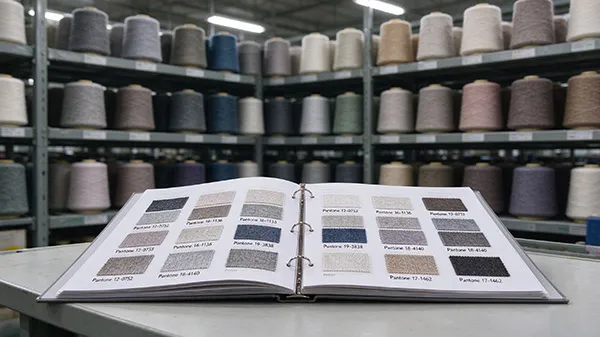
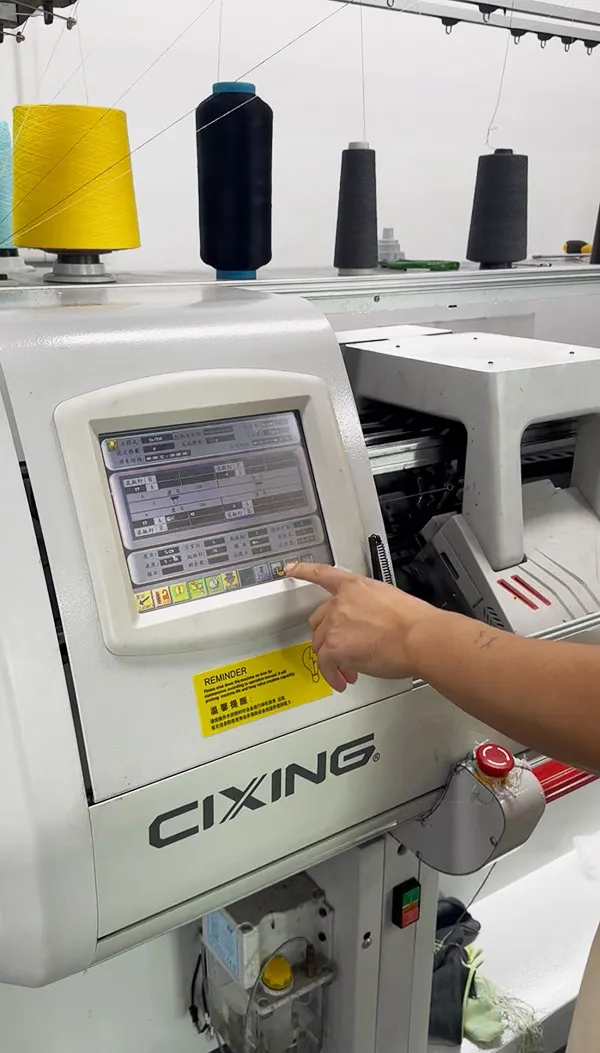
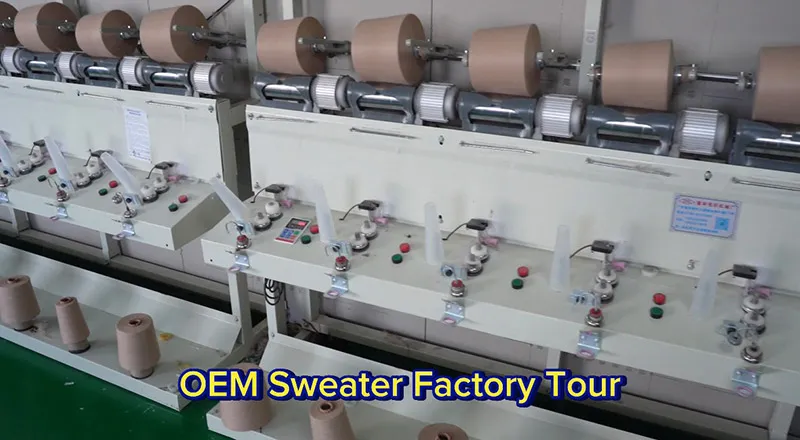
From a supply chain logic standpoint, stock service yarn transfers inventory risk upstream—the yarn mill absorbs base material costs, and the knitting factory is no longer constrained by yarn thresholds. On JM Sweater's production floor, garment MOQ depends solely on the setup cost for pattern programming and machine calibration on Stoll / Shima Seiki computerized flat knitting machines. Brands pay only a modest fixed setup fee to launch production at 30–50 pieces.
Yarn Composition & Gauge-to-Count Pairing for Low MOQ Programs
Low MOQ does not mean sacrificing quality. Rational yarn composition and gauge-to-count pairing are the core engineering details that determine hand-feel, thermal performance, and cost structure in winter knit beanies and scarves.
1. Common Stock Service Yarn Compositions & Performance Comparison
- 100% Cotton / Corespun Cotton: Excellent pilling resistance and skin-friendly hand-feel. No itch factor, easy care. The low-cost first choice for entry-level streetwear brands and indoor accessories.
- 100% Fine Merino Wool (17.5µm–19.5µm): Natural high-elastic recovery and superior warmth-to-weight ratio. Micron count controlled below 19.5µm effectively eliminates skin irritation. Engineered for mid-to-high-end brands.
- Wool/Acrylic Blends (e.g., 30/70, 50/50): Combines wool's texture with acrylic's loft and lightness. Wrinkle-resistant, abrasion-resistant, and highly cost-effective. Ideal for mass retail markets and "beanie + scarf + glove" gift sets.
- Recycled Polyester / Recycled Wool (GRS-certified): Meets EU/US GRS traceability standards and France's AGEC law requirements. Suited for sustainability-focused independent brands.
- Cashmere & Cashmere Blends: Delivers luxurious hand-feel and ultra-lightweight warmth. The core material for building high-premium accessory lines.
2. Gauge-to-Count Pairing Guide
Gauge (GG) determines fabric thickness and structural density. JM Sweater's factory floor runs 3GG to 18GG computerized flat knitting machines. Below are the most common gauge configurations in accessory development:
| Gauge | Recommended Yarn Count | Fabric Style & Structural Characteristics | Best-Suited Products |
|---|---|---|---|
| 3GG – 5GG (Chunky) | 2/16NM multi-ply / woolen-spun | Heavy, structured, strong hand-knit aesthetic | Heavyweight cuff beanies, chunky fringed scarves |
| 7GG – 9GG (Mid-gauge) | 2/28NM (two-ply) | Tight structure, balances warmth with pattern definition | Classic streetwear beanies, double-layer jacquard scarves |
| 12GG – 14GG (Fine) | 2/48NM worsted-spun | Smooth, refined surface, lightweight and close-fitting, high pilling resistance | Business flat-knit scarves, close-fit skull beanies |
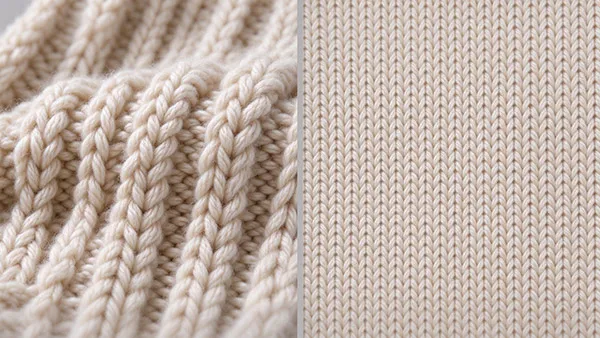
By drawing these yarn specifications directly from stock color cards, brands skip long spinning and sampling lead times and move straight to machine production with precise engineering matching.
Beanie & Scarf Structural Engineering: Construction Details That Define Quality
While beanies and scarves are small accessories, structural details and sampling techniques directly determine fit, wearability, and production cost. When developing low-MOQ programs with stock service yarn, rational pattern and structure design significantly elevates brand quality perception.
1. Beanie Engineering & Construction
Mainstream Silhouette Designs:
- Single Cuff Beanie: The most classic street and outdoor style. The cuff structure provides double-layer warmth over the ears.
- Fisherman Beanie: Short profile, sitting just above or at the ear line. Highly favored by trend-forward brands in recent years.
- Slouchy Beanie: Longer length with a natural relaxed drape at the back of the head.
- 3D WholeGarment Beanie: Knitted in one piece on seamless WholeGarment machines. Zero seams throughout, no pressure points during wear.
Crown Shaping: Common options are 4-dart and 6-dart crown closure. 4-dart shaping produces clean, sharp lines with a slightly raised crown; 6-dart shaping yields a rounder, closer-fitting curvature.
Seaming & Finishing:
- Hand-linking achieves stitch-to-stitch manual seaming, leaving interior seams flat with no ridges—the hallmark of premium quality.
- Cup-seaming / overlocking (machine sewing) offers high efficiency and lower cost, suited for volume-driven styles.
Rib Structure Selection:
- 1x1 rib: Smooth, refined surface with moderate elasticity.
- 2x2 rib: Greater stretch range and superior wrapping effect, better at contouring the head shape.
2. Scarf Knitting Structures & Edge Finishing
Weave Structure Classification:
- Single-Layer Jacquard: Pattern appears on one face; float yarns run across the back. In small-batch production, float length must be strictly controlled to prevent snagging during wear.
- Double-Layer / Tubular Jacquard: Both faces show smooth pattern; float yarns are fully enclosed. Fabric is thick and structured with excellent thermal performance. Highly suited for premium brand graphic customization.
- Ribbed Scarf: Identical structure on both faces, superior extensibility, and never curls at the edges. Strong textural expression.
Edge & Finishing Techniques:
- Hand Fringing: Manual yarn bundling at scarf ends for a rich vintage and handcrafted feel. Adds labor cost.
- Machine Selvage: Edge finishing completed directly on the computerized flat knitting machine. Clean, modern lines with significantly shortened finishing cycles.
In JM Sweater's sample workshop, even for 30–50 piece runs, we calibrate machine tension and stitch parameters precisely during sampling based on the specific stock yarn selected—ensuring bulk delivery matches sample quality with high consistency.
Brand Differentiation: Logo & Secondary Process Options at Low MOQ
Stock service yarn simplifies the upfront supply chain, but color cards are public resources. For startup brands to stand out, the key lies in differentiated logo application and secondary processing to build brand recognition:
Woven Patch
Extremely low MOQ (from 100 pieces), unit cost $0.05–$0.20. Sewn onto beanie cuffs or scarf ends—the most practical low-cost option for exclusive visual identity.
Leather / PU Patch
Delivers strong outdoor, workwear, and American vintage (Amekaji) aesthetics. Suited for rugged-style winter accessories with deep embossing.
Direct Embroidery
Strong three-dimensional effect, high abrasion resistance. However, when embroidering on knit fabric, stitch density and backing thickness must be precisely controlled.
Jacquard Logo
Brand logo knitted in one piece during the weaving process. No sewn-in foreign object feel, but character size must be strictly controlled according to machine gauge.
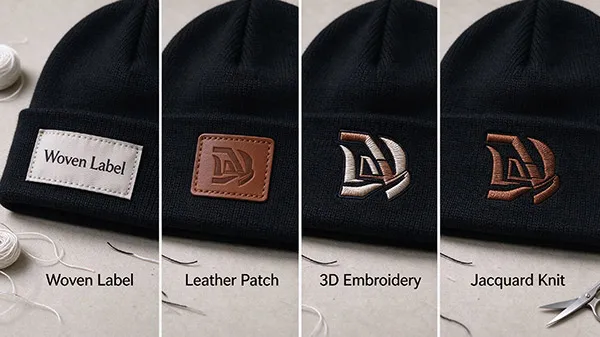
In JM Sweater's small-batch production system, we support diverse trim attachment and custom processing—helping brands achieve high-premium custom quality even at low MOQ procurement.
QC & Compliance: The Lifeline for Customs Clearance & Repeat Orders
Even for 30–50 piece runs, quality control and compliance are the lifelines determining whether a brand clears customs smoothly and earns repeat purchases. For skin-contact winter knit beanies and scarves, strict factory QC and international compliance testing are mandatory before shipment.
1. Factory QC Checklist
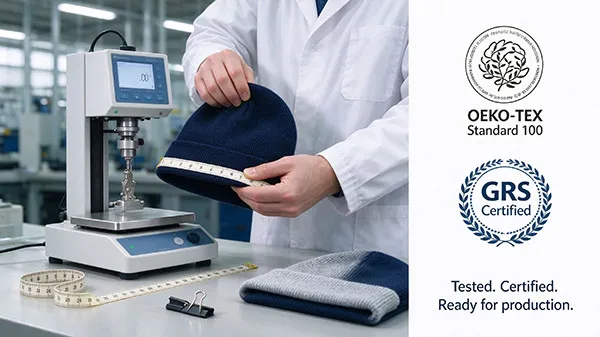
- Dimensional & Weight Tolerance: Accessory dimensions in relaxed state controlled within ±1cm–±1.5cm; individual garment weight variation strictly within ±3% to ensure consistent knitting density.
- Cuff Tension & Recovery: Beanie cuffs tested through 200 repeated stretch cycles with no slack or deformation—guaranteeing long-term wearing compression.
- Seam Strength: Crown shaping and scarf end seams must pass tensile strength testing to prevent seam bursting or stitch unraveling.
2. EU/US Market Compliance & Certification Standards
- OEKO-TEX Standard 100 (Annex 4): Ensures yarns and finishing auxiliaries contain no harmful chemical residues, meeting the rigid procurement threshold for skin-contact textiles in EU/US markets.
- GRS Certification: For recycled yarns, the factory must issue a valid GRS Transaction Certificate (TC) to support brand sustainability claims.
- Pilling Resistance & Colorfastness: ISO 12945-2 Martindale pilling resistance must reach grade 3–4; colorfastness to washing and wet/dry rubbing (ISO 105) must reach grade 3–4.
- Children's Accessory Safety Compliance: Exports to the Americas must meet CPSC 16 CFR 1610 fabric flammability requirements; children's hats and scarves must strictly comply with ASTM F1815 / EN 14682 drawstrings safety standards to eliminate strangulation hazards from loose drawcords.
As a compliant export manufacturing facility, JM Sweater enforces these QC protocols across bulk production—helping emerging brands avoid customs seizure and after-sales return risks.
Launch Your Winter Knit Accessory Line with Low MOQ Custom Sweater & Accessory Manufacturing
For startup apparel brands and independent designers, developing winter knit accessories no longer requires heavy capital sunk into inventory risk. By leveraging factory stock service yarn, brands eliminate custom-dye yarn constraints and launch beanie and scarf lines at 30–100 pieces per style/color—achieving lightweight startup and agile market validation.
As a professional B2B knitwear manufacturing partner, JM Sweater specializes in end-to-end supply chain enablement for emerging global brands—from stock service yarn allocation and 7-day rapid sampling to small-batch beanie manufacturing and flexible production.
Ready to launch your next winter knit accessory line?
Contact JM Sweater's technical team directly to receive a complimentary current-season Stock Yarn Swatch Book and a cost and budget assessment with sampling completed within 7 days.
Request Free Swatch Book & Quote