
Why Traditional Factory Audits Fail in France Today
For years, buying teams operated on a simple assumption: a valid OEKO-TEX certificate or an ISO 9001 factory badge was enough to sail through European customs. That assumption will now cost you containers.
French customs and the DGCCRF have shifted their inspection focus. The target is no longer just physical sweater quality—it's environmental compliance and full-chain traceability. With PFAS restrictions now enforceable, AGEC Article 13-I traceability actively audited, and Refashion eco-contributions under strict collection, non-compliant sweaters and knit accessories face detention and heavy fines.
Warning for Importers
A generic factory audit or a single yarn certificate does not cover France-specific AGEC Article 13-I traceability or Triman sorting labels. Legally, the brand owner and importer placing goods on the French market carry full liability for violations.
The legal responsibility sits with the importer, but the first line of defense is always at the manufacturing source. Before you wire a deposit or cut a bulk PO, you need a custom knitwear OEM ODM manufacturer who understands both knit engineering and current French regulations—one that can control compliance at the component level: yarn, trims, and coatings. That is the baseline for smooth clearance and avoiding violation losses.
Navigating France's Strict Environmental & Traceability Laws
France has layered its own environmental legislation on top of EU-wide rules. These laws hit directly at production history, chemical coatings, and end-of-life responsibility. Any single gap can trigger customs seizure, forced delisting, or fines.
AGEC Article 13-I: 3-Tier Traceability, Microplastic Warnings, and Anti-Greenwashing
AGEC (Anti-Waste and Circular Economy) Article 13-I demands radical transparency for apparel sold in France. Importers must publish the following on the product page or via QR code:
3-Tier Geographic Traceability
You must clearly identify the countries for three key production stages:
- Knitting / Weaving
- Dyeing / Printing
- Sewing / Making-up
Microplastic Release Warning
If synthetic fiber content—polyester, polyamide, acrylic—exceeds 50% (> 50%), you must add this fixed French warning on the label or information page:
"Le produit rejette des microfibres plastiques dans l'environnement lors du lavage"
(This product releases plastic microfibers into the environment during washing.)
Banned Greenwashing Terms
Do not use vague marketing claims like "Biodégradable," "Éco-responsable," or "Respectueux de l'environnement" on packaging, hangtags, or promotional materials unless you hold verifiable data.
PFAS Restrictions: The Danger Zone for Windproof and Stain-Resistant Knits
The recently enforced PFAS (per- and polyfluoroalkyl substances) restriction sets hard detection limits for "forever chemicals" in textiles:
| Parameter | Limit |
|---|---|
| Individual target PFAS | ≤ 25 μg/kg (ppb) |
| Sum of target PFAS | ≤ 250 μg/kg (ppb) |
| Total Fluorine | ≤ 50 mg/kg (ppm) |
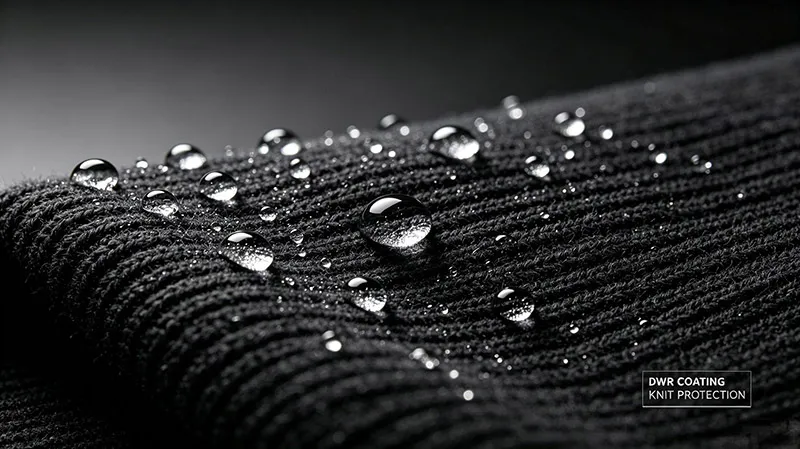
High-Risk Alert: Outdoor windproof sweaters, DWR-treated wool sweaters, and stain-repellent knits are the primary offenders. During yarn sourcing and dyeing, your factory must use fluorine-free / Zero-PFCs repellents and supply targeted test reports. If your current PFAS-free sweater supplier cannot produce these documents, you are exposed.
EPR, Refashion Registration, and the IDU Code
French law requires any entity selling textiles (TLC – Textiles, Linge de maison, Chaussures) in France to fulfill Extended Producer Responsibility (EPR) obligations:
- What is IDU (Identifiant Unique): Importers must register with Refashion and obtain a Unique Identifier from ADEME (French Agency for Ecological Transition).
- Why it matters: Customs and market inspectors randomly check IDU status. Products without a valid IDU or with unpaid eco-contributions cannot be listed online or sold in stores—and will face administrative penalties.
French Care Labels, Triman Marking, and Fiber Naming Rules
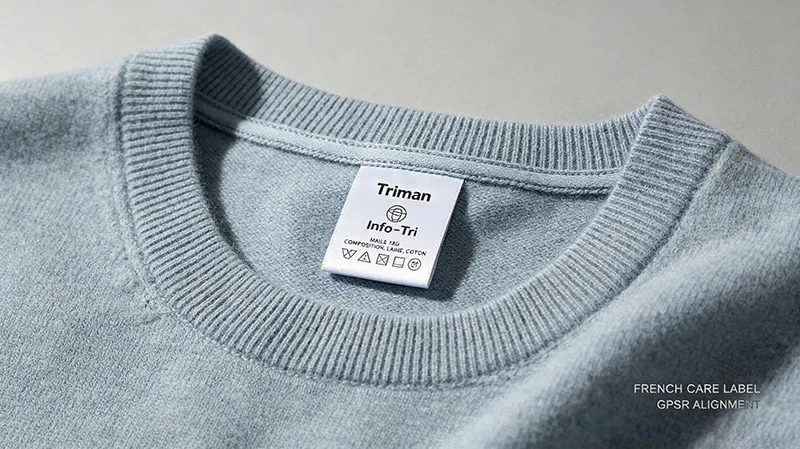
In France, the care label is not just washing instructions. It is a legal identity document checked at customs and by market surveillance. The label is small, but it carries language, fiber naming, animal-origin declarations, and mandatory recycling marks.
French Fiber Names and Animal-Origin Disclosure
Standard French fiber names are mandatory. Under EU Regulation No 1007/2011, products entering France must use legal French names: Coton, Laine, Cachemire, Élasthanne. Do not substitute trademark names like Lycra or Teflon for the standard chemical fiber name.
Animal-origin non-textile parts warning. If the sweater has a genuine leather patch, real shell buttons, horn buttons, or down accessories, the care label must include:
"Contient des parties non textiles d'origine animale"
(Contains non-textile parts of animal origin.)
Triman Logo and Info-Tri Layout Requirements
France enforces strict visual formatting for recycling marks on textile packaging and the garment itself. Missing or incorrectly printed Triman logos are treated as non-compliant.
- Triman core graphic: Circular arrows with a human figure.
- Info-Tri disposal guidance: Must combine the "Clothing icon" (knitwear category) with either the "Textile bank icon" (Borne textile) or "In-store recycling icon" (Magasin).
- French action prompt: Must include a clear directive such as "Donnez vos vêtements" (Donate your clothes).
[Brand Logo] [Style No.] [Batch No.]
[Fiber Content in French]
[5 GINETEX Care Icons]
[Triman Logo] + [Clothing Icon] + [Borne textile Icon]
"Donnez vos vêtements"
[EU Responsible Person: Name, Address, Email]
"Contient des parties non textiles d'origine animale" (if applicable)
EU Baseline Safeguards: Chemical Testing & Product Safety (REACH & GPSR)
Beyond France-specific laws, knitwear entering France must meet EU REACH and GPSR bottom lines. Yarn dyes, buttons, zippers, and all trims must be tested by component—not just as a finished garment.
REACH Annex XVII Chemical Limits for Textiles
Before sampling and bulk production, your factory must ensure all yarns and trims meet these limits. This is where REACH testing for apparel imports becomes non-negotiable.
| Chemical | Components | Regulatory Limit |
|---|---|---|
| Azo Dyes | Dyed yarn, printed fabric | < 30 mg/kg (22 banned aromatic amines) |
| Formaldehyde | Knit fabric, finishing coatings | Skin contact < 75 mg/kg; infants < 20 mg/kg |
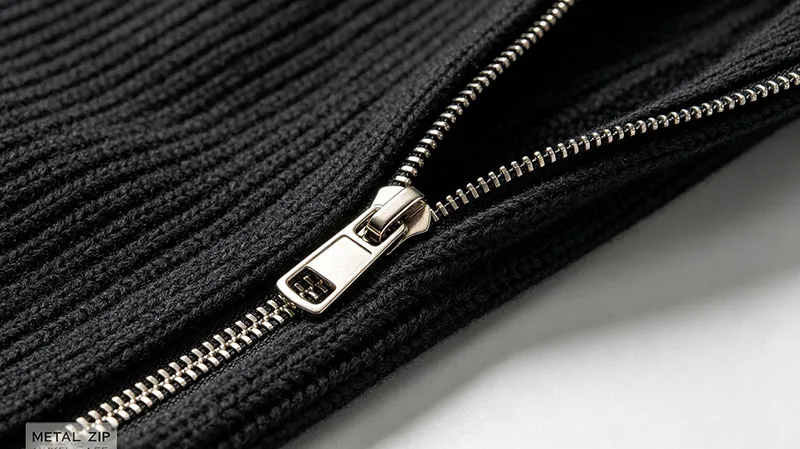
| Lead / Cadmium | Zippers, metal buttons, badges | Total lead ≤ 500 mg/kg; total cadmium ≤ 100 mg/kg |
| Phthalates (7P) | Rubberized prints, plastic buttons, coatings | Sum of 7 ≤ 0.1% (1000 mg/kg) |
| Nickel Release | Skin-contact metal zipper pulls, buttons | < 0.5 μg/cm²/week |
GPSR Traceability Requirements
GPSR requires all knitwear placed on the French and EU markets to be traceable:
- EU Responsible Person: The care label or outer packaging must clearly show the name, physical mailing address, and email/website of an EU-based responsible entity (importer or authorized representative).
- Production batch ID: Every sweater must carry a style number or batch number for precise tracing and recall if a safety issue arises.
Physical Safety Standards for Children's Knitwear
Children's sweaters face especially strict scrutiny. Key design and trim requirements:
- Drawstring anti-strangulation (EN 14682): For 0–7 years, no functional or decorative drawstrings in the head, neck, or chest area. Waist drawstrings must not exceed 7.5 cm when laid flat.
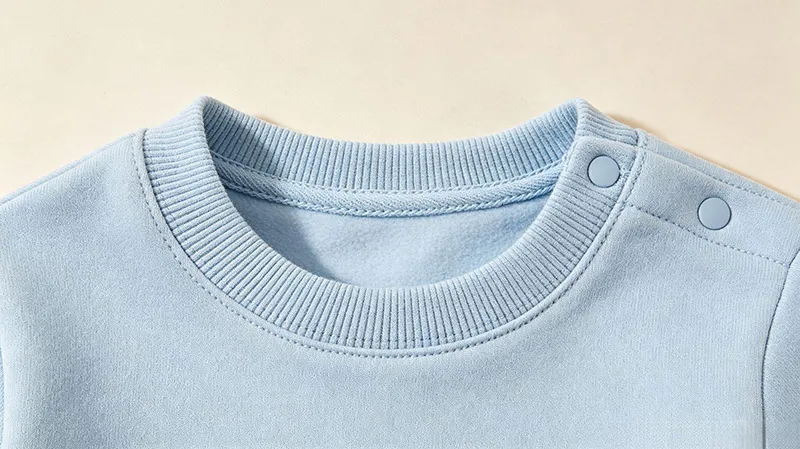
- Small parts detachment (EN 71-1): Buttons, zipper pulls, and decorative pom-poms on sweaters for children under 3 must pass a 90 N pull test held for 10 seconds without detaching—preventing choking hazards.
Customs Clearance, HS Codes, and ISO Quality Benchmarks
Getting goods into France depends on correct HS classification and hard physical quality testing. French customs and third-party labs (SGS, BV, Intertek) focus on these core metrics during clearance and spot checks.
HS Code Classification
French customs scrutinize textile declarations. The declared HS Code must match the fiber that holds the highest weight percentage or defines the product's character:
- 6110.11: Knitted pullovers, cardigans, vests of wool
- 6110.12: Of cashmere
- 6110.20: Of cotton
- 6110.30: Of man-made fibers (polyester, acrylic, polyamide, etc.)
Pitfall: Multi-fiber blends (e.g., wool mixed with acrylic) must be classified by the highest weight percentage or core characteristic. Misdeclaration triggers delays, back duties, and fines.
Physical Performance Acceptance Criteria
Beyond mandatory certificates, physical durability drives French brand returns and consumer complaints. Bulk production must pass these ISO tests. ISO knitwear shrinkage standards are particularly critical.
| Test | Standard | Acceptance Criteria |
|---|---|---|
| Dimensional stability / Shrinkage | ISO 6330 / ISO 5077 | After washing per care instructions and flat drying: length and width shrinkage within ± 5% |
| Colorfastness to washing | ISO 105-C06 | Color change and staining ≥ 3-4 |
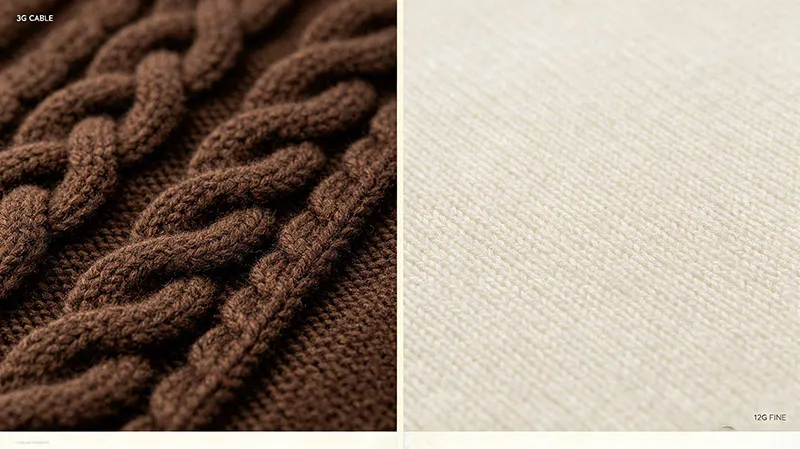
| Pilling resistance | ISO 12945-1 | For 3G–7G chunky knits: ≥ 3; fine-gauge: ≥ 3-4 recommended |
Factory control: During knitting and finishing, regulate stitch density and use steam pressing pre-shrinking to prevent post-wash deformation.
Following correct HS declaration and physical testing helps importers pass both customs compliance and market reputation gates.
The Pre-Order Vetting Protocol: 5 Questions to Ask Your Factory
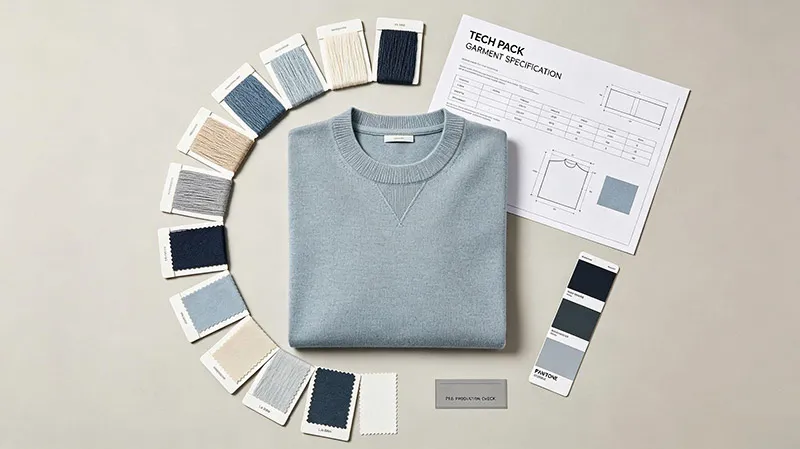
Before paying deposits and starting bulk, move compliance checks upstream to the manufacturing source. This is the cheapest and most effective risk control. When reviewing Tech Packs or requesting quotes from knitwear OEM/ODM suppliers, ask these five questions directly.
1. Component-Level Testing
"Can you provide component-level REACH testing reports for dyed yarns and trims?"
What to look for: Finished-garment testing alone leaves gaps. A qualified factory must provide independent chemical test evidence for each main yarn color, companion yarn, buttons, zippers, and print paste—confirming azo dyes, heavy metals, and phthalates meet limits by component.
2. 3-Tier Origin Tracking
"Do you support 3-tier production origin tracking for AGEC Art. 13-I disclosure?"
What to look for: Data transparency. The factory must provide specific country and workshop data for knitting, dyeing, and sewing—so you can complete legal disclosure on packaging or online.
3. PFAS-Free Verification
"Are your fluorine-free/DWR water-repellent coatings verified under current PFAS limits?"
What to look for: For outdoor windproof knits or DWR-functional wool sweaters, the factory must explicitly use fluorine-free / Zero-PFCs repellents and provide quantitative test reports showing total fluorine ≤ 50 mg/kg.
4. Machine Tension & Shrinkage Control
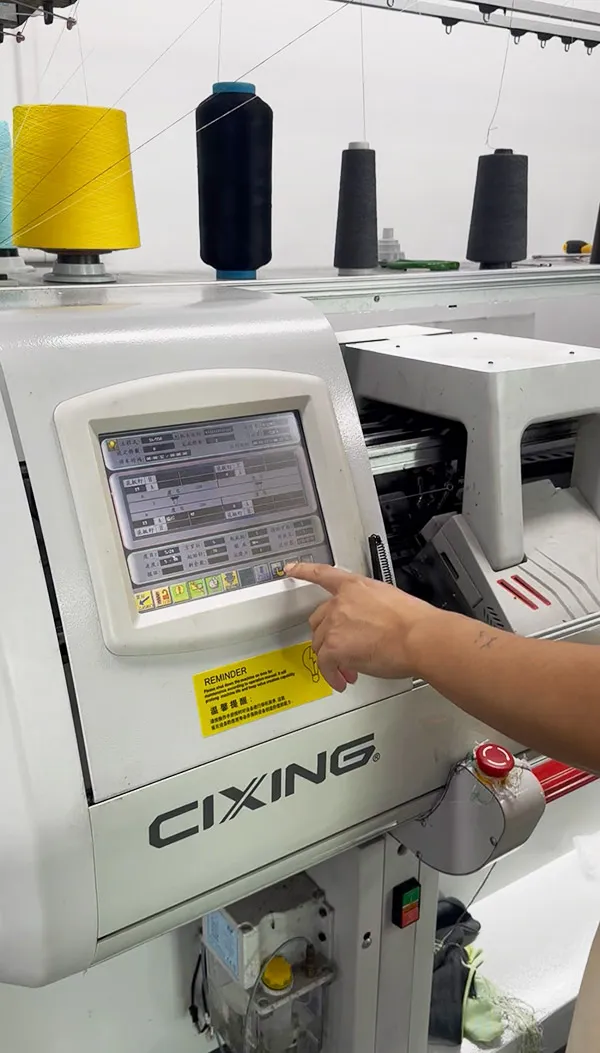
"Do your automated knitting machines (e.g., Stoll/Shima Seiki) ensure tight tension control to pass ISO shrinkage limits?"
What to look for: Precision determines physical quality. German Stoll or Japanese Shima Seiki computerized flat knitting machines, combined with steam pressing pre-shrinking, control stitch density from the source to keep shrinkage within ± 5%.
5. Custom French Care Label & Packing
"Can you apply customized French language care labels with integrated Triman logos before packing?"
What to look for: In-house finishing capability. Confirm the factory can sew and pack with French legal fiber names, 5 GINETEX icons, Triman + Info-Tri guidance, and GPSR responsible person code—avoiding costly rework after arrival in Europe.
Frequently Asked Questions (FAQ)
Q1: Is an OEKO-TEX Standard 100 certificate enough to clear French customs?
No. OEKO-TEX covers chemical safety, but it does not satisfy GPSR EU Responsible Person tagging, Triman recycling graphics, or AGEC Article 13-I traceability origin disclosure.
Q2: Do ordinary knitwear sweaters require a CE mark in France?
No. Standard fashion knitwear does not need a CE mark unless it functions as Personal Protective Equipment (PPE) or thermal protection wear.
Q3: Who is responsible for registering with Refashion and paying eco-contributions?
The importer or brand owner placing the product onto the French market must obtain the Unique Identifier (IDU) from Refashion.