
Every buying team we work with eventually hits the same wall: the UK is a genuinely difficult market to design knitwear for. There's no extended deep freeze to justify heavy layering pieces, yet the damp, wind-driven cold that hangs over the country from October through March cuts straight through anything too loosely knit. And then there's the indoor problem — the UK's pervasive central heating and efficient public transport network create a temperature whiplash that most knitwear simply isn't designed to handle.
Get the gauge wrong and you're looking at either dead stock or a returns headache. Go too heavy and customers will pull the jumper off the moment they step into the office or onto the Tube. Go too light and it won't survive a walk from the station to the car park. Gauge isn't just a machine setting — it determines garment weight, yarn structure, drape, and ultimately where the piece sits in the customer's wardrobe.
At Guangzhou Junma Apparel,a trusted OEM knitwear manufacturer, we've spent years producing mid-to-high-end knitwear for UK and European brands, and we've seen firsthand how the 14GG versus 7GG decision shapes a collection's commercial performance. This guide breaks down the technical differences, the climate-specific applications, and the sourcing strategy that should inform your next range.
Understanding Knitwear Gauge: What 14GG and 7GG Actually Mean
Gauge in Flat Knitting: The Fundamentals
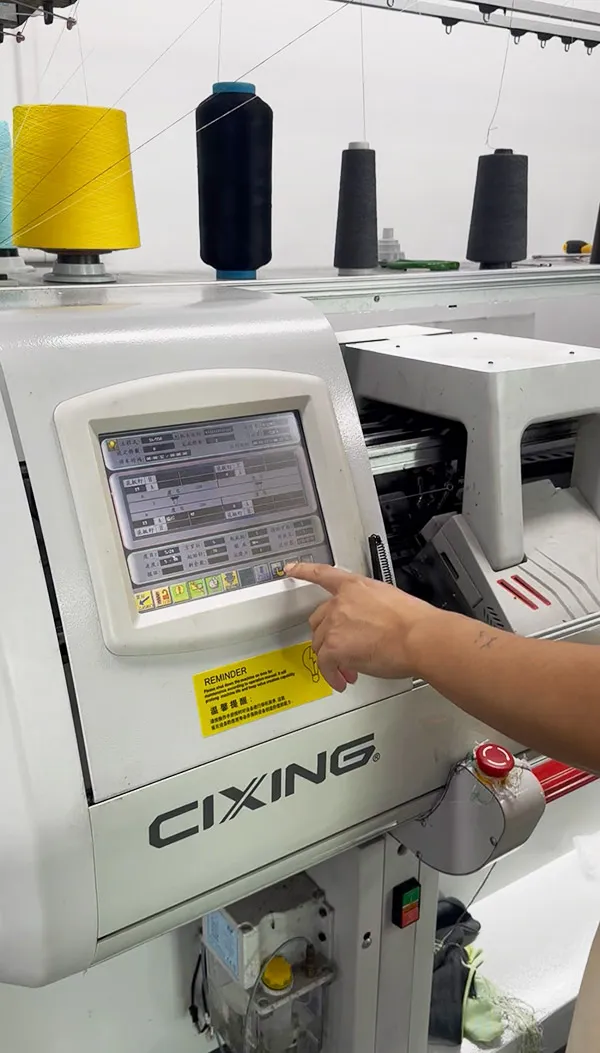
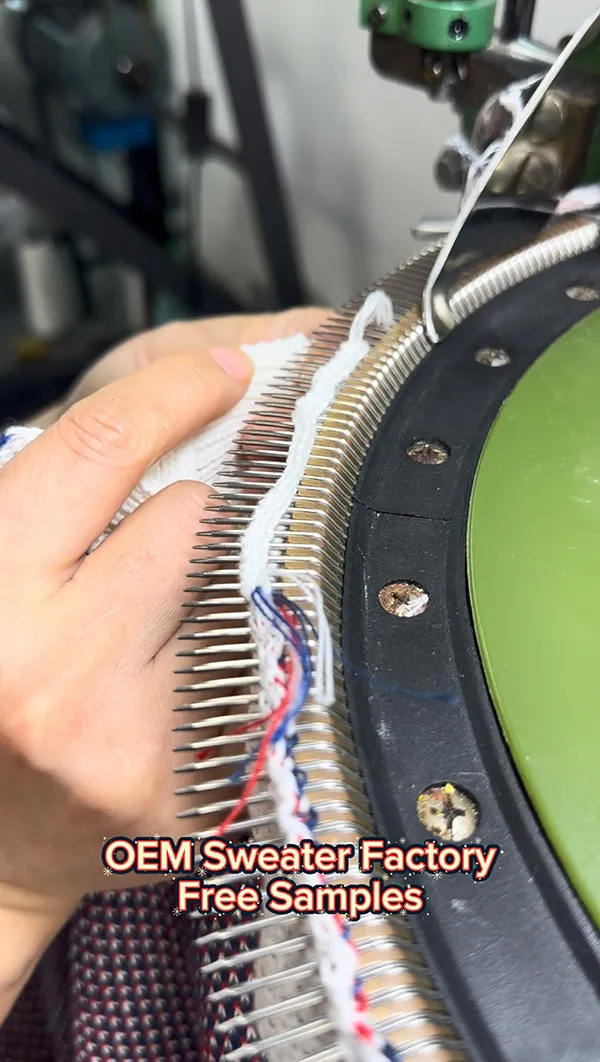
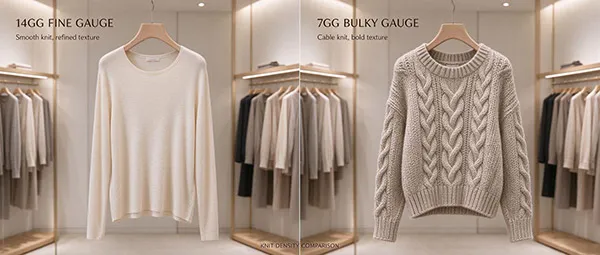
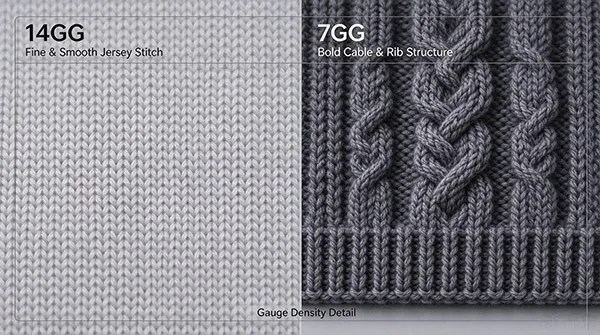
In computerized flat knitting, gauge (often abbreviated to GG) is the single most important technical parameter determining fabric density and thickness. It's defined as the number of needles per inch on the needle bed.
- Higher needle count (14GG): The needles are closely spaced and fine, allowing fine-count worsted yarns to be knitted into a smooth, lightweight fabric with a refined hand feel.
- Lower needle count (7GG): The needles are wider spaced and heavier, accommodating coarse or multi-fold yarns to create fabrics with pronounced texture and substantial structure.
14GG vs. 7GG: Technical Comparison at a Glance
To help sourcing teams evaluate quickly, here's how the two gauges compare on the specs that matter:
| Specification | 14GG (Fine Gauge) | 7GG (Mid-Coarse Gauge) |
|---|---|---|
| Needle bed density | 14 needles per inch (approx. 1.8mm spacing) | 7 needles per inch (approx. 3.6mm spacing) |
| Recommended yarn counts | 2/28Nm, 2/30Nm, 2/48Nm worsted yarns | 2/14Nm, 2/16Nm woollen yarns or multi-fold |
| Average garment weight | 180g – 260g (lightweight / layering) | 350g – 550g (mid-weight / outerwear) |
| Fabric appearance & texture | Smooth, refined surface with excellent drape and a seamless hand feel | Distinct stitch definition; ideal for cables, ribs, and textured structures |
| Knitting efficiency & machine time | High stitch density; longer machine time per garment | Faster knitting speed; higher yarn consumption but shorter machine time per garment |
The UK Climate: Why Weather Drives Knitwear Sourcing Decisions
It's surprisingly common for buyers to select a gauge based on design preference alone, without factoring in the climate where the garment will actually be worn. For the UK — one of the world's most mature knitwear markets — the country's distinctive geography and living habits directly dictate what consumers need in terms of weight, breathability, and stretch.
Damp Cold vs. Central Heating: The British Paradox
UK winter temperatures typically sit between 2°C and 9°C. On paper, that's mild compared to Scandinavia or North America. But the Atlantic maritime climate brings high humidity, and that damp cold has a way of cutting through loosely knit fabrics in a way that dry cold never does.
The bigger challenge, though, is the temperature differential between outdoors and indoors. British offices, homes, and public transport — the London Underground being the most notorious example — are aggressively heated. This creates a very British problem: you need wind protection and warmth for the commute, but the moment you step inside, a heavy jumper becomes unbearable. "Thick" alone doesn't win over UK consumers. The fabric has to manage heat intelligently — trapping warmth outdoors while allowing rapid moisture transfer and cooling indoors.
The UK's Layering Culture and Trans-Seasonal Demand
This climate has produced one of the world's most sophisticated layering cultures. British consumers instinctively think in layers, and they expect their knitwear to do the same. For UK brands and sourcing managers, the ideal knitwear piece needs three things:
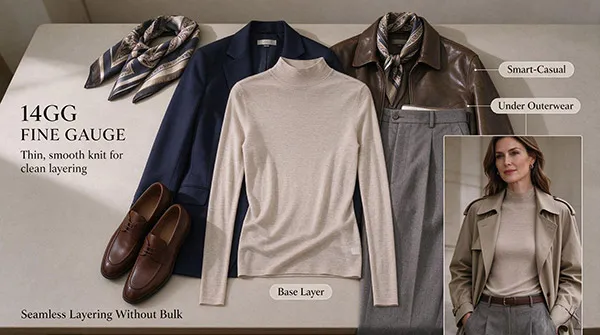
- Seamless layering: Sits flat under a shirt or beneath outerwear (a Barbour wax jacket, a structured trench, a blazer) without adding bulk.
- Moderate wind resistance: A tight enough knit structure to lock in body heat and block the damp, wind-driven cold.
- Three-season versatility: Wearable from early September through to April — autumn, winter, and spring — delivering a high cost-per-wear that justifies the purchase.
These requirements explain why 14GG and 7GG occupy such distinct and complementary roles in UK brand ranges.
14GG Fine Gauge: The Layering Specialist
Technical Profile
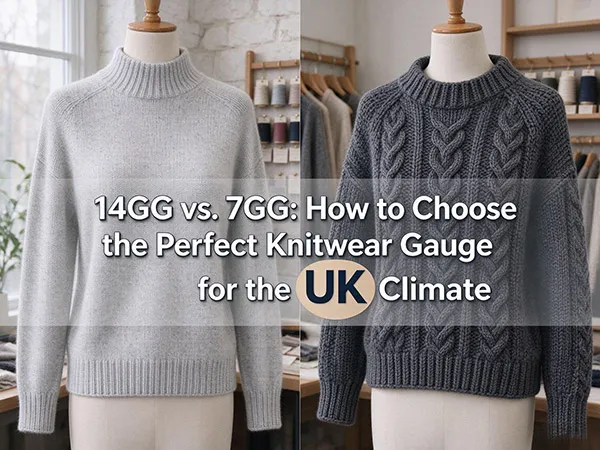
14GG is the hallmark of high-quality worsted knitwear. At 14 needles per inch, it's designed for fine-count worsted yarns — typically 2/28Nm, 2/30Nm, or even 2/48Nm — in fibres like Extra Fine Merino, cashmere, or cotton-cashmere blends.
The tight needle spacing produces an exceptionally smooth, refined surface with no visible coarse stitching. The fabric has natural elasticity and a fluid drape, and it achieves all of this at a remarkably light garment weight — usually between 180g and 260g.
Where 14GG Wins in the UK
Against the UK's mild weather and overheated interiors, 14GG is in its element:
- Spring and autumn standalone wear: At 9°C–15°C, a 14GG knit works perfectly as a standalone layer over a shirt.
- Deep winter layering: Under a blazer, trench coat, or Barbour jacket, 14GG adds warmth without adding bulk — essential for maintaining a clean silhouette.
- Office and indoor environments: The breathable structure handles central heating with ease, wicking moisture and preventing the overheating that comes from wearing a heavy jumper indoors.
Best-Selling 14GG Styles for British Brands
For UK-facing brands building a reliable core range, three 14GG styles consistently drive repeat business:
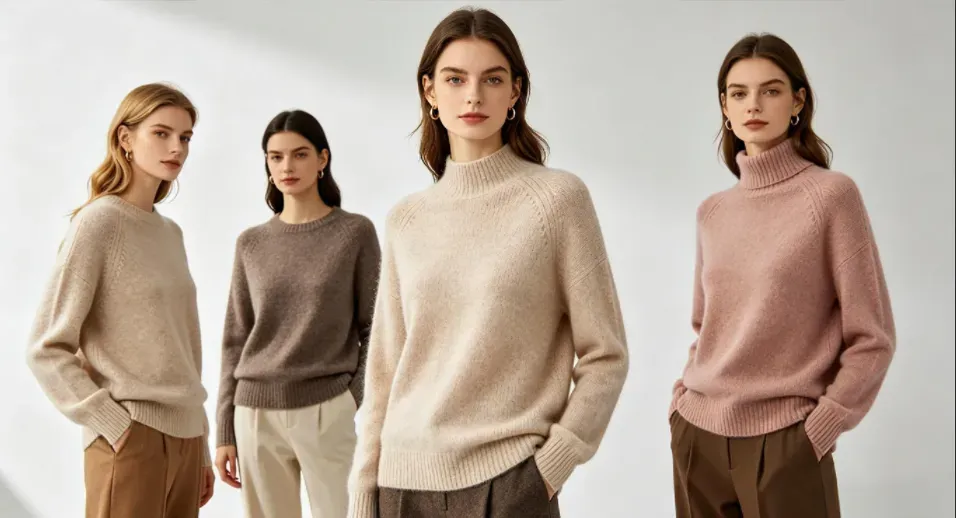
- Fine-gauge V-neck / crew neck: The foundation of any smart-casual wardrobe, designed to layer cleanly over a formal shirt.
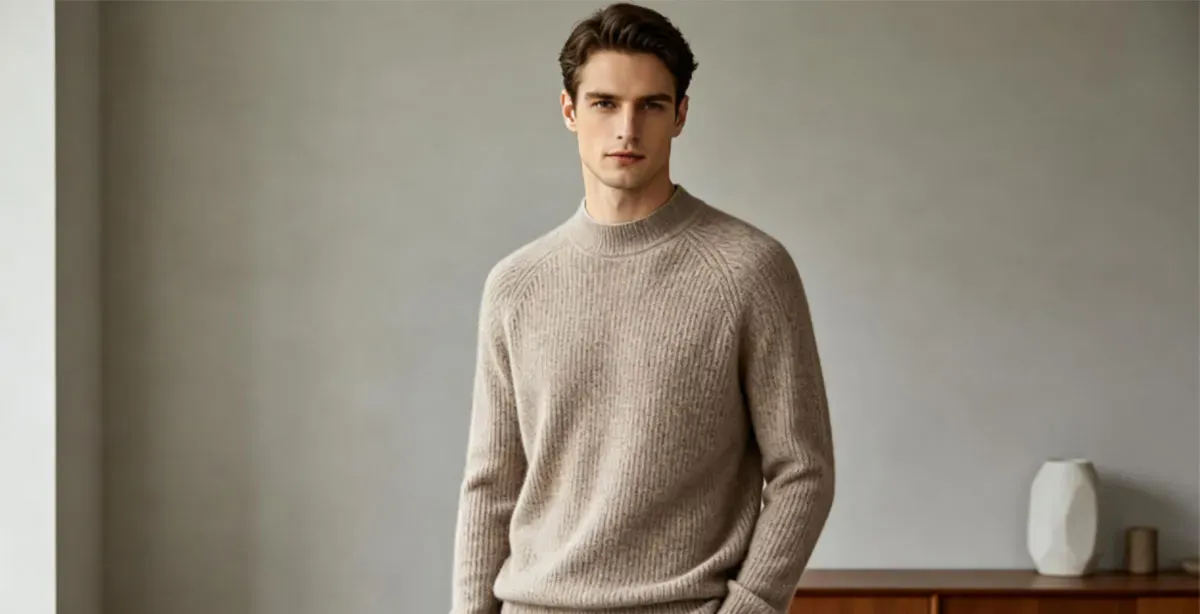
- Mock-neck base layer: A standout performer in the UK's smart-casual market, balancing warmth under outerwear with a polished, considered look.
- Thin button-up cardigan: Lightweight and easy to remove, ideal for the UK's changeable weather patterns.
7GG Mid-Coarse Gauge: The Outdoor Workhorse
Technical Profile
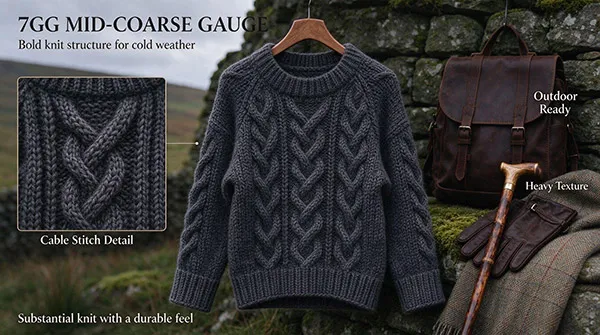
7GG is the go-to gauge for chunkier, more textural knitwear with a distinctly British character. At 7 needles per inch, the machine comfortably handles 2/14Nm or 2/16Nm woollen yarns and multi-fold constructions. Typical fibres include Lambswool with its natural lanolin content, flecked Donegal Tweed, and woollen-spun cashmere.
Where 14GG is smooth and refined, 7GG is bold and three-dimensional. The pronounced stitch definition makes it ideal for complex structures — classic cable knits, heavy ribbing, and the fisherman stitch that gives Aran knitwear its distinctive texture. Garment weights typically run from 350g to 550g, delivering a satisfying heft and premium hand feel.
Where 7GG Wins in the UK
In the UK's outdoor lifestyle and deep winter conditions, 7GG plays an irreplaceable role:
- Deep winter protection: From December through February, the dense air pockets within a chunky knit provide effective insulation against damp, wind-driven cold.
- Outdoor and weekend lifestyle: Perfect for the British weekend — country walks, Christmas markets, and outdoor gatherings — combining practical wind resistance with relaxed style.
- Trans-seasonal outerwear: At 10°C–15°C in early autumn or late spring, a 7GG knit can replace a light jacket as standalone outerwear.
Best-Selling 7GG Styles for British Brands
In UK retail, 7GG styles consistently dominate the autumn/winter visual merchandising. Three proven performers:
- Chunky cable-knit jumper: The definitive British country style — a hero piece for AW campaign imagery.
- Oversized boyfriend cardigan: Relaxed, easy to throw on, and hugely popular with womenswear and unisex brands.
- Heavyweight fisherman crew neck: Dense, structured, and hard-wearing — a staple for menswear and heritage outdoor brands.
Strategic Sourcing: How B2B Buyers Should Build Their Range
For UK knitwear buyers and product directors, choosing between 14GG and 7GG isn't just a design decision — it's a commercial calculation involving range architecture, raw material costs, and production time. Here's how we advise our brand partners to approach it.
AW vs. SS Collection Ratios
Autumn/Winter: We recommend a 60% (7GG/12GG) to 40% (14GG) split. The 7GG pieces carry the visual weight of the AW range — cables, texture, and chunk — while 14GG anchors the repeat-purchase business as the layering piece customers come back for in multiple colours.
Spring/Summer and Trans-Seasonal Knitwear: 14GG should account for 80% or more of the knitwear offering. The lightweight, breathable fine-gauge fabric handles the UK's extended mild weather perfectly.
Material Selection for the UK Market
For 7GG: We recommend Superwash Merino or Lambswool with a natural lanolin content. This improves water resistance and wind-blocking while ensuring the garment is machine washable — a key consideration for UK consumers.
For 14GG: Because these pieces sit directly against the skin, specify Extra Fine Merino at 19.5 microns or below, cashmere, or anti-allergy cotton-cashmere blends. Avoiding prickle is non-negotiable at this price point.
Production Economics: MOQ, Machine Time, and Yarn Consumption
7GG cost profile: High yarn consumption (garment weights of 350g–550g) means raw material costs dominate the unit cost. However, the lower needle count allows for faster knitting, reducing machine time per garment.
14GG cost profile: Lower garment weights (180g–260g) mean less yarn per piece. But the 14-gauge machines run slower, and the precision required extends machine time significantly — making labour time a larger share of the total cost.
Understanding these trade-offs is essential when negotiating pricing and MOQs with your manufacturing partner.
Getting the Balance Right
When you're building a knitwear range for the UK market, 14GG and 7GG aren't competing options — they're complementary tools for handling the country's unpredictable climate and varied wearing occasions.
14GG fine gauge owns the indoor, office, formal layering, and trans-seasonal business. Its lightweight breathability and clean lines make it the piece customers reach for again and again. 7GG mid-coarse gauge dominates outdoor style, deep winter warmth, and statement knitwear, with the textural presence that drives AW campaign imagery and full-price sell-through.
Get the ratio right, and your range will map perfectly onto how British consumers actually live — while keeping production costs under control and driving both volume and repeat purchase.
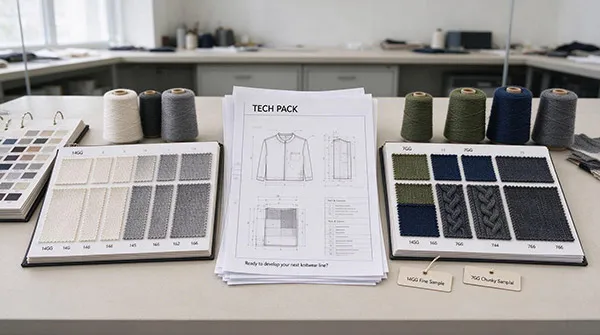
Ready to Develop Your Next UK Knitwear Line?
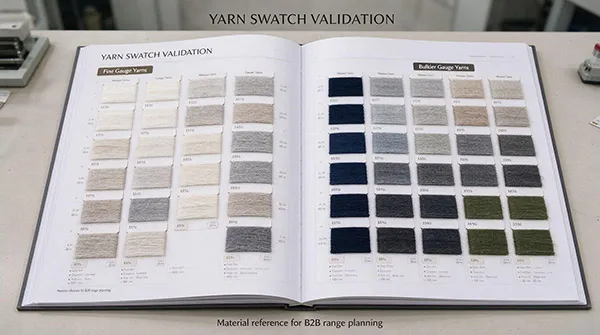
Our engineering and technical team is ready to turn your design brief into a production-ready garment programme. Contact Guangzhou Junma Apparel for free yarn swatches, tech pack consultations, or custom sample development for both 14GG and 7GG knitwear.