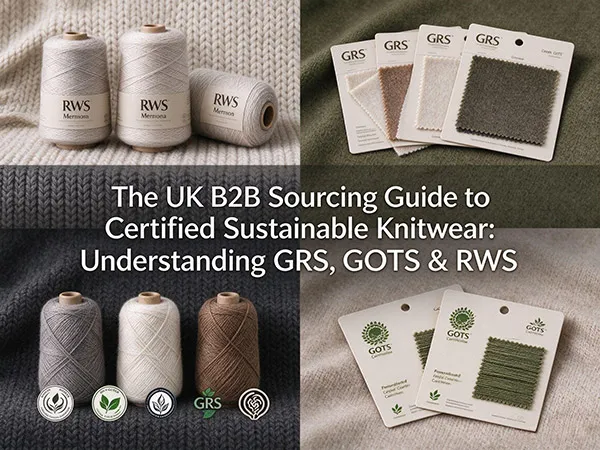
The UK B2B Sourcing Guide to Certified Sustainable Knitwear: Understanding GRS, GOTS & RWS
Table of Contents
1. Introduction: The Shift from Trend to Compliance in UK Knitwear Sourcing
2. Decoding the Top 3 Certifications for Sustainable Knitwear
3. GRS vs. GOTS vs. RWS: Which Standard Does Your Knitwear Line Need?
4. How Chain of Custody Works: From Yarn to Transaction Certificate (TC)
5. Practical Checklist: Sourcing Certified Sustainable Knitwear from China
6. Partner with a Certified Knitwear Manufacturer for the UK Market
1. Executive Summary & Market Context
The UK Sustainable Fashion Landscape
In the UK knitwear market, sustainability is no longer a "value-add" for brand marketing—it has become the entry threshold that determines whether a supply chain can access British retail channels at all. From London high-street brands to independent designer labels operating in the premium sector, buyer preferences for knitwear raw materials are undergoing a fundamental shift:
High-performance natural fibres and recycled materials running in parallel: Demand remains strong for premium natural sweaters built on Merino wool and lambswool, but buyers are increasingly uncompromising on raw material traceability. At the same time, the adoption of recycled polyester, recycled cashmere, and recycled blended yarns across gauge ranges from 7GG to 14GG has risen sharply.
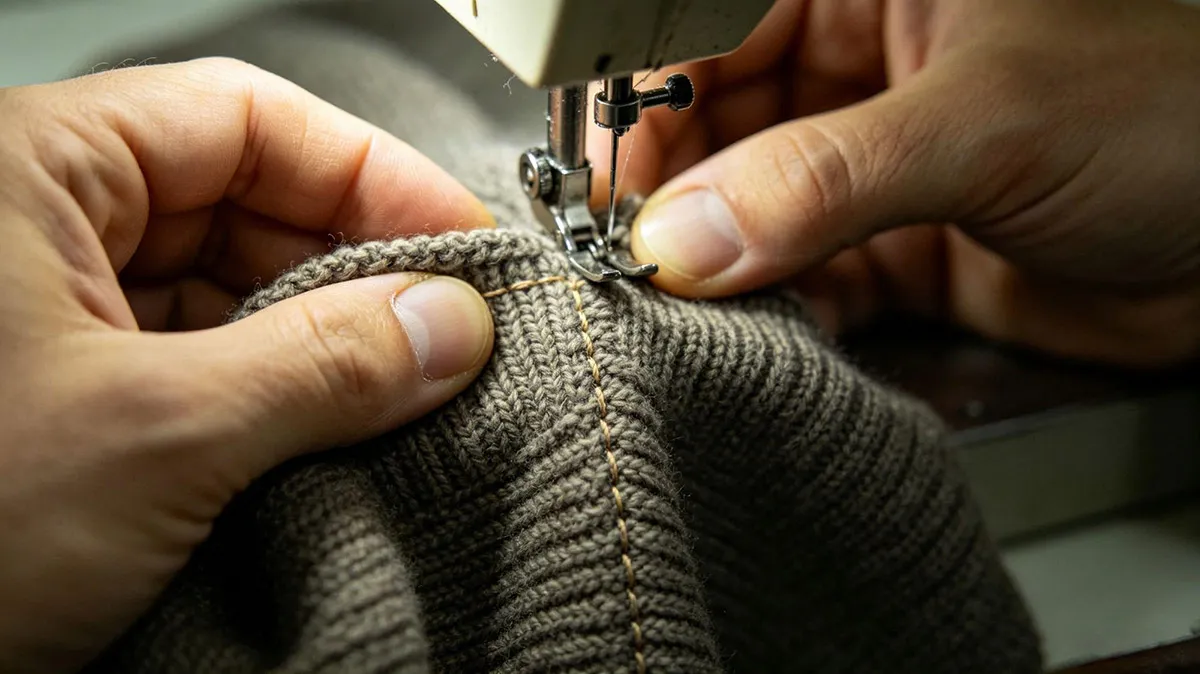
From product-level scrutiny to full-chain transparency: UK brand sourcing teams are no longer satisfied with the numbers on a yarn composition sheet. They require an OEM knitwear manufacturer to provide clear, verifiable environmental credentials at every processing stage—from flat-bed knitting and linking through to washing, milling, and final packaging.
The Regulatory Push: CMA Green Claims Code & DMCCA Compliance
The core driver behind this shift is the UK's increasingly stringent legal compliance environment. The Competition and Markets Authority's Green Claims Code, together with the latest Digital Markets, Competition and Consumers Act (DMCCA), has fundamentally rewritten the compliance rulebook for garment import and sale:
Severe penalties for non-compliance: Under current legislation, brands or retailers making vague, exaggerated, or unsubstantiated environmental claims—i.e., greenwashing—face fines of up to 10% of global annual turnover. More critically, this scrutiny now extends upstream into the manufacturing supply chain.
To mitigate substantial legal risk and brand reputation damage, UK buyers are absolutely uncompromising when it comes to official certification from Chinese knitwear manufacturers:
Scope Certificate (SC): Verifies that the production facility—such as Guangzhou Junma Apparel and its partner dyehouses and yarn mills—holds the legal, compliant qualification to produce under GRS, GOTS, or RWS certification.
Transaction Certificate (TC): Serving as the "passport" for each batch of goods, the TC provides a closed-loop traceability chain from raw material procurement through to finished product shipment. It is the only legally recognised document UK buyers can present during CMA regulatory audits.
For UK sourcing managers, choosing a knitwear manufacturer that not only understands computerised flat-bed knitting technology but can also efficiently issue SC/TC documentation is mission-critical to keeping their supply chain secure and ensuring smooth market access.
2. Deep Dive: Core Sustainable Knitwear Standards
Decoding the Top 3 Certifications for Sustainable Knitwear
In knitwear export and manufacturing, different fibre types map to entirely different certification systems. Understanding the technical details of GRS, GOTS, and RWS is the foundational prerequisite for compliant sourcing by UK buyers.
GRS (Global Recycled Standard) – The Industry Benchmark for Recycled Fibres
Applicable materials: Recycled polyester, recycled nylon, recycled cashmere, and recycled wool blend yarns.
Core thresholds: Products containing ≥20% recycled content qualify for a B2B traceability TC. To hang the official GRS hangtag at UK retail, the finished garment must contain ≥50% recycled content.
Audit scope: Covers not only raw material traceability (Chain of Custody) but also chemical restrictions (MRSL compliance), wastewater treatment, and factory social responsibility.
GOTS (Global Organic Textile Standard) – The Gold Standard for Organic Cotton and Linen Knits
Applicable materials: Organic cotton, organic linen, and natural organic blended fibres.
Two certification grades:
Organic: ≥95% organic fibre content.
Made with Organic: ≥70% organic fibre content (the remaining 30% must be specific non-organic fibres, with strict prohibition on blending the same fibre type).
Full-process control: From ginning to finished knitwear, PFAS, azo dyes, and heavy metals are strictly prohibited. Sewing threads, care labels, buttons, and other trims must also comply with the GOTS Approved Chemicals list.
RWS (Responsible Wool Standard) – The Mandatory "Passport" for UK Wool Sweaters
Applicable materials: Merino wool, lambswool, and wool blend yarns.
Three core pillars:
Animal welfare: Mandatory prohibition of mulesing; assurance of sheep health.
Land management: Protection of pasture soil and ecological balance.
Full traceability: End-to-end oversight from farm shearing, scouring, and spinning through to flat-bed knitting of the finished garment.
3. Comparative Analysis & Strategic Choice
GRS vs. GOTS vs. RWS: Which Standard Does Your Knitwear Line Need?
When developing knitwear ranges for the UK market, stacking certifications indiscriminately drives unnecessary production costs. Sourcing teams need to match certification strategy precisely to their product line's fibre composition and target customer base.
Comparison Matrix for B2B Buyers
Dimension
GRS (Global Recycled Standard)
GOTS (Global Organic Textile Standard)
RWS (Responsible Wool Standard)
Primary fibre types
Recycled polyester/nylon, recycled cashmere/wool
GOTS organic cotton, organic linen, natural organic blends
Merino wool, lambswool, and other raw wool and blends
Suitable knitwear categories
Fashion women's cardigans, men's sportswear blend sweaters
Baby and children's knitwear, next-to-skin base layers, summer cotton knits
UK autumn/winter heavy knits, classic wool sweaters, pullovers
Minimum content threshold
20% (TC traceability) / 50% (hangtag)
70% (Made with) / 95% (Organic)
No hard minimum (requires tier-by-tier traceability)
Core audit focus
Recycled content, MRSL chemicals, environmental responsibility
Organic farming origin, PFAS/heavy metal prohibition, full trim compliance
Animal welfare (mulesing-free wool), pasture land management
UK buyer recognition
Very high (essential for fast fashion and high-street brands)
Very high (premium organic, babywear, and sustainable brands)
Mandatory/preferred (mid-to-premium brands such as Cos, Barbour)
The Ultimate Triple-Lock Assurance for UK Retailers
Relying on a single material certification alone is no longer sufficient to fully satisfy the factory audit requirements of premium UK retailers. In practical export operations, we recommend UK buyers build a "Triple-Lock System":
Material Traceability: Specify GRS / GOTS / RWS to ensure ongoing source compliance, with the factory issuing batch-level TCs for finished goods.
Chemical Safety: Pair with OEKO-TEX Standard 100 to ensure finished knitwear contains no residual harmful chemicals and is safe for direct skin contact.
Social Compliance: Support with SEDEX (SMETA) or BSCI audit reports to meet UK brand requirements for labour rights, working hours, wages, and workplace safety on the production floor.
4. Supply Chain Traceability & Technical Execution
How Chain of Custody Works: From Yarn to Transaction Certificate (TC)
Building a knitwear supply chain that meets UK market regulation hinges on implementing Chain of Custody traceability. No compliant export can happen without the "dual certificate" framework and disciplined flat-bed knitting production controls.
Understanding SC (Scope Certificate) vs. TC (Transaction Certificate)
Scope Certificate (SC): The factory's "operating licence"—proving that the production entity (e.g., Guangzhou Junma Apparel and its partner yarn mills and dyehouses) holds the qualification to operate under GRS, GOTS, or RWS specifications.
Transaction Certificate (TC): The "tracking passport" for a specific batch of goods—recording in detail the weight, batch numbers, and ownership transfer from each yarn lot through to finished garments. It is the legal basis UK buyers rely on during CMA audits.
Step-by-Step TC Flow in Flat Knitting Production
Closed-loop traceability flow:
Yarn Supplier (issues TC 1)
Knitting Factory (draws materials against TC 1, processes, and issues TC 2)
UK Buyer / Import (receives finished-goods TC 3)
Technical Challenges in Sustainable Knitwear Manufacturing
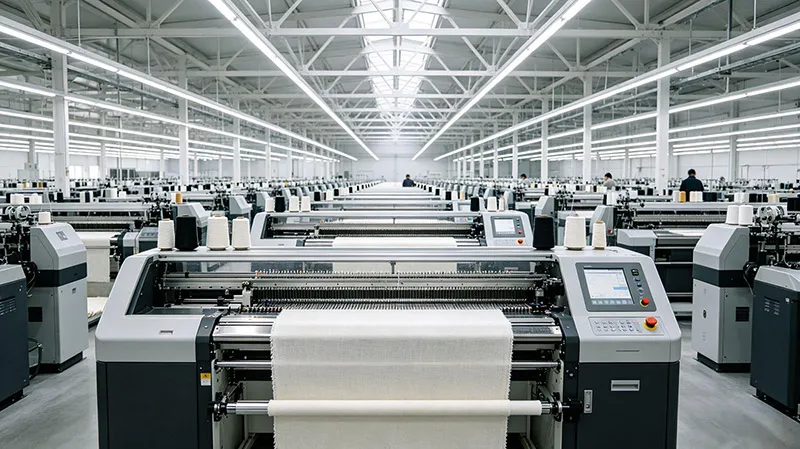
Knitting waste and MOQ: Recycled fibres (such as GRS recycled cashmere/cotton) contain more short staple fibres, resulting in higher breakage rates on computerised flat-bed knitting machines. Workshops need to budget 5–8% additional waste allowance and plan order quantities around the MOQ of certified yarns.
Cross-contamination prevention on the floor: At knitting, linking, and washing/milling stages, establish physically segregated zones. Certified materials must never be mixed with conventional fibres.
Garment packaging compliance: Specify GRS-certified recycled PE bags (≥30% recycled plastic content) for outer packaging—this directly helps UK buyers secure exemption from the UK Plastic Packaging Tax (PPT).
5. Actionable Sourcing Checklist for UK Buyers
Practical Checklist: Sourcing Certified Sustainable Knitwear from China
China is the primary source of imports for UK sustainable knitwear. To help UK buyers quickly verify a factory's genuine compliance capability before placing orders, sourcing teams should prioritise the following five critical questions when evaluating Chinese suppliers:
5 Critical Questions to Ask Your Knitwear Manufacturer
1. Does the factory itself hold a currently valid SC certificate?
Pitfall to avoid: Holding only an upstream yarn mill's certificate is not enough. The flat-bed knitting and linking factory (e.g., Guangzhou Junma Apparel) must itself hold a valid GRS/GOTS/RWS Scope Certificate to legally issue traceability documentation at the garment-making stage.
2. Can the factory issue an official TC covering the garment batch promptly after shipment?
Pitfall to avoid: Confirm whether the factory is familiar with the TC application procedures of certification bodies (e.g., Control Union, Intertek) and can provide the official TC closing documents within 60–180 days of shipment.
3. Do finishing chemicals comply with the ZDHC MRSL / GOTS approved list?
Pitfall to avoid: Wool anti-shrink agents, milling aids, and setting agents must comply with ZDHC MRSL or GOTS Approved Chemicals requirements to ensure no harmful chemical residues remain.
4. For low MOQ orders, is there a stock-service solution for certified yarns?
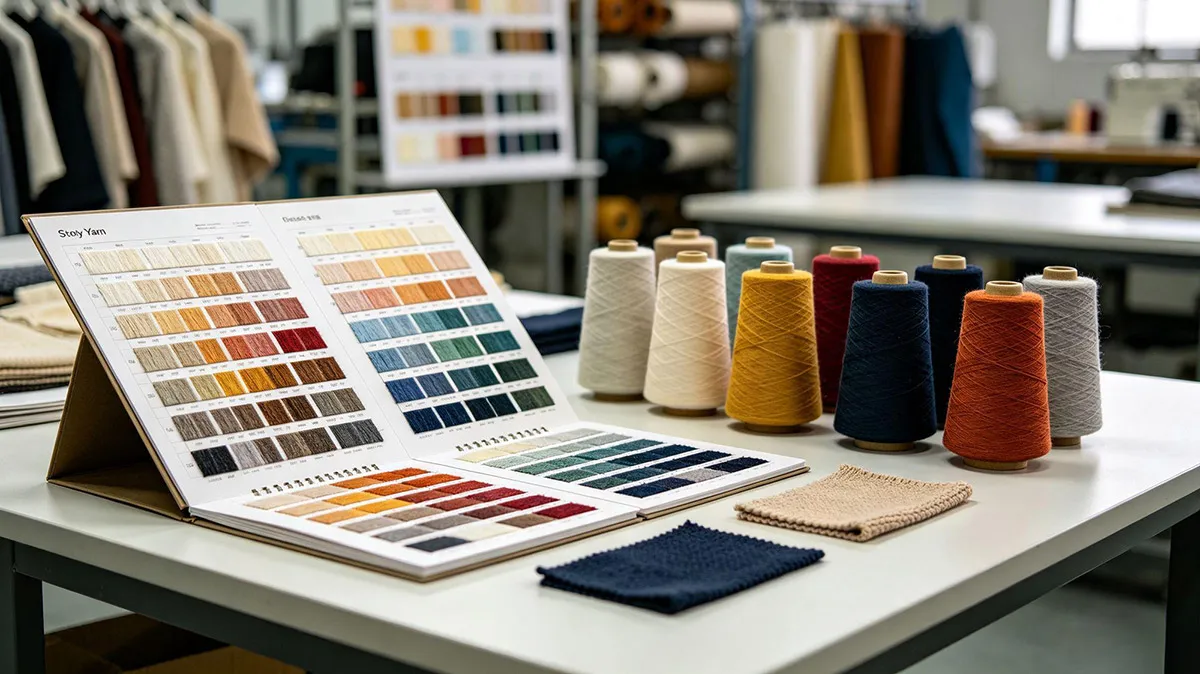
Pitfall to avoid: Ask whether the factory stocks colour-spun certified yarns such as GRS recycled cashmere and RWS merino wool—this helps emerging UK brands reduce MOQs and shorten sample development lead times.
5. Do outer packaging and hangtag layouts comply with the latest UK labelling guidelines?
Pitfall to avoid: Check whether the official logo usage and copy layout on garment hangtags have been reviewed and approved by the certification body, and whether packaging bags meet the UK recycled plastic content requirement (≥30%).
6. Conclusion & Call to Action
Partner with a Certified Knitwear Manufacturer for the UK Market
Against the backdrop of an increasingly stringent regulatory environment in the UK fashion market, a transparent, traceable knitwear supply chain that conforms to GRS, GOTS, and RWS certification is now the cornerstone for brands to mitigate CMA legal risk and build consumer trust.
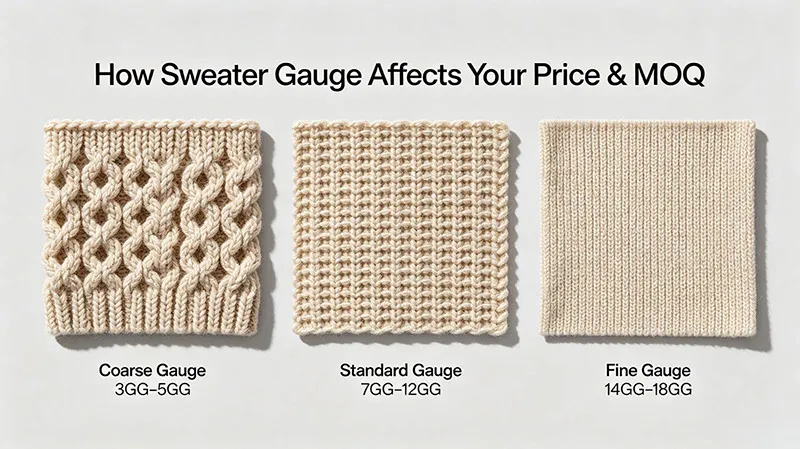
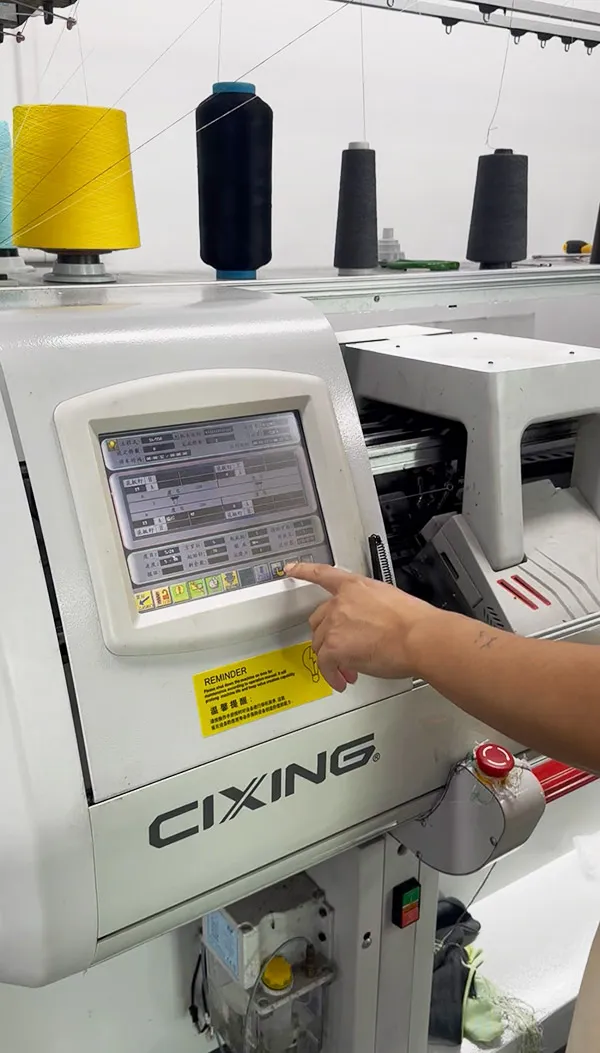
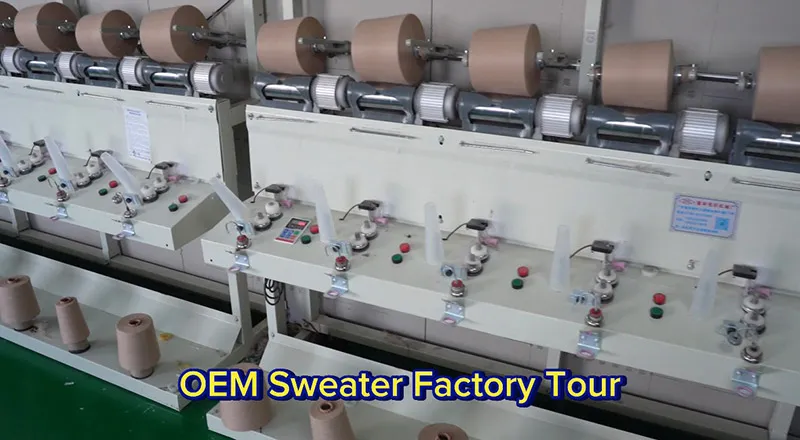
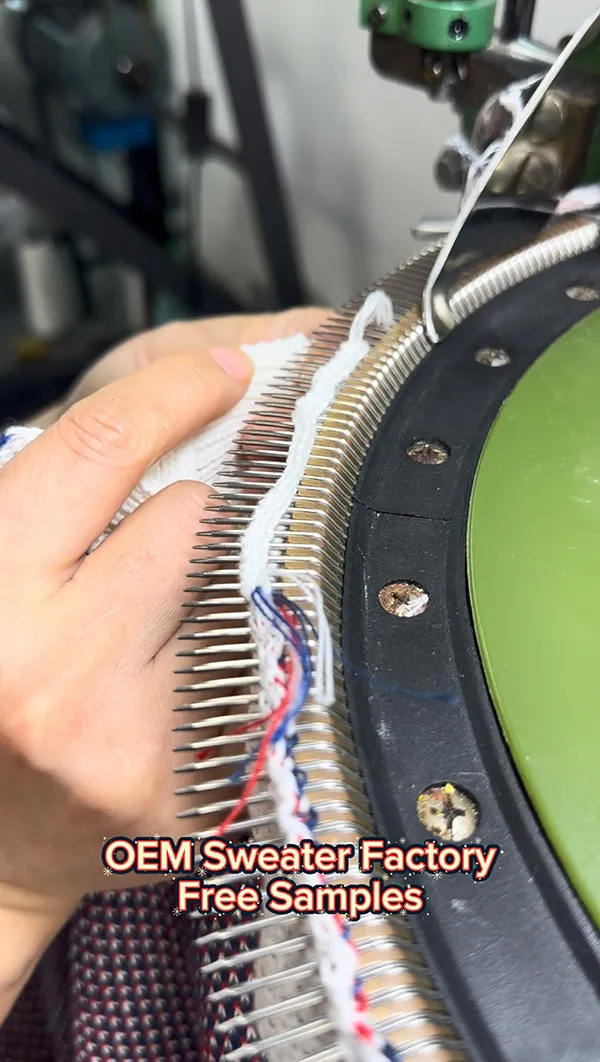
As a specialised factory with deep roots in knitwear manufacturing and export, Guangzhou Junma Apparel (JM Sweater) operates advanced computerised flat-bed knitting equipment and refined linking and finishing processes, and has fully established a compliant GRS, GOTS, and RWS supply chain traceability system. We offer precision knitwear development and production across the full 3GG–18GG gauge range, and can assist UK buyers in smoothly obtaining official batch-level TCs—ensuring your products fully meet UK market access and CMA compliant sustainable knitwear regulatory requirements.
Accelerate Your Sustainable Knitwear Sourcing
Looking for a reliable, compliant Chinese manufacturing partner for your next UK knitwear development season?
Request Certified Sample Pack
Request yarn colour cards & swatches (GRS recycled cashmere & RWS merino wool)
Verify Compliance Credentials
Review copies of our Scope Certificates (SC) at any time
Contact JM Sweater Team / Send Your Enquiry