





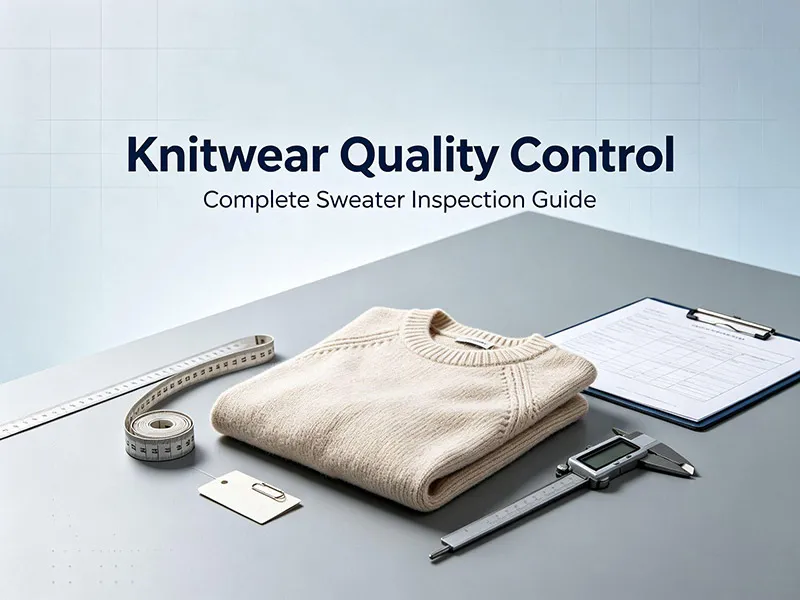
Knitwear Quality Control: Complete Sweater Inspection Guide
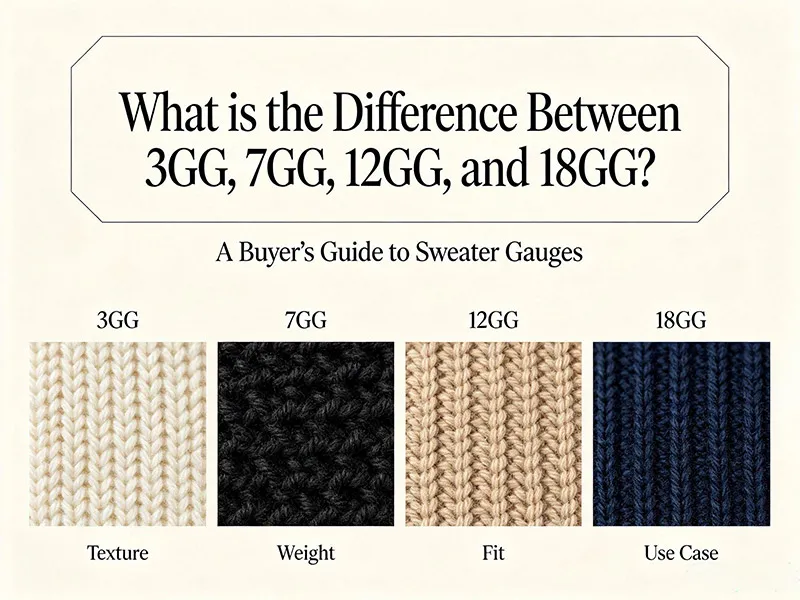
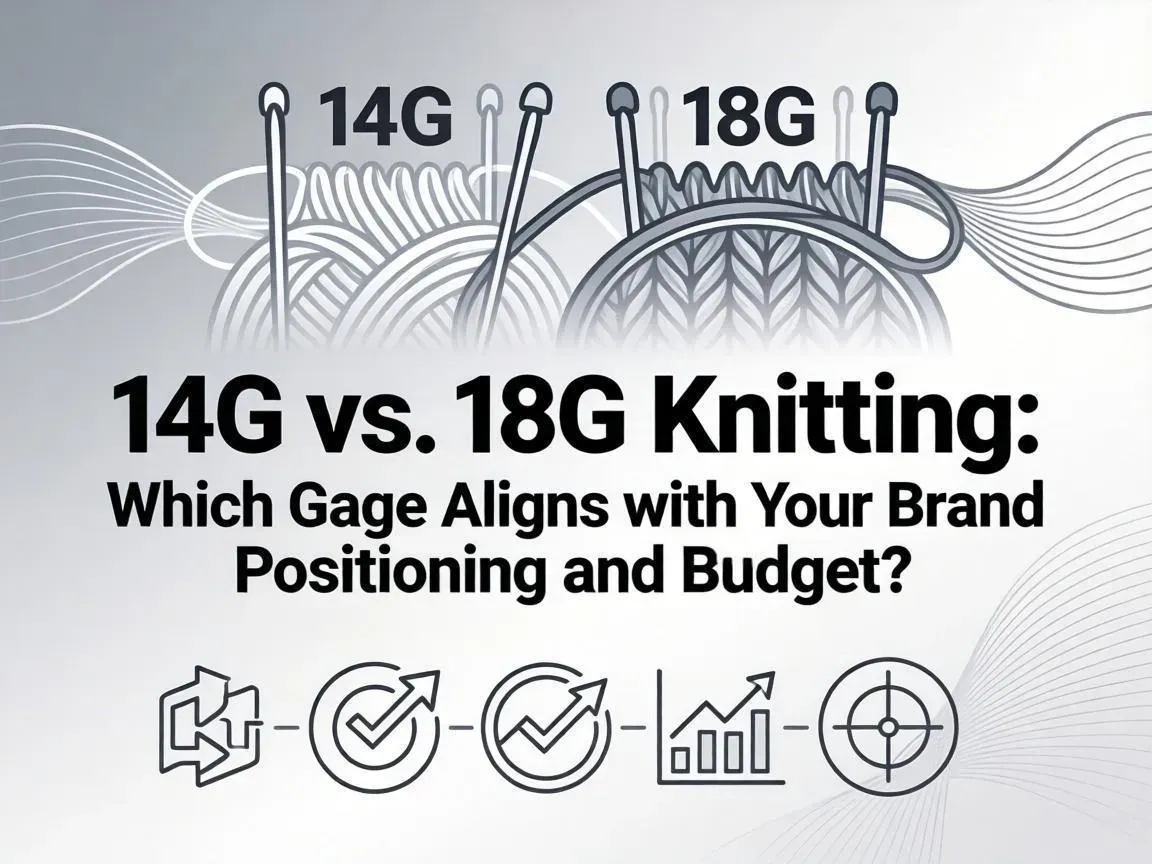
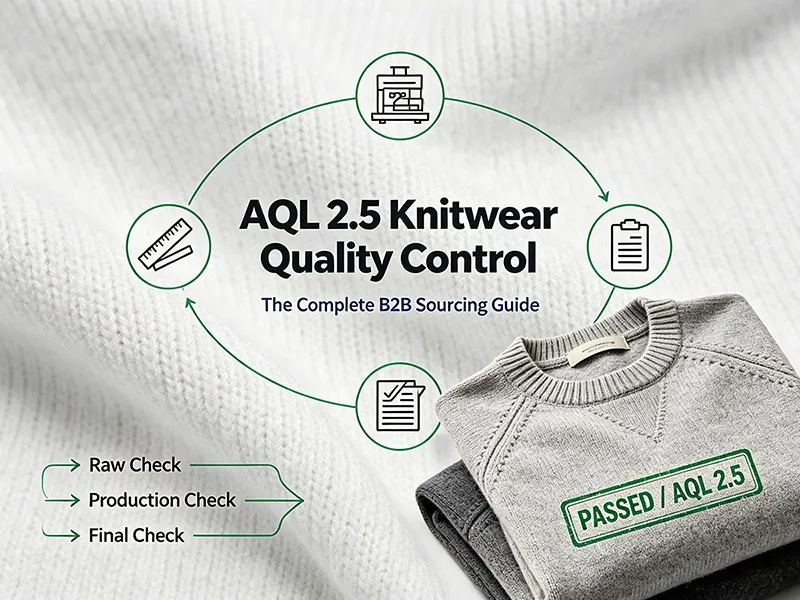
Subtitle:Sweater Manufacturer AQL 2.5, Torquing Prevention, Gauge‑Specific Checks, and Tolerances That Hold Up on the Measuring Table In cross-border knitwear sourcing and custom production, your Quality Control (QC) setup isn't just an inspection checkpoint—it’s the single biggest factor dictating your brand’s margin and survival. Unlike standard wovens, fully-fashioned knits are built loop by loop. Variable yarn tension, moisture regain, unpredictable relaxation shrinkage, and complex panel linking make knitwear inherently dynamic on the factory floor. Over the years, as a professional sweater manufacturer I’ve seen too many brands watch their profits burn over preventable finishing errors: distorted necklines, twisted side seams, premature pilling, or a dropped loop that unravels an entire panel in transit. Left unchecked at the mill, these micro-defects land squarely on the retail side—driving up return rates, damaging retailer relationships, and triggering costly chargebacks. To protect your shipments, we’ve broken down our factory-floor inspection framework into a practical playbook for international sourcing directors, technical designers, and buyers. Below is a breakdown of the core operational protocols covered in this guide: Why standard woven inspections fail on knitwear: How yarn mechanics, gauge tension, and structural elasticity force a completely different inspection approach. The five defects that actually cost you money – and how we stop them: Root causes and real-world countermeasures for spiralling, pilling, shading, and open seams before bulk packing. AQL 2.5/4.0 – thresholds that actually get used: A breakdown of sampling sizes, defect classification (Critical, Major, Minor), and pass/fail rules on the measuring table. Gauge-specific checks: 3GG is not 12GG: Tailoring inspection parameters to match the structural risks of coarse-gauge chunkies versus fine-gauge knits. Measurement POMs and the tolerance trap: Practical flat-lay protocols and realistic tolerance sheets that eliminate stretch disputes between buyers and factory QC teams. Tech Pack must-haves + handling third-party inspectors (SGS/ITS/BV): Aligning your spec sheets and factory SOPs to guarantee clean third-party field reports and zero-defect deliveries. Whether you're an established private-label brand scaling up seasonal bulk orders or a sourcing engineer tightening up your supplier quality agreement, this guide outlines the exact protocols needed to de-risk your knitwear supply chain from cone to carton. Why standard woven inspections fail on knitwear If your QC team uses a woven‑garment checklist on sweaters, you’re effectively writing off a percentage of your order before it leaves the factory. Wovens are cut from stable cloth; knits are loops that move. Tension, moisture regain, and yarn twist behave differently on every batch. I’ve personally watched S‑twist yarns wreck a 12GG production run in our Guangzhou facility simply because the steaming cycle wasn’t adjusted for that specific lot. The side seams spiralled so badly we had to pull the whole batch at the lightboard. The structural shift is simple: a broken thread in a woven stays local; a dropped loop in a knit can ladder the entire panel. So we measure different things: Tension & stress release – if the knitting stress isn’t steamed out, the garment shrinks or twists in the first home wash. Moisture regain – batch‑to‑batch humidity changes shift finished dimensions more than most buyers realise. Torquing – unbalanced single‑ply twist creates that ugly spiral effect. You can’t iron it out, and you can’t press it flat. We run three dynamic tests on every style: neck/cuff recovery (stretch it and see if it snaps back), light‑board scanning (every piece, no exceptions), and shade matching under D65/TL84 before linking. That last one catches dye‑lot mismatches that would otherwise only show up after packing. The five defects that actually cost you money – and how we stop them Defect What causes it Our fix on the floor Torquing / seam twist Over‑twisted yarn or uneven steam setting Pre‑knit reaming to relax twist; we slow the feed tension on the machine if the yarn feels tight; high‑temp steam set after knitting Pilling Short‑staple fibres or too much softener in the wash Switch to long‑staple/combed yarn; run a Martindale test at sample stage – if it scores below 3.5, we don’t cut Dropped stitches / holes Worn latch needles or poor linking Daily needle changes; 100% light‑board scan – zero tolerance. One hole, out of the shipment. Shading / dye‑lot variation Different dye batches or unstable vat temp Strict dye‑lot control; we hold back trims and body panels until they’re matched side‑by‑side under the lightbox Wash‑induced shrink No pre‑shrink allowance or mismatched blend rates Build 3‑5% shrink into the knitting programme; wash‑test the pilot sample and adjust before bulk Here’s a dirty little secret that doesn’t make it into the textbooks: some factories over‑stretch the rib during finishing just to hit the chest measurement on the table. That rib snaps back in transit, and suddenly your spec sheet is worthless. We check the relaxed state specifically to catch that – not the stretched number the production line wants to show you. AQL 2.5/4.0 – thresholds that actually get used We run General Inspection Level II for final random inspection. Critical defects are AQL 0 – one broken needle or a missing fibre label and the whole order stops. For a 2,000‑piece order, we pull 125 pieces. If we find 7 Majors and 10 Minors, the batch rolls. If Majors hit 8, we reject it on the spot. No debate. Real‑world classification (knits only): Major – dropped stitch, open linking seam, side‑seam twist >3%, measurement out of spec, obvious shading. Minor – loose thread >1cm inside, misplaced hang‑tag, light press mark. I’ve had third‑party inspectors flag a 2cm length difference on a heavy 5GG cable knit. We stopped the inspection, let that sweater relax flat for the full 24 hours, and re‑measured. It came back within tolerance. They signed the field report. That’s why we always build a relaxation hold into the FRI schedule – and we insist the inspector watches the re‑measure. Gauge‑specific checks: 3GG is not 12GG Coarse (3‑5GG) – gravity is your enemy. We never hang these; we measure after 24 hours flat. Linking strength gets a hard pull test at the shoulder. Mid (7‑9GG) – torquing and rib recovery are the trouble spots. We check side‑seam twist (must be ≤3%) and stretch neck/cuffs to verify snap‑back. If the rib doesn’t return, we add spandex in the next run. Fine (12‑14GG) – micro‑holes and density. 100% lightboard scan; we use a density glass to check courses and wales per inch and hold ±3% across the batch. Measurement POMs and the tolerance trap Never measure straight out of the polybag. That’s a rookie mistake that costs buyers thousands in false chargebacks. Our protocol: flat‑lay for 2‑4 hours (24 hours for coarse gauges), no stretching, non‑stretch steel tape. Core POMs we actually use: Body length – HPS to hem (including rib) Chest width – half measure, 1” below armhole Shoulder – seam to seam Sleeve length – from CB neck to cuff Neck width/depth – at seam and from back neck to front dip Tolerance sheet (by gauge): POM Fine (12‑14GG) Mid (7‑9GG) Coarse (3‑5GG) Heavy texture Body length ±1.0 cm ±1.2 cm ±1.5 cm ±2.0 cm Chest (half) ±0.8 cm ±1.0 cm ±1.5 cm ±1.5 cm Shoulder ±0.8 cm ±1.0 cm ±1.2 cm ±1.5 cm Sleeve ±1.0 cm ±1.2 cm ±1.5 cm ±2.0 cm Neck ±0.5 cm ±0.8 cm ±1.0 cm ±1.0 cm If the yarn has high spandex content, we add 0.3‑0.5cm on horizontal measures – but we flag that in the Tech Pack before production, never after the fact. Tech Pack must‑haves + handling third‑party inspectors (SGS/ITS/BV) Over 40% of disputes we mediate come down to one thing: the Tech Pack doesn’t specify the relaxed state. Yours must include: Yarn blend and count (e.g. 2/28NM) plus dye method Gauge and stitch structure, with a max float‑length limit A clear POM diagram – not just text Pantone reference and light‑source priority (D65 > TL84) Label position, thread spec, and packing details Performance numbers: pilling ≥3.5, colourfastness ≥4, shrink ≤3% For the 3rd‑party inspector: we give them a dedicated table, lightbox, and lightboard. The checklist they use must match the approved PP sample to the letter – no last‑minute tolerance changes. If they flag an out‑of‑spec measurement, our QC lead has the right to stop the process, re‑relax the piece, and re‑measure on the spot. We photograph the disputed point, sign the field report together, and keep a sealed sample for appeal. Final word (straight to the point) Knitwear quality isn’t inspected in at the end – it’s built into the yarn tension, the relaxation time, and the gauge‑specific checkpoints. If your Tech Pack doesn’t already specify the relaxed state and the recovery test, we’ve got a gap to close before we cut a single cone of yarn. If you’re sourcing knitwear and want a partner who runs these protocols daily – and who will flag the risks before they become chargebacks – send your Tech Pack over. Our technical team will give you a no‑cost feasibility read, a tolerance sample to check our finishing standards, and a supply‑chain risk review specific to your next season.