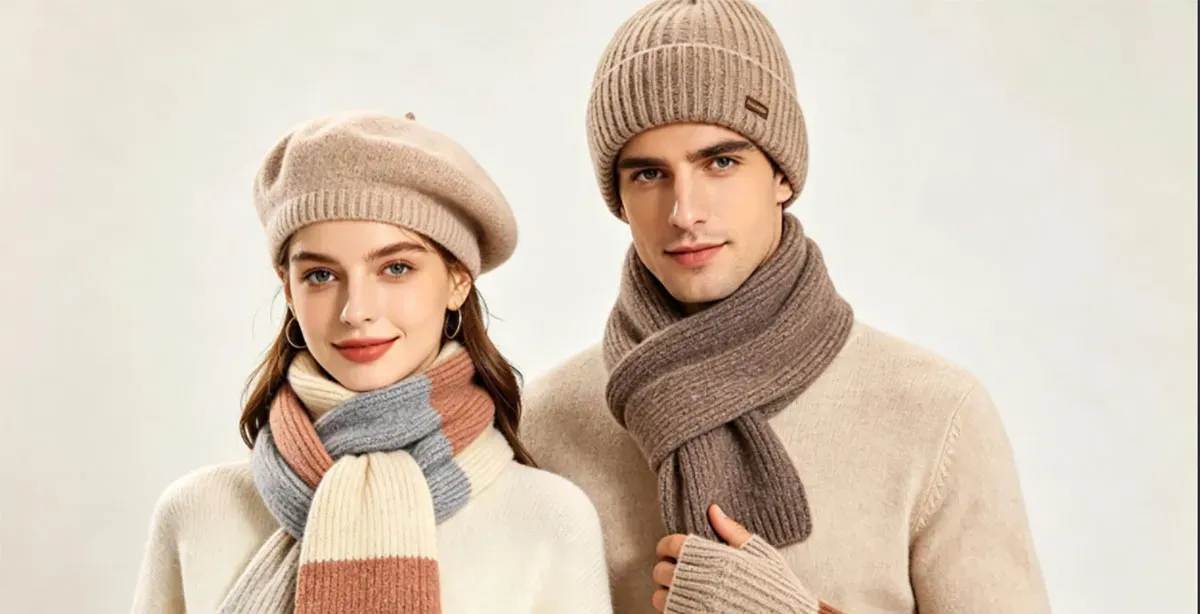

European and North American buyers have tightened their environmental sourcing rules fast. Brands that run loud "recycled fabric" claims in their marketing, then fail to produce paperwork when customs or an auditor asks, end up in the same place: a greenwashing headline and a damaged account.
For sourcing directors, picking a supplier with real GRS certification is no longer a nice-to-have line on a sustainability report. It's a compliance requirement. Miss it and your shipment can sit at port.
As a professional knitwear manufacturer, JM Sweater has been building sweaters for export markets for 21 years. We've watched a lot of supply chains break at the same weak points — usually between the yarn supplier's invoice and the finished garment's shipping carton. Real sustainable knitwear isn't a roll of yarn with an eco label on it. It's a paper trail. One that starts at plastic bottle collection, runs through fiber spinning, and ends with a Transaction Certificate attached to your specific order.
Here's how that trail actually works on our factory floor.
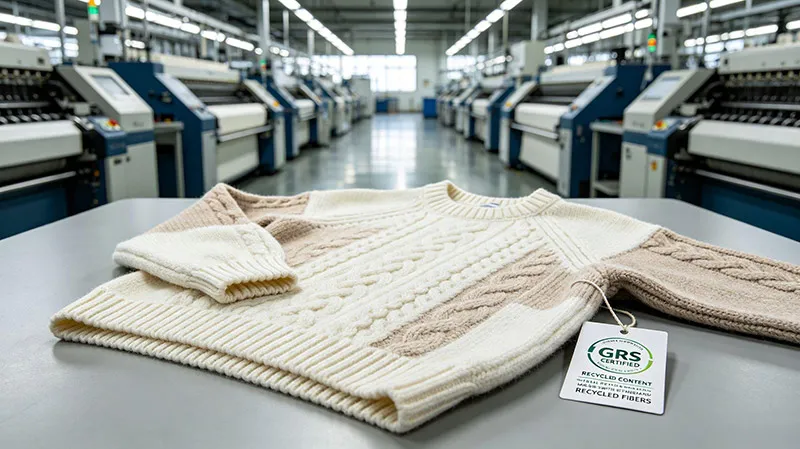
No SC Certificate, No Yarn: Our Raw Material Standard
The biggest traceability failure happens before a single cone hits the machine. Buyers often assume a yarn supplier's word is enough. Under GRS v4.0, it isn't.
Before we quote recycled polyester, recycled cotton, or recycled wool, we verify the spinner's Scope Certificate (SC). Not a copy from three years ago — an SC that's within its one-year validity window, with the certified product scope and recycled content percentage that matches what you're ordering.
If the numbers don't line up with the order, we don't buy. If there's no valid SC at all, we walk away, no matter how good the price looks. This is the first gate in eco-friendly knitwear sourcing, and it's non-negotiable. A cheap yarn without certification is the most expensive mistake on this list.
Why Physical Segregation Beats Good Intentions
Compliant recycled yarn arrives at the warehouse. Now the harder part starts.
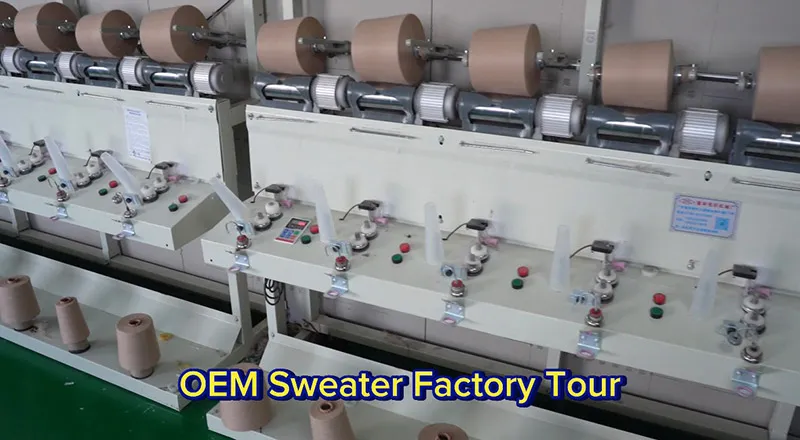
GRS requires physical segregation. That means your recycled yarn does not sit next to virgin yarn, does not share a bin, and does not share a paperwork system. We assign dedicated storage zones with their own material codes, logging batch numbers, recycled content, supplier details, and receipt dates.
Segregation doesn't stop at the warehouse door. It follows the yarn onto the production floor:
- Dedicated flow bins and route cards for GRS material only
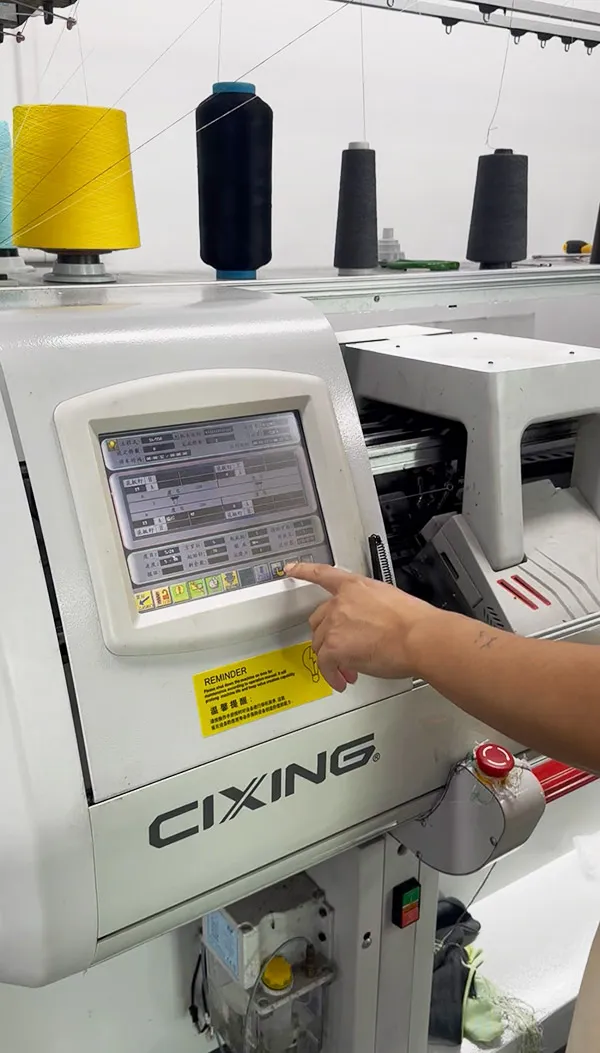
- Separate knitting positions on our STOLL computerized flat knitting machines, from 1.5GG heavy-gauge through 18GG fine-gauge
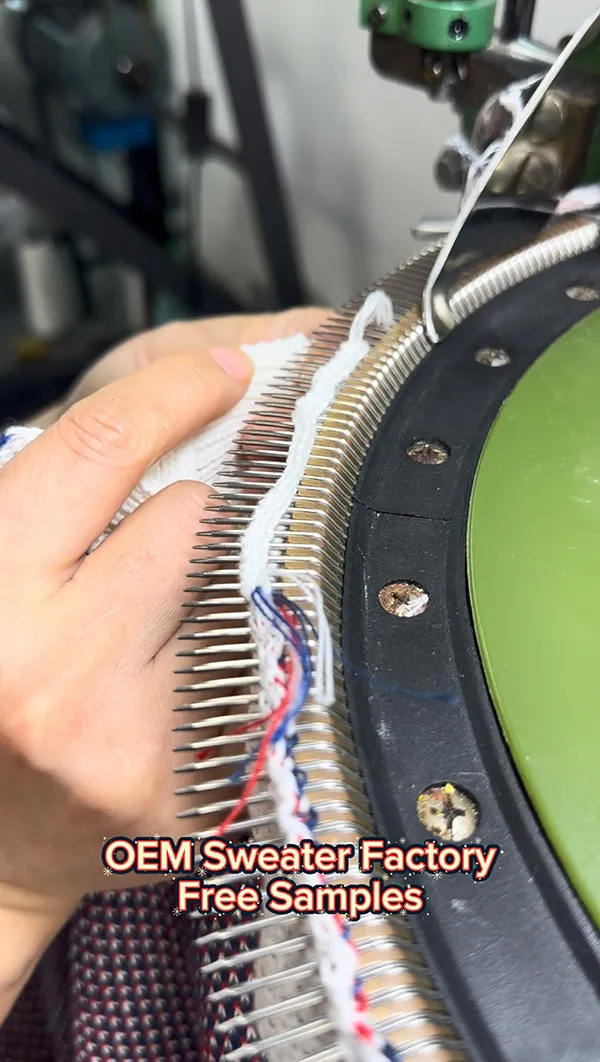
- Isolated hand-linking and seam-linking stations, where operators assemble panels loop by loop
- Separate waste collection containers, labeled and weighed
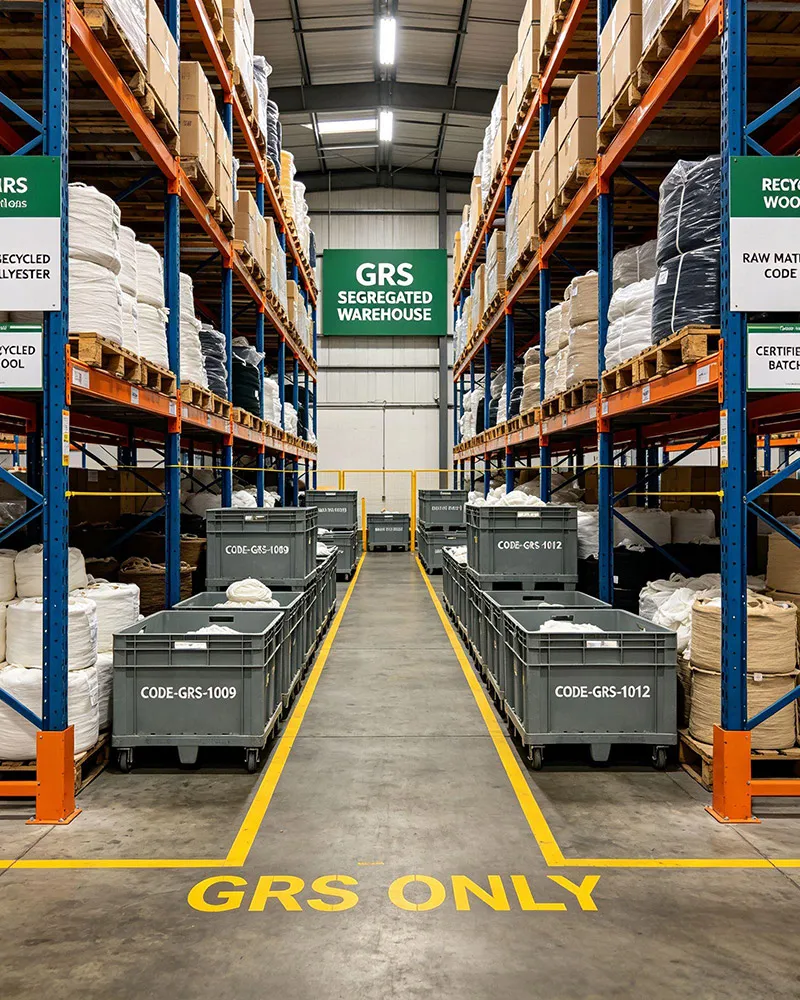
Cross-contamination is usually a housekeeping problem, not a technology problem. A factory that runs recycled and virgin yarn through the same bin is one audit away from losing its certification. We treat the separation as a physical wall, not a policy document.
Mass Balance: The Math Auditors Actually Check
Mass Balance accounting is where a factory's management systems get tested. The logic is simple to state and hard to execute: kilograms of recycled yarn in, minus documented loss, must equal kilograms of certified garment out. You cannot put in 100 kg and ship 150 kg of "recycled" sweaters.
Loss varies by gauge and structure. A 1.5GG chunky knit and an 18GG fine-gauge sweater consume yarn very differently, and a cable or jacquard structure wastes more than a plain jersey. Before production starts, we build a consumption model per style so the input weight and the planned output weight reconcile from day one.
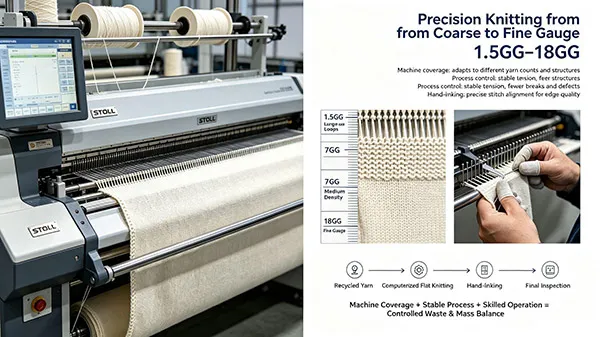
Tracking loss through every stage
A finished sweater passes through panel knitting, hand-linking, seam linking, washing, and steam pressing. Each stage loses material — trimmings, yarn tails, shrinkage.
We log it. Offcuts from linking and trimming get collected, weighed, and recorded separately. Washed and pressed garments get re-weighed before packing. That running loss sheet is what makes the final numbers hold up when an auditor compares purchase records to shipping documents.
It also means fewer surprises when you apply for your TC.
The TC Is the Only Document That Proves Your Sweaters Are Recycled
This is the trap most brands fall into. A supplier shows a valid SC and the buyer assumes the order is covered.
It isn't. The Scope Certificate certifies the facility. The Transaction Certificate (TC) for sweaters certifies your shipment. Without a TC tied to that specific order, a 100% recycled-yarn sweater is treated as uncertified product by customs and by retail compliance teams. Same garment, different legal status.
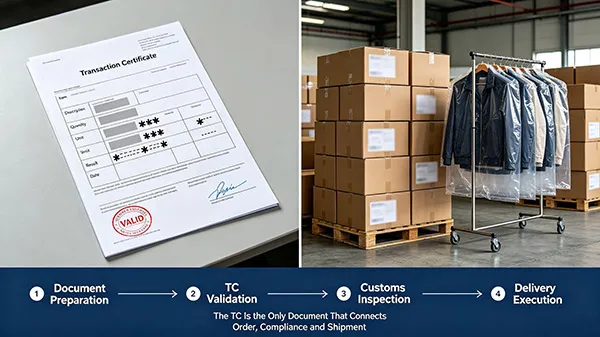
Closing the TC loop from shipment to certificate
Once production finishes and goods are ready to ship, the clock starts on the TC application. It's a data reconciliation exercise:
- Collect the paperwork — the yarn mill's original TC, raw material purchase invoices, the commercial invoice, packing list, and Bill of Lading.
- Submit to the certifier — Control Union, Intertek, or whichever body issued the SC, along with our internal loss sheets and Mass Balance reconciliation.
- Verify material flow — the certifier confirms that the recycled yarn weight purchased matches the shipped garment weight within accepted loss tolerances.
- Issue the TC — the certificate is issued for that order, and your compliance file is complete.
For a brand with ESG reporting obligations, that document is the difference between a defensible claim and an accusation. We run TC applications for our export clients as part of the standard service, not as an upsell.
Low MOQs for Emerging Sustainable Brands: 50 Pieces Per Style
Traditional knitwear supply chains make GRS collections painful for small brands. Spinners set MOQs of several hundred kilograms on recycled yarn. That requirement kills the project before the first sample.
We think that's a bad way to run a factory in 2026.
By keeping compliant recycled yarns in stock and running flexible production scheduling, we've cut the entry barrier down:
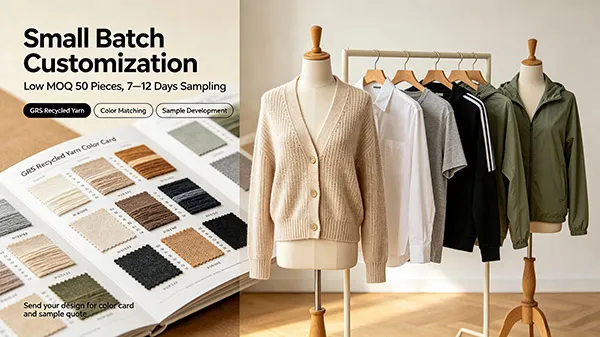
- Sampling in 7–12 days — send a tech pack or reference garment, we handle fit adjustments and knit the sample so you can check hand-feel and stitch definition before committing
- 50 pieces per style, per colorway — low enough for a test drop or a limited release
- Full GRS protocol on small runs — segregation, Mass Balance, and TC eligibility apply whether you order 50 pieces or 5,000
A 50-piece order goes through the same STOLL machines and the same hand-linking stations as a large program. There's no "small order, loose standards" tier here. That's the point of a sustainable sweater factory low MOQ model — it gets new brands into certified production without forcing them to gamble on inventory.
Build the Collection, Keep the Paperwork
A sustainable knitwear line that survives customs, retail audits, and a journalist's questions comes down to one decision: which factory you trust with it. The claims are easy. The traceability is the work.
JM Sweater holds GRS certification alongside BSCI and OEKO-TEX Standard 100, and we've spent two decades building export manufacturing systems that hold up under third-party review. That covers recycled yarn sourcing, warehouse segregation, Mass Balance accounting, STOLL flat knitting, hand-linking, and TC issuance support. Whether you need custom recycled polyester sweaters in bulk or a 50-piece capsule to test the market, the compliance standard doesn't move.