
I. Introduction: The Delicate Balance of UK Independent Fashion
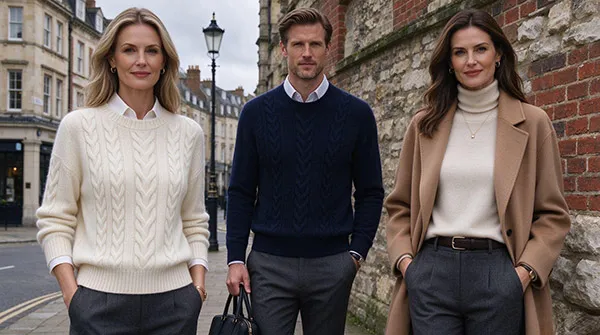
From Scottish cable knits to breakout talent at London Fashion Week, the UK carries genuine knitwear heritage. Yet independent brands — particularly SMEs — are navigating brutal conditions. Post-Brexit customs clearance costs and the ongoing cost of living crisis have squeezed cash flow from both ends.
Traditional knitwear factories demand 500–1,000 pieces per colour as standard. That means brands must lock up tens of thousands of pounds in stock before a single unit sells. When a style underperforms, deadstock piles up, forcing markdowns that erode both full-price sell-through rates and brand positioning.
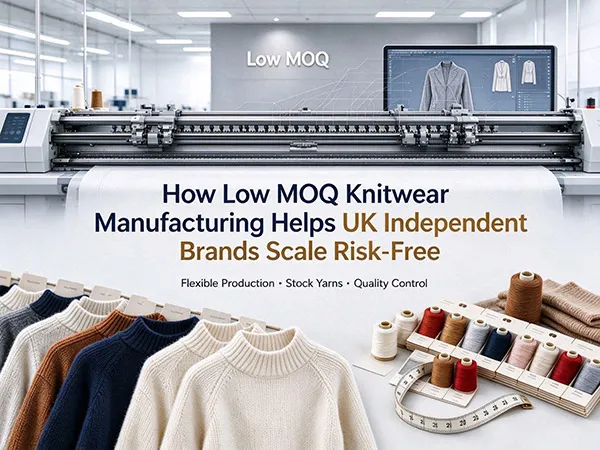
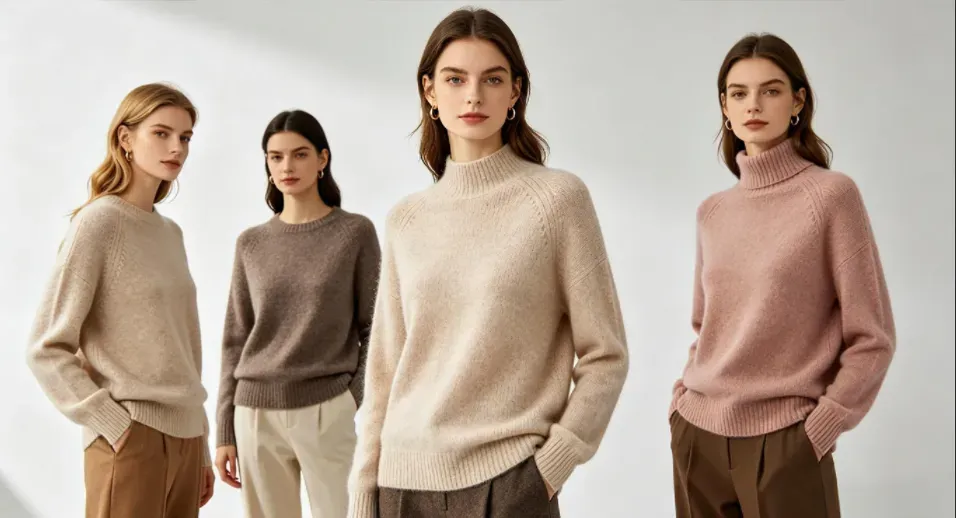
Against cautious consumer spending and unpredictable British weather, partnering with a flexible low MOQ OEM knitwear manufacturer has shifted from nice-to-have to essential strategy. With 30–50 pieces per style, brands can test the market with minimal capital, launch micro-drops, and protect cash flow while scaling without the inventory risk.
So how does low MOQ actually work — financially and operationally? Let's break down the commercial mechanics.
II. The Business Logic: How Low MOQ Eliminates Scaling Risks
For UK independent knitwear brands, low MOQ isn't just about smaller order quantities. It's a different operating model entirely.
1. Capital Efficiency & Cash Flow
Traditional sourcing locks brands into forecast-driven buying. Most working capital sits in unsold inventory. Low MOQ flips this to demand-driven: brands invest a third — or less — of the usual capital into an initial production run, then redirect the savings into social media, community building, and multi-channel expansion. Capital turnover improves dramatically.
2. Margin & Brand Equity Protection
Deadstock from high MOQs is the single biggest threat to mid-to-premium brand positioning. It drags brands into perpetual discounting. Small-batch production naturally supports high full-price sell-through rates. No need to clear stock through markdowns. Gross margins hold. Brand equity stays intact.
3. UK Market Agility
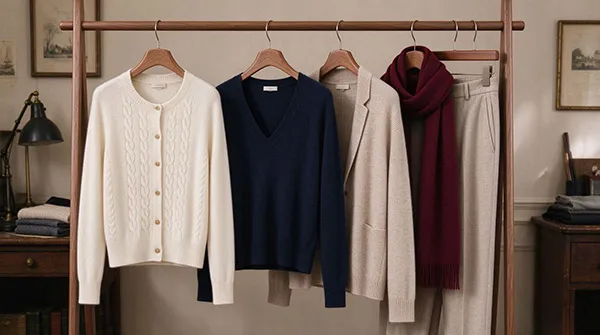
British weather is trans-seasonal and unpredictable. A single large seasonal buy rarely aligns with actual demand. Low MOQ lets brands run frequent micro-drops and low-cost A/B tests — say, a 14GG fine-gauge base layer alongside a 7GG chunky cable knit. Real market feedback tells you what to cut and what to replenish fast. Quick replenishment on winners, zero inventory risk on losers. That's scaling on your terms.
III. Under the Hood: The Knitwear Technology Enabling Low MOQ
Low MOQ isn't just factories being generous. It's the result of real advances in knitwear manufacturing technology.
1. Automated Computerised Flat-Bed Knitting
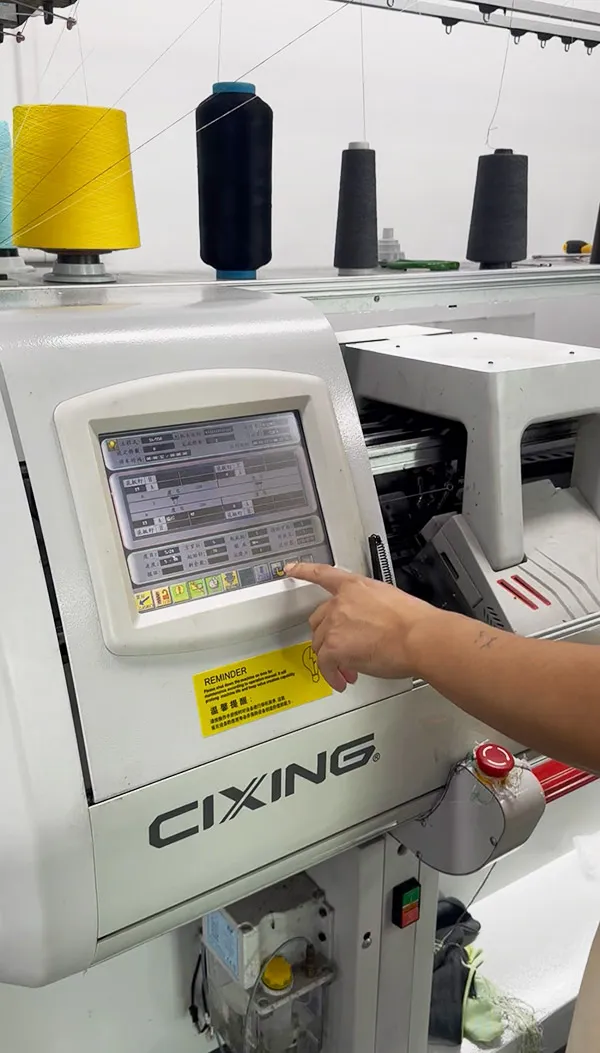
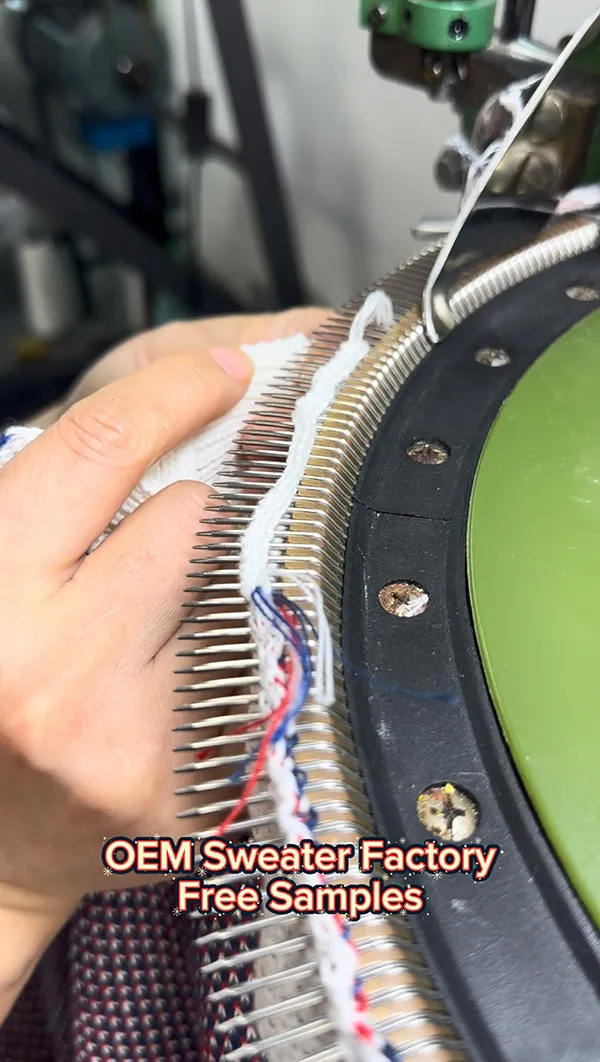
Traditional mechanical flat-bed machines carry high setup costs that only large orders can absorb. Advanced computerised flat-bed machines from Shima Seiki or Stoll change that. Technicians modify CAD knitting programmes to switch patterns and gauges. This digital knitting process slashes changeover costs, making 30–50 piece runs viable on mixed production lines.
2. Stock-Service Yarns
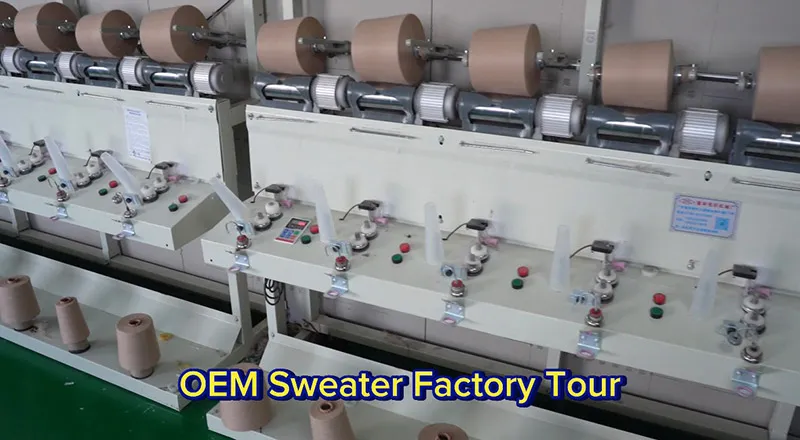
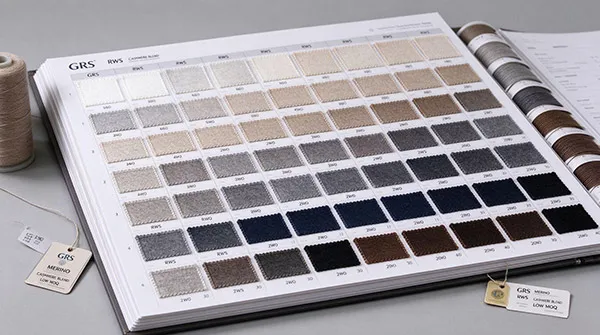
The real bottleneck on MOQ has always been yarn dyeing minimums — often 100kg or more per shade. Stock-service yarn collections solve this. With ready-to-knit merino wool, organic cotton, and cashmere blends held in stock, factories skip custom dyeing entirely. No yarn MOQ barrier. Fast start on the machine.
3. 3D Digital Sampling
3D virtual knitting and sewing simulation software eliminates the weeks-long physical sample back-and-forth. Silhouette confirmation, gauge selection (14GG or 7GG), jacquard colourways — all rendered and adjusted on screen in real time. Sample approval drops from weeks to hours. Development costs fall accordingly.
4. Zero-Waste & ESG Compliance
The UK market scrutinises sustainable supply chains closely. Low MOQ inherently avoids overproduction. Paired with GRS (Global Recycled Standard) and RWS (Responsible Wool Standard) certified yarns, it gives independent brands a credible ESG-compliant supply chain.
IV. Strategic Guide: How UK Brands Should Execute a Low-MOQ Strategy
Adopting low MOQ isn't just about picking a supplier. It requires brand-side discipline in product planning and supply chain management. Three practical moves:
1. Build Capsule Collections Around Shared Base Yarns
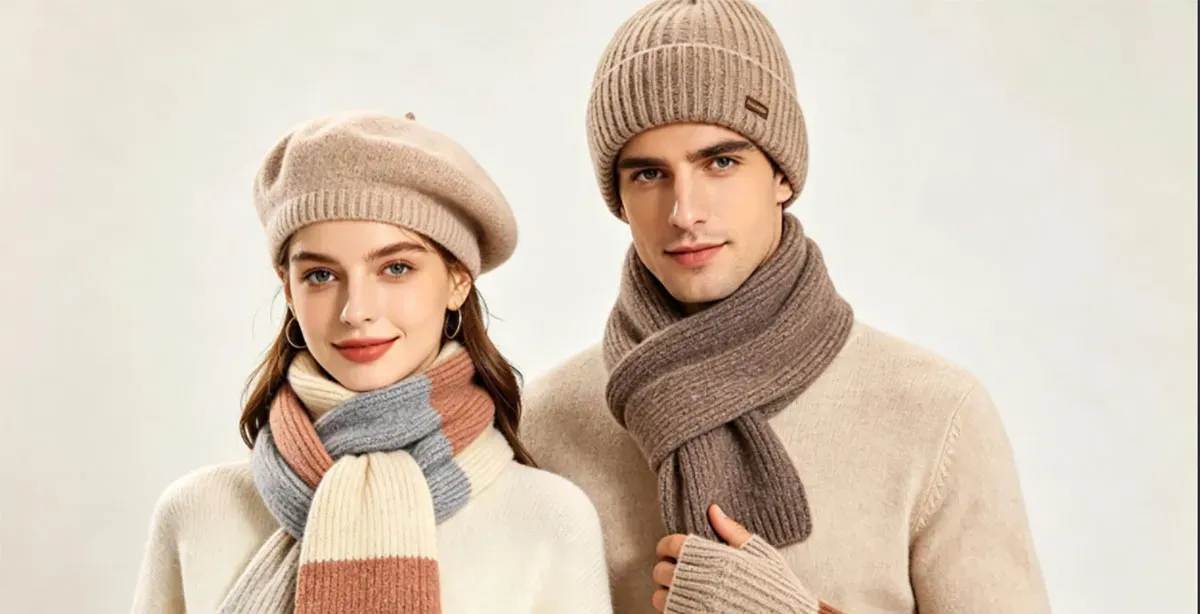
Concentrate on one or two high-quality stock-service yarns — 100% merino or GRS-certified recycled yarn, for example. Extend across cardigans, V-necks, and scarves on the same yarn base. Yarn sharing spreads the procurement threshold across multiple styles. Richer product line, lower total material cost.
2. Optimise Tech Packs Using Standard Base Patterns
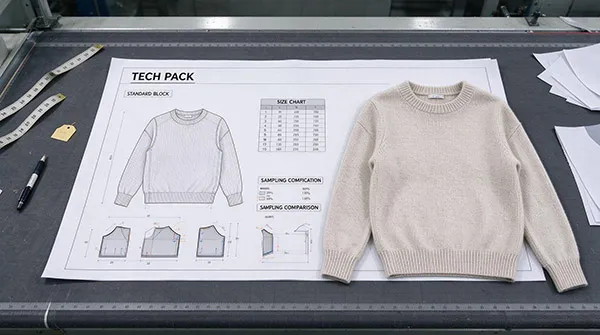
Skip reinventing the wheel. Use the factory's established base pattern library, then adjust necklines, cuffs, or add bespoke jacquards and cables. This agile tech pack approach eliminates repeated sampling and pattern revision. Sample approval and bulk production both move twice as fast.
3. Evaluate Total Cost of Ownership — Not Just FOB
Small-batch FOB pricing may run 10–15% higher per unit. But ROI calculations must factor in total cost of ownership:
Low MOQ eliminates up to 70% of end-of-season surplus risk and markdown losses. That releases cash flow and protects actual net profit.
V. The Bridge: What to Look for in a Flexible Knitwear Partner
Turning low MOQ strategy into competitive advantage depends on choosing a manufacturing partner with genuine flexible production capability. UK independents should vet suppliers on three core criteria:
1. Stock-Service Yarn Availability
Does the supplier hold a comprehensive in-stock yarn library? Can they consistently offer yarns suited to UK market preferences — high-gauge worsted wool, shrink-resistant cotton blends, GRS/RWS certified sustainable options? This directly determines whether you can skip dyeing MOQs and start at 30–50 pieces per style.
2. Strict QC & Testing Standards
Small orders don't mean compromised quality. A capable factory runs rigorous inspection protocols — AQL 2.5/4.0 standards — and provides test data on anti-pilling (Grade 4+), shrinkage control, and knit tensile strength. Every garment should meet UK mid-to-premium retail quality requirements.
3. UK Sizing & Compliance Experience
Does the factory understand UK sizing standard bust ease and sleeve length calibration? Can they handle post-Brexit customs documentation and BS EN safety standards? A manufacturing partner with this experience prevents sizing discrepancies at the pattern development stage, reducing return rates.
Frequently Asked Questions (FAQ)
Q1: Does a low MOQ mean a significantly higher cost per unit?
A: While the unit FOB price for a 30–50 piece order may be 10–15% higher than a mass order of 1,000 pieces, the Total Cost of Ownership (TCO) is significantly lower. By eliminating deadstock write-offs and markdown losses on unsold inventory, your net margin and cash flow remain fully protected.
Q2: What is the typical lead time for small-batch knitwear production?
A: By utilising stock-service yarns and 3D digital sampling, initial sample confirmation takes 3 to 5 days. Bulk production for a low-MOQ run (30–100 pcs per style) generally requires 15 to 25 days, depending on design complexity and machine scheduling.
Q3: Do I need to pay for sampling, and is it refundable?
A: Yes, physical sample development requires a nominal fee to cover programming and machine setup. However, sample fees are fully credited or refunded once you confirm and place the bulk production order for that style.
Q4: Can low-MOQ orders still provide eco-certifications like GRS or RWS?
A: Yes. By leveraging our certified stock-service yarn collection, your low-MOQ production can be issued official GRS (Global Recycled Standard) or RWS (Responsible Wool Standard) transaction certificates, ensuring complete ESG compliance for your UK brand.
VI. Partnering for Risk-Free Scaling
In a competitive and uncertain UK fashion market, low MOQ manufacturing has moved beyond a production choice. It's a strategic foundation for independent brands to protect cash flow, reduce inventory write-offs, and achieve lightweight scaling. By leveraging stock-service yarns, 3D digital sampling, and agile capsule development, small and mid-sized brands can control their product cadence without sacrificing quality or margin.
About Us
As a specialist B2B knitwear manufacturing and export partner, Guangzhou Junma Apparel (JM Sweater) understands the supply chain pressures facing UK independent designer labels and growing fashion businesses.
To help emerging brands eliminate inventory risk and scale without exposure, we've built a highly flexible knitwear manufacturing system:
- Flexible Low MOQ: 30–50 pieces per style. Test real market demand with minimal commitment.
- Stock-Service Yarn Collection: Multi-colour in-stock yarns including GRS-certified recycled, RWS responsible wool, and high-gauge worsted blends. No dyeing MOQ wait.
- Efficient Development & Strict QC: 3D digital sampling combined with Shima Seiki automated flat-bed knitting. AQL 2.5 inspection standards across all lines. Patterns calibrated to UK sizing standards.