
——A Must-Read Guide for Brand Procurement Managers
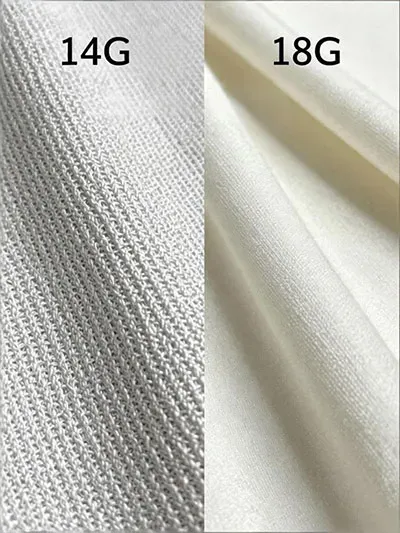
14G vs.18G
14G vs.18G
In knitwear manufacturing, choosing between 14G and 18G isn’t just technical—it shapes your finished product’s texture, pricing, and brand positioning. As a brand procurement manager, nailing these core differences is non-negotiable for purchasing decisions that fit your brand’s goals.Drawing from our extensive experience as a sweater manufacturer, we’ve handled dozens of knitwear procurement projects, and this guide cuts through the jargon to what you actually need to know.
💎What is Knitting Gauge?
“G” stands for Gauge—simple enough, it’s the number of needles per inch on a knitting machine’s needle bed. Higher gauge = finer, denser fabric; lower gauge = looser, heavier knit. No fancy wording here—just the basics you need to avoid miscommunication with suppliers.
In the industry, 14G and 18G both count as fine gauges, great for lightweight, smooth knitwear. 14 needles per inch (14G) vs. 18 needles per inch (18G)—that 4-needle gap? It makes a world of difference in quality and feel. I’ve seen brands mix these up, leading to costly reworks, so getting this right upfront saves headaches.
🔥Five Core Comparisons Between 14G and 18G
1. Yarn Compatibility and Fabric Weight
First rule: Match gauge to yarn thickness. Thick yarn won’t work on a high-gauge machine; thin yarn slips on a low-gauge one. Skip this, and you’ll end up with fabric that’s either too flimsy or too stiff—we’ve all been there.
14G works best with yarns from 2/26Nm to 2/60Nm. The result? Medium-weight fabric with good structure—perfect for business sweaters, contemporary knit tops, and versatile pieces that balance style and wearability. It’s the workhorse of most knitwear lines, no frills, just reliable.
18G is pickier: it needs ultra-fine yarns (2/48Nm or higher), yielding an extremely lightweight, delicate fabric. Think cashmere and premium merino—pieces where softness and refinement are make-or-break. A common mistake I hear? “Higher gauge = less warm.” Wrong. Denser stitches mean smaller gaps, so 18G locks in heat better than 14G, even at the same thickness.
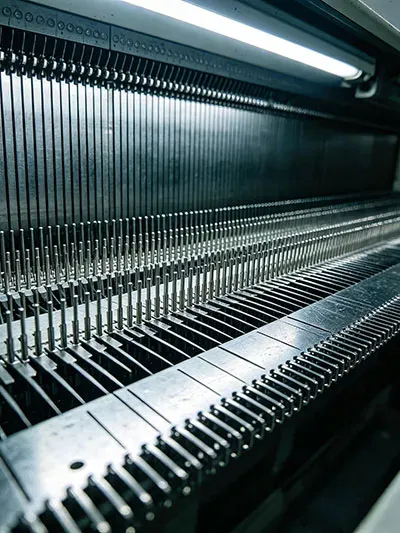
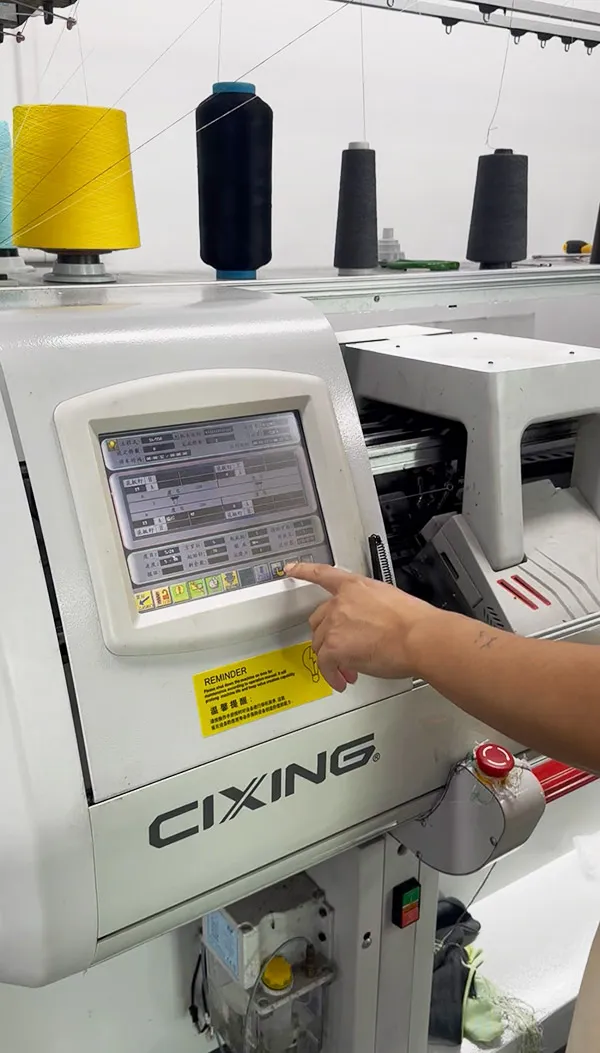
18G Knitting Machine
2. Hand Feel and Appearance
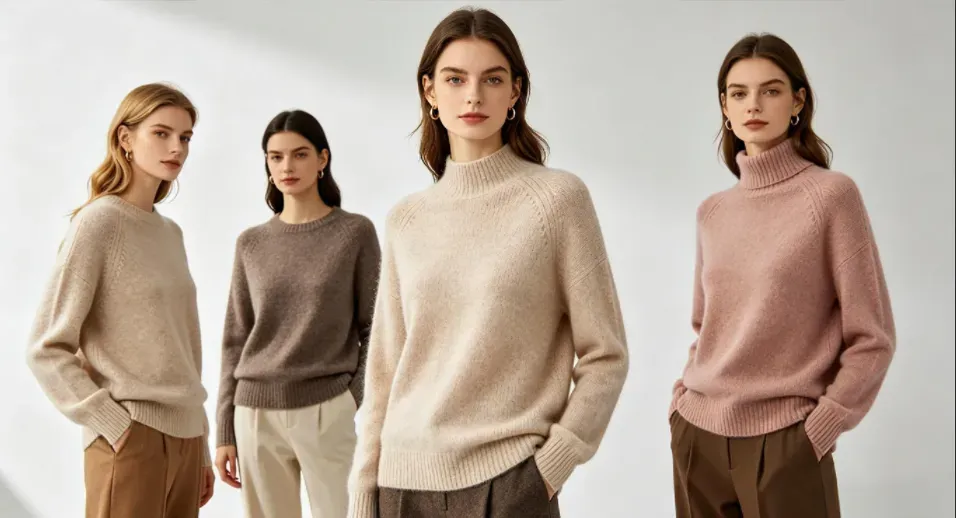
14G has a smooth surface with visible stitches—classic knit texture, balanced between structure and comfort. Gauges 12G to 14G are our go-to for business and professional attire; they’re versatile, polished, and don’t look too casual or too formal. Suppliers love working with 14G for this reason—it’s consistent and easy to scale.
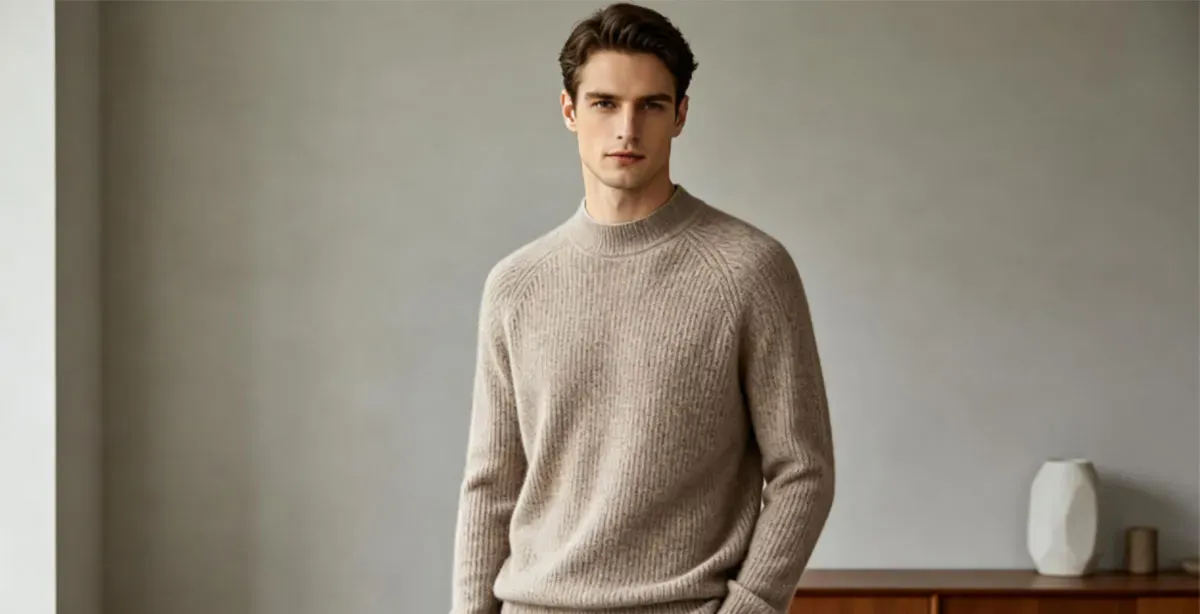
18G is next-level fine. Stitches are barely visible, and the surface feels like woven fabric but retains knitwear’s stretch and comfort. Its dense, sleek finish is why luxury brands use it for cashmere pieces, high-end polos, and premium knits that scream understated elegance. It’s not just fabric—it’s a tactile selling point for your brand.
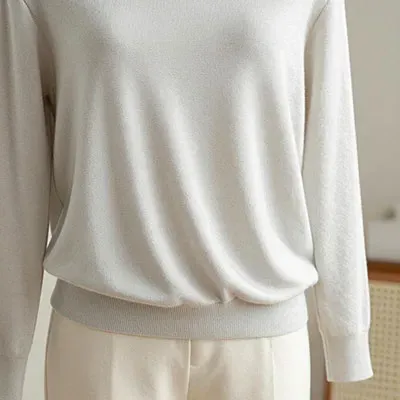
High-end 18G Knitwear
14G has a smooth surface with visible stitches—classic knit texture, balanced between structure and comfort. Gauges 12G to 14G are our go-to for business and professional attire; they’re versatile, polished, and don’t look too casual or too formal. Suppliers love working with 14G for this reason—it’s consistent and easy to scale.
18G is next-level fine. Stitches are barely visible, and the surface feels like woven fabric but retains knitwear’s stretch and comfort. Its dense, sleek finish is why luxury brands use it for cashmere pieces, high-end polos, and premium knits that scream understated elegance. It’s not just fabric—it’s a tactile selling point for your brand.
High-end 18G Knitwear
3. Drape and Fit Performance
14G has moderate drape and holds its shape well—ideal for business-casual styles that need a defined silhouette. It transitions from office to weekend seamlessly, which is why brands with broad seasonal ranges rely on it. No surprises here—just consistent fit, batch after batch.
18G? Exceptional drape. It flows softly over curves, making it perfect for women’s knit dresses, layering pieces, and any style where fluidity matters. Lower gauges can’t replicate this flow—we’ve tested it, and 18G’s drape is a unique selling point for luxury lines.
14G has moderate drape and holds its shape well—ideal for business-casual styles that need a defined silhouette. It transitions from office to weekend seamlessly, which is why brands with broad seasonal ranges rely on it. No surprises here—just consistent fit, batch after batch.
18G? Exceptional drape. It flows softly over curves, making it perfect for women’s knit dresses, layering pieces, and any style where fluidity matters. Lower gauges can’t replicate this flow—we’ve tested it, and 18G’s drape is a unique selling point for luxury lines.
4. Anti-Pilling and Durability
Pilling is every brand’s nightmare—and gauge is key to fixing it. 14G is woven looser, so it’s more prone to pilling after wear and washes. We usually recommend anti-pilling treatments for 14G pieces to keep customer complaints down.
18G’s ultra-dense weave holds yarns tight, preventing pilling and boosting dimensional stability. These garments keep their shape longer, which justifies a higher price tag. For luxury brands, this durability is non-negotiable—it builds customer trust.
Pilling is every brand’s nightmare—and gauge is key to fixing it. 14G is woven looser, so it’s more prone to pilling after wear and washes. We usually recommend anti-pilling treatments for 14G pieces to keep customer complaints down.
18G’s ultra-dense weave holds yarns tight, preventing pilling and boosting dimensional stability. These garments keep their shape longer, which justifies a higher price tag. For luxury brands, this durability is non-negotiable—it builds customer trust.
5. Production Costs and Pricing
This is where the rubber meets the road—costs directly impact your bottom line. 14G is faster to produce, with mature processes and moderate equipment needs. It’s the sweet spot for most brands: quality without breaking the bank, keeping profitability consistent.
18G is a different beast. It needs precision equipment—Stoll or Shima Seiki computerized flat knitting machines—and skilled technicians. Yarn quality has to be perfect (any defect is instantly visible). From our experience, fine-gauge knitting costs 40% to 60% more than 14G, even with similar yarn usage.
Why the gap? Slower knitting speeds, stricter equipment requirements, zero room for error, and pricier ultra-fine yarns. A 14G machine can crank out dozens of garments a day; an 18G machine takes 3-4 times longer. Factor that into your production timeline, too.
This is where the rubber meets the road—costs directly impact your bottom line. 14G is faster to produce, with mature processes and moderate equipment needs. It’s the sweet spot for most brands: quality without breaking the bank, keeping profitability consistent.
18G is a different beast. It needs precision equipment—Stoll or Shima Seiki computerized flat knitting machines—and skilled technicians. Yarn quality has to be perfect (any defect is instantly visible). From our experience, fine-gauge knitting costs 40% to 60% more than 14G, even with similar yarn usage.
Why the gap? Slower knitting speeds, stricter equipment requirements, zero room for error, and pricier ultra-fine yarns. A 14G machine can crank out dozens of garments a day; an 18G machine takes 3-4 times longer. Factor that into your production timeline, too.
Five Core Comparisons Between 14G and 18G
|
Core Comparison Items
|
14G
|
18G
|
|---|---|---|
|
Yarn Compatibility & Fabric Weight
|
Yarns: 2/26Nm–2/60Nm; Medium-weight, structured fabric
|
Yarns: 2/48Nm+ (ultra-fine); Lightweight, delicate fabric; Denser, better heat retention
|
|
Hand Feel & Appearance
|
Smooth surface, visible stitches; Classic knit texture, versatile and polished
|
Ultra-fine, barely visible stitches; Woven-like feel, sleek, understated elegance
|
|
Drape & Fit Performance
|
Moderate drape, good shape retention; Suitable for business-casual styles
|
Exceptional drape, flows softly; Ideal for women’s dresses and fluid styles
|
|
Anti-Pilling & Durability
|
Looser weave, prone to pilling; Needs anti-pilling treatment
|
Dense weave, anti-pilling; High dimensional stability, long-lasting
|
|
Production Costs & Pricing
|
Faster production, mature processes; Moderate cost, high profitability
|
Needs precision equipment/technicians; 40%-60% higher cost, slower production
|
💡Which Gauge Is Right for Your Brand?
No one-size-fits-all answer—align it with your brand positioning, target market, and pricing. Here’s what we tell our clients:
When to Choose 14G
- Brand positioning: Affordable luxury or contemporary fashion
- Target price: Mid-to-high end ($80–$200 retail)
- Product lines: Spring, autumn, winter—prioritize structure and silhouette
- Goal: Balance quality and cost control
Suitable categories: Business sweaters, fashion knit tops, brand logo sweaters
When to Choose 18G
- Brand positioning: Ultra-luxury or craftsmanship-driven
- Target price: High-end and above ($300+ retail)
- Focus: Lightweight, year-round knit pieces
- Audience: Quality-conscious buyers willing to pay for details
Suitable categories: Luxury cashmere tees, high-end polo shirts, women’s fine-gauge knit dresses
| Comparison Item | When to Choose 14G | When to Choose 18G |
|---|---|---|
| Brand Positioning | Affordable luxury or contemporary fashion | Ultra-luxury or craftsmanship-driven |
| Retail Target Price | Mid-to-high end ($80–$200) | High-end and above ($300+) |
| Applicable Seasons & Features | Spring, autumn, winter; prioritize structure and silhouette | Lightweight, year-round wearable knit pieces |
| Core Goal | Balance quality and cost control | Pursue exquisite details and top-level texture |
| Target Audience | General high-fashion consumers | Quality-conscious buyers willing to pay for delicate craftsmanship |
| Suitable Product Categories | Business sweaters, fashion knit tops, brand logo sweaters | Luxury cashmere tees, high-end polo shirts, women’s fine-gauge knit dresses |
💰Procurement Decision Checklist
Before getting quotes, answer these five questions—we’ve seen brands skip this and regret it:
1. Target retail price: Can it support 18G’s premium cost? If not, stick to 14G.
2. Target market: European/American high-end markets value 18G; emerging markets prioritize cost-effectiveness.
3. Core season: 18G shines for spring/summer/year-round; 14G covers more seasons.
4. Brand story: 18G says “craftsmanship”; 14G says “refined, accessible quality.”
5. Production volume/budget: 18G needs precision equipment and premium yarn—small runs drive up unit costs.
✅Conclusion
Choosing 14G or 18G boils down to your brand, audience, and pricing. For most brands scaling steadily, 14G is the safe bet—balance of quality and cost. But if you want to stand out in high-end markets, 18G’s craftsmanship is irreplaceable.
Our go-to strategy: Build core lines with 14G for stable sales and profits; use 18G for limited-edition luxury collections to boost brand image and pricing power. It’s worked for dozens of our clients.
One final tip: Before mass production, ask suppliers for 14G and 18G swatches. No amount of writing beats feeling the fabric firsthand—this avoids costly reworks later.
If you’re still on the fence about 14G/18G customization, our team can help. We’ve guided brands of all sizes through knitwear procurement, and we’ll tailor our advice to your specific needs.