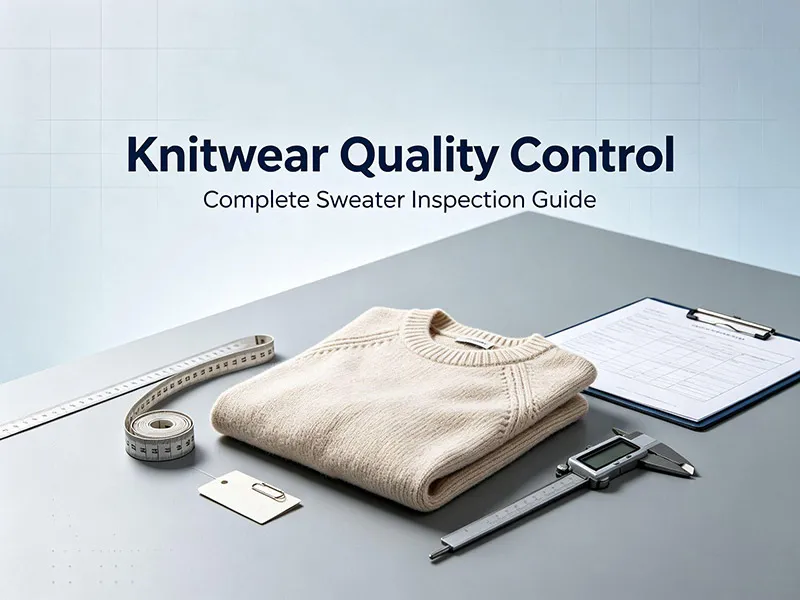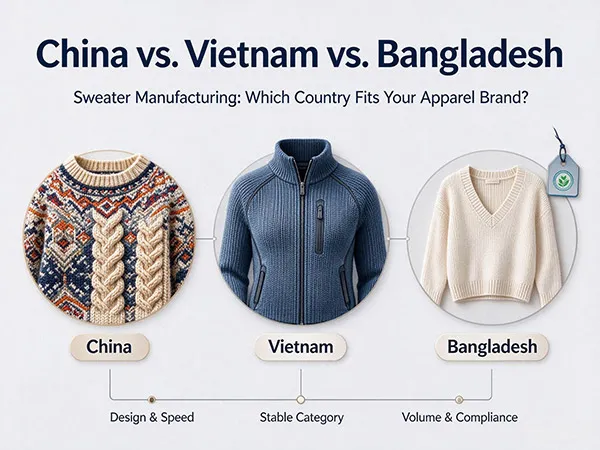

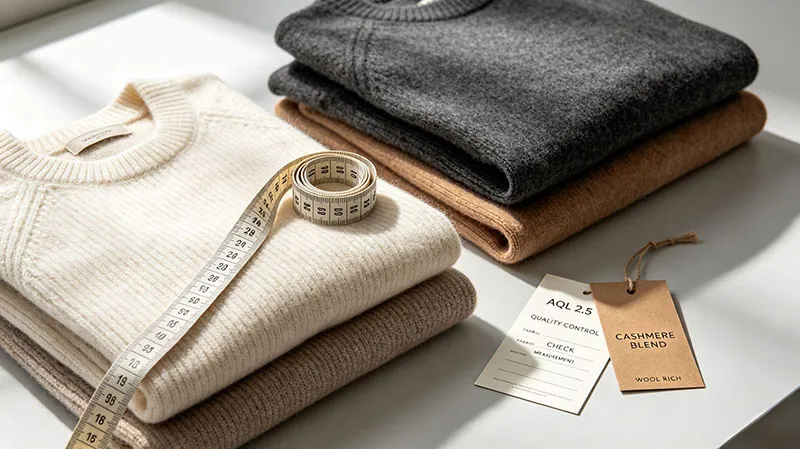
When Western apparel brands vet a knitwear supplier, the first question from the Sourcing Manager is almost always the same: "What AQL standard does your factory run?" For sweaters and knitwear—categories with notoriously high return rates—AQL 2.5 (Acceptable Quality Limit 2.5) isn't just a number. It's the benchmark brands use to gauge whether an OEM/ODM factory can deliver consistent bulk production or not.
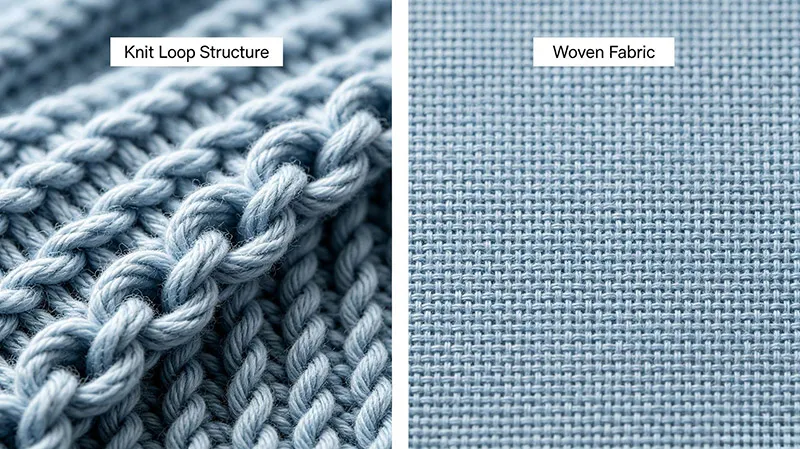
Here's the catch: knitwear doesn't behave like woven fabric. Woven goods have a fixed structure. Knits are built from interlocking loops, which means they stretch, shrink, torque, and distort in ways woven fabric never will. Whether you're running 2G chunky gauge or 30G ultra-fine, every step—hand-linking, loop attachment, steam pressing—can introduce drop stitches, holes, or dimensional drift. That structural complexity is exactly why knitwear QC demands a strict, quantitative inspection protocol.
1. Knitwear Defect Matrix: The Three-Tier AQL Standard
| Defect Class | AQL Standard | Tolerance Ceiling | Typical Knitwear Defects | Commercial Impact |
|---|---|---|---|---|
| Critical | AQL 0 | Zero tolerance (0%) | Needle fragments/metal residue, severe mold, drawstring safety violations (childrenswear) | Fines, full batch recall, customs seizure |
| Major | AQL 2.5 | Core control (≤ 2.5%) | Drop stitch/holes, seam bursting, excessive spirality, out-of-tolerance dimensions | End-consumer returns, brand reputation damage |
| Minor | AQL 4.0 | Moderate allowance (≤ 4.0%) | Untrimmed threads (5–10mm), minor yarn knots in concealed areas, slightly skewed hangtags | Cosmetic only; does not affect wearability |
2. Knitwear Defect Classification: How Inspectors Draw the Line
During bulk inspection, correctly classifying a defect as Critical, Major, or Minor is the entire ballgame. Knitwear's unique loop structure and multi-stage processing (flat-bed knitting, hand-linking, steam setting) mean defect classification follows clear industry definitions:
2.1 Critical Defects — AQL 0: Zero Tolerance
These carry legal liability, safety hazards, or render the product completely unsellable. Under any AQL inspection system, one single Critical defect in the sample = unconditional batch rejection (Fail).
Knitwear-specific examples: Needle fragments or metal residue left in seams, severe mold growth, drawstring safety violations (e.g., non-compliance with CPSC regulations), excessive restricted substances.
2.2 Major Defects — AQL 2.5: The Buyer's Primary Control Point
These directly compromise wearability, structural durability, or visual appeal—the kind of defects that drive end-consumer returns. During bulk sampling, the total count of Major defects must stay within the AQL 2.5 acceptance number (Ac).
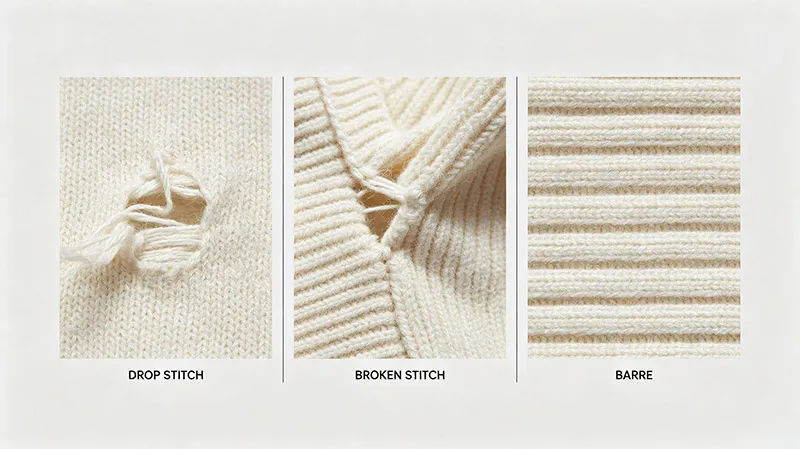
Knitwear-specific examples: Drop stitch defect in sweaters / holes, broken stitch at hand-linking seams, barre (horizontal banding), spirality/torque beyond tolerance, chest width or body length falling outside dimensional tolerances.
2.3 Minor Defects — AQL 4.0: Workmanship Details
These don't affect performance or overall appearance. The average consumer won't return a garment over them.
Knitwear-specific examples: Exposed untrimmed threads (5–10mm), small yarn knots in non-structural concealed areas, slightly skewed hangtags or care labels, minor surface stains that can be wiped off.
3. AQL Sampling Table for Apparel: ISO 2859-1 Level II in Practice
During Final Random Inspection (FRI), the AQL sampling table (based on ISO 2859-1 / ANSI/ASQ Z1.4) is the legal document both buyer QC and factory use to determine whether a shipment clears for export.
3.1 Why Level II Is the Global Default
ISO 2859-1 defines three general inspection levels:
- Level I (Reduced): Smaller sample size. Only suitable for long-term partners with rock-solid quality history. Higher risk for the buyer.
- Level III (Tightened): Larger sample, significantly higher inspection cost and time. Reserved for high-risk products or production lines with a history of quality failures.
- Level II (Standard): The global default for apparel and knitwear export. It strikes the best balance between sampling cost and statistical risk control, which is why Western buyers overwhelmingly specify it.
3.2 AQL 2.5 (Major) / 4.0 (Minor) Sampling Reference Table for Knitwear
The most commonly referenced data card for sweater and knitwear bulk procurement under single normal sampling:
| Lot Size (pcs) | Code Letter | Sample Size (pcs) | AQL 2.5 Major (Ac / Re) | AQL 4.0 Minor (Ac / Re) |
|---|---|---|---|---|
| 281 – 500 | H | 50 | 3 / 4 | 5 / 6 |
| 501 – 1,200 | J | 80 | 5 / 6 | 7 / 8 |
| 1,201 – 3,200 | K | 125 | 7 / 8 | 10 / 11 |
| 3,201 – 10,000 | L | 200 | 10 / 11 | 14 / 15 |
Note: Ac (Accept) = maximum allowed defective pieces (≤ this number passes).
Re (Reject) = rejection threshold (≥ this number fails the entire lot).
3.3 Worked Example: 1,000-Piece Sweater Order
A Western brand orders 1,000 wool-blend sweaters. A third-party inspector (SGS, Intertek, or brand QC) follows this on-site process:

Step 1 — Determine sample size: 1,000 pcs falls in the 501–1,200 range → Code J → pull 80 pieces randomly from packed cartons.
Step 2 — Confirm acceptance criteria:
- AQL 2.5 (Major): Ac = 5, Re = 6 (max 5 Major defects allowed)
- AQL 4.0 (Minor): Ac = 7, Re = 8 (max 7 Minor defects allowed)
- AQL 0 (Critical): Ac = 0, Re = 1 (zero tolerance)
Step 3 — Verdict:
- Pass scenario: 3 Major (drop stitch/broken seam) + 4 Minor (untrimmed threads), zero Critical → Pass. Cleared for shipment.
- Fail scenario: 6 Major (seam bursting/dimensional deviation), even with only 1 Minor → Fail. Factory must 100% re-screen, repair, and apply for re-inspection.
4. Essential On-Site Quality Tests for Knitwear Inspection
When executing an AQL 2.5 knitwear inspection, beyond standard appearance and construction checks, inspectors must perform these four tests specific to knitwear's elastic, distortion-prone nature:
4.1 Flat Relaxation & Dimensional Measurements
Knitted fabric deforms under carton-packing stress. Before measuring, samples must be laid flat without tension and allowed to relax for 1–2 hours until the loop structure naturally rebounds and stabilizes. Measuring immediately after unpacking—especially with any pulling—will trigger false Out-of-Tolerance readings.
4.2 Spirality / Torque Calculation
Yarn twist and weft-knit loop structure cause garments to skew after washing or wear (torque). To measure, lay the garment flat, then measure the offset distance of the side seam from vertical and the total seam length:
Western buyers typically cap spirality at 3%–5%. Anything beyond that is classified as a Major defect.
4.3 Seam Stretchability & Recovery Test
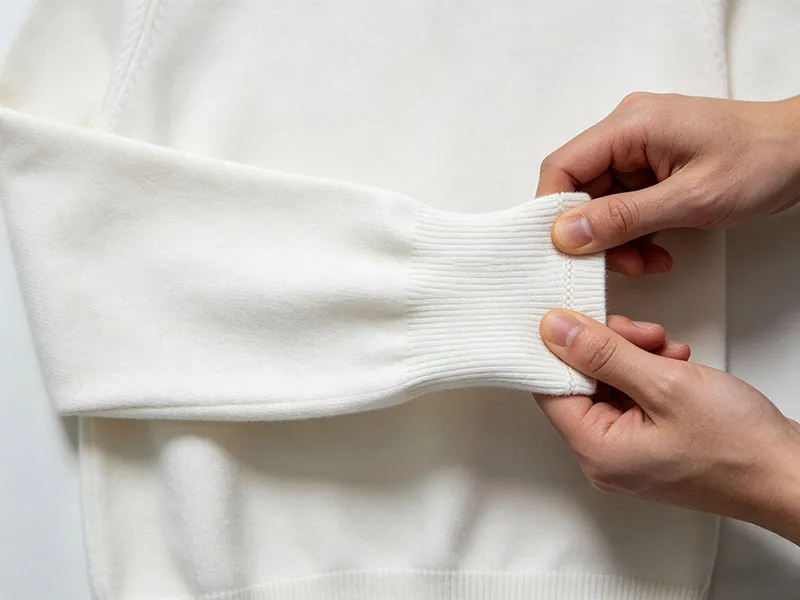
Necklines, cuffs, and hand-linking seams endure significant tension during wear. Inspectors must stretch these seams firmly, checking for broken stitch (seam bursting), and observe whether the seam recovers its original shape without puckering.
4.4 Needle Detection Protocol
Needle fragments are an AQL 0 Critical defect. All garments exported to Western markets (especially childrenswear and infant knitwear) must pass 100% through a needle detector before packing. During inspection, verify the factory's detection records and run a live pass-through to confirm zero needle or ferrous fragment residue.
5. How JM Sweater Ensures AQL 2.5 Compliance: Our Quality Control System
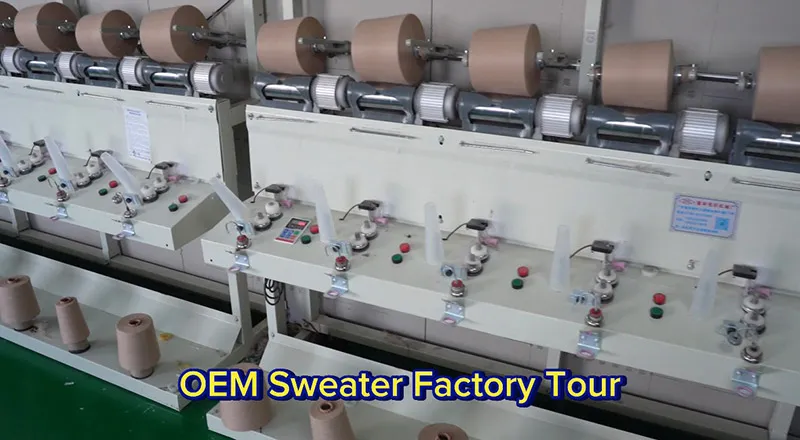
At JM Sweater, we operate on a simple principle: quality is built into production, not inspected in at the end. To consistently meet or exceed AQL 2.5 for every bulk shipment, we embed QC across the entire workflow—from yarn to packed carton.
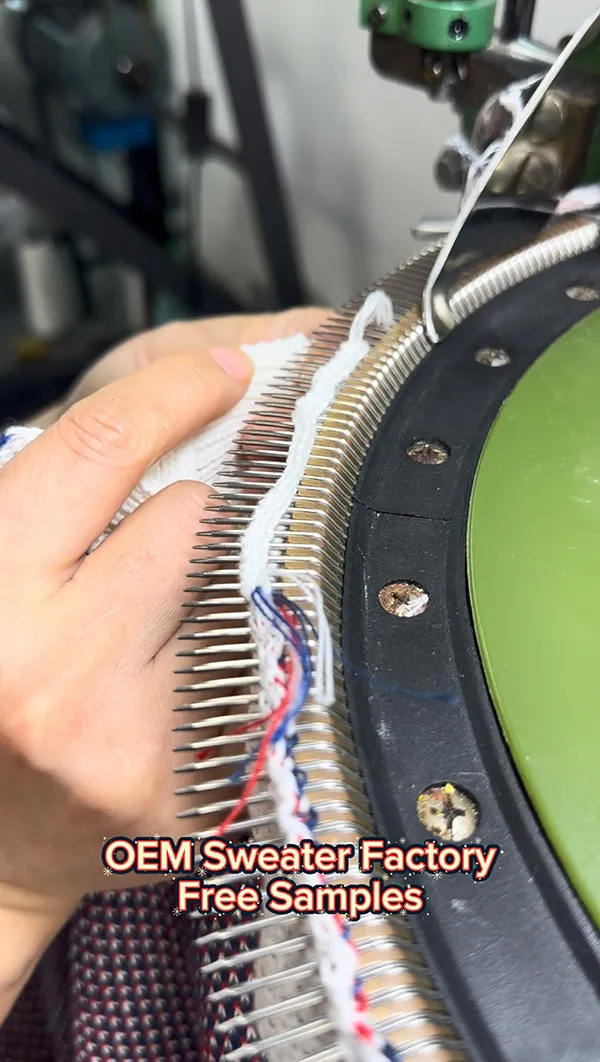
5.1 Automated Knitting & Gauge Control (2G–30G Precision Manufacturing)
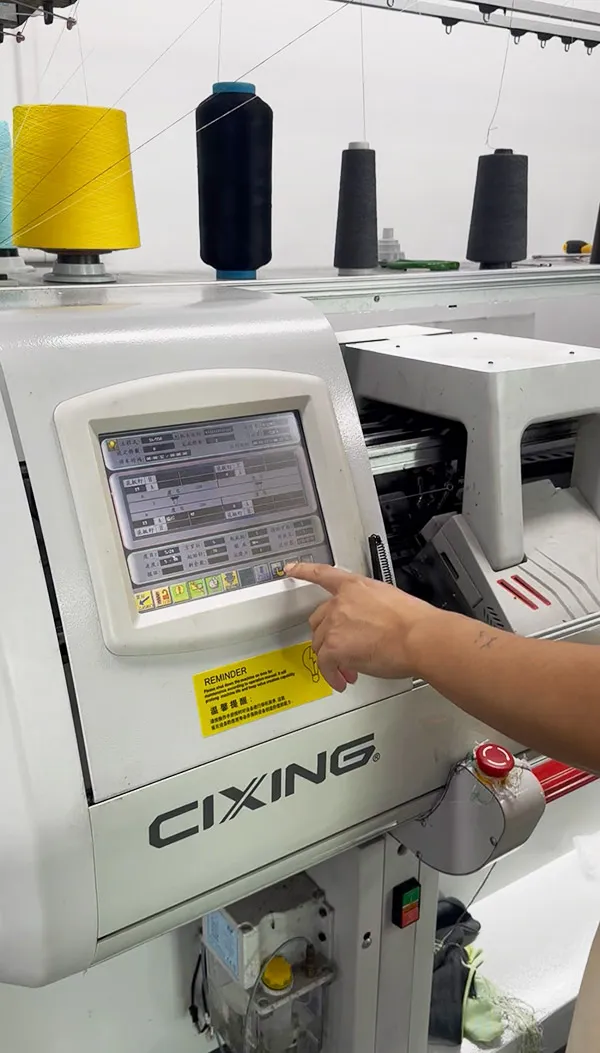
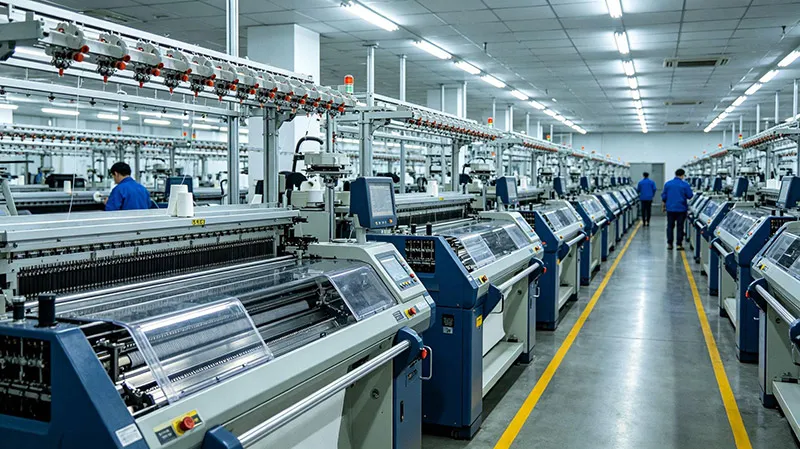
We run German STOLL and Japanese Shima Seiki computerized flat-bed machines, with WHOLEGARMENT seamless 3D knitting capability. Digital tension control systems eliminate uneven loop tension at the source, dramatically reducing barre, drop stitch, and laddering—the Major defects that plague lesser factories.
5.2 In-Process Inspection & 100% Light-Box Panel Check Before Linking
Before panels enter hand-linking, our inspection team performs a 100% light-box check on every knitted panel. Holes and drop stitches are intercepted at the semi-finished stage. Defective panels never reach the next operation.
5.3 Steam Pressing & Dimensional Stability Control
Knitwear shrinks and distorts. After sewing, we use steam-setting pressing to precisely control shrinkage and spirality, locking chest width, body length, and other critical dimensions within AQL tolerance when measured flat and relaxed.
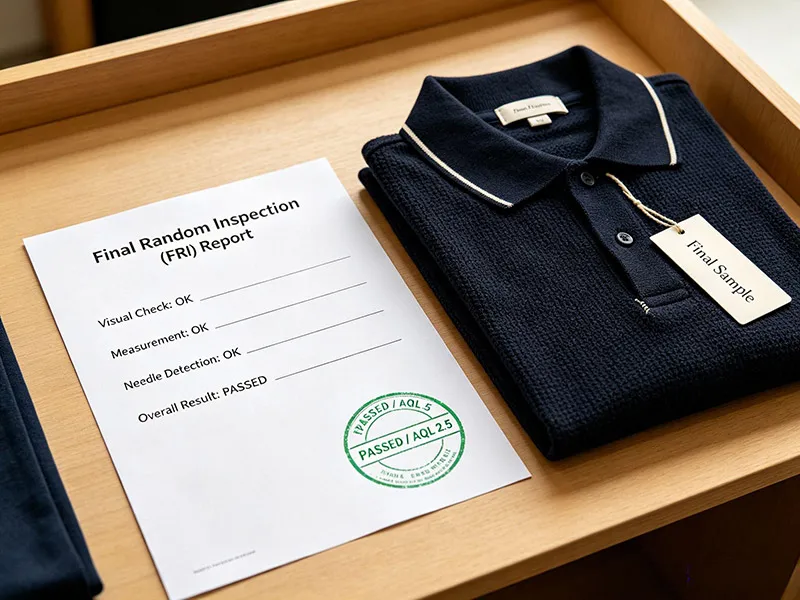
5.4 Final Random Inspection (FRI) & 100% Needle Detection
Before packing, every garment passes 100% through a needle detector—eliminating the Critical defect risk of needle fragments. Senior QC then executes AQL 2.5/4.0 Final Random Inspection strictly per ISO 2859-1 Level II. Only passing lots get packed and shipped.
6. Sourcing FAQ
7. Start Your Next Knitwear Program: OEM/ODM Manufacturing with AQL 2.5 Compliance
In knitwear sourcing, consistent quality shouldn't depend on luck. It comes from a standardized, quantitative production and QC system. As a specialized custom OEM ODM knitwear manufacturer, JM Sweater applies AQL 2.5/4.0 standards across the entire workflow—from 2G–30G yarn knitting and hand-linking to pressing and packing.
Whether you're developing a new knitwear collection or looking for a manufacturing partner with stable quality and transparent delivery, our engineering and QC teams are ready to support you:
- Get a custom production plan and quote: [Contact Our Engineering Team] to start knitwear development and bulk production fully aligned with AQL 2.5 acceptance standards.
- Request samples and QC report references: [Submit Inquiry / Contact Us] to receive PP Sample documentation and a sample AQL FRI Report template.
Transparent international-standard quality control—protecting your brand reputation and your bulk delivery.