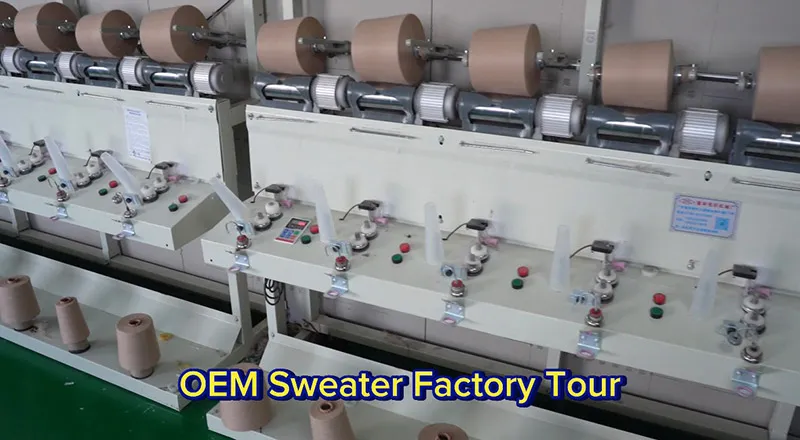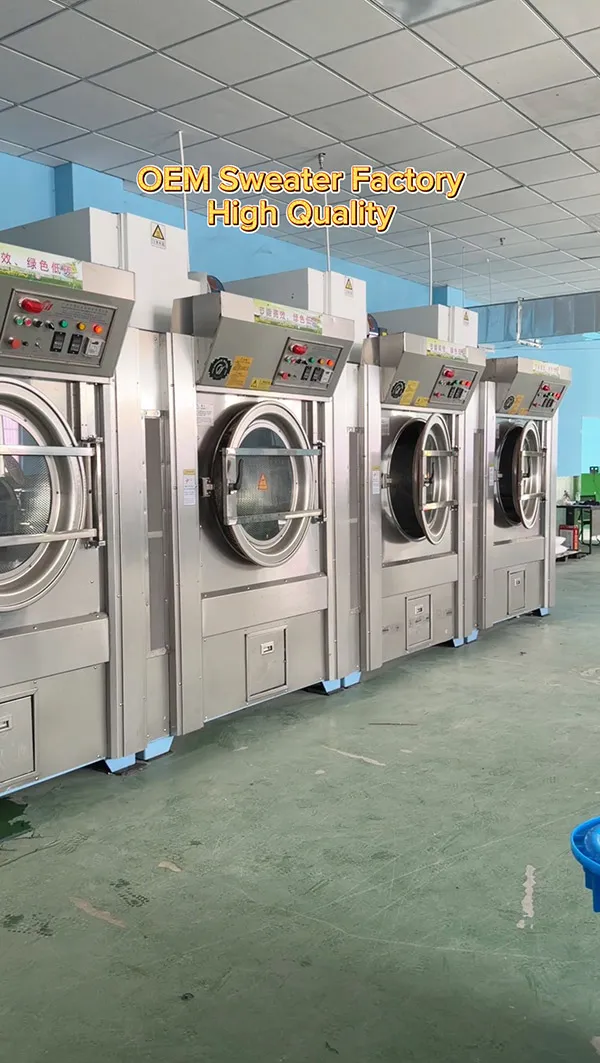


Offshore manufacturing for Italian knitwear is governed by micro-tolerances. For European sourcing directors, the real risk is not the prototype; it is bulk execution drift. Italian knitwear is not a design aesthetic. It is fabric hand-feel, stitch tension, and micron-level craft tolerances. When partnering with an offshore sweater manufacturer, the core challenge is whether the bulk order can replicate the DNA of Italian quality—and whether raw material traceability remains absolutely transparent.
True Italian manufacturing standards rest on quantifiable engineering protocols. The scope is specific: dynamic Transaction Certificate (TC) traceability for high-gauge cashmere, GRS-certified recycled yarns, and GOTS organic cotton. Tension control on 3GG–18GG fully computerized flat-knitting machines and 3D WHOLEGARMENT knitting technology. Loop-by-loop hand-linking. Mobilon tape structural reinforcement at shoulder and neck seams. Every engineering detail determines whether bulk production repeats.
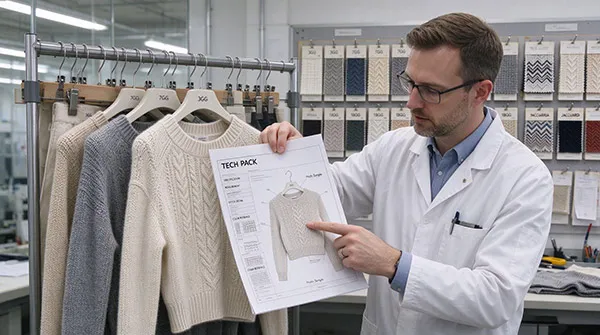
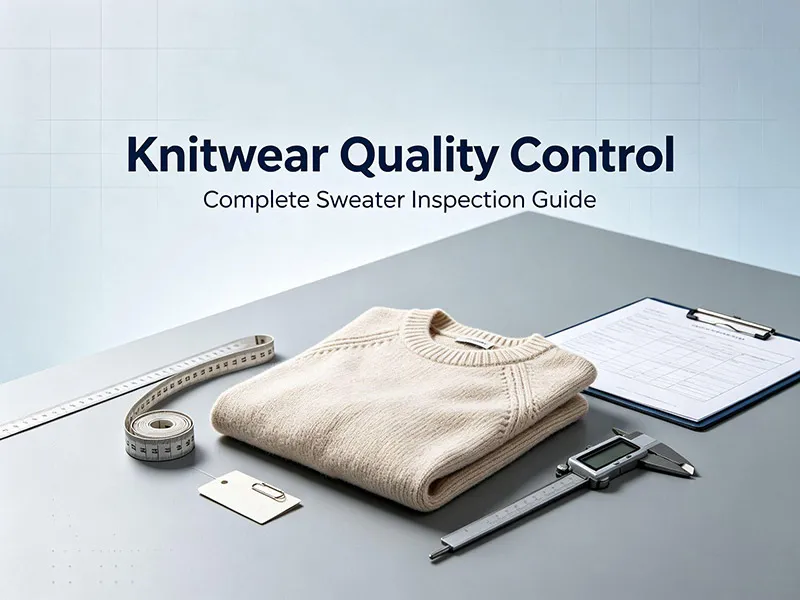
This guide outlines a systematic factory technical audit standard: material chain-of-custody, gauge engineering matching, structural reinforcement, and laboratory physical tolerances. It covers what brands need to execute bulk orders while safeguarding compliance and quality.
1. Italian Raw Material Protocol: Premium Yarn Sourcing and Chain-of-Custody (CoC) Control
Italian high-end knitwear starts with precise control over natural fibers and specialty yarns. For European buyers who care about brand reputation and compliance, raw material auditing goes beyond hand-feel and yarn count. It demands rigor in the supply chain's Chain-of-Custody (CoC).
Dynamic Transaction Certificate (TC) Verification for Luxury Fibers
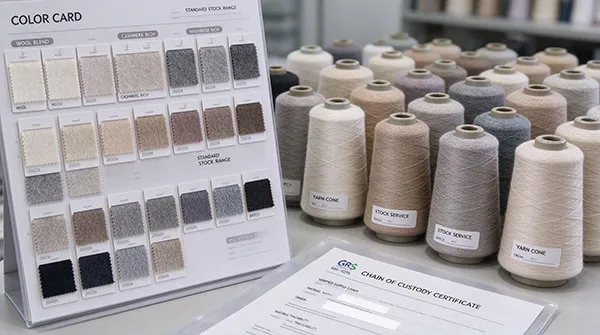
A static Scope Certificate (SC) only proves a factory holds the qualification. SC certificates mean little without batch TCs. The key to verifying actual bulk raw materials is the dynamic Transaction Certificate (TC). For high-gauge cashmere, GRS-certified recycled yarns, and GOTS organic cotton, a rigorous manufacturing system must achieve full documentation closure from spinning through dyeing to knitting. Third-party-issued batch TC certificates are required with every bulk delivery, providing 100% traceability from raw material source to finished garment.
Italian Specialty Processing and Flexible Supply Chain Support (Basolan Wool and Stock Service Color Cards)
For specialty fabric processing, Basolan-treated washable merino wool is used. Scale-stripping modification technology retains wool's natural soft hand-feel while significantly improving shrinkage resistance and anti-pilling performance. A Stock Service Yarn Program allows brands to directly access in-stock premium yarn counts and color palettes. This shortens sample development cycles and lowers MOQ thresholds. Italian and European brands gain small-batch, high-frequency premium rapid response.
2. Gauge Mechanics: Matching Italian Design with Equipment Precision (3GG to 18GG)
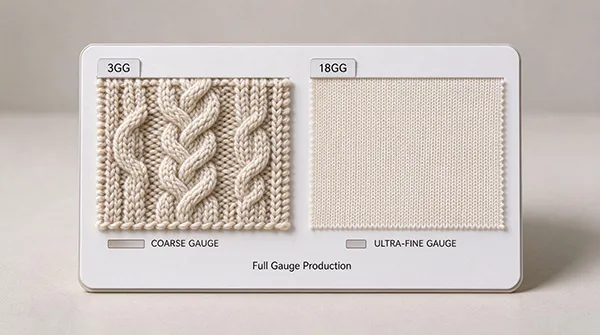
Italian knitwear is known for rich texture layering and fine gauge expression, from heavyweight cable-knit cardigans to ultra-light base layers. This places extreme span requirements on equipment configuration and gauge mechanics.
Full Gauge Spectrum and Yarn Count Matching Matrix
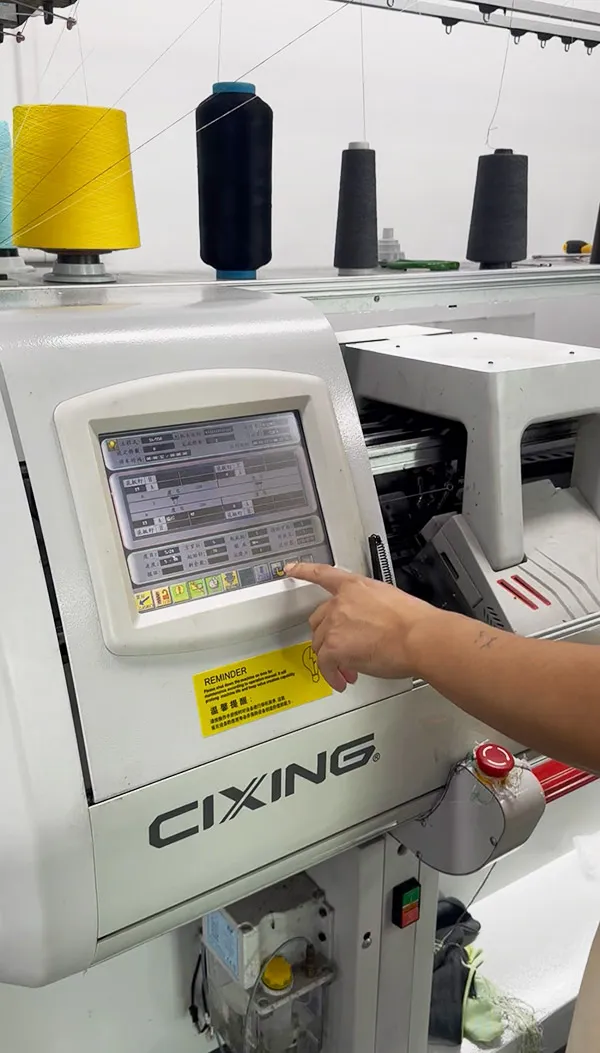
Production is executed on the full 3GG to 18GG gauge spectrum using computerized flat-knitting machines. Through scientific yarn count and density matching, each garment achieves precise balance between weight, hand-feel, and structural tension:
| Gauge | Recommended Yarn Count | Typical Italian Styles | Engineering Control Focus |
|---|---|---|---|
| 3GG – 5GG | 1.5Nm – 4.5Nm (coarse/multi-ply) | Heavyweight coarse-gauge, Italian cable/aran cardigans | Structural support and sag resistance |
| 7GG – 9GG | 2/28Nm – 2/48Nm (2-ply) | Classic crew necks, Intarsia | Fabric surface flatness and color-block separation |
| 12GG – 14GG | 2/48Nm – 2/60Nm (worsted) | Business slim-fit, Basolan anti-shrink merino | Gauge uniformity and wash shrinkage tolerance |
| 16GG – 18GG | 2/60Nm – 2/80Nm+ (ultra-fine) | Minimalist haute couture base layers, ultra-thin cashmere | Yarn tension micro-adjustment and high-gauge hand-linking |
Advanced Flat-Knitting Systems and 3D WHOLEGARMENT Technology (STOLL / Shima Seiki)
For complex stitch structures, German STOLL and Japanese Shima Seiki flat-knitting machines are deployed. Sinker and dynamic tension control systems resolve fabric torque and surface flatness deviations that commonly occur in Italian cable knits and multi-color jacquards.
European premium brands require zero waste and wearing comfort. 3D WHOLEGARMENT knitting technology addresses both. Three-dimensional integral forming eliminates traditional cut-and-sew panels and seams. The garment naturally conforms to body contours. Yarn cutting waste drops to zero. This aligns with EU circular textile directives.
3. Italian Craftsmanship and Structural Integrity: Intarsia, Hand-Linking, and Structural Reinforcement
Italian knitwear quality is not only about fabric surface. It is local seam precision and structural anti-deformation engineering.
Complex Pattern Structures: Intarsia vs Jacquard Pattern Engineering
In large-area multi-color or geometric pattern knitting, conventional Jacquard creates floats on the reverse side. That adds fabric thickness and compromises drape. For large color-block designs, Intarsia is the specified engineering route. Independent interlocking of yarns at boundaries eliminates excess floats on the reverse. Zero floats on the reverse. Clean drape on the front. The result is a single-layer fabric surface, smooth without bulk. For complex textures requiring Jacquard, back-bed float tension and span are precisely regulated to ensure clean pattern edges and consistent lateral extensibility.
Loop-by-Loop Hand-Linking and Mobilon Tape Structural Reinforcement
The essence of Italian seaming is eliminating seam bulk and hard interference. Garment assembly uses loop-by-loop hand-linking. Panel edge stitches and linking machine needles align 1:1. The result: flat, high-elasticity, invisible seams with no foreign body sensation.
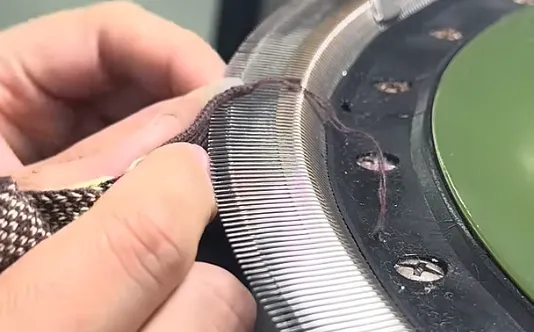
High-gauge sweaters (14GG–18GG) lose shape quickly on hangers. To prevent this, high-quality Mobilon tape structural reinforcement is pre-embedded directly into the shoulder seams and neck collar before hand-linking. Garment appearance and soft hand-feel remain unchanged. Seams gain lasting tensile recovery. Neckline deformation and shoulder drop are resolved.
4. Bulk Repeatability: Italian Laboratory Testing and Tolerance Control Matrix
The core test of premium knitwear bulk delivery is replicability from Proto to Bulk. Italian and European brands set stringent QC standards. Visual judgment is replaced by data-driven laboratory physical testing and precision tolerance control.
Laboratory Physical Performance Testing Standards
Bulk garments undergo rigorous physical performance testing before shipment. They must maintain Italian premium quality through daily wear and washing:
- Pilling Resistance: Tested per ISO 12945-2 (Martindale method) or ASTM D3512 (random tumble pilling method). Results consistently achieve Grade 3.5–4 and above.
- Color Fastness to Rubbing: Dry/wet crocking color fastness both achieve Grade 4.
- Wash Shrinkage: After standard wash-and-dry testing, fabric dimensional change in warp and weft directions remains strictly within ±3%.
Spectrophotometer Dye-Lot Color Difference and Garment Tolerance Control
Cross-batch dye-lot color variation and bulk pattern drift are industry pain points. Quantitative engineering control standards are applied:
-
Dye-Lot Spectrophotometer Color Measurement: Precision spectrophotometers compare color samples. Spectrophotometer dye-lot color difference is strictly limited to ΔE < 1.0—imperceptible to the human eye.
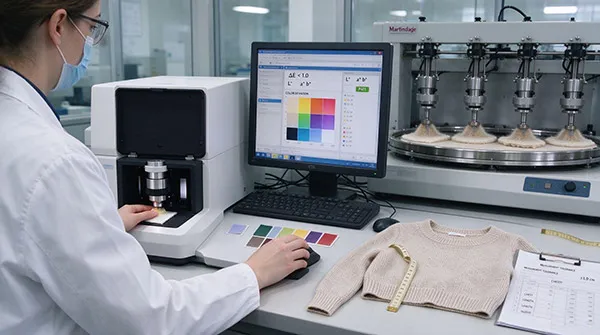
- Garment Dimensional Tolerance: Ultra-narrow production tolerances are enforced. Chest width, body length, and other primary structural measurements are controlled within ±1.0 cm. Collar width, cuffs, and other detail measurements are limited to ±0.5 cm. Bulk delivery closely matches TOP Sample specifications.
5. Enabling Italian Brands' Global Distribution: Environmental and International Trade Compliance
Premium Italian knitwear brands distribute across the EU, North America, and core global markets. In cross-border distribution, manufacturing compliance failures—such as unauthorized chemical residues, improper environmental labeling, or non-compliant flammability ratings—can result in customs impoundment, retail delisting, or severe regulatory penalties. Our manufacturing infrastructure embeds target-market regulatory frameworks directly into pre-production workflows and ex-factory quality assurance protocols, guaranteeing seamless international distribution for brand partners.
EU and French Environmental Compliance (REACH, AGEC Law, and Triman Marking)
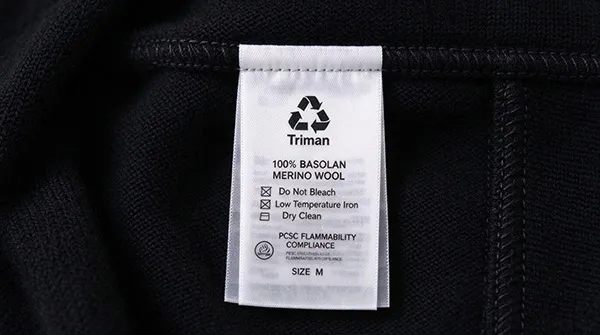
Within EU markets, our quality control protocols enforce total chemical traceability across all yarn lots, dyeing auxiliaries, and finishing agents under REACH regulations. All incoming raw materials undergo mandatory pre-screening to verify zero Substances of Very High Concern (SVHC). To meet France's specific environmental mandates under the AGEC Law (Anti-Waste and Circular Economy Law), our production management system incorporates end-to-end material traceability and environmental impact documentation. Garments leaving the line are fitted with fully compliant French Triman markings and localized sorting instruction labels, enabling brands to pass European environmental audits effortlessly.
North American Market Access Standards (FTC Care Labeling and CPSC Flammability Compliance)
For export into North America, brushed, coarse-gauge, and ultra-lightweight knits require rigorous safety verification. Bulk production from our facility is routinely backed by accredited Class 1 safety testing under US CPSC 16 CFR 1610 (Standard for Flammability of Clothing Textiles). Furthermore, care labels generated during automated finishing adhere strictly to US Federal Trade Commission (FTC) 16 CFR Part 423 guidelines, featuring fully verified fiber content ratios, exact country-of-origin documentation, and standardized care instructions. This embedded compliance infrastructure eliminates regulatory bottlenecks at customs and ensures friction-free retail placement.
6. Co-Creating Italian Quality: Technical Evaluation and Free Sample Development Protocol
Replicating true Italian knitwear quality never relies on verbal promises. It depends on a transparent, verifiable, data-driven factory execution system. TC transaction certificate verification for high-gauge yarns. Tension regulation on 3GG–18GG full-gauge equipment. Loop-by-loop hand-linking. Strict laboratory tolerance control. Engineered management at every stage is the fundamental guarantee for bulk quality and supply chain risk reduction.
To help Italian and European brand procurement teams connect with premium manufacturing resources, our engineering team provides a responsive technical feasibility evaluation and sample development mechanism. Whether a project requires structural optimization for complex patterns (Intarsia/Jacquard) or the optimal yarn count ratio for a specific gauge, our engineering team delivers professional technical assessment and costing analysis.