

1. Executive Summary: The Evolution of Italian Knitwear
The latest signals coming out of Pitti Filati, Pitti Uomo, and Milan Fashion Week point to a marked shift in autumn winter knitwear design across Italy. The market has moved well beyond the restrained "Quiet Luxury" vocabulary that dominated recent seasons. What buyers and designers are chasing now is tactile luxury — an approach that foregrounds extreme surface hand-feel and artisanal stitch engineering.
Plain jersey is no longer enough. Long-hair mohair, raised 3D jacquard, and seamless whole-garment construction are driving the kind of rich texture and visual depth that retail buyers want on the shelf.
That said, translating this distinctly Italian aesthetic into commercially viable, scalable product is where brands hit real friction — making the choice of an experienced custom sweater manufacturer critical on the supply chain side. Three bottlenecks come up repeatedly:
- Yarn cost. Top-tier Italian-spun fibers carry a premium that squeezes margins at scale.
- Knitting complexity. 3D stitch structures demand machinery capability and operator skill that not every factory has.
- Yarn waste. High-gauge (12G–18G) knitting combined with shaped panels pushes waste rates up significantly.
The way through these barriers is to connect front-end design intent with modern flatbed knitting engineering. By working with the latest Italian knitwear trends A/W directions and mapping them against fully computerized flatbed machines (2G through 18G) and WHOLEGARMENT® 3D seamless technology, brands can hold onto the Italian hand-feel and structural beauty while keeping production costs controlled and output standardized.
2. YARNS & FIBERS: Material Innovations in A/W Italian Collections
The soul of Italian autumn winter knitwear lives in the yarn. This season, textile engineers and designers have pushed fiber blending and finishing technology to the limit, drawing maximum tactile and functional performance out of natural materials.
2.1 Tactile & Halo Yarns
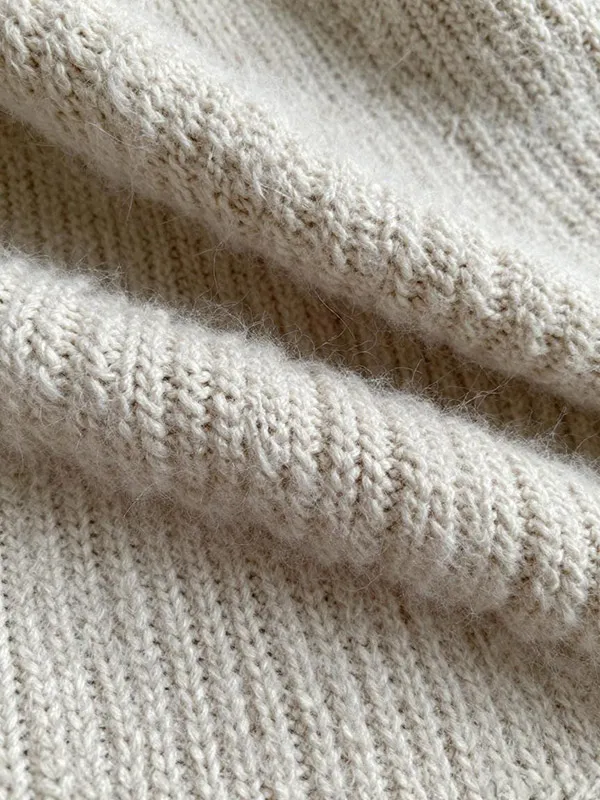
Long-hair mohair, baby alpaca, and bouclé / terry yarns are the headline act. These yarns get their signature cloud-like halo effect through finishing processes — specifically washing and milling, followed by brushing. In production, we typically run a high-gauge base yarn in the blend. That keeps the structure stable while letting the surface deliver the full tactile experience.
2.2 Sustainable & Certified Fine Wools
Sustainability is no longer a nice-to-have — it's a core procurement metric. This season's Italian yarn direction leans heavily on three certification and performance benchmarks:
- GRS-certified recycled cashmere. Combines a strong sustainability narrative with cost efficiency. Paired with a sustainable cashmere yarn supplier's traceability system, it brings raw material costs down substantially.
- RWS merino wool. Guarantees animal welfare and fiber traceability — the foundation for any credible RWS merino wool knitwear program.
- Basolan-treated wool. A micro-scale shrink-resist process that preserves wool's natural elasticity and warmth while adding machine-washability and anti-pilling performance.
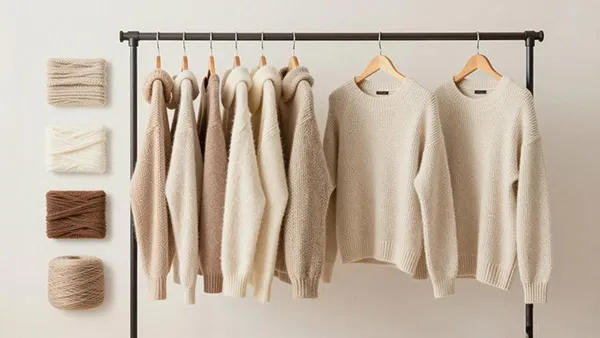
Beyond certifications, undyed neutrals and mélange yarns are showing up across collections. These reduce the chemical load of dyeing while giving knitwear a refined, naturally derived color palette.
2.3 Metallic Accents & Silk Blends
For a subtle touch of luxury in everyday wear, designers are specifying Lurex and silk-cashmere blends. Using plating techniques, the faint metallic or silk sheen flickers in and out of the stitch structure — adding visual layering without shouting.
Italian Yarn Characteristics vs. B2B Sourcing Alternatives Matrix
| Yarn Type | Warmth | Pilling Resistance | Raw Cost | Production MOQ | Typical Application |
|---|---|---|---|---|---|
| Virgin Cashmere | Very High (5/5) | Moderate (3/5) | Very High ($$$$$) | High | Luxury turtlenecks, minimal cardigans |
| GRS Recycled Cashmere | High (4/5) | Moderate (3/5) | Moderate ($$$) | Flexible | Sustainable accessible luxury, eco basics |
| RWS Merino | High (4/5) | Good (4/5) | Moderate ($$$) | Low | Business knitwear, fine-gauge base layers |
| Mohair Bouclé | Medium-High (3.5/5) | Low (2.5/5) | Medium-High ($$$$) | Moderate | Voluminous outerwear, mohair boucle sweater OEM |
As a manufacturing partner focused on premium knitwear export, we maintain long-standing relationships with GRS and OEKO-TEX certified yarn suppliers. That gives brand buyers access to raw material solutions that deliver Italian hand-feel at competitive cost.
3. STITCH INNOVATIONS & STRUCTURES: Engineering 3D Texture
In Italian autumn winter knitwear design, stitch structure is what gives a garment three-dimensionality and body. Modern computerized flatbed technology has freed designers from the constraints of plain jersey and basic rib. Through precise stitch engineering, artisanal handwork can now be translated into efficient, repeatable industrial production.
3.1 Raised 3D Jacquard & Modern Intarsia
This season's jacquard and intarsia have moved past the flat, printed look:
- Double-bed 3D raised jacquard. By controlling needle bed alignment on a double-bed machine, the face shows a raised, sculptural motif while the reverse forms a clean, organized backing. This significantly boosts fabric density and structure. As a specialized 3D jacquard sweater factory, we fine-tune tension during knitting to keep the pattern sharp and eliminate float yarns pulling across the back.
- Modern color-block intarsia. For abstract geometry and color contrast, dedicated intarsia feeders knit each color zone separately. Unlike traditional jacquard with its float yarns on the reverse, our intarsia panels — as a custom custom intarsia knitwear supplier — come out flat with no bulk on the back. The garment wears lighter and more comfortably.
3.2 Dimensional Cable & Brioche Ribbing
Traditional heavy cables eat yarn and weigh a garment down. This season's cable knit structural engineering focuses on balancing "volume" with "lightness":
- Transfer & tuck stitches. By introducing tuck and transfer stitches at cable twists, we create honeycomb or openwork relief effects. The cable interior fills with air.
- Brioche ribbing. Combined with high-elasticity rib, this gives the vertical stitch columns a deep, springy, three-dimensional groove — enriching the tactile layering of heavy-gauge sweaters.
3.3 Light-as-Air Openwork & Pointelle
Openwork also shines in autumn winter. Through precise transfer pointelle on computerized flatbed machines, paired with mohair or fine-gauge merino, we achieve a vintage lace effect that mimics hand crochet — crochet-look machine stitches. This preserves warmth while adding visual breathability for layering.
3.4 3D WHOLEGARMENT® & Complete Garment
For brands chasing the ultimate wearing experience and clean silhouette, whole-garment seamless knitting represents the premium manufacturing standard:
- Zero-waste knitting. The entire garment is knitted in one piece, in three dimensions, on the machine. No cutting. No linking. This dramatically reduces waste rates on expensive yarns like cashmere and fine wool.
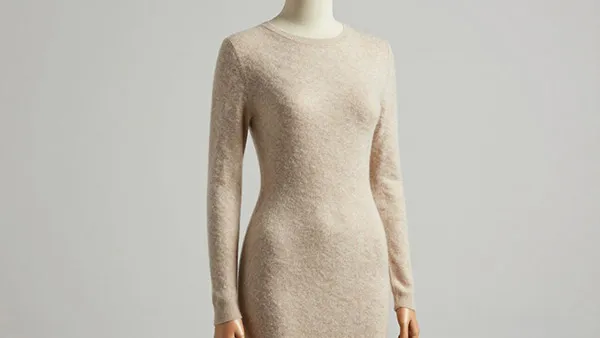
- Seamless fit. A whole garment 3D seamless sweater eliminates shoulder and side seams entirely — no friction, no pull. The garment follows the body's curves like a second skin, aligning with the Italian emphasis on fluidity and comfort.
4. SILHOUETTES & TAILORING: Fluidity Meets Architectural Volume
Autumn winter Italian knitwear silhouettes are merging fluidity with architectural volume. This season's cuts break away from the loose, formless feel of traditional sweaters. Through precise garment construction, knitwear now achieves a structured outline that rivals tailored suiting.
4.1 Architectural Milano-Knit Outerwear
Dense Milano stitch has become the core technique for this season's knit outerwear:
- Structural support. Milano stitch uses a double-face, high-density knit with excellent tensile resistance and body. Used in double-breasted coats or heavy overcoats, it creates a boxy silhouette with the tailored feel of woven cloth — tailored knitwear in the truest sense.
- Manufacturing precision. As an experienced milano stitch sweater supplier and boxy cardigan OEM manufacturer, we control flatness and shrinkage strictly during finishing. The result: outerwear that holds its architectural lines while retaining knitwear's natural comfort stretch.
4.2 Oversized Funnel Necks & Slouchy Turtlenecks
Collar and neckline shapes are the visual anchor this season:
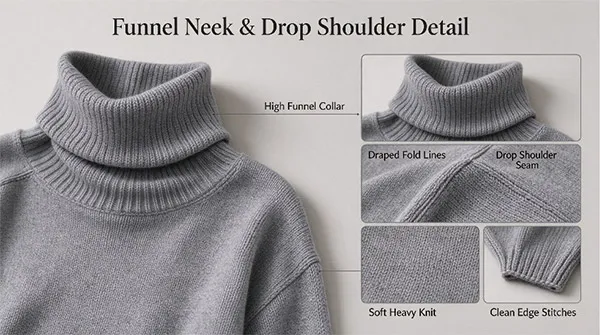
- Collar scaling and linking. Extra-high funnel necks and draped, foldable necklines require linking with very high elasticity.
- Drop shoulders and drape. Slanted drop-shoulder construction, paired with lightweight high-gauge yarns, lets the garment form natural drape folds at the shoulder — elegant but relaxed.
4.3 Multi-Layerable Vests, Capes & Sets
Layering pieces built for unpredictable weather are having a moment:
- Knit vests and capes. Deep V-neck vests and seamless capes emphasize edge reinforcement (Mobilon tape structural strengthening) to prevent distortion from repeated layering.
- Knitwear co-ord sets. Matching tops, bottoms, and scarves require stitch harmony and strict yarn dye-lot control — a production approach that gives premium brands a cohesive, high-margin offering.
As a manufacturing partner focused on premium knitwear export, we use precise pattern drafting and linking processes to translate Italian architectural lines into high-quality architectural knitwear coats and premium custom collections.
5. B2B OEM/ODM BRIDGING: Translating Italian Design into Scalable Production
For overseas apparel brands, sourcing managers, and independent designers, the biggest challenge in developing an Italian-style knitwear collection is this: how do you achieve controllable production costs and industrial-scale output without sacrificing quality or design detail?
As a premium knitwear manufacturing and export partner, we bridge that gap through engineering precision and supply chain management.
5.1 Gauge Precision Matching: 2G to 18G
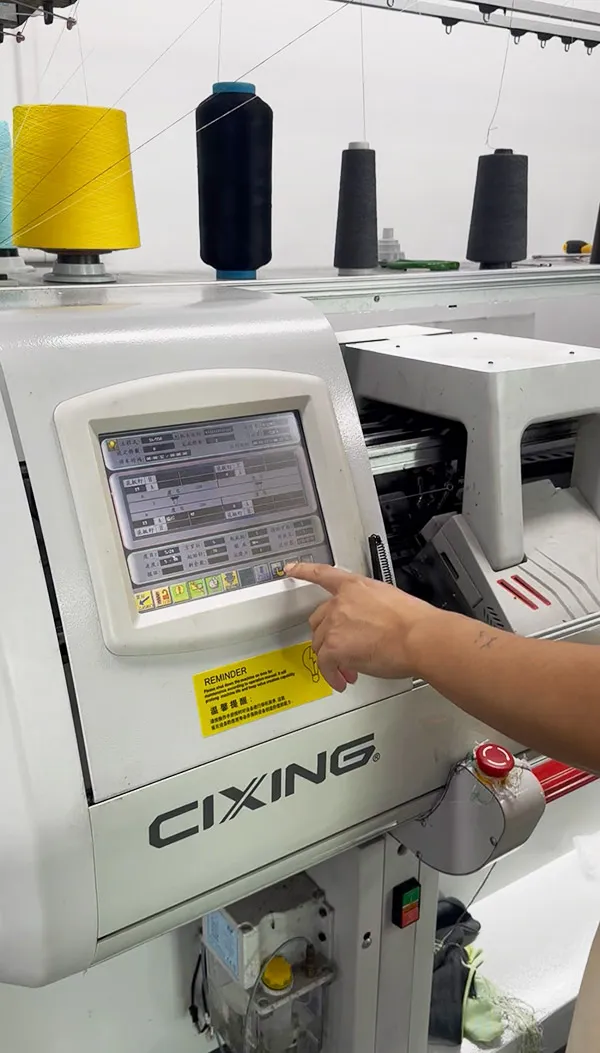
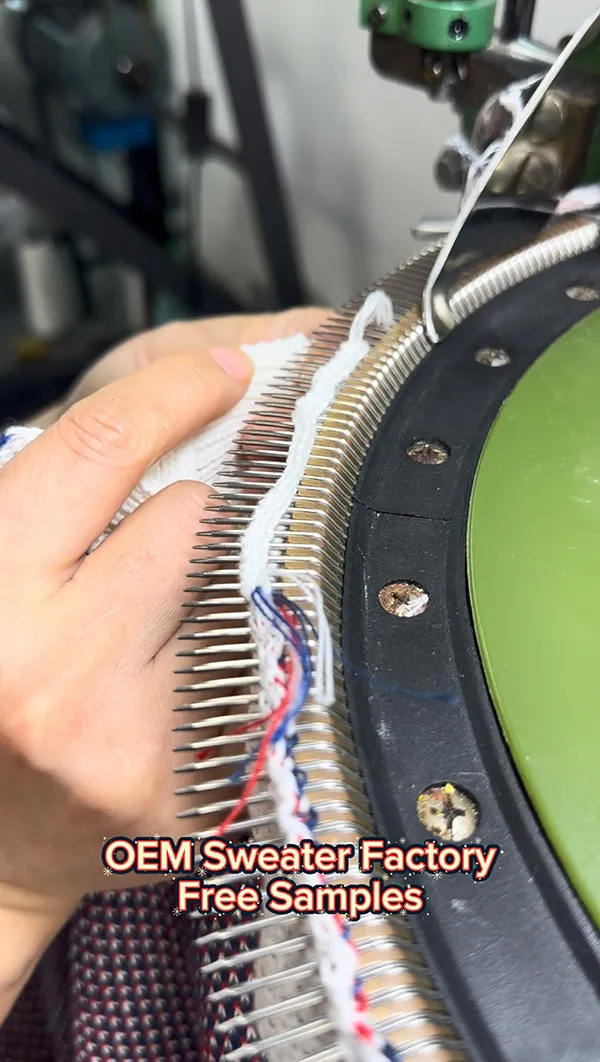
Different gauges determine a sweater's structure and drape. Our production base is equipped with 110 fully computerized flatbed machines, including German STOLL and Japanese Shima Seiki:
- Coarse gauge (2G / 3G / 5G / 7G): Ideal for hand-knit looks, chunky cables, and rugged outerwear knits.
- High gauge / fine gauge (12G / 14G / 18G): Built for accessible luxury base layers, premium merino, and ultra-thin cashmere — delivering superior flatness and drape. As a specialized high gauge knitwear factory China, we maintain zero dropped stitches and uniform stitch density at high gauges.
5.2 Cost-Engineering: Practical Optimization Strategies
Without compromising the face-side visual, our technical team can deliver actionable custom sweater OEM cost breakdown optimization:
- Structural optimization. For yarn-heavy 3D cables or complex intarsia, we can engineer the back panel in single jersey or rib while keeping the front in 3D stitch. This directly cuts yarn weight and labor time by 15%–20%.
- Blend substitution. We recommend using cost-effective core-spun yarns or GRS recycled fibers in the base structure, keeping premium mohair or cashmere on the surface for hand-feel. Raw material budgets drop significantly.
5.3 Washing & Finishing: Hand-Feel Calibration
The signature "cloud hand" and loft of Italian knitwear is 70% determined by washing and milling in the finishing stage:
- Precise water quality and temperature control. We strictly calibrate wash water pH, temperature, and softener ratios.
- Shrink-resist and anti-pilling. For wool and cashmere, standardized milling and drying time control lets us build a fluffy halo while maintaining pilling resistance and dimensional stability — replicating a hand-feel close to Italian origin.
5.4 Quality Compliance: International Standards & Certifications
To ensure smooth customs clearance and retail compliance globally, our production follows strict international testing protocols:
- QC inspection. Full AQL 2.5 sweater quality inspection — covering seam tensile strength, dimensional tolerances, and stitch defects.
- Regulatory compliance. Meeting US CPSC flame retardancy testing (16 CFR 1610) and FTC care labeling requirements. All stress points are reinforced with Mobilon elastane tape.
- Sustainable factory certifications. GRS, OEKO-TEX Standard 100, and BSCI. As a compliant sustainable knitwear manufacturer, we help brands enter European and North American retail channels without friction.
6. Frequently Asked Questions (FAQs) – Sourcing & Technical Insights
This section addresses the four most common technical and supply chain questions overseas buyers ask when developing Italian-style knitwear.
Q1: Without using 100% imported luxury yarns, how do you achieve Italian-level hand-feel?
A: By blending natural wool or cashmere with high-elasticity core-spun yarn, combined with precise washing and milling in finishing. This builds a fluffy halo effect while reducing raw material costs by over 30%.
Q2: What is the fundamental difference between 3D WHOLEGARMENT® and traditional cut-and-sew knitwear?
A: WHOLEGARMENT® knitting produces the entire garment in one piece, in three dimensions, on the machine. It eliminates shoulder and side seams entirely — no friction against the body — and achieves near-zero-waste production.
Q3: What are the sampling lead times and MOQs for complex jacquard and intarsia custom styles?
A: After Tech Pack confirmation, sampling takes 7–10 working days. MOQ for in-stock color yarns starts at 100–200 pieces per style. For custom-dyed yarns, MOQ is typically 300–500 pieces per style.
Q4: How do you solve pilling on high-gauge (12G–18G) merino and cashmere sweaters?
A: By selecting high-twist two-ply yarns, increasing stitch density, and combining with an anti-pilling wash and setting process. Pilling resistance consistently meets ISO Grade 4 or above.
7. Conclusion & Actionable Call to Action
The essence of autumn winter Italian knitwear trends lies in the seamless fusion of extreme tactile materials, three-dimensional stitch engineering, and architectural silhouettes. Whether you're a premium brand chasing top-tier hand-feel or a growing designer label focused on cost efficiency, the key to successfully translating Italian aesthetics is choosing a manufacturing partner with genuine stitch engineering capability and rigorous quality standards.
We operate a 3,000 sqm modern production facility with 110 fully computerized flatbed machines spanning 2G to 18G, plus 3D seamless WHOLEGARMENT® technology. We provide knitwear OEM/ODM services to global clients, meeting AQL 2.5 inspection standards.
Ready to bring Italian hand-feel into your next autumn winter collection?
Contact us and submit your Tech Pack or design references. Our technical engineering team will provide a free sampling feasibility assessment, optimal gauge recommendations, and a transparent yarn cost breakdown — within 48 hours.
📩 [Start an Inquiry / Request Sample Development]