
Introduction: The Reality of Mini-Me Knitwear Engineering
Scaling a human sweater pattern down to Chihuahua proportions takes about ten minutes in CAD. Cleaning up the returns it generates takes a full season.
That's the trap most brands walk into with their first Mini-Me collection. The pattern looks right on a flat lay. Then the photoshoot happens, the product goes live, and three weeks later the warehouse is filling up with sweaters that owners say "twist," "ride up," or "make my dog freeze mid-walk." Some come back chewed. A few come back with a vet note attached.
Here's the engineering reality: a dog is a horizontal quadruped. A human is a vertical biped. Gravity loads the fabric in completely different directions, and the front limbs need a range of motion that no downscaled sleeve cap can deliver. Building a wearable pet sweater that matches its owner's is a knitwear engineering project — one that pulls in veterinary anatomy, anti-snag stitch architecture, fiber toxicology, and international compliance testing.
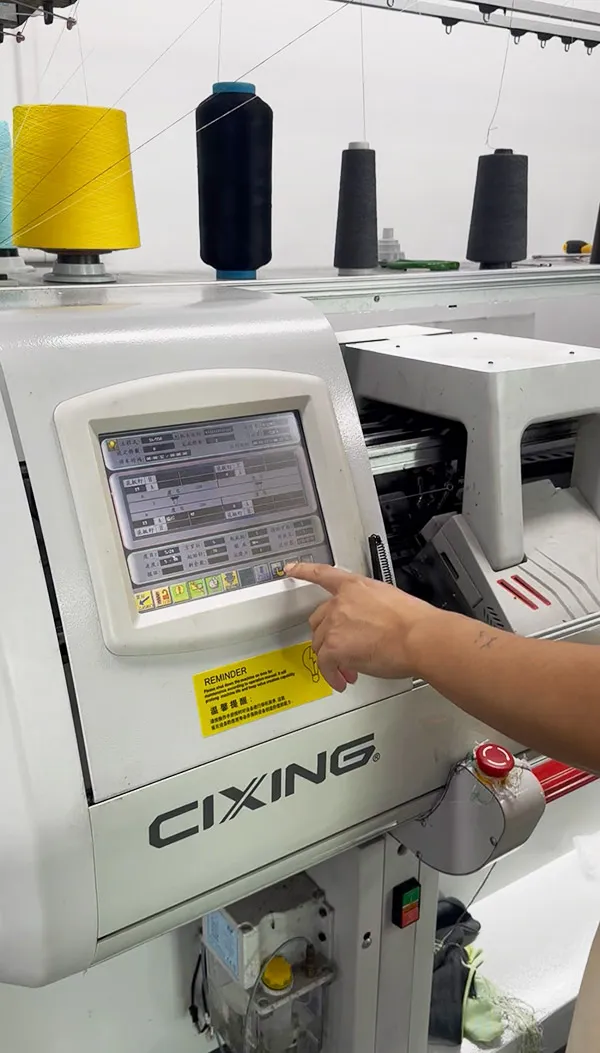
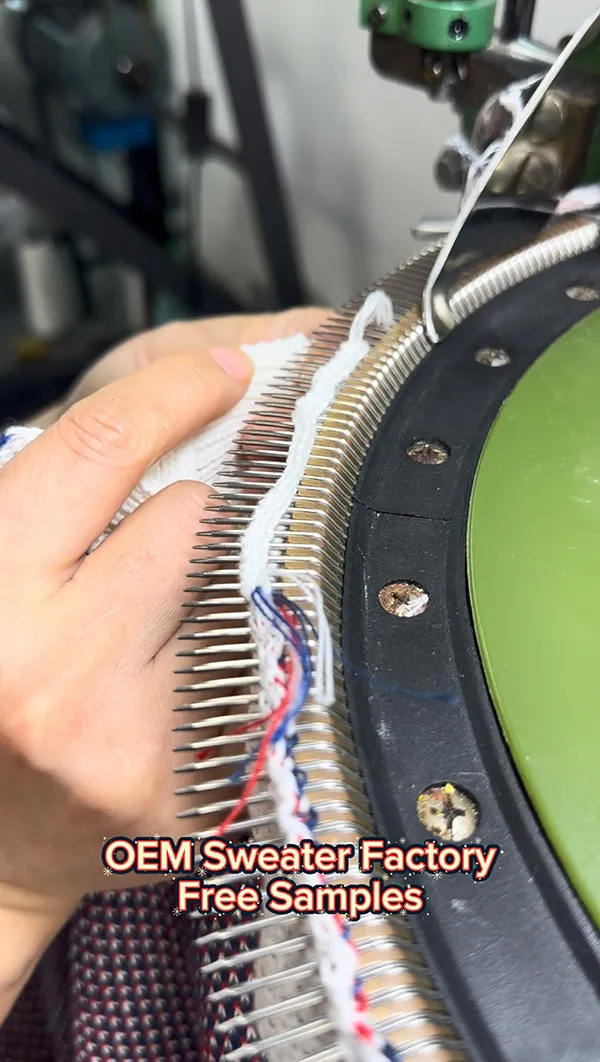
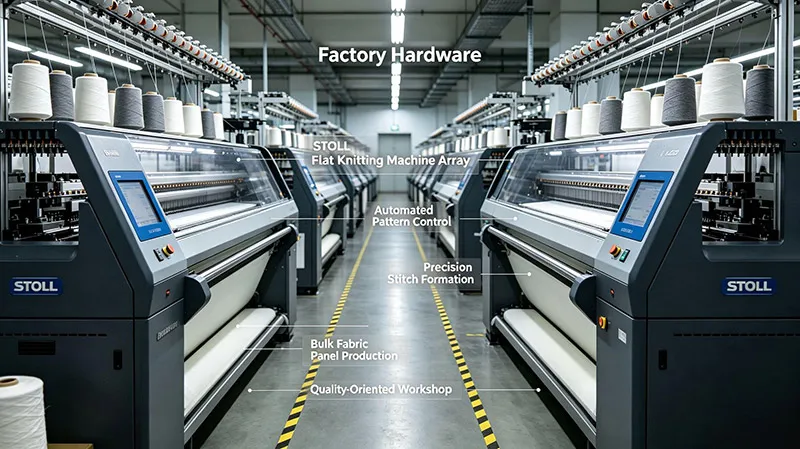
We've been running this playbook for 21 years at JM Sweater. With 110+ German STOLL computerized flat knitting machines covering 2G through 18G, we've taken more Mini-Me programs from sketch to container than we can count. This guide is the technical version of what we tell brand buyers on the first call.
Anatomical Sizing & Pattern Engineering
Walk into our pattern room and you'll hear the same line repeated to every new brand client: human and pet body mechanics are not the same problem.
On a human sweater, the pattern logic revolves around shoulder slope, chest darts, and hem drape. On a pet garment, the fabric has to survive horizontal compression and stretch across the chest and forelegs every time the animal runs, jumps, or lies down. Apply a scaled human block and the front legs get bound up while excess fabric pools under the belly.
The fix is a Dual-Tech Pack — one visual design language, two independent pattern blocks. The stitch structure, color palette, and intarsia placement stay identical so the pair reads as a matching set. The geometry underneath does not.
Where the Two Blocks Diverge
Armhole / Leg Opening. Human armholes angle forward and down. Pet leg openings have to shift toward the underside of the body and carry enough arc to clear the scapula as the foreleg swings forward.
Neckline. Human knits use back-neck drop and front-neck depth to control fit. Pet necklines follow the cervical spine angle. Too low and the collar slides down and traps the front legs. Too high and you're putting pressure on the trachea.
Underbelly Slash. Human hems run level. Pet hems need a U-shaped curve — longer at the rear to cover the back for warmth, cut back at the front toward the ribcage.
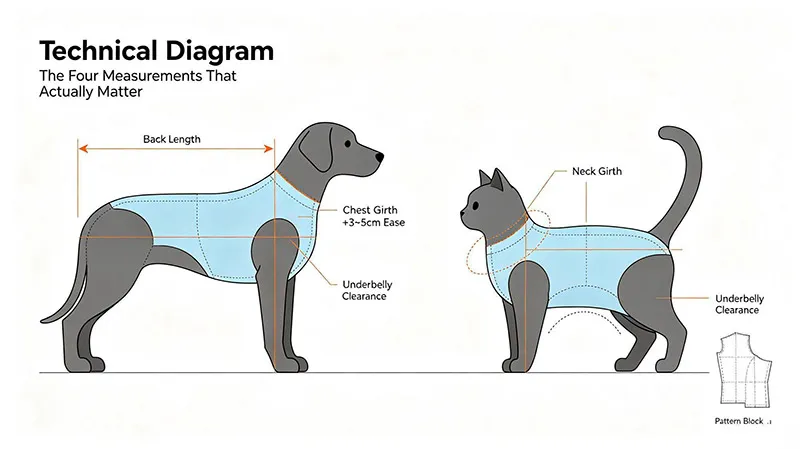
The Four Measurements That Actually Matter
When you build a Size Spec for the pet block, these four numbers control everything:
Back Length — straight-line distance from the base of the neck (top of the scapula) to the tail base. This drives coverage. Too long and the tail can't lift; too short and the garment does nothing.
Chest Girth — circumference at the widest point of the ribcage, just behind the forelegs. Always add +3cm to +5cm of dynamic ease allowance on top of the measured girth. That gap absorbs breathing expansion and coat thickness.
Neck Girth — circumference at the collar seat. The rib collar needs at least 30% elastic extension so it clears the head on the way on, then snaps back flush.
Underbelly Clearance — for male dogs specifically, the belly panel has to pull back to roughly the 4th–5th rib. Miss this and you've built a urine wick.
Functional Hardware: Leash Portal and Bar-Tack
A matching pet sweater isn't just a photo prop. It has to work as a walking garment.
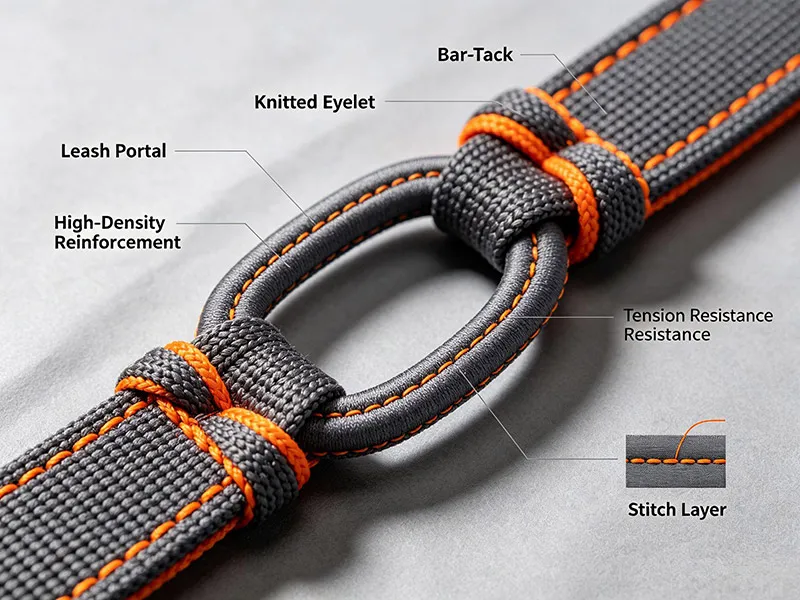
Leash Portal. We knit a roughly 3.5cm hidden opening on the centerline, 3–5cm below the back of the neck. It lets the owner clip a leash to a harness worn underneath. On the STOLL machines this is done with an automatic knitted eyelet or a bound-edge finish so the opening stays flat and doesn't ladder.
Bar-Tack Reinforcement. A leash clip puts sudden, sharp load on that opening. We place 12–14 stitch high-density bar-tacks at both stress ends. Properly executed, the portal holds 100N–200N+ of pull without tearing.
Sizing Matrix for SKU Planning
Use this as a starting point for pairing pet sizes to human sizes. It's the reference we hand buyers when they're mapping inventory ratios for a matching pet and owner sweaters program.
| Pet Size | Recommended Pet Type / Typical Breeds | Pet Back Length (cm) | Pet Chest Girth (cm) | Matching Human Size | Human Chest Reference (cm) |
|---|---|---|---|---|---|
| Pet XS | Chihuahua, Pomeranian, kittens | 20 – 25 | 28 – 34 | Women S / Unisex XS | 82 – 88 |
| Pet S | Poodle, Bichon, small cats | 25 – 30 | 34 – 40 | Women M / Unisex S | 88 – 94 |
| Pet M | Schnauzer, Corgi, French Bulldog | 30 – 38 | 40 – 50 | Unisex M / Men S | 94 – 100 |
| Pet L | Shiba Inu, Border Collie, medium breeds | 38 – 48 | 50 – 65 | Unisex L / Men M | 100 – 108 |
| Pet XL | Golden Retriever, Labrador, Husky | 48 – 60 | 65 – 80 | Unisex XL / Men L | 108 – 116 |
Treat the human side as a guide, not a rule. Buyers often shift one size up on the human block when the pet block runs generous, so the pair photographs proportionally.
Yarn Selection & Pet Safety Standards
A dog's stratum corneum is roughly one-third the thickness of a human's. Add habitual licking and chewing, and the yarn spec stops being a comfort question and becomes a safety question.
Yarns We Recommend
100% Combed Cotton — breathable, anti-static, low allergenicity. The default for year-round next-to-skin pieces.
Superwash Merino — natural thermoregulation, soft enough to avoid prickle. The superwash treatment makes it machine washable.
Cotton / Acrylic Blend — cotton comfort with acrylic's abrasion resistance. This is what you specify when the garment needs to survive tug-of-war and roughhousing.
Yarns We Refuse to Run
Long-staple mohair, angora, feather yarn — sheds heavily. Ingested fibers cause trichobezoars and acute intestinal blockage. This is a hard no.
Untreated 100% Polyester — high static build-up in cold dry air. It mats the coat, irritates skin, and stresses the animal.
Compliance Benchmarks
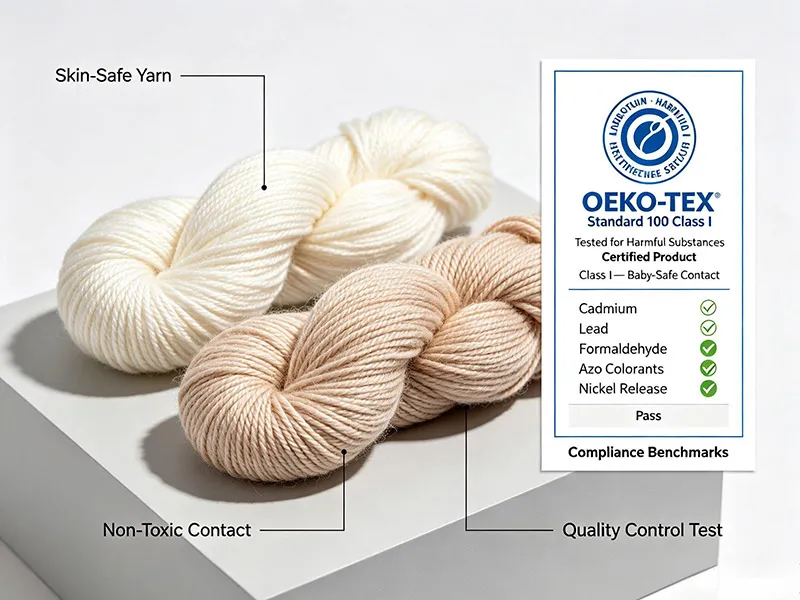
Every yarn and dye lot we buy has to clear:
OEKO-TEX Standard 100, Class I — the infant-grade tier. Zero restricted azo dyes, zero heavy metal residue. This is the standard for pet-safe yarn, and it's the one to quote in your product copy.
US CPSC 16 CFR 1610 — flammability performance for apparel textiles.
Lead & Phthalates Control — lead under 90ppm, plasticizer content tightly capped. Pets chew. The chemistry has to assume that.
Knitting Technology & Production Control
Pattern complexity only matters if the machine and the stitch architecture can carry it. Here's how we set up the floor for pet garments specifically.
Gauge Selection
5G / 7G coarse gauge — for vintage cable knits and heavier outer layers. Full, chunky hand-feel. Increase stitch density here; loose courses give claws something to catch on.
12G / 14G fine gauge — for lightweight four-season pieces. Smooth surface, minimal bulk. Best choice for small breeds and cats.
Float Yarn Management on Jacquard
Long floats on the reverse side of a jacquard are the number one cause of snagged claws and pulled stitches. Our rule: no interior float exceeds 1cm. For large multi-color graphics, we switch to Double Jersey or Intarsia, which produces a clean interior with no crossing yarns at all.
WHOLEGARMENT 3D Knitting
For the highest-end programs we run WHOLEGARMENT 3D seamless pet knitwear — the garment is knitted to finished three-dimensional shape in one pass. No side seams, no underarm joins, no seam ridge rubbing against the ribcage. Stretch recovery across the body is also noticeably better than a cut-and-sew equivalent.
Collar and Cuff Recovery
Pet garments get pulled on and off constantly. We knit the collar and leg cuffs with a high-elasticity Mobilon tape / spandex-wrapped core inside the rib. After repeated washing and heavy movement, the openings still snap back instead of going slack.
Step-by-Step OEM/ODM Workflow
This is the four-stage QC sequence we run on every matching pet and owner knitwear program. It's built around the specific failure modes of dual-block patterns.
1. Tech Pack & 3D Virtual Fitting — Development & Sampling Stage.
We load the Dual-Tech Pack into the STOLL programming environment for stitch simulation and precise color-position alignment. 3D virtual fitting validates the pattern structure before anything touches yarn. First samples of the full human/pet pair ship in 7–12 days.
2. Physical Wear Trial & Dynamic Clearance Test — Pattern Validation Stage.
Samples go onto real animals across different builds and breeds — French Bulldog, Corgi, Poodle, and so on. We watch for stretching during running and lying down, check that the foreleg root shows no friction marks, and confirm the belly cut clears properly with no contamination risk.
3. 30°C Machine Wash Pre-Shrink — Wash & Finishing Stage.
Before bulk pressing, every garment goes through a 30°C standard wash and high-temperature setting cycle. This releases yarn stress early. We hold total machine-wash shrinkage within ±3%, so the end customer's first home wash doesn't change the fit.
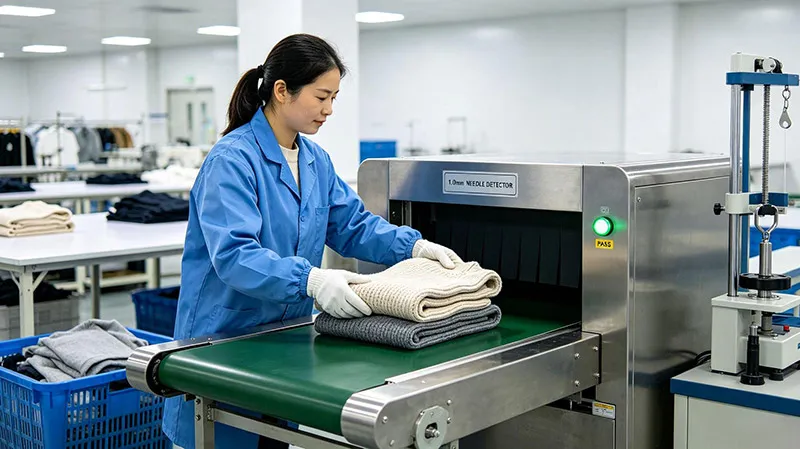
4. Leash Portal Pull Test & 100% Needle Detection — Physical & Safety Inspection.
Every leash opening gets a 100N+ tensile pull test to verify the bar-tack holds. Before packing, 100% of units pass through a 1.0mm needle detector to eliminate broken needles and metal fragments. No exceptions.
Working With JM Sweater
Matching pet and owner knitwear is not a graphic design exercise with a smaller pattern block attached. It sits at the intersection of fashion aesthetics, quadruped anatomy, and hard physical-chemical safety requirements. Brands that skip the anatomy work and the yarn screening end up paying for it in returns, reviews, and vet bills.
We've helped multiple overseas labels take their Mini-Me collections from concept to commercial launch. We understand buyer QC expectations, and we understand the engineering logic underneath pet garments.
What we bring to your program:
- Low MOQ pet clothing manufacturing — from 50 pieces per style, so you can test the market without sinking capital into inventory.
- Fast sampling — 7–12 days for the first human/pet sample pair, built on 3D virtual fitting and dual-block pattern modeling.
- Export-ready compliance — OEKO-TEX Standard 100 Class I, CPSC flammability, and tensile testing documentation handled in-house.
- German STOLL machine capacity — 110+ machines, 2G–18G, as a German STOLL machine pet sweater supplier with full traceability.
If you're planning a matching pet and owner knitwear line and want a straight technical read on feasibility, cost, and timing, talk to our team. We'll give you a free process assessment, pattern support, and a factory quote.
Email: [email protected]
Instant messaging: Reach us on WhatsApp or through the live chat on our website.