
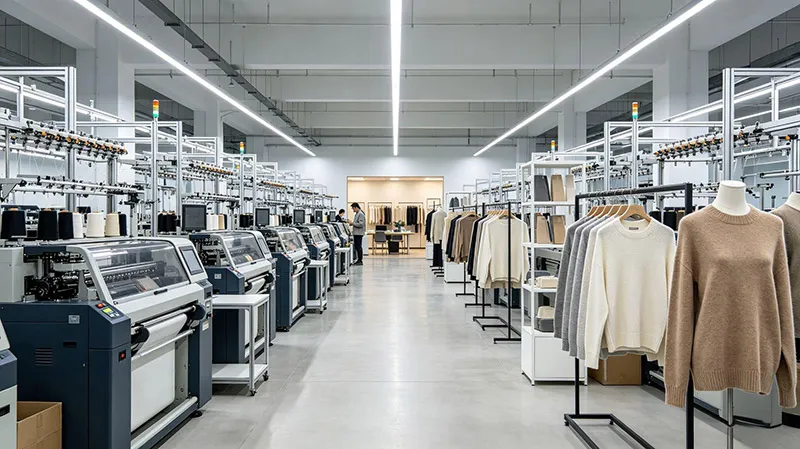
What Must Be on Your Sweater Care Label?
To get your knitwear past US Customs, a half-hearted "cold wash" won't cut it. Under the FTC's stringent rules, a compliant care label must cover the garment's complete care lifecycle—from washing to drying—across four essential categories:
Washing Instructions: Must specify whether the garment is machine washable or hand wash only, and include a clear water temperature limit (e.g., cold, warm).
Bleaching Instructions: Many knitwear yarns are highly sensitive to chemical agents. If bleaching isn't safe, "Do not bleach" must appear. If the material permits it, the label should specify whether only non-chlorine bleach is acceptable.
Drying Instructions: This is where sweaters most often get returned due to consumer shrinkage or distortion. The label must state whether to dry flat, line dry, or tumble dry. If machine drying is permitted, a specific temperature setting is required.
Ironing Instructions: If standard ironing would damage the fabric's texture or distort a knitted intarsia pattern, the label must carry a clear warning—such as "Do not iron."
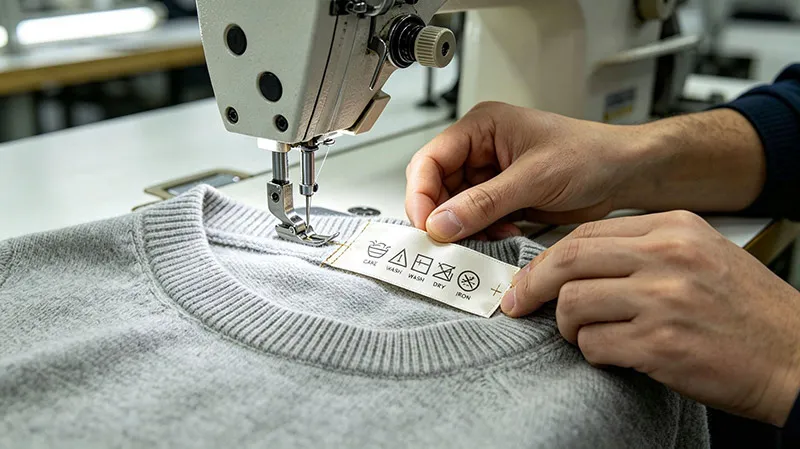
Beyond accuracy of content, the FTC enforces a strict baseline that trips up many first-time brands: permanent care label attachment. The regulation requires that care labels be securely sewn into the garment and remain legible throughout the product's useful life—no removable stickers or flimsy hangtags allowed.
Meeting this "permanent" requirement often tests a production team's attention to detail. In knitwear, the care label must withstand repeated pulling and laundering over the garment's lifetime—yet be applied smoothly enough that rough edges don't irritate the wearer's skin and trigger avoidable customer complaints.
In a mature private label or white label manufacturing relationship, the care label is never an afterthought slapped on at the end of production. It's integrated into the sampling phase alongside customized neck labels, packaging, and other branded trims. At JMSWEATER, we treat this as a non-negotiable part of our quality control protocol. Based on the specific gauge and fabric weight of each sweater, we determine the optimal sewing position and stitch method. This proactive approach to compliance—baked into our daily QC workflow—ensures your garments satisfy FTC scrutiny while preserving the premium hand-feel of high-end knitwear.
Text vs. Symbols: Getting the Format Right
When designing care labels, many brand founders face a common dilemma: plain English or graphic symbols? Some brands, chasing a minimalist aesthetic, slap European wash symbols onto sweaters bound for the US—and this is a frequent trigger for FTC penalties.
For the US market, the FTC is clear and inflexible on format:
English is mandatory. If your label includes text, it must be in English. You're welcome to design bilingual or multilingual labels for global distribution, but the standard English care instructions must be present and must accurately convey the core steps—washing, bleaching, drying, ironing.
Symbols must follow one standard. To save label space, the FTC permits the use of graphic symbols in place of lengthy text—but only if those symbols comply with the ASTM D5489 care symbol system (Standard Guide for Care Symbols for Care Instructions on Textile Products). Many novice importers default to ISO (International Organization for Standardization) icons, unaware that subtle differences exist between the two systems—for example, in how bleach symbols denote chlorine versus non-chlorine bleach. If your labels use non-ASTM symbols without accompanying English text, Customs can flag your shipment as "non-compliant".
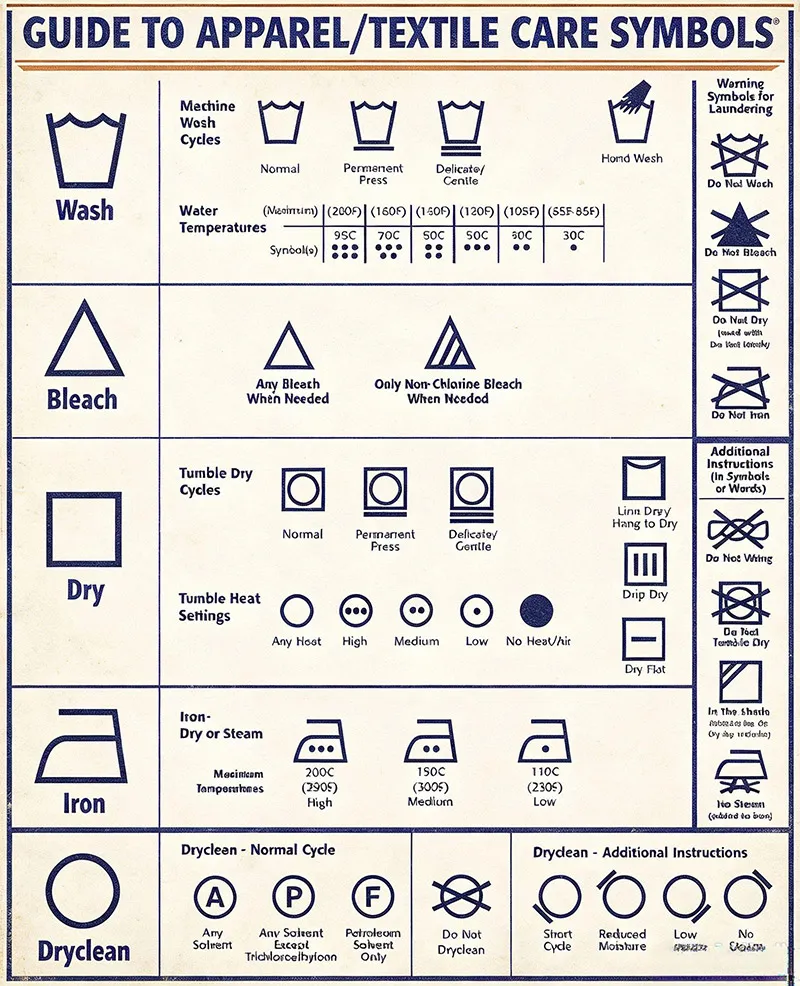
These cross-border regulatory nuances demand a supply chain partner who knows the rules. At JMSWEATER—a professional knitwear manufacturer with annual capacity of 1.2 million pieces and deep experience in US and European markets—our technical and merchandising teams are intimately familiar with these regional differences.
During your proto sample development phase, we don't just confirm silhouette and construction details. We scrutinize every element of your tech pack, including label design. If we spot non-US-standard symbols or missing English disclosures, our team issues an immediate alert and helps you correct it. By embedding this compliance audit into our sampling and bulk production workflow, we ensure that when your custom sweaters ship with your brand labels attached, they carry not only premium quality but also 100% Customs-ready compliance credentials.
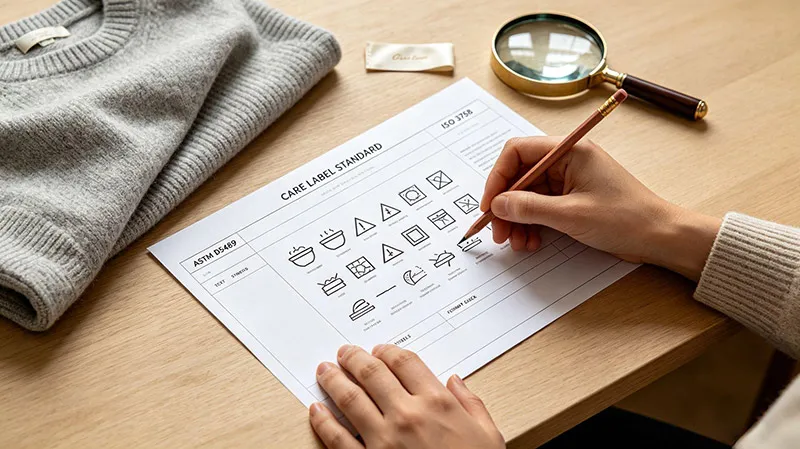
Special Labeling Rules for Complex Knitwear
Standard care instructions don't apply across the board. When you're dealing with complex constructions or sensitive end-user categories, the FTC's scrutiny becomes more granular. Partnering with a manufacturer that has full-spectrum production capabilities and deep compliance expertise is the only way to ensure accuracy across every sweater type.
Fine-Gauge & Delicate Sweaters (18GG & Complex Intarsia)
High-gauge fine knits and intricate intarsia designs demand exceptionally precise care parameters. A lightweight 18GG sweater, for instance, can easily distort or suffer yarn damage under standard machine washing. For these delicate pieces, the FTC typically expects explicit warnings like "Hand Wash Cold, Dry Flat." A mature custom knitwear manufacturer will conduct rigorous wash testing based on the fabric's physical properties to determine the most accurate care parameters—preventing high-end garments from being returned due to consumer washing errors.
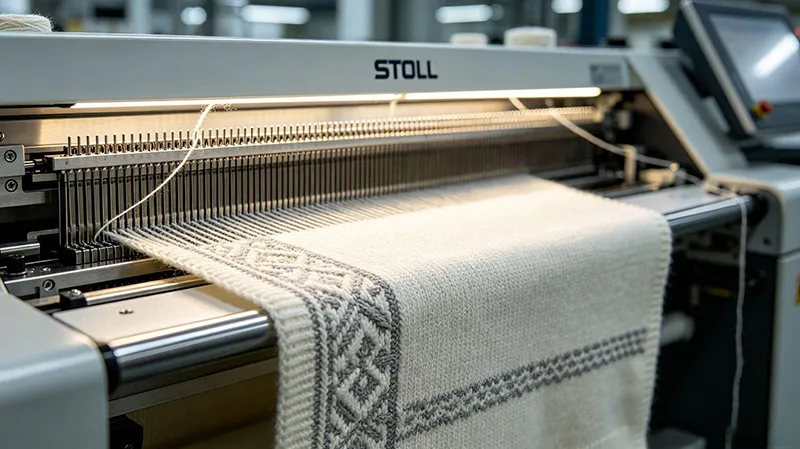
Sustainable Yarns & GRS Knits
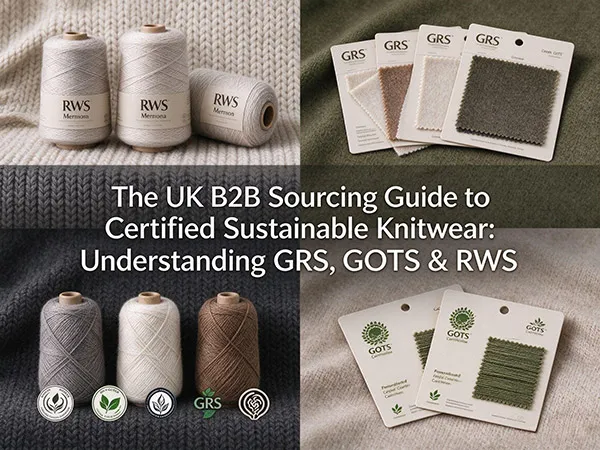
With the rise of sustainable fashion, recycled materials are now widely used in knitwear. Due to the unique structure of regenerated cellulose fibers, these sweaters typically cannot tolerate strong bleaches and require stricter drying temperature limits. Beyond wash testing during sampling, brands need a supply chain with internationally recognized certifications—such as GRS (Global Recycled Standard)—to ensure that sustainable knitwear meets full US and EU compliance requirements, from raw material traceability all the way to the final care label.
Children's Sweaters – The Double Compliance Hurdle
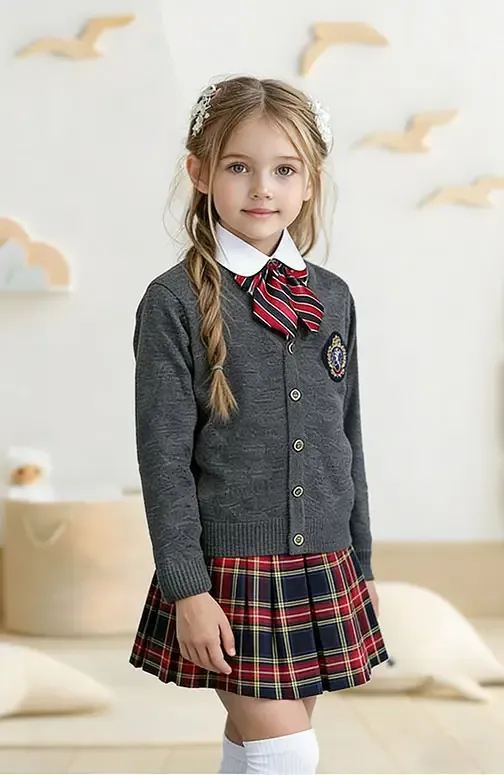
Children's knitwear destined for the US faces the industry's toughest "double compliance" standard. Your product must satisfy not only the FTC's Care Labeling Rule but also the US Consumer Product Safety Commission's (CPSC) flammability and heavy metal testing requirements. This is why we consistently advise children's apparel brands to work with manufacturers that hold valid CPSC-compliant CPC credentials. When you place your order with a pre-qualified partner, you're not just getting quality-verified garments—you're getting care labels and safety documentation that are both customs-ready, eliminating the risk of detention at the border from the start.
The Hidden Cost of Unprofessional Suppliers
Many brands new to the US market operate under a dangerous misconception: if a care label violation triggers a customs detention or FTC penalty, the overseas factory should be the one held accountable. Under US law, however, the Importer of Record compliance liability falls squarely on the brand that clears the goods through Customs—bearing full legal and financial responsibility.
That means if your factory lacks a deep understanding of US labeling rules and cuts corners on care labels, you pay the price. At best, you're looking at costly port holds and labor-intensive relabeling. At worst, you're facing substantial federal penalties for trade regulation violations.
The only reliable hedge against these compliance risks is a supply chain partner with systematic management capabilities. Professional sweater manufacturing is not a workshop-style operation that slaps on labels haphazardly. It requires end-to-end control—from yarn testing through finished goods inspection. At JMSWEATER, our rigorous QC team and comprehensive fabric testing protocols ensure that every knitwear style's recommended care method has been validated through repeated testing. By placing production with a factory that embeds systematic compliance management into every order, you intercept hidden costs at the source—ensuring your products are bulletproof at retail.
How JMSWEATER Secures Your Brand's Compliance
Building a knitwear brand in the US market demands both compliance and efficiency. From FTC care label approval to CPSC dual certification for children's wear, a single oversight at any stage can generate unnecessary compliance costs. Choosing a sourcing partner who knows the rules and holds the right credentials keeps your supply chain on the fast track.
As a vertically integrated manufacturer focused on the mid-to-high-end overseas market, we combine uncompromising compliance standards with agile, brand-friendly support:
- Flexible Low MOQ: Start with as few as 50 pieces per style per color (MOQ 50pcs)—reducing inventory risk and letting you test the market with confidence.
- Rapid Sample Development: Leverage our mature technical and programming capabilities for 7- to 12-day fast sampling.
- End-to-End Compliance Assurance: From 18GG fine-gauge knits to GRS-certified sustainable yarns—and FTC- and CPSC-compliant labels that meet every regulatory requirement—we ensure every garment clears customs without a hitch.
If you're searching for a knitwear manufacturing partner that delivers both exquisite craftsmanship and ironclad compliance, send us your tech pack or design concepts. Let our expert team help your brand navigate the US market with confidence.