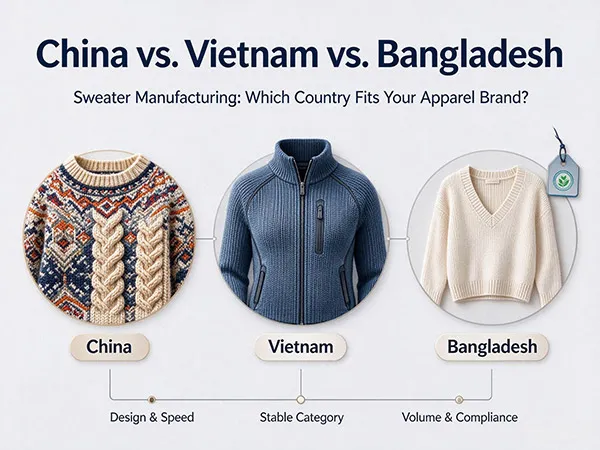
China vs. Vietnam vs. Bangladesh Sweater Manufacturing: Which Country Fits Your Apparel Brand?
Introduction: The Era of Diversified Sourcing (China +1 Strategy)
Beyond the Price Tag: Why the "China +1" Strategy is the New Normal
For today's overseas apparel brands, sweater sourcing is no longer a simple numbers game of who offers the lowest FOB quote. With Western tariff policies in constant flux, shifting labor costs across Southeast Asia, and mounting inventory pressure at retail, betting your entire knitwear program on a single country is a recipe for margin erosion.
This is precisely why the "China +1" supply chain diversification strategy has become the new normal for global sourcing directors. As someone who has spent years on the factory floor of oem knitwear manufacturing, I'll be upfront with brands: there is no such thing as a perfect sweater factory—only the source that best fits your brand's business model. Is your core need hundreds of thousands of units of value-priced bulk production, or a few dozen pieces to test a trend? Different needs demand entirely different answers.
In this guide, we'll strip away surface-level price sheets and take a strategic look at Knitwear Total Cost of Ownership (TCO) to objectively compare the three major sweater manufacturing hubs: China, Vietnam, and Bangladesh. We'll examine five critical dimensions:
Real FOB unit prices and tariff barriers
ESG and green sustainability
Gauge capabilities and craftsmanship ceilings
MOQ thresholds and supply chain agility
The hidden costs everyone overlooks
By the end, you'll have a clear picture of how the global knitwear supply chain actually works—and the clarity to make the right sourcing decision for your next season's collection.
Table of Contents:
Executive Summary: At-a-Glance Comparison Matrix
Cost, Tariffs & The Geopolitical Landscape
Technical Upgrades, ESG & Craftsmanship
MOQ, Agility, and Inventory Risk Control
The Decision Tree: Which Hub Fits Your Brand?
The JM Sweater Approach: Agile Manufacturing
Frequently Asked Questions (FAQ)
Executive Summary: At-a-Glance Comparison Matrix
For quick evaluation, the table below summarizes the key metrics and data across China, Vietnam, and Bangladesh for sweater manufacturing. Use it to establish a panoramic view of each country's supply chain positioning before diving into the details:
Sourcing Metric
Bangladesh (The Volume King)
Vietnam (The Balanced Haven)
China (The Agile Specialist)
Primary Strength
Lowest Cost, 0% EU Tariff, ESG/LEED
US Tariff De-risking, High Quality
Complex Craftsmanship, Low MOQ
Average FOB Cost
Low ($)
Medium ($$)
Medium-High ($$$)
US Tariff Rate
~16.5%
~16.5%
24% – 41.5% (incl. Section 301)
EU Tariff Rate
0% (EBA)
0% (EVFTA)
12%
Standard MOQ
2,000 – 5,000+ pcs
800 – 2,000 pcs
50 – 500 pcs (Agile factories)
Production Lead Time
70 – 100 days
60 – 75 days
25 – 45 days
Best For (Apparel Type)
Basic Sweaters, High-volume plain knits
Mid-to-high end blends, Steady basics
Intarsia, Jacquard, 2G-18G, Quick-response
Key Takeaway: If your brand prioritizes unit cost and tariff exposure above all else, Southeast Asia is your first stop. But if your business model depends on rapid sampling, multi-style testing, complex stitch structures, and minimizing deadstock risk—China's agile factories remain an irreplaceable strategic asset.
Deep Dive 1: Cost, Tariffs & The Geopolitical Landscape
When evaluating sweater supply chains, sourcing teams typically look at FOB unit price first. But focusing only on ex-factory cost means you're likely overlooking the hidden expenses tied to tariffs and supply chain coordination. Here's the real financial and geopolitical breakdown across the three hubs:
Bangladesh: The Unbeatable Champion of Volume & EU Duty-Free
For ultra-high-volume basic sweaters, Bangladesh enjoys a cost moat that no other country can match.
Rock-bottom labor costs: As the world's second-largest apparel exporter, Bangladesh offers highly competitive labor rates—ideal for standardized orders starting at tens of thousands of units.
Europe's duty-free safe harbor: Thanks to the EU's EBA (Everything But Arms) preferential trade agreement, Bangladesh exports to the EU enjoy 0% tariffs (compared to China's 12% rate). For high-volume brands targeting European markets with solid-color, plain-knit pullovers, this cost advantage is untouchable.
Vietnam: The Strategic Safe-Haven for US Brands
For brands focused on the US market, Vietnam has become the core de-risking destination in recent years.
Clear tariff advantage: With Section 301 tariffs adding to US-China trade friction, China's combined export tariff to the US has climbed to 24%–41.5%, while Vietnam's rate to the US holds steady at around 16.5%.
Mature mid-tier category management: Vietnam boasts solid port infrastructure and a quality control culture deeply influenced by Japanese and Korean capital. For mid-range synthetic blend sweaters and standard cardigans, Vietnam delivers remarkably consistent output.
China: Navigating High Tariffs with "Hidden Cost" Savings
As a Chinese oem knitwear manufacturer, I'll be candid: China's labor costs now exceed Southeast Asia's, and export tariffs to the US are substantial. Yet many sophisticated brands still keep a significant share of orders in China after running the TCO (Total Cost of Ownership) math.
The reason comes down to hidden costs that Southeast Asian supply chains can't easily avoid:
Upstream raw material dependency and longer lead times: Bangladesh and Vietnam have relatively thin local supply chains for specialty yarns. When brands need GRS-certified recycled yarns, high-count merino wool, or specialized functional blends, factories in Southeast Asia typically still source yarn from China (Guangdong, Zhejiang industrial belts) and import by sea. Just the yarn transfer and customs clearance adds 2–3 weeks and extra logistics costs.
Sampling iteration and rework losses: Complex stitch structures (like high-difficulty jacquards or intarsia) often require multiple rounds of sample revisions at Southeast Asian factories. The time spent on back-and-forth sample shipping, plus potential defect rates in bulk production, quickly eats away at the few cents saved on the initial FOB quote.
When brands factor in stock-service yarn availability, first-pass sampling success rates, and deadstock risk into their financial calculations, the "hidden costs" saved by China's mature industrial ecosystem often effectively offset the tariff premium.
Deep Dive 2: Technical Upgrades, ESG & Craftsmanship
When discussing knitwear manufacturing, equipment sophistication and worker experience directly determine the quality ceiling of your sweaters. On this dimension, each country has evolved along distinctly different paths:
The Rise of Bangladesh's LEED Green Factories (ESG Focus)
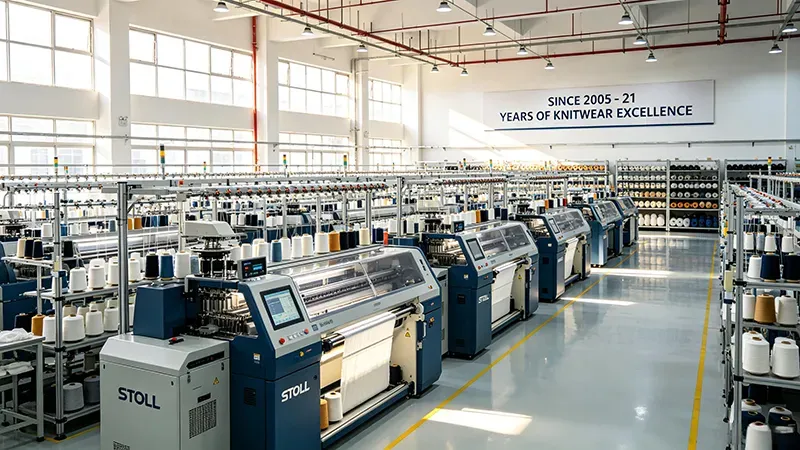
Many buyers still picture Bangladesh as a purely manual-labor era operation. That's outdated. In recent years, Bangladeshi factories have aggressively adopted German STOLL and Japanese Shima Seiki computerized flat knitting machines, achieving international-standard automation for 7G-12G standard gauges. More notably, Bangladesh now hosts the world's densest concentration of LEED-certified green factories. For clients who put ESG (Environmental, Social, and Governance) at the heart of their brand messaging, Bangladesh offers compelling supply chain credentials.
China's Irreplaceable Moat: 2G to 18G & Extreme Complexity
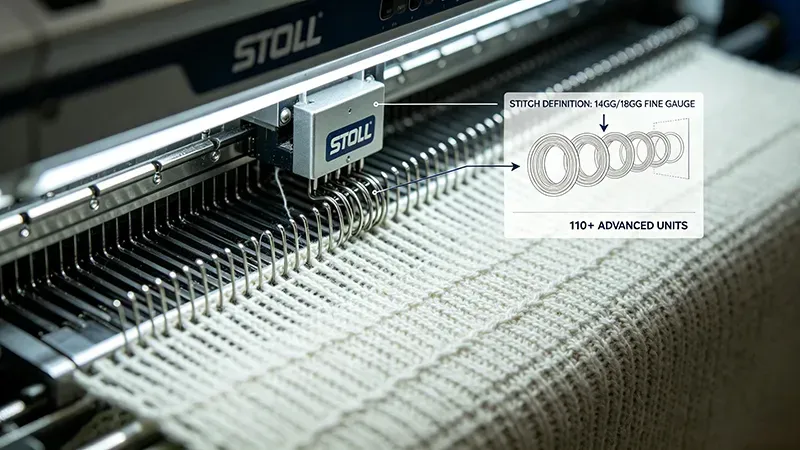
But when styles move beyond basic knits into the deep end of craftsmanship, China's technical moat remains insurmountable. Whether it's the rich texture of 2G/3G heavy-gauge vintage chunky knits, or the machine-precision-demanding 16G/18G lightweight fine-gauge knits, Southeast Asian factories often can't deliver.
For multi-color Intarsia and Jacquard knitwear, fine hand-linking seams, and 3D seamless garment knitting, China remains the only solution with the highest density of advanced equipment and the deepest pool of skilled technicians. For mid-to-high-end brands chasing design ceilings and premium hand-feel, China is still the irreplaceable place where designs become reality.
Deep Dive 3: MOQ, Agility, and Inventory Risk Control
In today's fast-moving apparel retail market, MOQ thresholds and supply chain agility often determine a brand's survival and cash flow more than the unit processing quote.
The Traditional Mega-Factory vs. The Agile Specialist
Let's clear up a common misconception: not all Chinese factories do small-batch quick-response. Many traditional Chinese mega-factories still enforce strict MOQs of 2,000+ pieces per style. However, alongside the rise of D2C brands and emerging designers, China has cultivated a new breed of knitwear suppliers specializing in agile manufacturing—built specifically to solve modern brands' inventory pain points.
Sample-to-Market Speed: Beating the Trend Clock
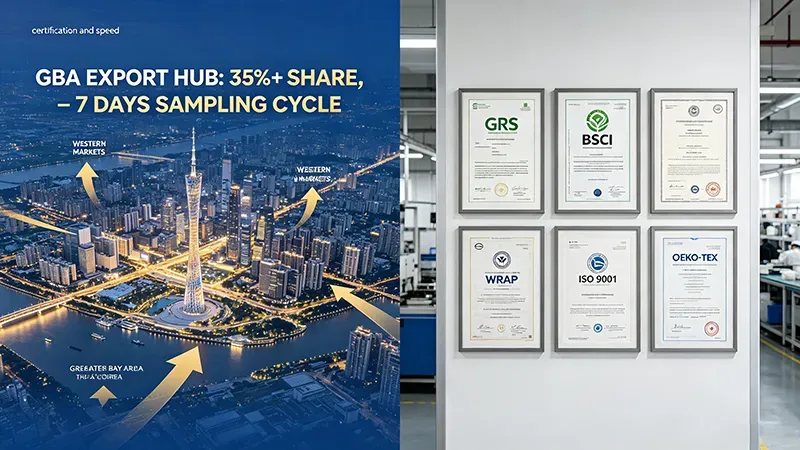
When chasing fashion trends, sampling speed is your lifeline. Constrained by upstream material availability and port infrastructure, Bangladesh or Vietnam typically need 3-4 weeks from sampling to approval, followed by 40+ days of ocean freight. By contrast, leveraging highly concentrated stock-service yarn markets, China's agile factories can compress first-sample turnaround to 7-10 days—helping brands convert sketches into shelf-ready inventory at maximum speed.
How "Small Order, Quick Response" (SOQR) Saves Margins
Many sourcing teams fall into a financial blind spot: chasing a $1 per-unit processing savings by placing massive overseas orders. The truth is, the biggest killer of brand margins is deadstock inventory risk. The core business logic of a modern agile supply chain is this: test the market with initial MOQs as low as 50-100 pieces per style, identify winners with precision, then rapidly reorder. Rather than dumping inventory at 50% off at season's end, using SOQR to protect healthy margins is the advanced play for mature brands.
The Decision Tree: Which Sourcing Hub Fits Your Brand?
Finding the perfect sweater manufacturer was never about finding the absolute lowest price—it's about finding the supply chain piece that best fits your brand's business model. Setting aside all subjective bias, here's a brand-profile decision tree to help you quickly identify your match:
When You Should NEVER Choose China (Go to Bangladesh/Vietnam Instead)
The best way to build trust is honesty. As a China-based knitwear manufacturer, here's our most straightforward advice: if your order volume per style exceeds 5,000 pieces, your designs are solid-color plain knits with zero complex craftsmanship, your target customers are extremely price-sensitive mass-market consumers, and you have a comfortable 6-9 month lead time—book your flight to Bangladesh or Vietnam. In a pure labor-cost volume war, Chinese factories can't offer you the best margins.
Model A: The Volume & ESG Brand (Match: Bangladesh)
Core needs: Rock-bottom pricing, 0% EU tariffs, green factory credentials.
Brand profile match: Large fast-fashion retailers or big-box stores targeting the European market. Your business depends on massive volume runs and extremely low per-unit FOB costs. Meanwhile, Bangladesh's dense concentration of LEED-certified green factories perfectly supports your ESG compliance audits and sustainability marketing strategy for Europe.
Model B: The US-Market Balancer (Match: Vietnam)
Core needs: US tariff mitigation, mid-to-upper order volumes, a stable quality-cost compromise.
Brand profile match: Traditional American mid-tier commercial brands. Your typical order per style runs 800-2,000 pieces. Given Section 301 tariffs, you need a de-risked alternative in Asia. Vietnam's mature port infrastructure and Japanese-Korean-influenced quality control make it an ideal safe haven for your evergreen basics.
Model C: The Trend-Chaser & High-Crafter (Match: China Agile Specialists)
Core needs: Complex jacquard/intarsia designs, full gauge range (2G-18G), low MOQ testing, stock-service premium and sustainable yarns for quick response.
Brand profile match: Modern D2C brands, mid-to-high-end designer labels, or boutique buyers. Your sweaters exist to elevate brand equity, and your designs are packed with intricate Intarsia, Jacquard, or refined hand-linking craftsmanship. You need a factory with full equipment coverage from 2G heavy-gauge vintage chunky knits to 18G ultra-fine gauge. More importantly, you care deeply about cash flow and inventory health—you need a low MOQ sweater manufacturer supporting 50-100 piece orders for market testing, with direct access to GRS, GOTS-certified stock-service yarns for rapid production and reorders. This is the absolute home turf of China's new-generation agile factories.
Partnering with Agile Specialists: The JM Sweater Approach
How JM Sweater Redefines the Sourcing Experience
At JM Sweater, we know exactly where we fit—and where we don't. We're not trying to out-compete Southeast Asian factories on the lowest per-unit price for massive basic orders. Instead, we've chosen to be the hardcore technical backbone for Model C brands: mid-to-high-end and quick-response labels.
As a representative of China's knitwear manufacturing shift toward agility, we've restructured our factory's fulfillment process around three core capabilities:
Extreme Agility: We've broken down the rigid production thresholds of traditional mega-factories, offering genuine MOQs as low as 50-100 pieces per style. Combined with mature stock-service yarn support, this helps emerging brands test the market at minimal risk.
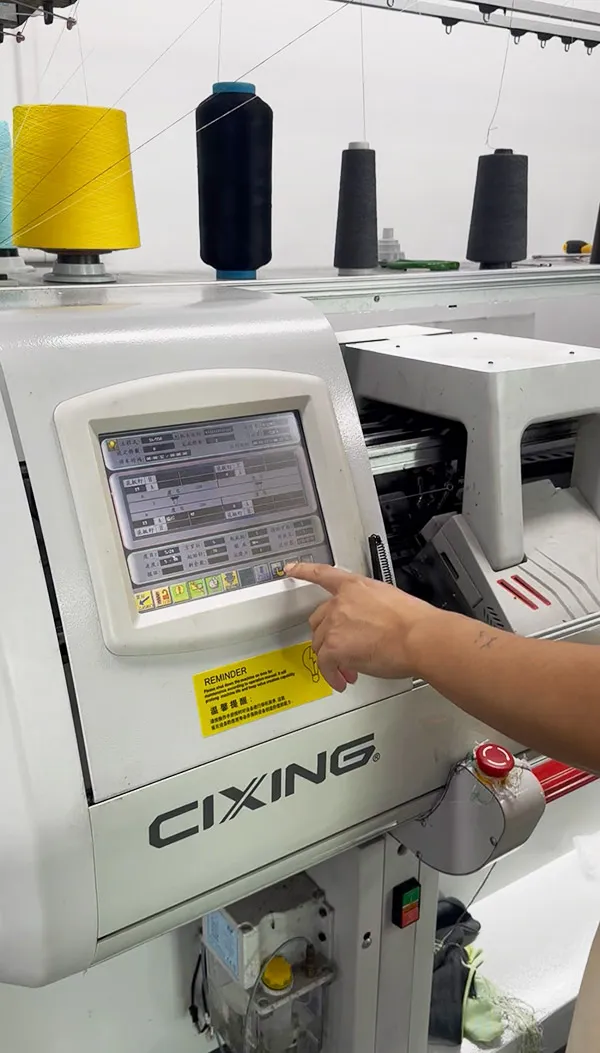
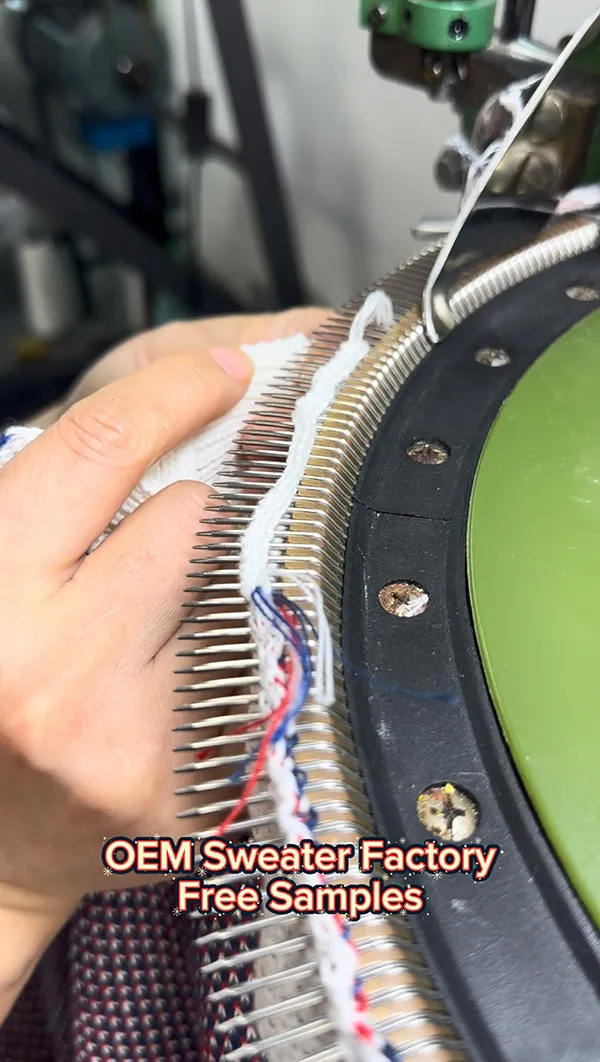
Full-Spectrum Mastery: Our facility is equipped with 2G to 18G gauge capabilities across our computerized flat knitting machines. We handle heavy-gauge chunky knits, lightweight fine-gauge, Intarsia and Jacquard knitwear, and hand-linking seams—the high-barrier techniques that define premium knitwear.
Speed to Market: Leveraging our deep industrial belt connections, we deliver 7-day rapid sampling and 25-45 day bulk production cycles. This helps clients capture trends while minimizing deadstock inventory risk.
Conclusion & FAQ Section
Summary
Global sweater supply chain selection was never a zero-sum game. Sophisticated apparel brands typically adopt a blended strategy: place stable, high-volume basics with Bangladesh or Vietnam to leverage cost and tariff advantages, while routing high-margin designs, complex gauge craftsmanship, and trend-driven quick-response styles through China's agile manufacturing factories.
Through this coordinated approach, brands can dilute Knitwear Total Cost of Ownership (TCO) while maintaining market sensitivity and inventory safety—striking an ideal balance between profitability and risk resilience.
FAQ
What is the minimum order quantity for custom sweater manufacturing in China?
It depends on the factory. Traditional Chinese mega-factories often require 2,000+ pieces per style. However, agile specialists like JM Sweater offer MOQs as low as 50-100 pieces per style, making small-batch custom knitwear viable for emerging brands and trend testing.
What gauge capabilities should I look for in a sweater manufacturer?
It depends on your design intent. For heavy-gauge vintage looks, you need 2G-5G capability. For standard sweaters, 7G-12G is typical. For lightweight, fine-gauge luxury knits, you need 14G-18G. China's agile factories typically offer the full 2G to 18G gauge range under one roof.
How long does sampling take for complex knitwear?
Sample turnaround time varies significantly by country. Bangladesh and Vietnam typically require 3-4 weeks. China's agile factories, leveraging concentrated stock-service yarn markets, can compress first-sample turnaround to 7-10 days.
What quality control standards should I expect?
Reputable manufacturers across all three countries should operate at AQL 1.5 quality control standards or tighter. Always request third-party inspection reports and clarify defect thresholds before placing bulk orders.
Can I source GRS-certified recycled yarns from Southeast Asia?
It's possible but logistically complex. Most GRS-certified stock-service yarns originate from China's industrial belts. Southeast Asian factories typically import these yarns, adding 2-3 weeks to lead times and extra logistics costs. Sourcing directly from Chinese factories with in-house access to certified yarn stocks is more efficient.