
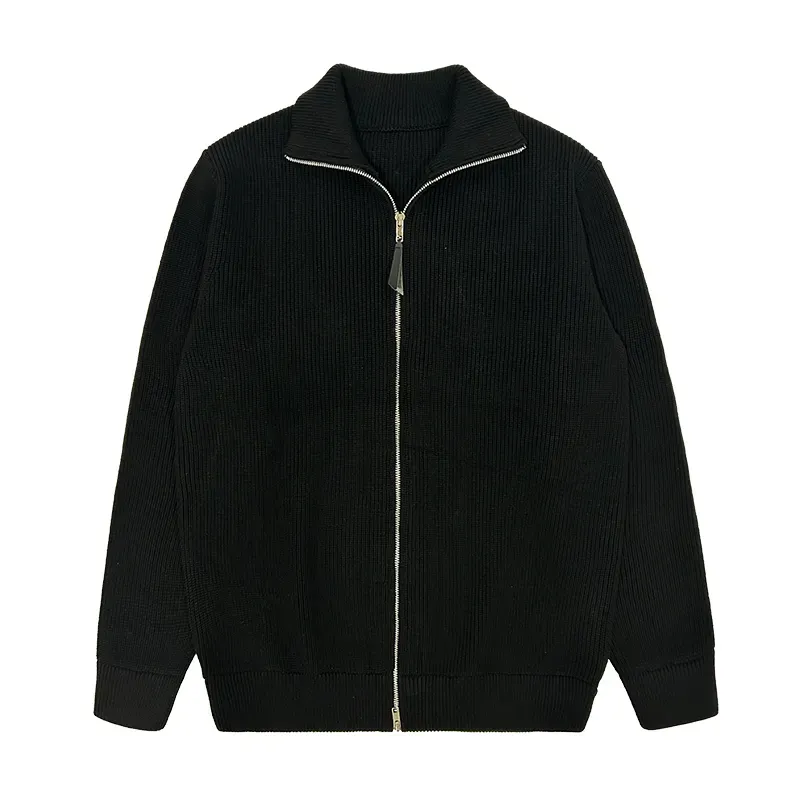
For the past few seasons, that piece has been a black full-zip knit jacket. Nothing flashy. No loud branding. Just a quiet, engineered piece of clothing that somehow solves a pile of problems for men who move between airports, boardrooms, and bike lanes in a single day.
And yes, we track the numbers. As a custom sweater manufacturer, we see exactly how this single style has quietly crossed tens of thousands of units shipped into premium menswear channels across North America and Western Europe. It’s become the anchor that independent designers, golf clubs, and contemporary brands build a fall delivery around.
Here’s why—and I’ll try not to make it sound like an engineering manual. Even though, honestly, it kind of is.
The silhouette trick that tailors already know
Most knitwear follows the body too literally. If the wearer’s shape is 1:1—straight up and down—the sweater amplifies that. Not flattering, and not what a guy wants when he’s rushing from a redeye to a client meeting.
We went after a 1:0.8 shoulder-to-waist proportion instead. Tailors have used this ratio for decades on suits; we just baked it into knit construction. A vertical rib texture does a lot of the optical work. The ribs draw the eye downward, the black absorbs light, and the side panels use a micro-compression stitch that gently reins in the midsection—no squeezing, no shapewear nonsense, just a cleaner line. A guy can slouch in an airport chair and still look like his posture is on purpose.
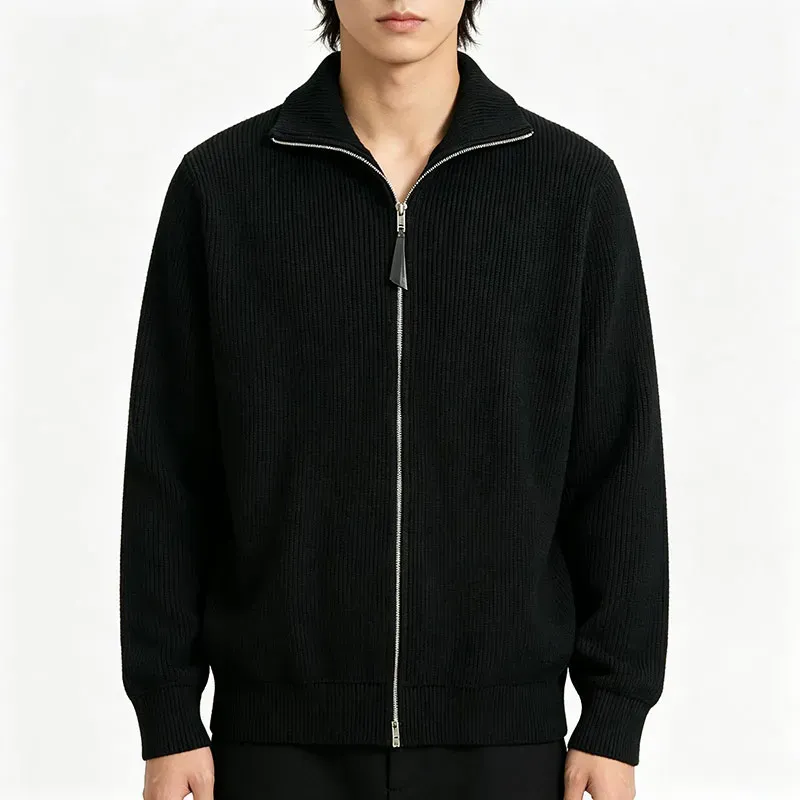
And the zip? When it’s pulled to mid-chest, that V-line does something to the neck and jawline that usually requires a well-cut blazer. Small things, huge payoff.
Details that buyers actually call out in emails
A few months back, a sourcing VP from New York—someone who’s forgotten more about garment construction than I’ll ever know—sent over a note. Not a PO, just a note. He’d moved 40% of their brand’s full-zip knit program onto our whole-garment line. Returns from seam irritation? Zero. His words: “Zero. I’ve never written that before.”
That came down to a handful of nerdy decisions.
The collar is double-layer, variable-stitch. Zip it all the way up on a damp morning and it stands crisp against the neck—no floppy turtleneck thing. Leave it open, and the lapels roll back in a clean, flat curve that doesn’t fight gravity. I’ve worn a sample inside out just to check the seam finish. There isn’t one. It just flows.
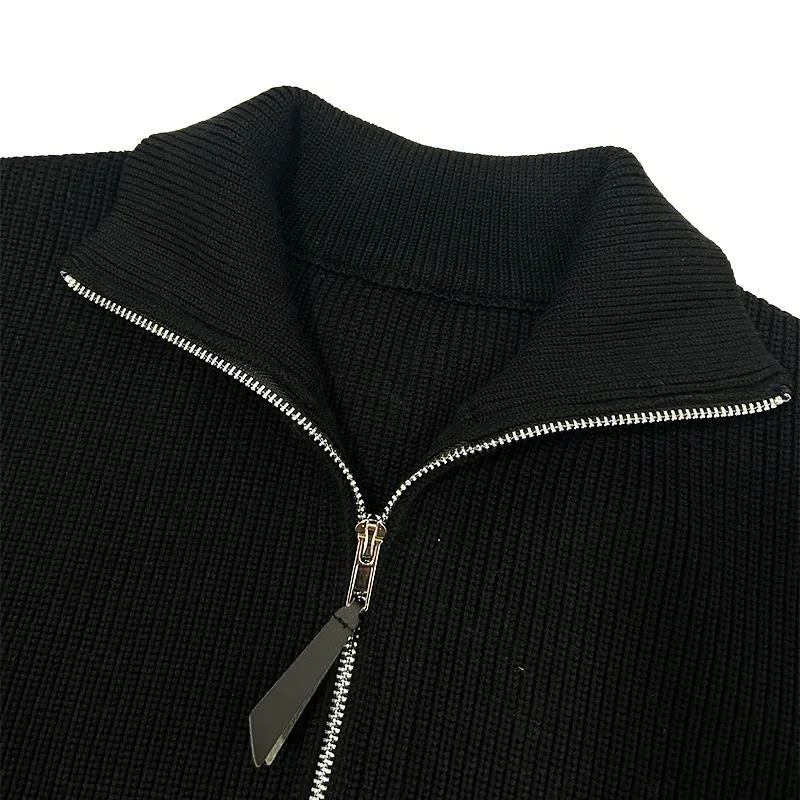
The zipper is a heavy-duty two-way metal job, and before you ask—yes, we cycled it over 10,000 times. Couldn’t help ourselves. More importantly, the inner placket is knitted, not sewn-on binding. That means no cold metal on bare skin and no wavy puckering when the wearer sits down, leans forward, or spends an hour hunched over a laptop. The placket just stays straight. Quietly. Stubbornly.
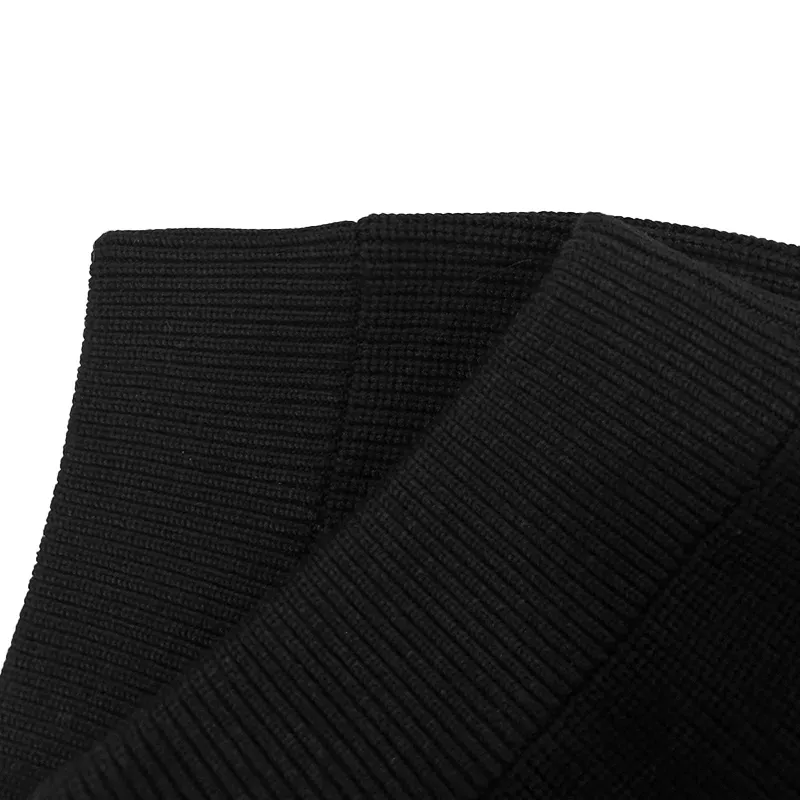
Cuffs and hem got a high-memory rib. We’ve thrown samples through 30 wash-and-dry cycles—not lab washes, actual repeated home laundry—and they snap back with the same grip as day one. For buyers, this translates to fewer returns labeled “stretched out” or “lost shape.” For the guy wearing it, it just means the jacket doesn’t give up on him by mid-season.
A few months back, a sourcing VP from New York—someone who’s forgotten more about garment construction than I’ll ever know—sent over a note. Not a PO, just a note. He’d moved 40% of their brand’s full-zip knit program onto our whole-garment line. Returns from seam irritation? Zero. His words: “Zero. I’ve never written that before.”
That came down to a handful of nerdy decisions.
The collar is double-layer, variable-stitch. Zip it all the way up on a damp morning and it stands crisp against the neck—no floppy turtleneck thing. Leave it open, and the lapels roll back in a clean, flat curve that doesn’t fight gravity. I’ve worn a sample inside out just to check the seam finish. There isn’t one. It just flows.
The zipper is a heavy-duty two-way metal job, and before you ask—yes, we cycled it over 10,000 times. Couldn’t help ourselves. More importantly, the inner placket is knitted, not sewn-on binding. That means no cold metal on bare skin and no wavy puckering when the wearer sits down, leans forward, or spends an hour hunched over a laptop. The placket just stays straight. Quietly. Stubbornly.
Cuffs and hem got a high-memory rib. We’ve thrown samples through 30 wash-and-dry cycles—not lab washes, actual repeated home laundry—and they snap back with the same grip as day one. For buyers, this translates to fewer returns labeled “stretched out” or “lost shape.” For the guy wearing it, it just means the jacket doesn’t give up on him by mid-season.
The thing about not cutting and sewing
Most knitwear is cut-and-sew. Front panel, back panel, sleeves, stitch them together. Those seams don’t just rub—they interrupt how the fabric wants to drape. It’s like putting a speed bump in the middle of a flowing line.
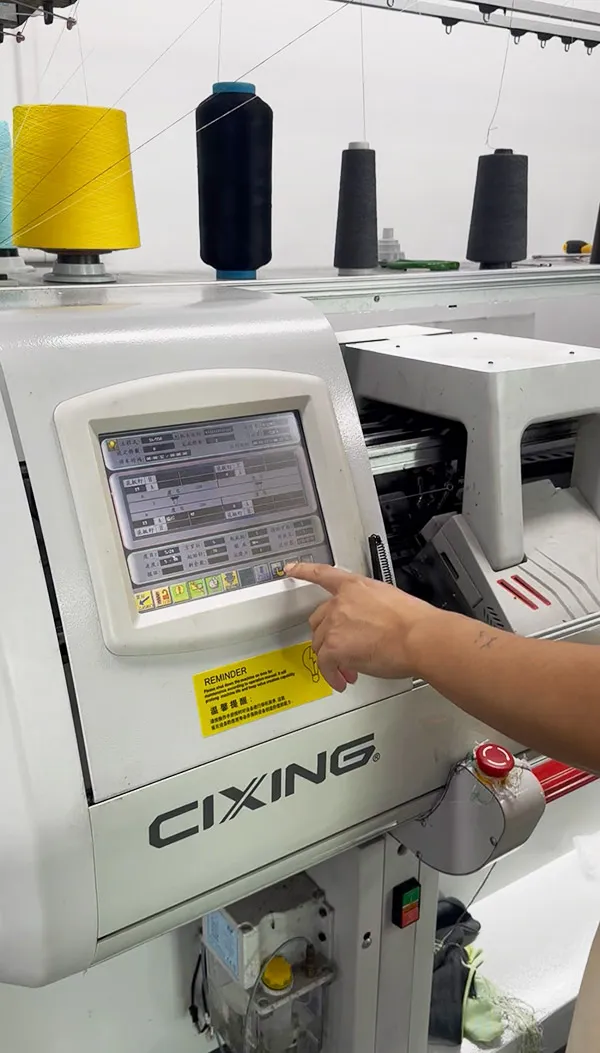
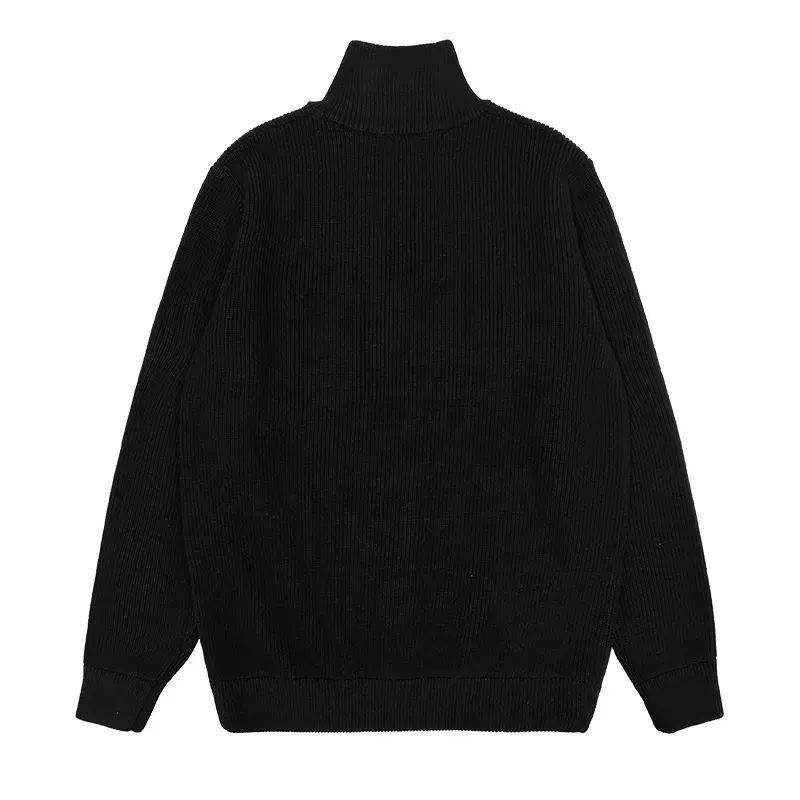
We parked 110+ German STOLL flatbed machines on our floor years ago and committed to whole-garment programming. One continuous yarn enters, one complete jacket exits. No shoulder seams. No side seams. No inside labels scratching the back of your neck. The drape ends up being genuinely liquid. The pressure distribution across the body is even. I’ve handed this jacket to a fabric technologist and watched him rub the inside of the sleeve against his cheek. That’s the kind of reaction you can’t fake.
Most knitwear is cut-and-sew. Front panel, back panel, sleeves, stitch them together. Those seams don’t just rub—they interrupt how the fabric wants to drape. It’s like putting a speed bump in the middle of a flowing line.
We parked 110+ German STOLL flatbed machines on our floor years ago and committed to whole-garment programming. One continuous yarn enters, one complete jacket exits. No shoulder seams. No side seams. No inside labels scratching the back of your neck. The drape ends up being genuinely liquid. The pressure distribution across the body is even. I’ve handed this jacket to a fabric technologist and watched him rub the inside of the sleeve against his cheek. That’s the kind of reaction you can’t fake.
Merino that can handle a washing machine
We blend washable merino with GRS-certified bio-based fibers. The merino still does what merino does—temperature regulation, natural odor resistance, a soft hand that doesn’t feel precious. But the washable treatment means the jacket lands in a machine, not at the dry cleaner. For the busy-guy demographic (the one that never remembers to “lay flat to dry”), this changes everything.
Internally, we call it the “Monday morning test.” Take the jacket off a hanger after a weekend wash, throw it on, go straight into a video call. No pills, no shrinkage, no embarrassing fuzz on the collar. That’s the bar. It sounds basic, but anyone who’s dealt with wool returns knows it’s not.
We blend washable merino with GRS-certified bio-based fibers. The merino still does what merino does—temperature regulation, natural odor resistance, a soft hand that doesn’t feel precious. But the washable treatment means the jacket lands in a machine, not at the dry cleaner. For the busy-guy demographic (the one that never remembers to “lay flat to dry”), this changes everything.
Internally, we call it the “Monday morning test.” Take the jacket off a hanger after a weekend wash, throw it on, go straight into a video call. No pills, no shrinkage, no embarrassing fuzz on the collar. That’s the bar. It sounds basic, but anyone who’s dealt with wool returns knows it’s not.
What I’d tell a buyer over coffee
If you’re building a knit program for a premium menswear audience—whether that’s a boutique, a golf pro shop, or a direct-to-consumer label—don’t underestimate the power of one technically obsessive anchor piece. Buyers keep telling us this jacket sells through fast, generates very few “fit” or “quality” complaints, and rewards repeat customers who buy it in multiple colors once we offer them.
We’re not a marketing machine. We’re a factory that genuinely enjoys solving textile problems. The fact that the problem-solving resulted in a best-seller is just a nice side effect.
If this sounds like the kind of conversation you’d like to continue, reach out. We’ll send a sample, a spec sheet that reads more like a technical white paper, and—if you want it—a peek at the 1:0.8 pattern math that makes the whole thing work.
If you’re building a knit program for a premium menswear audience—whether that’s a boutique, a golf pro shop, or a direct-to-consumer label—don’t underestimate the power of one technically obsessive anchor piece. Buyers keep telling us this jacket sells through fast, generates very few “fit” or “quality” complaints, and rewards repeat customers who buy it in multiple colors once we offer them.
We’re not a marketing machine. We’re a factory that genuinely enjoys solving textile problems. The fact that the problem-solving resulted in a best-seller is just a nice side effect.
If this sounds like the kind of conversation you’d like to continue, reach out. We’ll send a sample, a spec sheet that reads more like a technical white paper, and—if you want it—a peek at the 1:0.8 pattern math that makes the whole thing work.