
You get a Tech Pack across your desk. Complex multi-color graphics. First question we ask—every single time—is this: Intarsia or Jacquard?
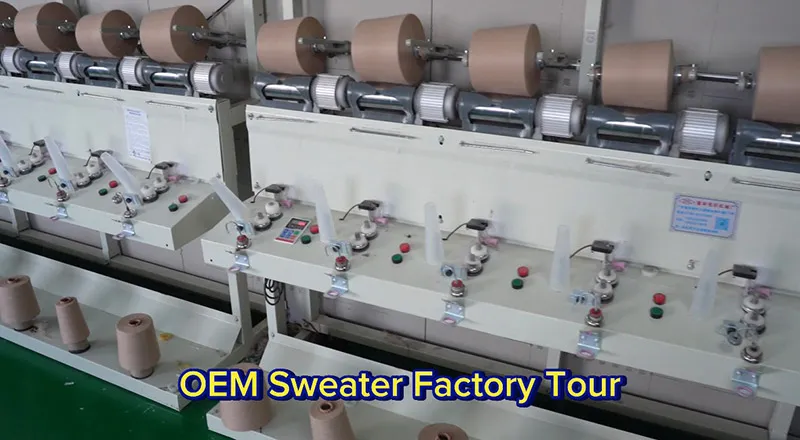
To a brand founder or sourcing manager new to custom sweater manufacturing, the two look identical on paper. Both give you bold color patterns. But out on the floor, with STOLLs and Shima Seikis running twenty-four-seven, this choice separates collections that ship from collections that tank.
Pick wrong and it gets ugly. That lightweight knit you planned for early fall? Jacquard's hidden floats turn it into a stiff, heavy thing that snags if you look at it wrong. Or that all-over repeat you wanted to push in volume? Run it as Intarsia and your machine stops every few seconds to swap yarn carriers. FOB per unit spikes, your production schedule drags, and you're late for the season.
Intarsia and Jacquard run on completely different knitting logics. One is a single-layer jigsaw. The other stacks multiple yarns across the whole width. So when you're debating whether to chase that 16GG fine-gauge float-free finish or lean into Jacquard's efficiency and structure, understand this: you're not picking a look. You're picking a price point, a yield rate, and a machine-hour burn.
We're skipping the textbook stuff. What follows is how these two processes actually behave in bulk production—the real cost drivers, the fabric differences you can feel, and what it means for your bottom line.
Core Structure Breakdown: Float-Back Jacquard vs. Float-Free Single-Layer Intarsia
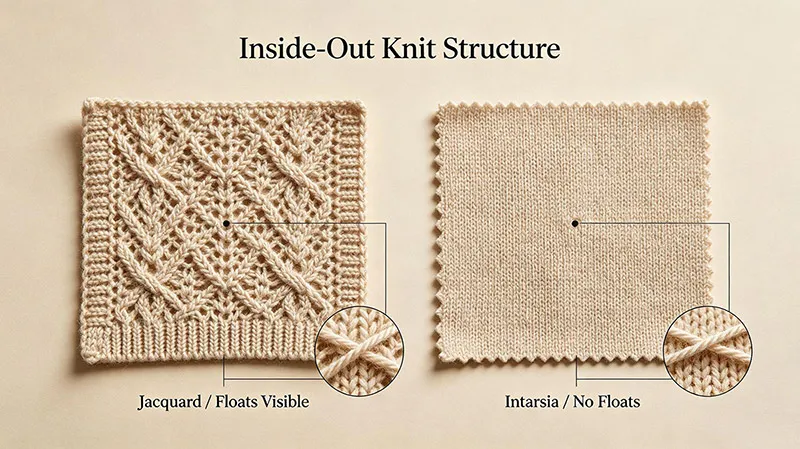
Flip the sweater inside out. That's where the truth lives. At JM Sweater, we tell clients: the face shows your design. The back shows your manufacturing discipline.
The Structure of Jacquard: The Weight Hidden on the Reverse
Jacquard is "yarn-across." The primary color knits on the face. Every other color in the pattern—instead of cutting—gets carried behind and tucked into the fabric.
Those are floats. The signature of Jacquard. To keep long floats from snagging in wear, our pattern techs program Birdseye backing or bridge stitches into the reverse. That layering—double or even multi-layer—adds real weight to the garment. Gives you warmth. Gives you structure. Great for heavy winter knits. The catch? Lateral stretch drops. Go too heavy and the sweater wears like a sack.
The Magic of Intarsia: True Single-Layer, Float-Free Knitting
Intarsia works differently. "Yarn on demand. Stop when done." One color block finishes, its carrier halts at the boundary. A separate carrier—loaded with the next color—takes over from there. The two yarns interlock only at the join.
What you get is a true single-layer knit. Flip it. The back is clean. No floats. The fabric breathes, drapes, stays light.
Running Intarsia on 5G or 7G coarse gauges is hard enough. On 16GG fine-gauge? That's where most factories tap out. The needle bed is dense—16 needles per inch. Dozens of carriers shuttling in that tight space, exchanging at exact points, avoiding collisions, holding tension consistent through every single join. Few shops can pull this off reliably. We've built our reputation on doing exactly that. Which is why float-free fine-gauge intarsia still sits at the top of the luxury knitwear pyramid—nobody's found a cheaper way to get that finish.
16GG Fine Gauge: The Technical Divide and Gold Standard in Premium Knitwear
In B2B knitwear sourcing, 5G to 12G intarsia is table stakes. 16GG fine-gauge intarsia separates the real manufacturers from the rest.
We see it all the time. Brands spec ultra-fine lines and complex color palettes. Then they shop the sample around and come back frustrated. Most contractors can't touch it—their machines are old, their programmers never worked below 12G. Simple as that.
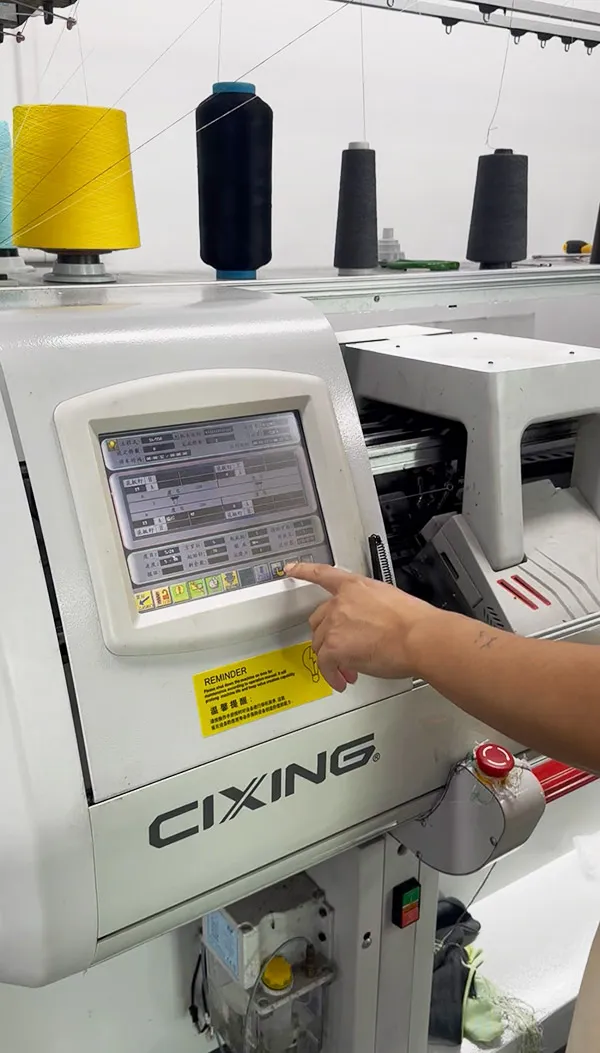
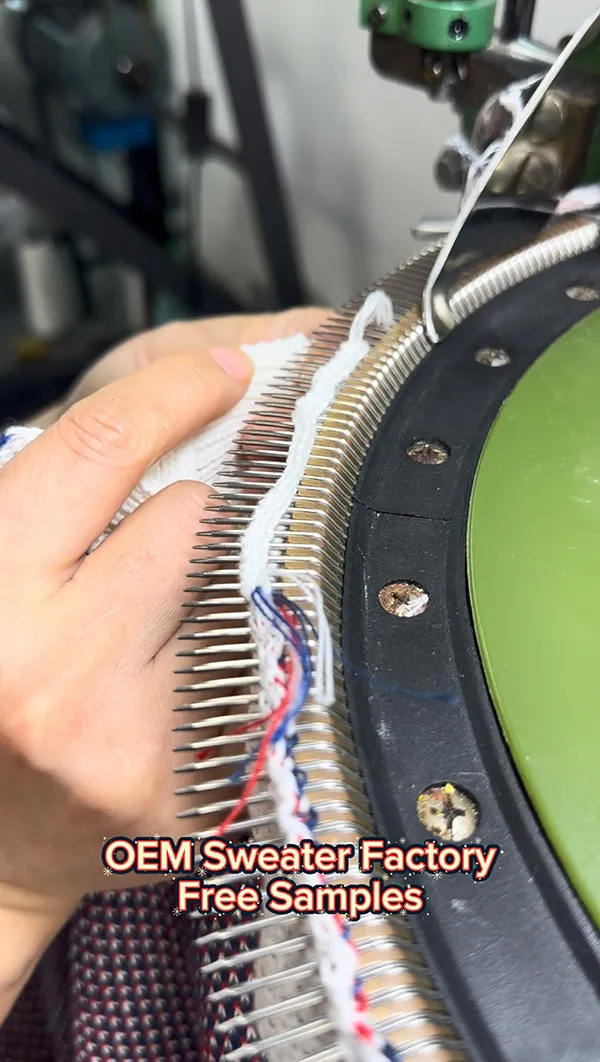
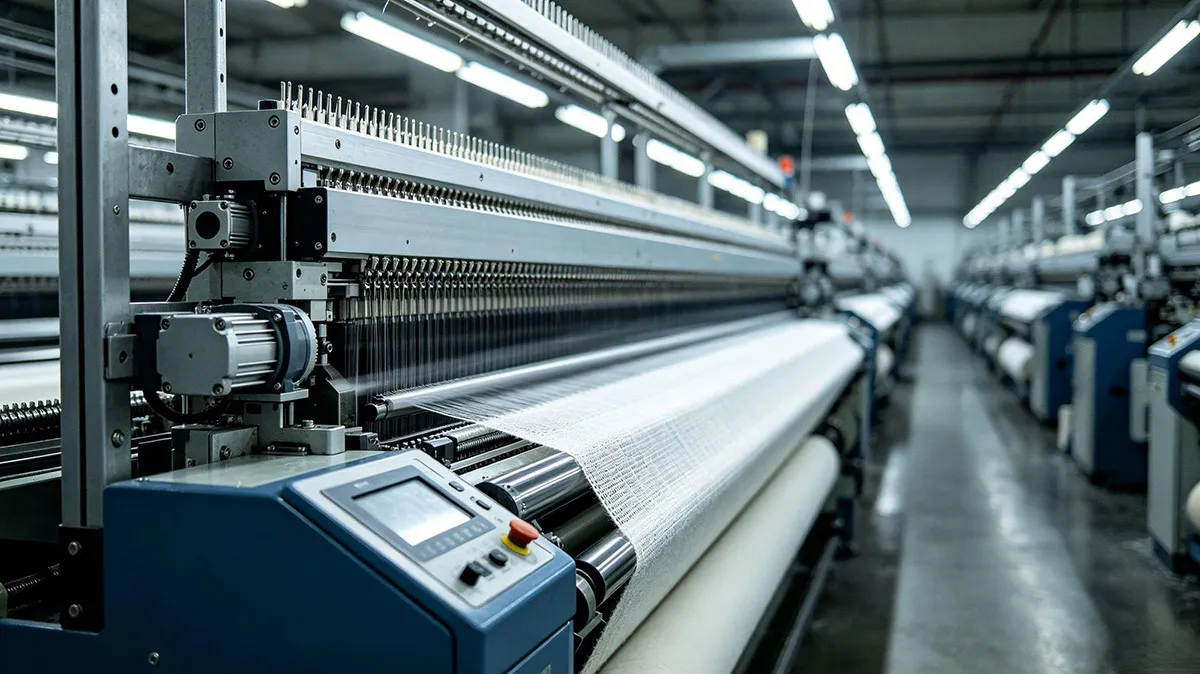
JM Sweater runs next-generation STOLL and Shima Seiki flat machines. We scaled 16GG fine-gauge production to stable bulk levels while everyone else said it couldn't be done. That's not marketing. That's years of dialing in tension parameters and carriage timing.
Why 16GG Fine-Gauge Intarsia Is a Technical Barrier
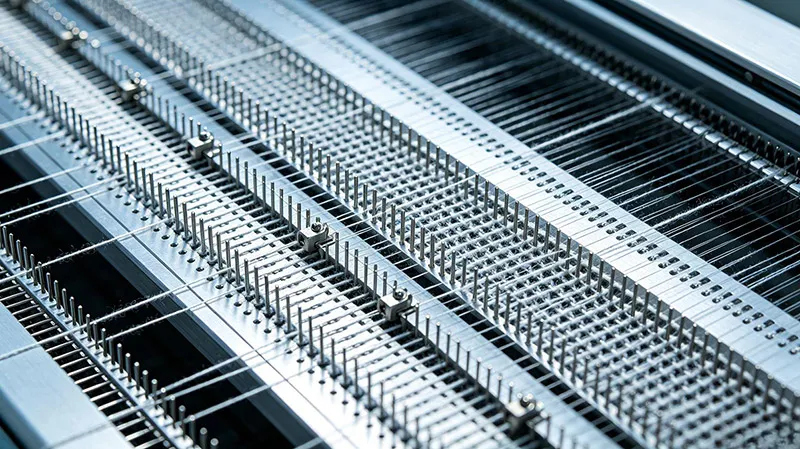
16GG equals 16 needles per inch. That bed is tight. Running multi-color intarsia means carriers exchange and reverse direction within fractions of a millimeter.
One bad parameter and carriers collide. Or you get dropped stitches at the joins. Or tension goes uneven and the pattern warps. You need hardware that holds tolerance and pattern techs who understand yarn tension like the back of their hand. Most factories don't have either.
We've put the runs through. Thousands of pieces. We've proven we can turn complex design aesthetics into finished goods that pass inspection, piece after piece. That's the bar.
Cost & Bulk Production Comparison: Making the Right Call for Your Sourcing Budget
Design fidelity gets you started. Bulk cost control, production efficiency, and MOQ finish the job. Here's the real scorecard:
| Evaluation Dimension | Intarsia | Jacquard |
|---|---|---|
| Programming & Machine Time | High. Complex programming; carriage stops constantly for carrier changes; machine efficiency takes a hit. | Lower. Straightforward programming; machine runs continuous high-speed reciprocating strokes. |
| Yarn Consumption & Weight | Used only where needed. Lightweight fabric, minimal waste. | Hidden floats drive up yarn use. Garment weight and thickness increase noticeably. |
| Labor & Finishing Cost | Higher. Color joins need careful hand-linking and trimming. | Lower. Standard finishing runs automated; labor cost is strictly controllable. |
| Bulk MOQ | Stricter. High setup and sampling costs push per-color MOQ up. | More flexible. Suited for scale; MOQ barriers are lower. |
Transparent Sourcing Advice: How We Help You Control Budget
We've been at this long enough to give it straight.
Jacquard wins on speed and unit cost. Continuous knitting, simpler setup. If FOB is your main lever and you're running volume, that's your horse.
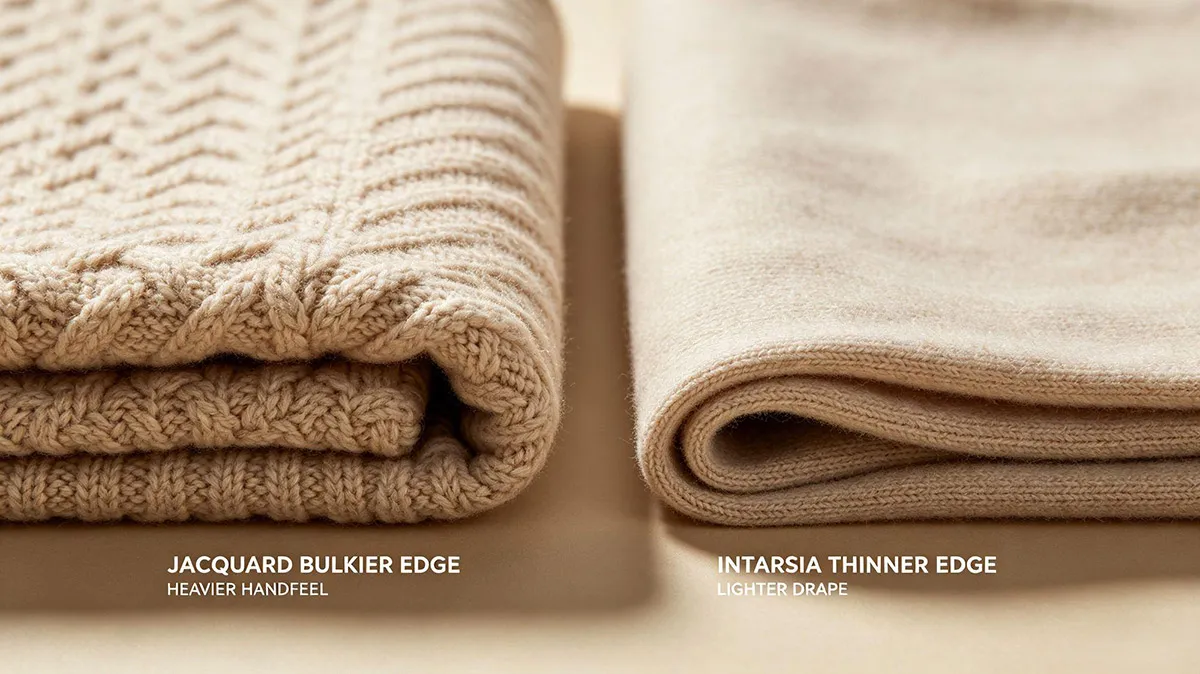
Intarsia costs more. More machine stops, more hand-finishing. But you get a handfeel and drape Jacquard can't touch. That's the trade-off. No way around it.
MOQ: we set higher minimums on complex intarsia styles. Not to be difficult—to protect yield stability. The setup and patterning cost is real. We're not going to burn your budget on low-margin sampling that never scales. The MOQ reflects what actually makes commercial sense.
Quality Compliance & North American Market Standards: Protecting Your Shipment
Great design and sharp pricing get your container loaded. Passing destination-country inspections gets it sold. For North America, compliance and sustainability aren't optional.
1. North American Compliance: CPSC 16 CFR 1610 & CPC Certification
Kids' knitwear? Your process choice feeds directly into flammability testing.
Intarsia is single-layer, no floats. Jacquard is multi-layer with internal mass. Different thickness, different weight, different airflow. Under CPSC's 16 CFR 1610 test, that translates into different burn characteristics and different exemption pathways.
We've run enough of both to know where each lands. We evaluate flammability at sampling stage—per technique, per yarn lot. That way you get your CPC certificate clean and your customs clearance doesn't stall.
2. Sustainable Yarns: Balancing GRS-Certified Fibers Across Techniques
GRS-certified recycled yarns are becoming standard. But how they perform depends on the knitting method.
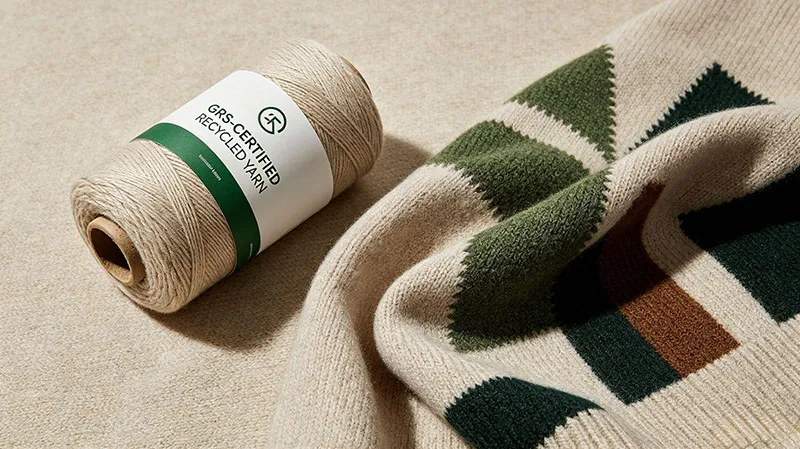
Jacquard eats more yarn per garment because of those hidden floats. That means higher certified-material weight percentage in the finished piece. Great for brands pushing a "circular" narrative.
Intarsia is better for expensive sustainable fibers—fine recycled wool, organic cashmere. The single-layer, float-free construction lets those premium eco-fibers show their handfeel and drape without getting buried under a second layer.
We've dialed in both approaches. Whether you need compliance numbers or sustainability metrics, we handle it during sampling, not after the fact.
Decision Guide: Which Technique Should Your Next Sweater Collection Use?
Here's how we break it down with clients:
Go Jacquard if:
- All-over repeats—Fair Isle, houndstooth, geometrics
- Budget is tight and you want warmth and structure
- You need high volume, fast delivery, scalable production
Go Intarsia if:
- Big independent color blocks, bold logos, complex graphics (figures, animals, abstract art)
- Mid-to-high-end designer or luxury positioning
- Lightweight, breathable, float-free drape with premium handfeel—spring/summer knits, especially
- You have the development budget and timeline for the extra complexity
Start Your Next Premium Knitwear Project
Your choice of technique sets the ceiling on quality. The right factory makes sure you actually hit it.
JM Sweater runs advanced STOLL and Shima Seiki machines. We operate under CPSC protocols and GRS-certified systems. That's the hardware and the paperwork.
Got a finalized Tech Pack? A rough sketch? An idea on a napkin? Send it over. Our senior technical team will give you a free process feasibility read and cost breakdown—straight talk, no fluff.
Let's see if we can make your next collection work. And make it exceptional.
Contact us. Bring your specs. We'll tell you what's possible.