
And honestly? There’s no single right answer. But there is a smart way to choose.
I’ve been in textile sourcing for over 15 years, operating a custom sweater factory and working with mills across China to sell into the US and Europe. I’ve seen great cotton sweaters fall apart after three washes, and I’ve also seen core-spun hold up like a champ for five winters.
Let me walk you through the real differences—no fluff, just what actually matters for your production and your customers.
First, what are we actually talking about?
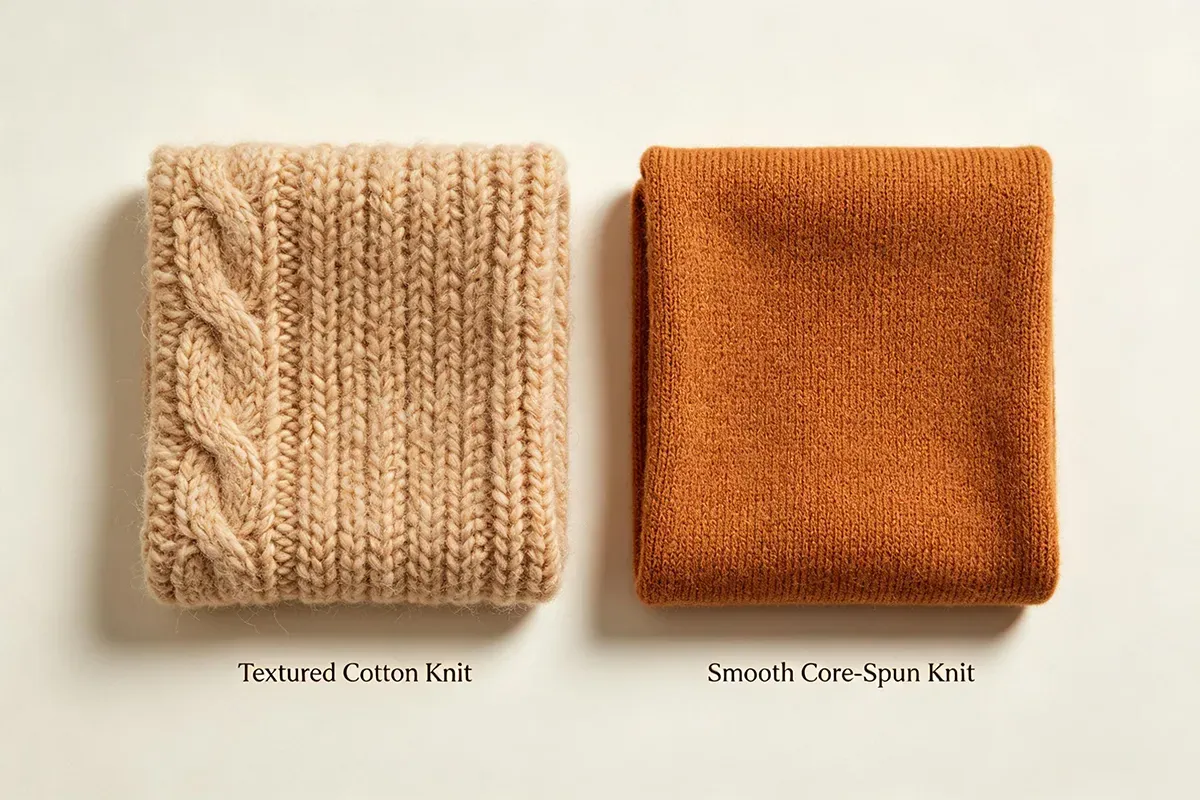
Cotton yarn is simple: 100% cotton fiber, uniform structure. It breathes, it’s soft, and it’s been a go-to for everything from baby onesies to summer tees for decades.
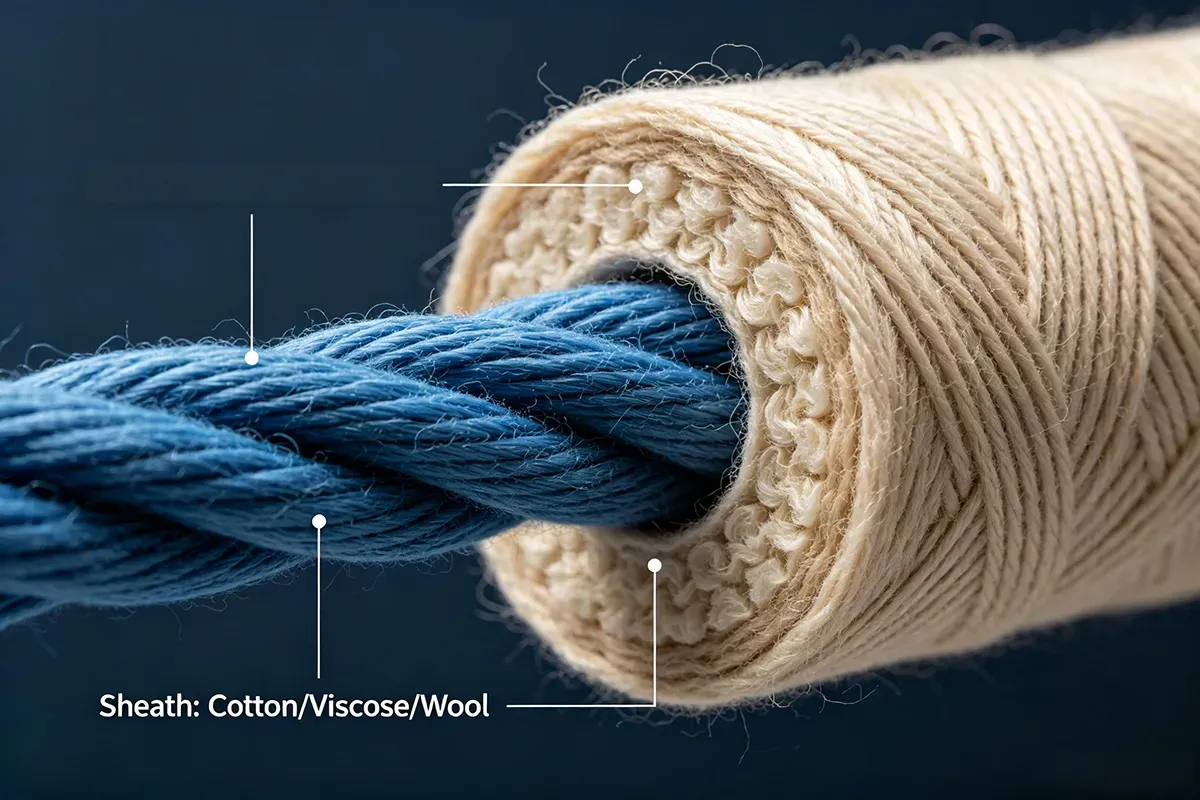
Core-spun yarn sounds technical, but the idea is clever. You take a filament core—usually polyester or spandex—and wrap it with a short-fiber sheath like cotton, viscose, or wool. Skin on the outside, strength on the inside.
Think of it as a engineered sandwich: the core gives you stretch and recovery, the sheath gives you hand feel and next-to-skin comfort.
Cotton yarn is simple: 100% cotton fiber, uniform structure. It breathes, it’s soft, and it’s been a go-to for everything from baby onesies to summer tees for decades.
Core-spun yarn sounds technical, but the idea is clever. You take a filament core—usually polyester or spandex—and wrap it with a short-fiber sheath like cotton, viscose, or wool. Skin on the outside, strength on the inside.
Think of it as a engineered sandwich: the core gives you stretch and recovery, the sheath gives you hand feel and next-to-skin comfort.
Stretch & shape retention: core-spun wins, hands down
Pure cotton has almost no memory. You pull it, it stays pulled. That’s why a cotton tee looks great in May but by August the collar looks like a wavy potato chip. Elbows bag out, cuffs go limp.
Core-spun with spandex? Different story. It stretches with your body and bounces back. I’ve seen core-spun sweaters go through a full season of weekly machine washes and still hold their silhouette. If your customer hates ironing and doesn’t want to look like they slept in their clothes, core-spun is a no-brainer.
Pure cotton has almost no memory. You pull it, it stays pulled. That’s why a cotton tee looks great in May but by August the collar looks like a wavy potato chip. Elbows bag out, cuffs go limp.
Core-spun with spandex? Different story. It stretches with your body and bounces back. I’ve seen core-spun sweaters go through a full season of weekly machine washes and still hold their silhouette. If your customer hates ironing and doesn’t want to look like they slept in their clothes, core-spun is a no-brainer.
Hand feel & skin comfort: cotton feels “natural,” core-spun feels “plush”
Both can be soft, but they’re different kinds of soft.
Cotton is that loose, slightly fluffy soft—like an old flannel sheet you’ve washed a hundred times.
Core-spun is springy soft. You press it and it pushes back. A wool-core-spun blend? Almost feels like cashmere but without the itch.
For sensitive skin, pure cotton is the safer bet—no chemicals, no irritation. But honestly, I’ve rarely seen complaints about core-spun either, because the synthetic core is fully wrapped. Your skin touches the outer cotton or viscose, not the filament.
Both can be soft, but they’re different kinds of soft.
Cotton is that loose, slightly fluffy soft—like an old flannel sheet you’ve washed a hundred times.
Core-spun is springy soft. You press it and it pushes back. A wool-core-spun blend? Almost feels like cashmere but without the itch.
For sensitive skin, pure cotton is the safer bet—no chemicals, no irritation. But honestly, I’ve rarely seen complaints about core-spun either, because the synthetic core is fully wrapped. Your skin touches the outer cotton or viscose, not the filament.
Pilling: surprising but true—cotton does better
Most people assume synthetics pill less. Not here.
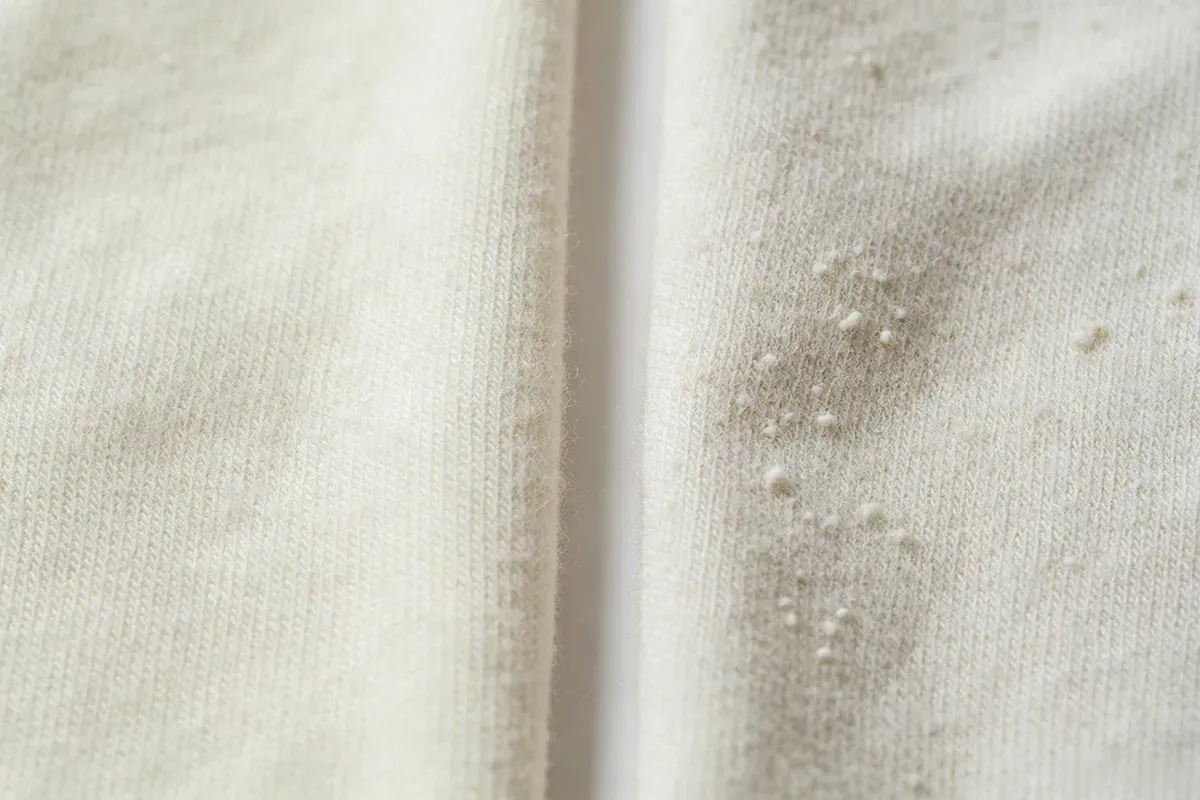
Cotton fibers are short. When they rub, the fiber ends just break off and fall away. You might get some fuzz, but rarely those ugly little balls.
Core-spun? The outer short fibers and the inner filament have different wear rates. Under friction, those sheath fibers slip out and tangle into pills. It’s the nature of the beast.
That said, spinning quality matters. A well-made core-spun pills less, but it will never beat cotton on this one.
Most people assume synthetics pill less. Not here.
Cotton fibers are short. When they rub, the fiber ends just break off and fall away. You might get some fuzz, but rarely those ugly little balls.
Core-spun? The outer short fibers and the inner filament have different wear rates. Under friction, those sheath fibers slip out and tangle into pills. It’s the nature of the beast.
That said, spinning quality matters. A well-made core-spun pills less, but it will never beat cotton on this one.
Breathability vs. warmth: pick your season
Cotton is naturally breathable and moisture-wicking. Hollow fibers pull sweat away from your skin. That’s why summer wear is almost always cotton.
Core-spun is slightly less breathable because of the filament core, but the difference isn’t huge—the sheath still does its job.
Where core-spun shines is warmth. Synthetic cores have lower thermal conductivity, meaning they trap heat better. Add the air layer from the sheath, and you’ve got a genuinely warmer garment. Ever seen those “self-heating” or “thermal” knits from brands like Uniqlo? Many are core-spun constructions.
Cotton is naturally breathable and moisture-wicking. Hollow fibers pull sweat away from your skin. That’s why summer wear is almost always cotton.
Core-spun is slightly less breathable because of the filament core, but the difference isn’t huge—the sheath still does its job.
Where core-spun shines is warmth. Synthetic cores have lower thermal conductivity, meaning they trap heat better. Add the air layer from the sheath, and you’ve got a genuinely warmer garment. Ever seen those “self-heating” or “thermal” knits from brands like Uniqlo? Many are core-spun constructions.
Price & positioning
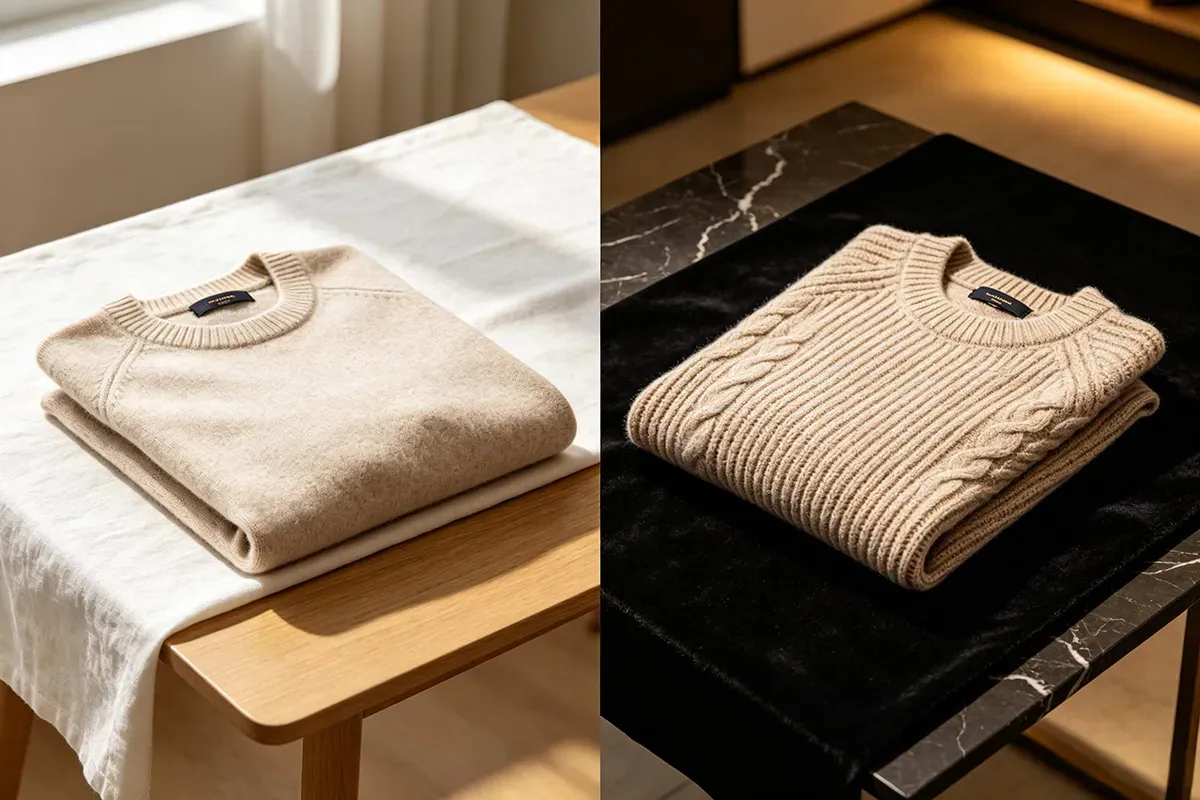
Cotton is cheap. High volume, simple process. You can find a cotton sweater for $15–30 wholesale easily.
Core-spun sits in the mid-range. More complex to spin, so it costs more than cotton but way less than pure merino or cashmere. What you’re paying for is the balance—decent warmth, good durability, good hand feel, without the luxury price tag.
Cotton is cheap. High volume, simple process. You can find a cotton sweater for $15–30 wholesale easily.
Core-spun sits in the mid-range. More complex to spin, so it costs more than cotton but way less than pure merino or cashmere. What you’re paying for is the balance—decent warmth, good durability, good hand feel, without the luxury price tag.
So how do you choose?
Go core-spun if:
•You want a low-fuss, long-wearing product
•Your customer doesn’t iron or hand-wash
•You need warmth without bulk for fall/winter
Go cotton if:
•Your customer loves natural fibers and has sensitive skin
•It’s for indoor layering or spring/summer
•You’re okay with some stretching and shrinking as part of the “character”
Or follow the calendar:
Spring through early fall → cotton for breathability
Late fall through winter → core-spun for warmth
Neither is better. They’re just different tools. Know your customer’s lifestyle and care habits, and the answer writes itself.
Go core-spun if:
•You want a low-fuss, long-wearing product
•Your customer doesn’t iron or hand-wash
•You need warmth without bulk for fall/winter
Go cotton if:
•Your customer loves natural fibers and has sensitive skin
•It’s for indoor layering or spring/summer
•You’re okay with some stretching and shrinking as part of the “character”
Or follow the calendar:
Spring through early fall → cotton for breathability
Late fall through winter → core-spun for warmth
Neither is better. They’re just different tools. Know your customer’s lifestyle and care habits, and the answer writes itself.