
As a professional sweater manufacturer,I’ve watched designers spend weeks nitpicking over Pantone shades, only to blindly tick “wool” off a swatch card without basic due diligence. No check on pilling performance, minimal awareness of shrinkage after first wash, zero thought whether raw material costs will blow up the BOM before sampling even kicks off.
This isn’t a failure in creative design. It boils down to insufficient yarn knowledge. And let’s be clear: knitting machinery does not care how stunning your mood board looks.
Everything below comes straight out of production workshops. No polished marketing talking points. I’ll break down five staple fibres I deal with week in, week out: how each behaves on knitting machines, common costly pitfalls, and practical spec tips to stop your factory resenting your tech packs.
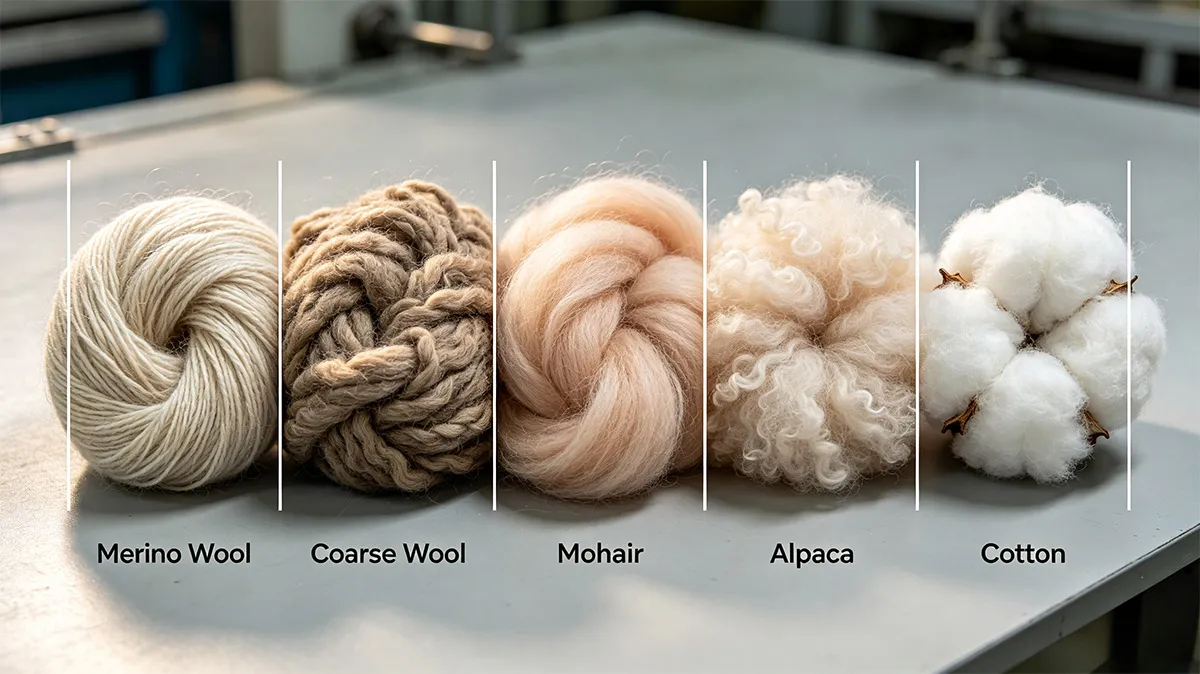
For quick reference, I keep rough fibre benchmarks taped above my workstation. These figures come from real factory engineering records, not generic textbook data.
| Yarn Type | Fiber Micron Diameter Range | Compatible Knitting Gauges | Pilling Resistance Grade | Key Physical Characteristics | Production Cost Tier |
| Merino Wool | 16.5μm - 19.5μm | 12G, 14G, 18G (Fine Gauge) | Grade 3 - 4 (depending on twist level) | Excellent elasticity and moisture-wicking properties | Premium Tier |
| Standard Wool | 24μm - 32μm | 3G, 5G, 7G (Medium-Coarse Gauge) | Grade 2 - 3 | Crisp, warm, and cost-effective | Mid-Tier (Accessible) |
| Mohair | 25μm - 34μm | 3G, 5G (Open Structure / Mesh Knit) | Grade 2 (prone to shedding, requires post-finishing) | Unique plush feel and luster | Premium Tier |
| Baby Alpaca | 20μm - 23μm | 5G, 7G, 12G | Grade 3 - 4 (lanolin-free) | Natural hollow fiber, extremely lightweight | Luxury Tier |
| Cotton | 15mm - 35mm (fiber length) | 7G, 12G, 14G | Grade 4 - 5 | Skin-friendly, moisture-absorbent, anti-static, suitable for all seasons | Low to Mid-Tier (Volume-driven) |
Keep those rough benchmarks in mind. Now let’s cover all the messy details you won’t find on any simplified cheat sheet — the hard truths you only learn spending time on knitting floors.
Merino Wool – High maintenance, but worth the investment
When clients request buttery next-to-skin comfort on 18-gauge knits, merino is almost always the solution. Finer, smoother cuticles mean far less itch compared to conventional wool.
Working it on fine gauge machines brings real challenges though. 18G merino is notoriously sensitive to tension shifts. I’ve stood beside running flat machines where tension drifted merely ±2 grams, and watched panels turn into uneven, unusable messes. If your manufacturer hasn’t invested in digital constant-tension yarn feeders for fine gauge runs, prepare for excessive waste and delays.
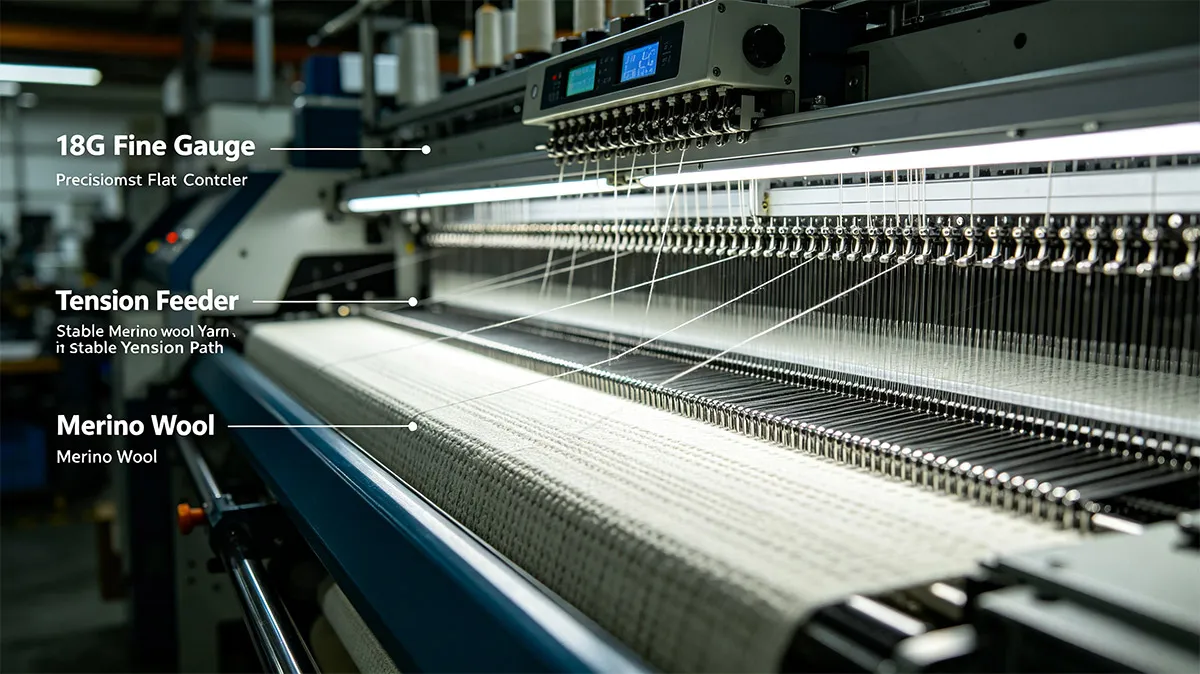
One habit I stick to: before confirming pos for fine gauge merino, ask to view live tension monitoring footage, don’t settle only for lab dip submissions.
When clients request buttery next-to-skin comfort on 18-gauge knits, merino is almost always the solution. Finer, smoother cuticles mean far less itch compared to conventional wool.
Working it on fine gauge machines brings real challenges though. 18G merino is notoriously sensitive to tension shifts. I’ve stood beside running flat machines where tension drifted merely ±2 grams, and watched panels turn into uneven, unusable messes. If your manufacturer hasn’t invested in digital constant-tension yarn feeders for fine gauge runs, prepare for excessive waste and delays.
One habit I stick to: before confirming pos for fine gauge merino, ask to view live tension monitoring footage, don’t settle only for lab dip submissions.
Standard Wool – Reliable workhorse with shrink risks
Think chunky Aran knits, heavy gauge outerwear — standard wool delivers rigid structure. Its thicker, stiffer fibres are a strength for oversized, robust silhouettes, yet poor choice for slim-fit roll necks.
Wash stability remains the biggest headache. A 3G wool knit can shift half a size up or down purely from slightly extended steam finishing cycles. I still recall one frustrated buyer calling me out when an entire shipment came out inconsistently sized.
If you need improved dimensional stability while controlling costs, blending with acrylic makes practical sense. An 80/20 wool-acrylic mix remains an enduring reliable formula.
Think chunky Aran knits, heavy gauge outerwear — standard wool delivers rigid structure. Its thicker, stiffer fibres are a strength for oversized, robust silhouettes, yet poor choice for slim-fit roll necks.
Wash stability remains the biggest headache. A 3G wool knit can shift half a size up or down purely from slightly extended steam finishing cycles. I still recall one frustrated buyer calling me out when an entire shipment came out inconsistently sized.
If you need improved dimensional stability while controlling costs, blending with acrylic makes practical sense. An 80/20 wool-acrylic mix remains an enduring reliable formula.
Mohair – Gorgeous texture, complicated processing
Mohair originates from Angora goats; its fibre lacks meaningful surface scales. This characteristic creates that signature shine and airy fluff, yet it also comes with barely any inherent elasticity.
On knitting equipment, mohair cannot hold stitch shape independently. You will need a nylon core blend at often higher percentages to maintain structure. Many designers overlook one critical stage post-knitting: brushing.
I’ve seen multiple mishaps in brushing departments. Inexperienced operators over-brush panels and burn holes straight through the body; under-brush, and the finished knit appears flat and lifeless.
Only partner with facilities with experienced brushing operators or accurately calibrated mechanical brushing lines. Enquire how many brushing test runs they complete per order. Evasive, blank responses are an immediate red flag.
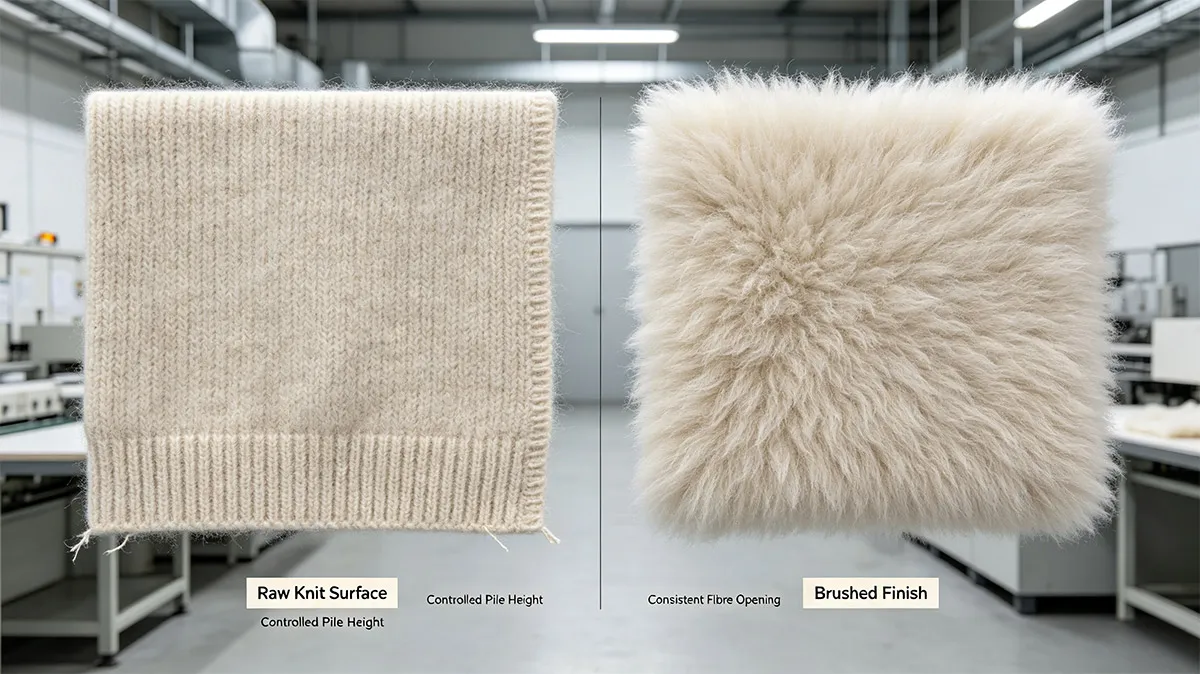
Mohair originates from Angora goats; its fibre lacks meaningful surface scales. This characteristic creates that signature shine and airy fluff, yet it also comes with barely any inherent elasticity.
On knitting equipment, mohair cannot hold stitch shape independently. You will need a nylon core blend at often higher percentages to maintain structure. Many designers overlook one critical stage post-knitting: brushing.
I’ve seen multiple mishaps in brushing departments. Inexperienced operators over-brush panels and burn holes straight through the body; under-brush, and the finished knit appears flat and lifeless.
Only partner with facilities with experienced brushing operators or accurately calibrated mechanical brushing lines. Enquire how many brushing test runs they complete per order. Evasive, blank responses are an immediate red flag.
Baby Alpaca – Featherlight, prone to sagging
Let’s clear up a widespread misunderstanding first: “baby” alpaca does not refer to young animals. It describes the first shearing harvested from mature alpacas, delivering the softest fibre grade available.
Hollow fibre construction creates remarkable warmth without excess weight, and zero lanolin delivers natural hypoallergenic performance. There is a significant downside however: extremely low shape recovery.
Hang heavy-gauge baby alpaca knits on standard hangers, and gravitational stretch will warp lengths rapidly. I learned this lesson the expensive way. Shoulder and back neck seams require stay tape reinforcement as standard, otherwise expect endless customer complaints about elongated garments.
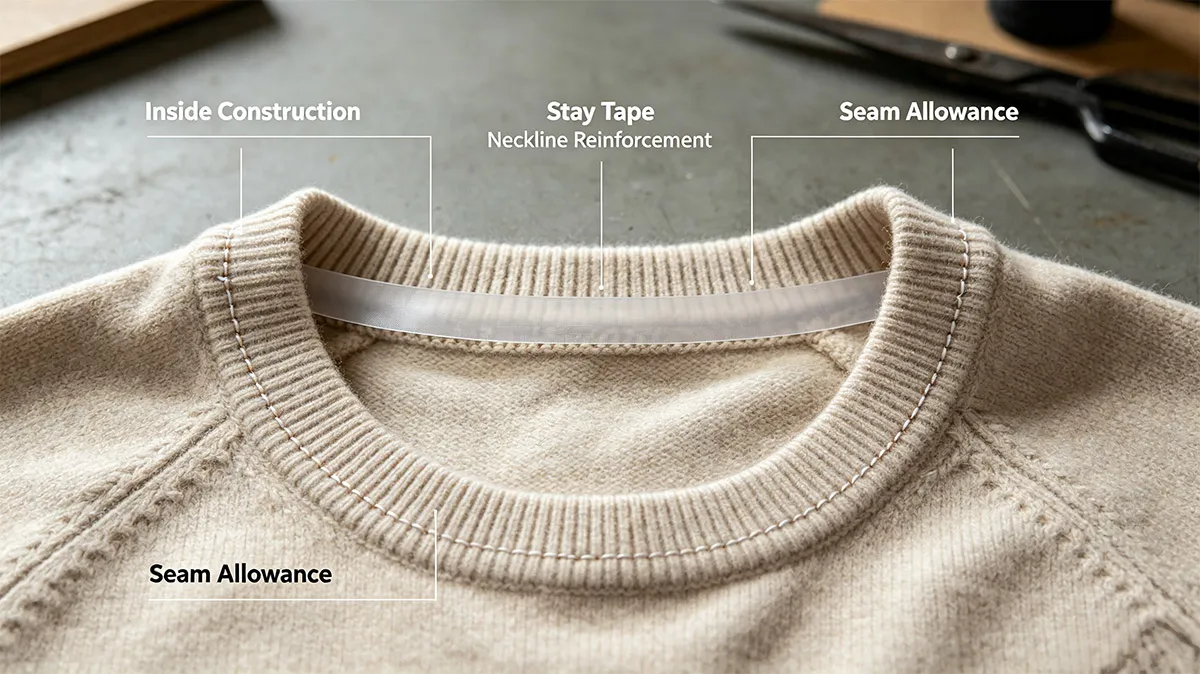
Opt for 7-gauge structures to add minimal rigidity, and always ship folded rather than hung.
Let’s clear up a widespread misunderstanding first: “baby” alpaca does not refer to young animals. It describes the first shearing harvested from mature alpacas, delivering the softest fibre grade available.
Hollow fibre construction creates remarkable warmth without excess weight, and zero lanolin delivers natural hypoallergenic performance. There is a significant downside however: extremely low shape recovery.
Hang heavy-gauge baby alpaca knits on standard hangers, and gravitational stretch will warp lengths rapidly. I learned this lesson the expensive way. Shoulder and back neck seams require stay tape reinforcement as standard, otherwise expect endless customer complaints about elongated garments.
Opt for 7-gauge structures to add minimal rigidity, and always ship folded rather than hung.
Cotton – Underrated transitional knit option
Cotton is unfairly written off as merely summer tee material. High-twist cotton yarn on 12-gauge knits produces excellent trans-seasonal pieces. It feels smooth against skin, avoids static build-up, and accepts dyes beautifully.
The main drawback is visible bagging around elbows and cuffs over wear. For styles requiring sustained shape retention, pure cotton is rarely my first recommendation.
A simple workaround: small cashmere additions, even a 95/5 cotton-cashmere blend. You retain cotton’s cool hand feel alongside subtle elasticity to resist stretching. Most suppliers can produce this mix without prohibitive minimum orders.
Cotton is unfairly written off as merely summer tee material. High-twist cotton yarn on 12-gauge knits produces excellent trans-seasonal pieces. It feels smooth against skin, avoids static build-up, and accepts dyes beautifully.
The main drawback is visible bagging around elbows and cuffs over wear. For styles requiring sustained shape retention, pure cotton is rarely my first recommendation.
A simple workaround: small cashmere additions, even a 95/5 cotton-cashmere blend. You retain cotton’s cool hand feel alongside subtle elasticity to resist stretching. Most suppliers can produce this mix without prohibitive minimum orders.
Fibre selection guidance for commercially focused brands
For anyone building collection roadmaps focused on balanced return rates, this is how I frame recommendations to my clients:
Premium launch styles, high retail price points, hypoallergenic selling story: Baby Alpaca in 5GG or 7GG. Let the natural fibre texture take centre stage.
Core tailored knits, elevated everyday basics, direct skin contact wear: 14GG or 18GG Merino. Confirm your factory has matching suitable machinery beforehand.
Bold statement silhouettes, runway-inspired airy fuzzy effects: Loose 3GG Mohair. Never cut corners on brushing quality control.
Large volume mass market lines, durability priority, healthy profit margins: Standard wool blends or cotton-heavy mixes. Less glamorous, yet consistently commercially viable.
For anyone building collection roadmaps focused on balanced return rates, this is how I frame recommendations to my clients:
Premium launch styles, high retail price points, hypoallergenic selling story: Baby Alpaca in 5GG or 7GG. Let the natural fibre texture take centre stage.
Core tailored knits, elevated everyday basics, direct skin contact wear: 14GG or 18GG Merino. Confirm your factory has matching suitable machinery beforehand.
Bold statement silhouettes, runway-inspired airy fuzzy effects: Loose 3GG Mohair. Never cut corners on brushing quality control.
Large volume mass market lines, durability priority, healthy profit margins: Standard wool blends or cotton-heavy mixes. Less glamorous, yet consistently commercially viable.
None of these fiber selection principles work in practice if a factory only follows orders blindly, without proactive engineering judgement. After years of hands-on production experience across South China’s knitting industry, I’ve structured our own JM Sweater production workflow entirely around these technical pain points.
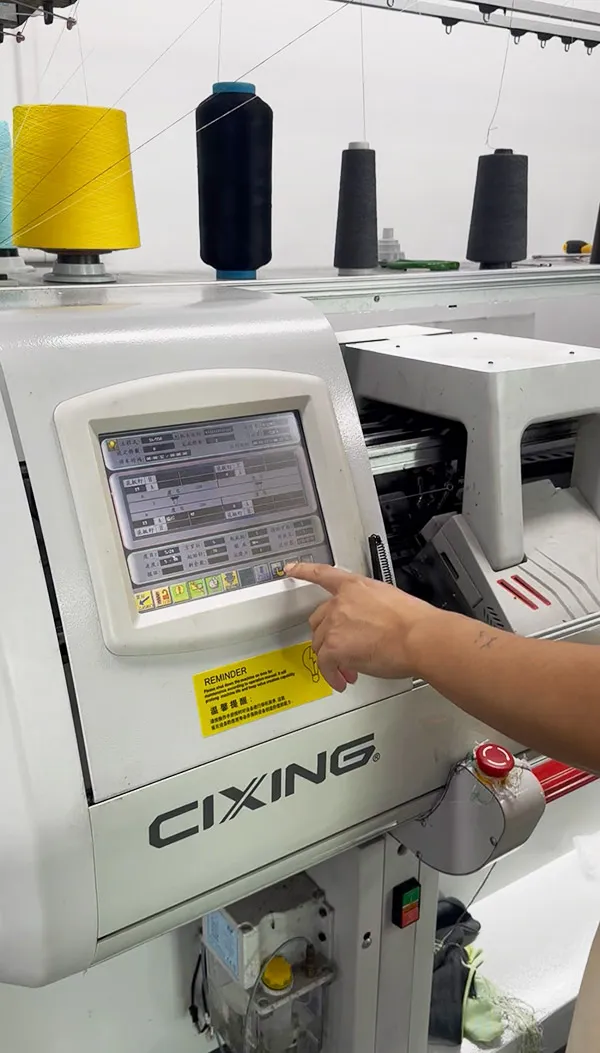
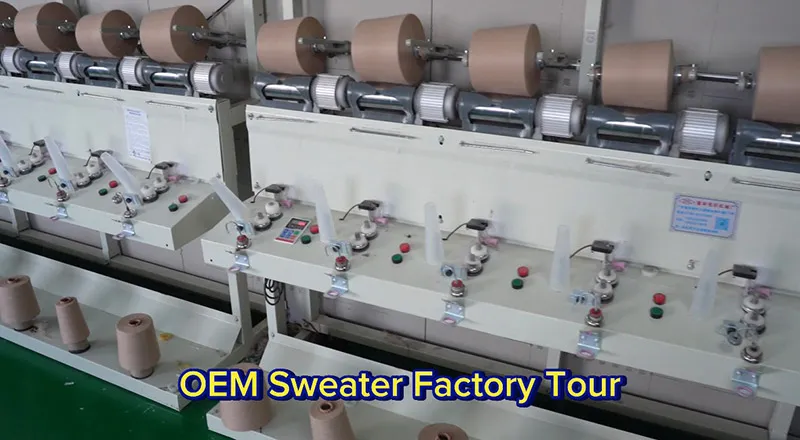
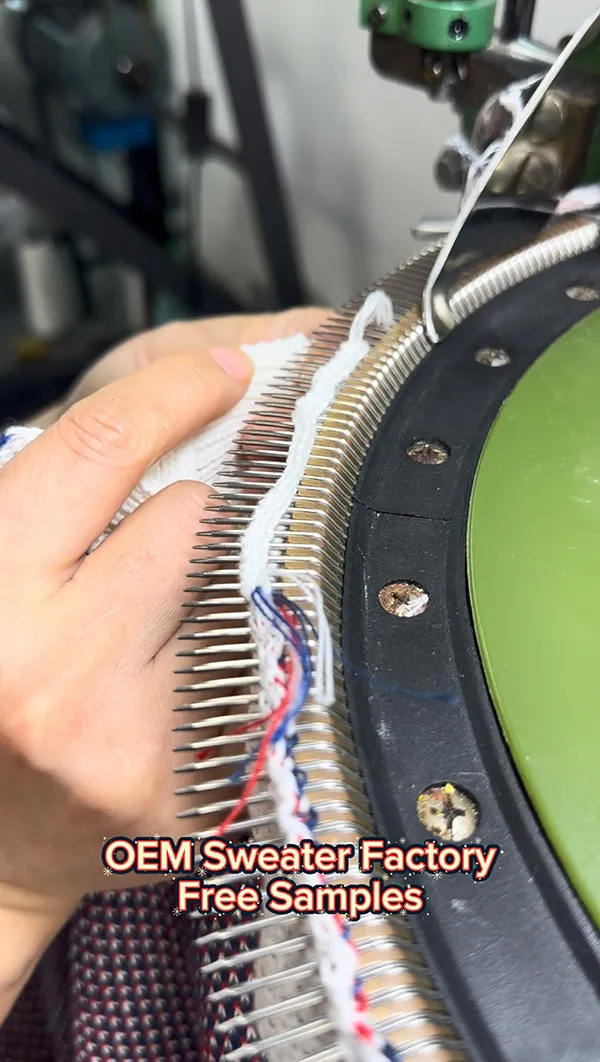
As a professional sweater manufacturer based in Guangzhou, we run a 3000-square-meter production facility equipped with over 110 fully computerized flat knitting machines, covering the full gauge range from heavy 2G chunky knits all the way to precision 18G ultra-fine styles.
Many of the industry issues I’ve mentioned are exactly the details our engineering team prioritizes in daily production. We strictly monitor tension stability for 18G merino runs to avoid uneven stitching and yarn waste. For mohair styles, our brushing process follows standardized cycle counting for every single panel, ensuring consistent fluff texture without damage. For baby alpaca knits, we integrate stay tape into shoulder and neck seams as a standard procedure to prevent stretching and shape sagging after wear.
We also maintain full industry compliance certifications including GRS, OEKO-TEX, BSCI, WRAP and ISO 9001. Full traceability from raw yarn to finished packaging allows us to support brands’ sustainability and quality accountability requirements.
As we gear up for the 2026/2027 fall/winter collection season, we offer accurate technical spec consultation and fast prototype turnaround for brands refining their yarn and gauge selection. Physical yarn swatch cards are always available — real material texture, thickness and hand feel always speak louder than digital previews.
As a professional sweater manufacturer based in Guangzhou, we run a 3000-square-meter production facility equipped with over 110 fully computerized flat knitting machines, covering the full gauge range from heavy 2G chunky knits all the way to precision 18G ultra-fine styles.
Many of the industry issues I’ve mentioned are exactly the details our engineering team prioritizes in daily production. We strictly monitor tension stability for 18G merino runs to avoid uneven stitching and yarn waste. For mohair styles, our brushing process follows standardized cycle counting for every single panel, ensuring consistent fluff texture without damage. For baby alpaca knits, we integrate stay tape into shoulder and neck seams as a standard procedure to prevent stretching and shape sagging after wear.
We also maintain full industry compliance certifications including GRS, OEKO-TEX, BSCI, WRAP and ISO 9001. Full traceability from raw yarn to finished packaging allows us to support brands’ sustainability and quality accountability requirements.
As we gear up for the 2026/2027 fall/winter collection season, we offer accurate technical spec consultation and fast prototype turnaround for brands refining their yarn and gauge selection. Physical yarn swatch cards are always available — real material texture, thickness and hand feel always speak louder than digital previews.