
When a brand sets out to develop a new sweater collection, the lion’s share of the product development energy goes into yarn selection—agonizing over whether to spec a 2/26NM 100% cashmere or a high-twist extra-fine merino. Once the sample knits up and the hand feel hits the mark, it’s become almost routine for sourcing managers and designers to copy the yarn mill’s generic washing instructions straight onto the care label.
The logic seems straightforward enough: if the yarn itself is technically machine-washable, or the mill’s tag says “dry-clean only,” then the finished garment’s care label is effectively done.
But in the reality of B2B bulk production and the US retail market, this “copy-paste from the datasheet” approach is a ticking time bomb—one that routinely triggers consumer complaints, spikes return rates, and can even land brands with retailer chargebacks.
Here’s the hard truth that separates the factories that know what they’re doing from the ones that don’t: yarn is just raw material. What actually determines whether a premium knitwear piece holds its shape after washing and wear is the physical construction of the finished garment—specifically, the dense, closed-loop structure of fine-gauge knitting, and the delicate, precision work of hand-linked seams at the collar and armhole.
When a yarn is knitted into an 18-gauge fine-gauge sweater manufacturing process and set with steam pressing, the internal physical stresses and loop density have fundamentally changed from what they were on the cone. Blindly copying a yarn mill’s generic wash recommendations completely ignores how the whole garment behaves under mechanical agitation, spin-cycle centrifugal force, and the gravitational pull of water weight.
As a knitwear factory with years of hands-on production experience, we’ve learned this the hard way: a defensible care label isn’t a copy-paste job. It’s reverse-engineered from whole garment physical testing. Here’s why fine-gauge and hand-linking are the real decision-makers—straight from the factory floor.
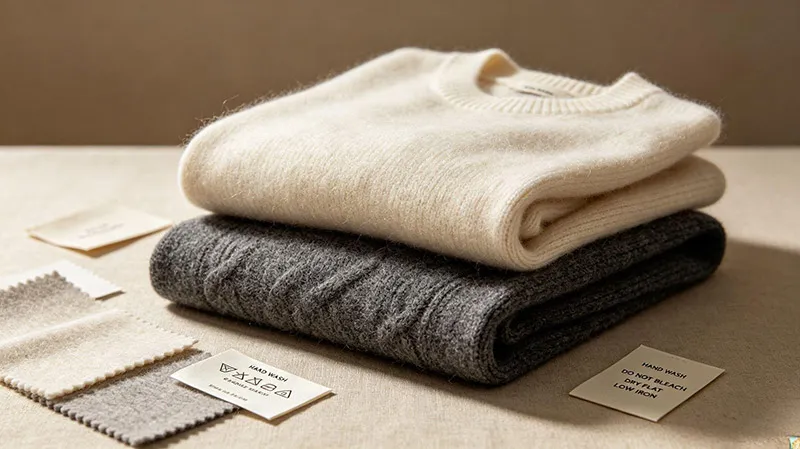
The Physical Reality of Fine-Gauge Fabric: Why You Can’t Just Copy Standard Wash Instructions for 18-Gauge Sweaters
In premium knitwear development, 16-gauge, 18-gauge, and finer—what the industry calls fine-gauge knitting—is how you achieve that buttery-soft hand, liquid drape, and luxury-level aesthetic. But from a production and QC perspective, the finer the fabric, the more finicky it becomes in the wash.
A lot of US buyers assume that if they’ve spec’d a good anti-pill or shrink-resistant yarn, they’re safe to mark the care label “Machine Washable.” That assumption ignores a basic physical fact: dense, high-stitch-density fabric structures impose their own constraints on what you can and cannot do in the wash—and those constraints override the yarn data every time.
1. The Tension Between Stitch Density and Stress Relief
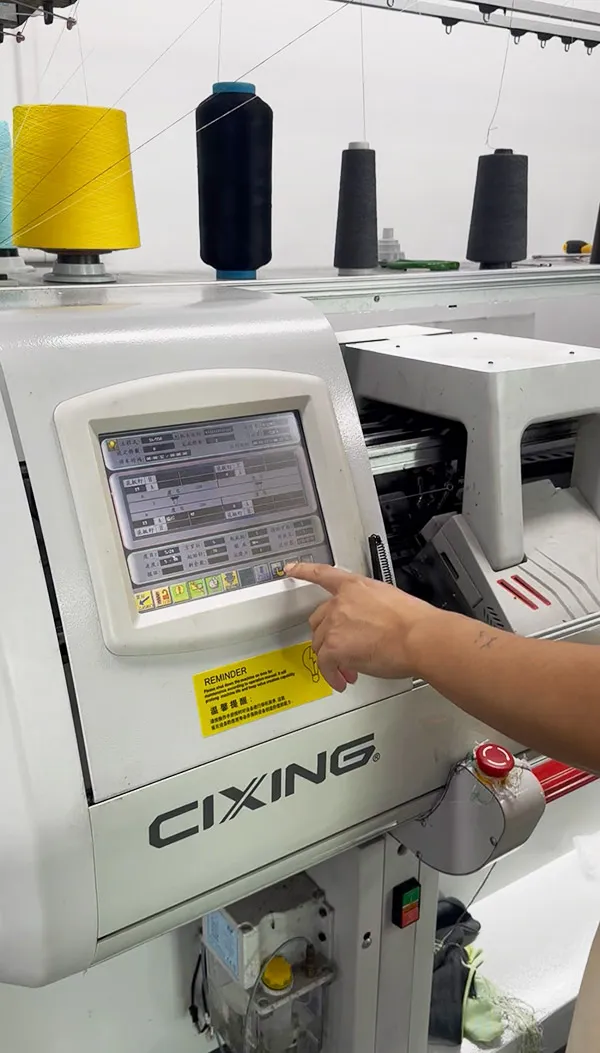
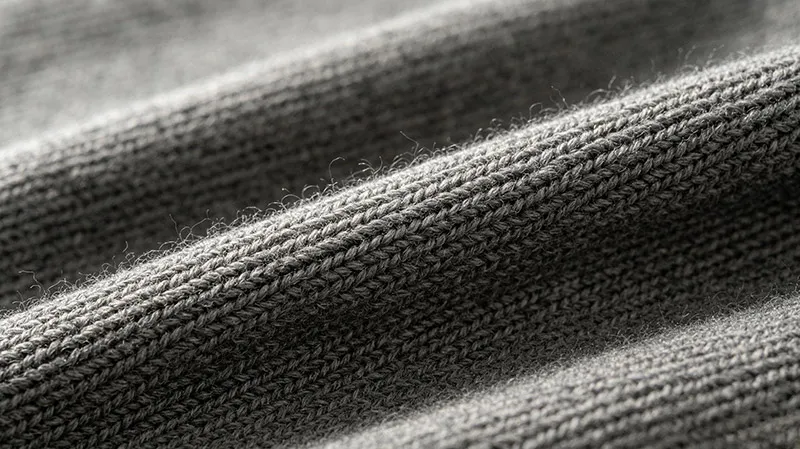
When a computerized flat knitting machine—STOLL or Shima Seiki, take your pick—knits at 18 gauge, it’s packing an extremely high density of loops into every inch of fabric. During knitting, linking, and final steam-pressing, the yarn has been subjected to significant mechanical stretching, building up substantial internal physical stress.
The moment that garment hits water in a consumer’s home, moisture causes the fibers to swell, and the washing machine’s mechanical agitation accelerates the sudden release of that built-in stress. Because high-density loops have very little buffer space between them, even slight felting or fiber relaxation can geometrically amplify shrinkage—both in length and chest width.
2. The Spin Cycle Problem and the “Dry Flat” Mandate
Beyond water temperature, the mechanical force of the spin cycle is arguably more damaging to fine-gauge knits. Coarse-gauge sweaters have more open, relaxed loop structures and some degree of elastic recovery; 18-gauge fabric, with its tight, dense construction, has almost none. Under high-speed spin, that tight structure distorts—permanently.
That’s why, despite what the yarn mill’s lab data might suggest, we as the manufacturer must downgrade the care label based on the actual knitted fabric density. In many cases, the correct call is "Hand Wash Cold, Do Not Tumble Dry, Dry Flat in Shade." Not because the yarn can’t handle it—but because the fabric can’t.
From a B2B supply chain risk standpoint, the care label isn’t a marketing document. It’s a technical conclusion drawn from fabric density, internal stress, and actual shrinkage test results.
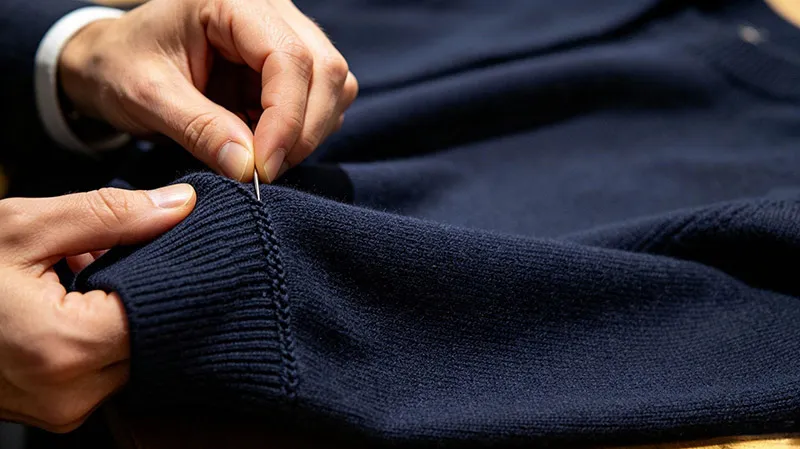
The Structural Vulnerability of Hand-Linked Seams: Why “Do Not Wring” and “Dry Flat” Are Non-Negotiable
If fine-gauge determines the surface stability of the garment, then hand-linking at the collar, shoulder, and armhole is the skeleton that determines whether a premium sweater survives repeated wear. And here’s the catch: this hallmark of luxury construction—the thing that signals quality and craftsmanship—is also the most vulnerable part of the garment in the wash.
Too many overseas buyers spec’ing high-end wool or cashmere sweaters overlook the physical relationship between seam construction and care instructions.
1. Wet-State Gravity and the Tensile Limits of Linking Threads
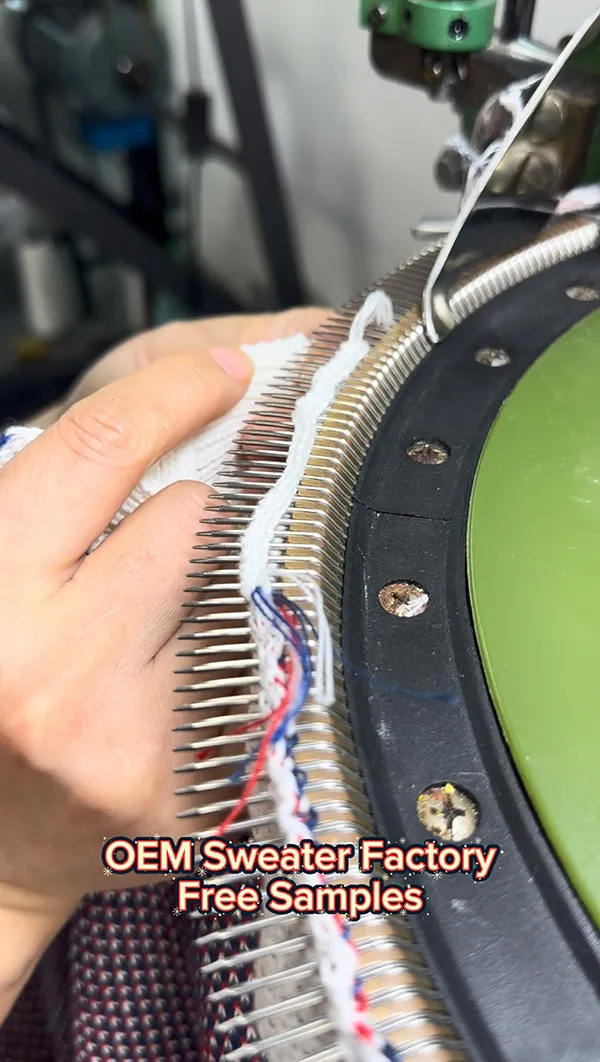
Hand-linking isn’t overlocking. It’s a stitch-by-stitch, loop-to-loop connection—each course matched precisely, using a linking yarn that’s the same quality as the garment yarn. The result is a flat, almost invisible seam with no bulky ridge and no friction against the skin. But that refinement comes with a trade-off: the structure is extremely sensitive to weight.
When a sweater is wet, it can weigh two, three, even four times as much as it does dry. If the consumer wrings or twists it to remove water, or if the washing machine’s high-speed spin cycle takes over, the full force of that water weight and mechanical pull concentrates on the single linking thread at each seam point. That localized stress is exactly what causes linking threads to snap, collars to stretch out of shape, and—worst case—actual holes at the join.
2. Vertical Water Distribution and the “Dry Flat” Imperative
Beyond wringing, the hanging method is equally destructive. If a consumer hangs a wet sweater on a hanger, gravity pulls moisture downward, concentrating all the tensile force on the hand-linked loops at the shoulder and armhole. Because natural fibers like wool and cashmere have lower elastic modulus when wet, those shoulder seams stretch permanently—which is exactly why you see those “shoulder horns” or stretched-out armholes on sweaters that looked great before the first wash.
This is why, whenever hand-linking is involved, we insist on "Do Not Wring" and "Dry Flat" on the care label. Not as a suggestion. As a structural requirement.
Factory-Proven: Why Every Care Label Needs Whole Garment Wash Testing Behind It
In the real world of B2B knitwear sourcing, a lot of overseas buyers operate under a comfortable illusion: get a lab report from the yarn supplier, or pull a template from a similar fabric, and the care label is sorted.
That’s not how it works on the factory floor.
To actually comply with the FTC Care Labeling Rule—which requires manufacturers and importers to have a "reasonable basis" for every care instruction they put on a label—a professional factory doesn’t guess. It tests.
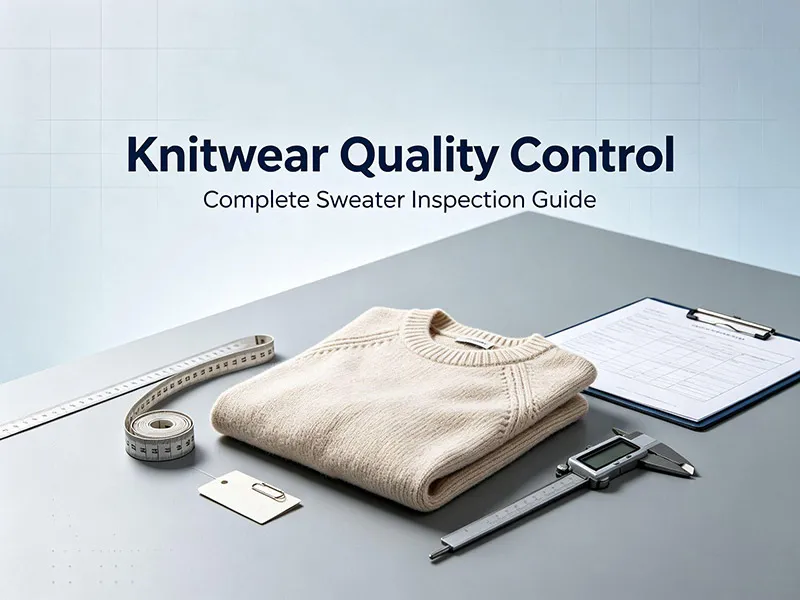
Here’s our SOP: once a garment comes off the production line—fully knitted in 18-gauge or finer, hand-linked, steam-pressed, and finished—it doesn’t go straight to bulk packing. It goes to the QC lab as a finished sample.
Our QC team runs it through multiple cycles of actual washing, drying, and spin—simulating real consumer use. We measure dimensional change in length, chest, and sleeve before and after. We visually inspect the fine-gauge fabric for localized felting or surface distortion after mechanical agitation. And we check every hand-linked seam—collar, shoulder, armhole—for relaxation, stretching, or any signs of weakness.
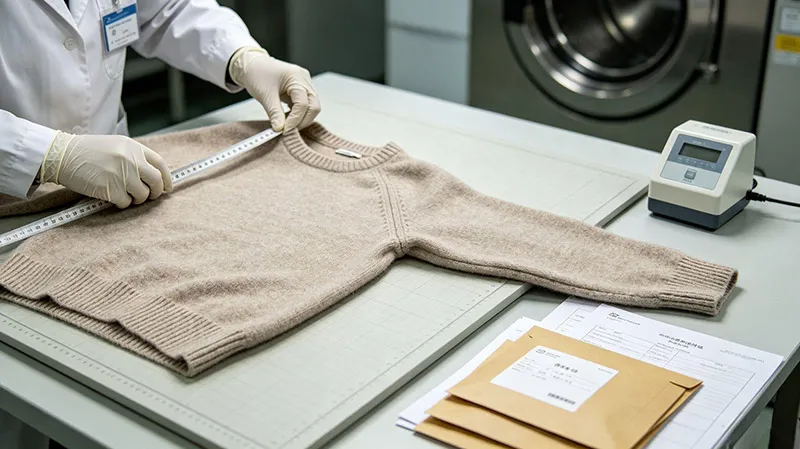
If the test shows that a particular blend or construction shrinks more than 3% in critical dimensions, or if the hand-linked seams show even slight deformation, we kill the “machine washable” concept on the spot. The care label gets downgraded—by reverse engineering—to "Hand Wash Cold, Dry Flat."
For cross-border buyers and brands, working with a factory that has this apparel customs delays prevention capability isn’t a nice-to-have. It’s how you avoid FTC compliance risk, prevent customs delays, and keep return rates from eating your margin.
Conclusion: Building a Quality Moat Through Process Integrity
A care label is never the last casual scribble on a production order. It’s the final link between yarn performance, fine-gauge knitting technology, hand-linked seam construction, and FTC regulatory compliance.
As we’ve laid out here, copying datasheets or generic templates is a fast track to shrinkage surprises, seam failures, chargebacks, and compliance headaches. For brands selling into the US market, the difference between a product that performs and one that disappoints comes down to one thing: working with a manufacturer that understands the physics of what they’re making.
From pre-production whole garment wash testing to rigorous care-label reverse engineering, we build quality and compliance into the process—not as an afterthought, but as the foundation.
If you’re looking for a knitwear supply partner that can turn your design vision into production reality—without the surprises—let’s talk about your next-season development program.
Frequently Asked Questions (FAQs)
Q1: Can yarn lab reports replace whole garment wash testing for US imports?
A: No. Yarn datasheets only describe raw cone material. Once knitted into a dense 18-gauge structure and steam-pressed, physical behavior changes entirely. Relying solely on yarn data fails the FTC "reasonable basis" requirement.
Q2: Why do 18-gauge sweaters shrink more than coarse-gauge knits?
A: High-density loops store intense internal stress during production. Water and agitation trigger rapid stress release; lacking buffer space, tight loops translate minor fiber relaxation into geometric shrinkage.
Q3: How does hand-linking dictate "Do Not Wring" and "Dry Flat"?
A: Wet sweaters weigh significantly more. Wringing or vertical hanging concentrates water weight onto delicate hand-linked joints, snapping threads and causing permanent shoulder distortion ("shoulder horns").