
Why Sweater Gauge Choice Dictates Product Success
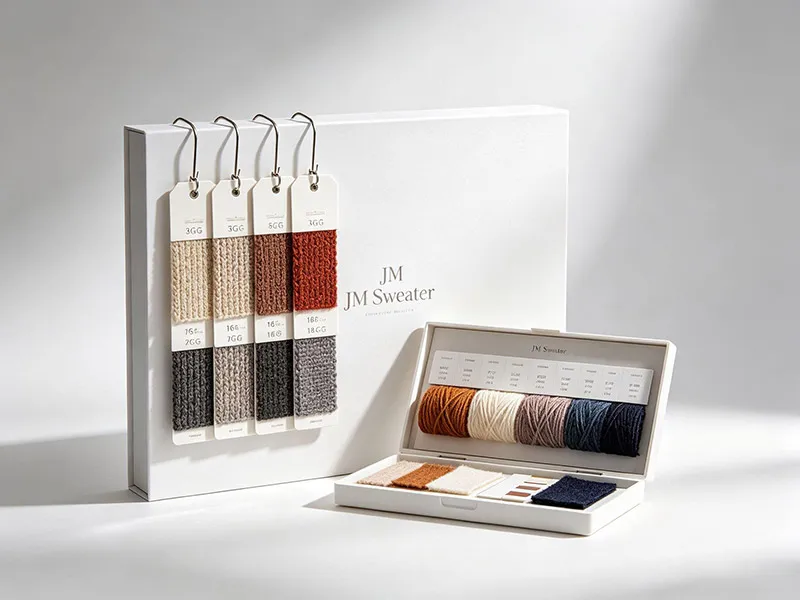
In custom sweater OEM/ODM development, gauge is not a style tag. It is the cost model. Buyers and designers often treat 3GG, 7GG, 12GG, and 18GG as a simple chunky-versus-fine look. Factories don’t. At the needle bed, gauge controls yarn burn, machine time, garment weight, and season fit. It also sets visual style and hand feel.
At JM Sweater, we see the same mistake in sample development. A startup brand specs a coarse gauge but keeps a fine-gauge yarn recipe. The sample comes off the machine loose and distorted. Another brand wants the finest surface possible and jumps to 18GG without factoring in machine time. FOB blows the budget. Bottom line: pick gauge before you fall in love with a sketch.
If you want sweater gauges explained without the showroom spin, this is the factory version. For buyers, knowing the process limits of each gauge is the first step to balance design, quality, and bulk cost.
What is Sweater Gauge (GG)? The Engineering Basics
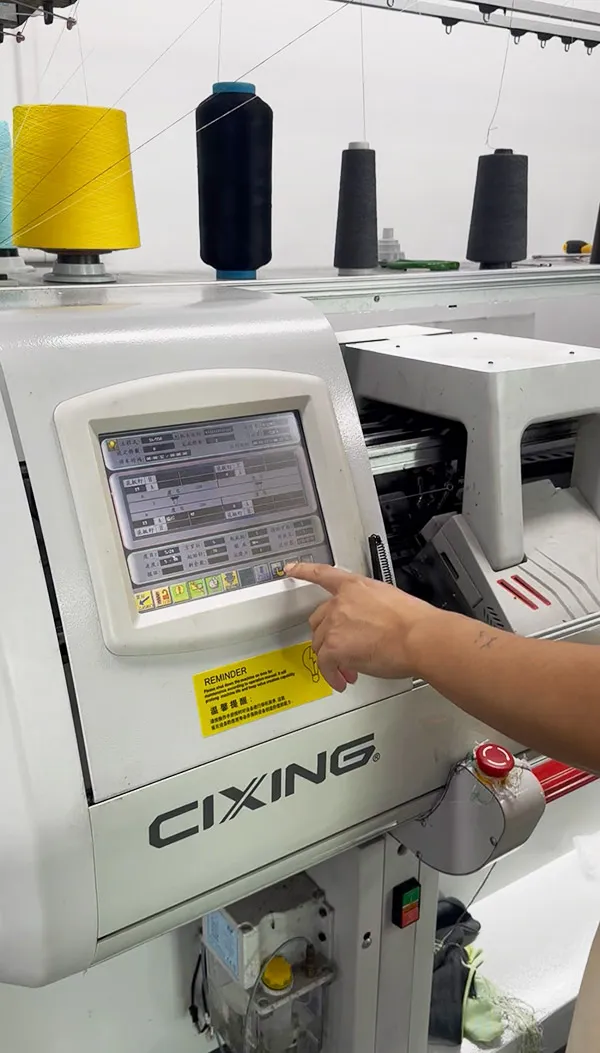
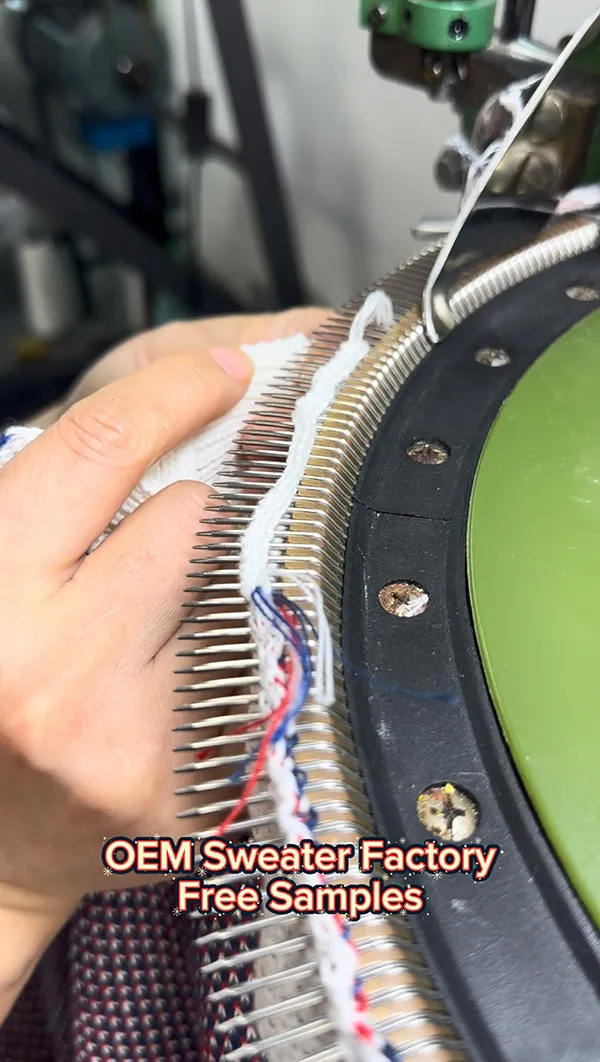
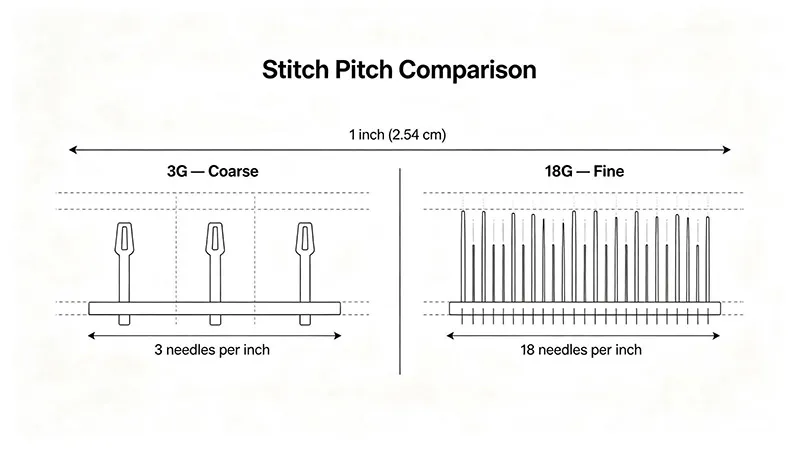
In flat knitting, Gauge (GG) is the machine’s physical precision. Definition: needles per inch (NPI) on the needle bed of a Stoll or Shima Seiki flat knitting machine. One inch. 2.54 cm. Count the needles.
That number sets stitch density and the yarn channel width the needle bed can accept. Gauge is math. Plain and simple. One inverse rule matters:
- Lower number (3GG, 5GG) = wider needle pitch. Only 3 or 5 needles per inch. Needle pitch is wide, so you must feed coarse-count yarn or multiple plies. Fabric is heavy, rugged, and strongly textured. This is chunky gauge knitwear.
- Higher number (12GG, 18GG) = denser needle pitch. 12 or 18 fine needles sit tightly in one inch. Needle spacing is small, so only high-count worsted fine yarn will run. Fabric is flat, light, and refined, with a hand feel close to woven fabric. This is fine gauge knitwear.
That’s the line between fine gauge vs chunky gauge knitwear.
At JM Sweater’s sampling room and bulk production floor, gauge is a hard wall. Force 3GG coarse-spun yarn into a 12GG fine-needle machine and you get needle breakage and yarn breakage. Run a single 12GG fine yarn on a 3GG needle bed and the fabric turns into an open, unstable mesh with no structure. When you submit tech pack requirements for knitwear, define the GG number accurately. It is the engineering precondition for matching yarn count for sweater gauge and locking machine parameters.
3GG vs 7GG vs 12GG vs 18GG: Side-by-Side Comparison
Here’s the 3GG vs 7GG vs 12GG vs 18GG comparison we use in sample review. It covers garment weight, yarn match, and manufacturing complexity. Use it as a quick reference before you write a Tech Pack.
| Gauge | Visual Style / Category | Typical Garment Weight | Suggested Yarn Specs | Season & Common Styles | Knitting & Linking Complexity |
|---|---|---|---|---|---|
| 3GG | Chunky / Heavy Knit | 400g–800g+ | Coarse-spun 2/16NM (6–8 plies) or coarse-count yarn | Deep winter outerwear, chunky cable cardigans | Often hand-linking or heavy-gauge linking |
| 7GG | Medium Gauge | 280g–420g | Coarse/worsted 2/28NM (3–4 plies) | Fall/winter pullovers, dropped-shoulder casual sweaters | Standard machine time; strong cost-to-fault tolerance |
| 12GG | Fine Gauge | 180g–260g | Worsted 2/28NM (2 plies) or 2/48NM | Spring/fall/winter fitted base layers, business V-neck/crewneck | Precision linking; most common standard fine gauge |
| 18GG | Ultra-Fine Gauge | 100g–160g | Worsted ultra-fine 2/60NM–2/80NM+ | Spring/summer knit polos, premium next-to-skin tanks/T-shirts | Very high demands on machine precision (Stoll/Shima) and operator skill |
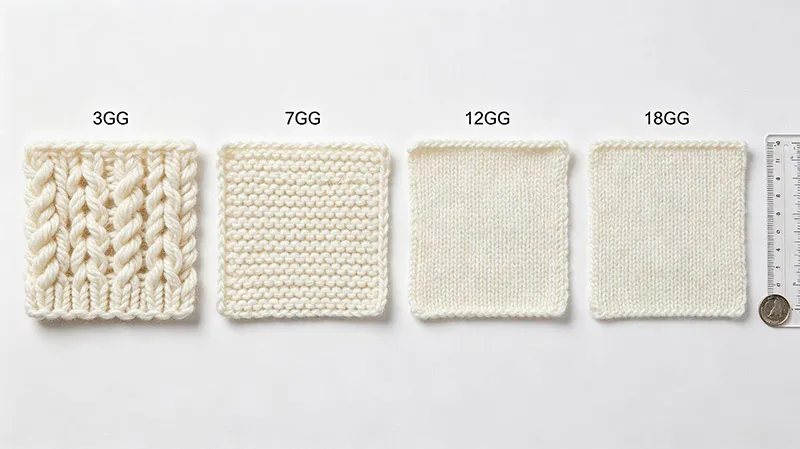
Factory sampling note: Weight is not gauge alone. Stitch structure and washing/milling change the number. If you’re not sure whether your ply count will fill the needle eye, ask JM Sweater to run a needle-bed trial and stitch count before sample order.
Deep-Dive Technical Specs: Breaking Down Each Gauge
Moving from concept to bulk means knowing machine behavior, finishing, and construction. Here’s how we see each gauge on the floor.
3GG Chunky Knits: Statement Pieces & Outerwear
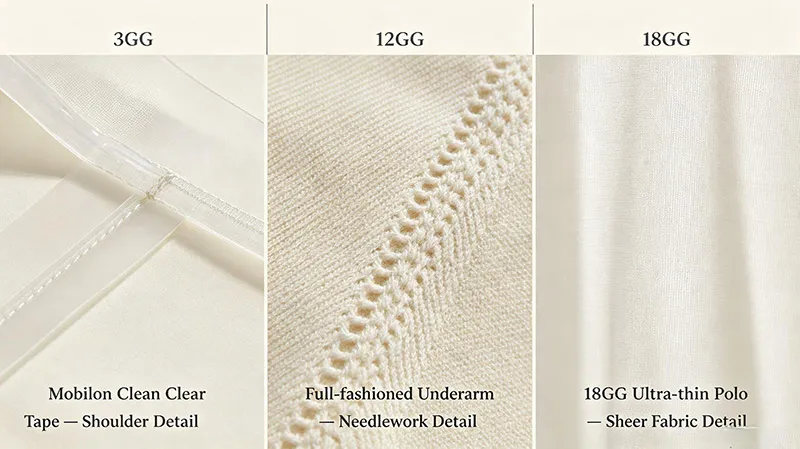
3GG is heavy chunky. Stitches are bold. It’s the gauge for statement pieces, outerwear cardigans, vintage cables. It runs Aran, heavy cable, cardigan stitch, Ottoman rib. But weight is the enemy. A 3GG sweater can hit 400g–800g. Hang it wrong and shoulders drop. At JM Sweater, we tape shoulder seams and necklines with Mobilon tape (elastic clear tape) to hold structure. Linking is another story. Needle eyes are big. Standard linking machines won’t hit the mark. We use hand-linking or heavy-gauge linking equipment.
Last month on our Guangzhou floor, a brand insisted on running 2-ply 2/28NM on a 3GG machine. The panel came off the bed looking like a fishnet. We stopped the run, re-plied to 6 ends, re-swatched, and saved the style.
- If the design has a deep V or heavy rib, factor in tape and seam support early.
- Don’t spec 3GG for a soft, fluid drape. It won’t happen.
- A 3GG sample can look great flat and fail on hanger. Test hanging before bulk.
7GG Medium Knits: The Retail Gold Standard
Q: Why is 7GG the volume king?
A: It hits the retail sweet spot. Texture of a chunky knit. Flatness of a finer gauge. Warmth. Cost. Machine time is moderate. Yarn window is wide—coarse-spun or worsted multi-ply. In bulk, 7GG tolerates small yarn evenness issues. Lot-to-lot quality stays stable.
Q: What styles run best?
A: Dropped-shoulder sweatshirt sweaters, basic crewnecks, casual cardigans. It also carries jacquard, intarsia, and brushed finishes without fighting the machine.
Q: Where does 7GG fall short?
A: If you want a luxury next-to-skin finish, it’s too thick. If you want deep winter outerwear, it may be too light. For those, move to 12GG or 3GG.
Q: Is it a safe first bulk order?
A: Yes. For many brands, 7GG is the lowest-risk gauge to scale. Machine time, yarn cost, and QC all sit in a workable range.
12GG Fine Knits: Year-Round Versatility
12GG is the worsted standard. Flat stitches. Clean surface. Good drape. It works for business menswear, women’s fitted base layers, quality cardigans. It is also the best gauge for full-fashioned decreasing. Run visible fashion marks at armholes and necklines. You cut panel waste and get a tailored look. Linking must run on high-precision 12GG linking machines, stitch by stitch. Operator skill matters.
Case box: Last month on our Guangzhou floor, a German menswear brand sent a tech pack with a 12GG V-neck, 2/48NM cashmere, full-fashioned armholes. First sample had a clean surface but the neckline was too soft. We dialed in the linking tension, changed the tape at the shoulder, and re-swatched. Second sample hit the mark. Bulk started two weeks later. The lesson: 12GG is versatile, but small finishing choices decide whether it feels premium or plain.
18GG Ultra-Fine Knits: Luxury Lightweight Performance
18GG is the ultra-fine limit. Surface is extremely flat. Hand feel sits close to high-end woven. Weight runs 100g–160g. It’s for luxury and premium spring/summer polos, next-to-skin tanks, and lightweight base layers. Needle pitch is about 1.4mm. That’s tight. Machine precision and takedown tension must be controlled. At JM Sweater’s manufacturing facility, we run high-precision Stoll and Shima Seiki machines to mitigate yarn breakage, dropped stitches, and missed stitches.
- 18GG is not a cheap way to get a fine hand. Run time is high.
- Yarn quality is non-negotiable. Weak or uneven yarn raises rejects.
- Needle inspection and repair are slow. Build QC time into the quote.
The Sourcing Formula: How Yarn Count Matches Sweater Gauge
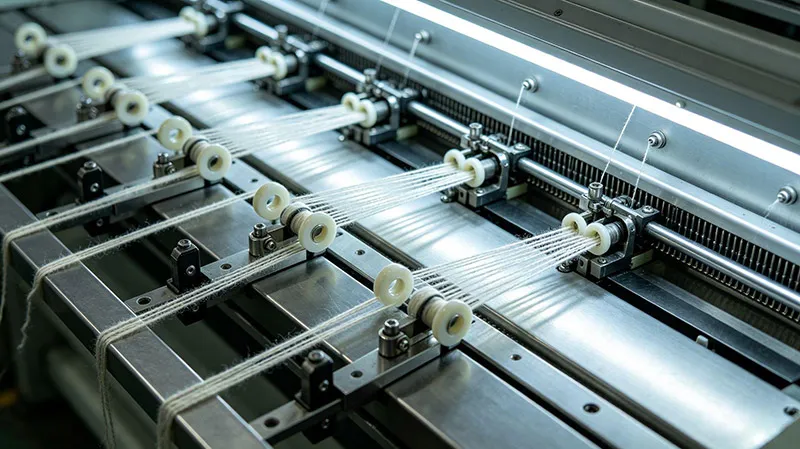
Here’s where many bulk orders go wrong. Gauge is set. Sample comes out either open and light-transmitting or stiff as a board. Root cause: yarn count for sweater gauge is off. Yarn thickness must fill the needle eye. Not too thin. Not too thick. When you talk to a factory about the Tech Pack, two formulas help you estimate yarn cost and feasibility.
1. Common Yarn Count Units: NM and S
Metric Count (NM): The most common measure for wool, cashmere, and worsted knitting yarns. It indicates the length in meters of 1 gram of yarn at official moisture regain. For example, 2/28NM means two plies of 28NM single yarn. Effective single-yarn thickness: 28 ÷ 2 = 14NM.
Cotton Count (S): Common for cotton, linen, and blended yarns. Conversion:
2. Multiple Plies / End Count Calculation
If yarn is too fine, the factory combines plies or ends to fill the needle eye. Formula:
Needle bed rule: lower GG = smaller effective NM = thicker yarn bundle.
- 3GG machine: Effective NM around 1.5NM–2.5NM.
- 12GG machine: Effective NM around 12NM–14NM.
Buyer Tip: Use Stock-Service Yarn and Plies to Cut Inventory Risk
Don’t buy new coarse yarn if you don’t have to. A 12GG staple like 2/28NM can run on 3GG. Combine 6–8 ends. Knit it as a coarse feed. JM Sweater does this often. It reuses the brand’s 12GG stock-service yarn and stock color inventory. It also avoids high MOQs and dead stock on coarse-count raw materials. Trade off: more plies mean more winding and feeding attention. Factor that into sampling.
Manufacturing Cost, Lead Time, and MOQ Considerations
Gauge choice sets cost and cycle time. No way around it.
Machine time and lead time: Flat knitting processing fees are calculated by knitting rows. 18GG has extremely dense stitches, so per-piece run time is 3–4 times that of 7GG. Processing cost and scheduling lead time run much higher than coarse gauge.
Yarn weight vs. quality: A single 3GG piece often weighs 500g–800g, so cost sits in yarn weight. An 18GG piece saves yarn weight (only 100g–150g), but it demands high tensile strength and evenness. Poor yarn drives up yarn breakage and reject rate cost.
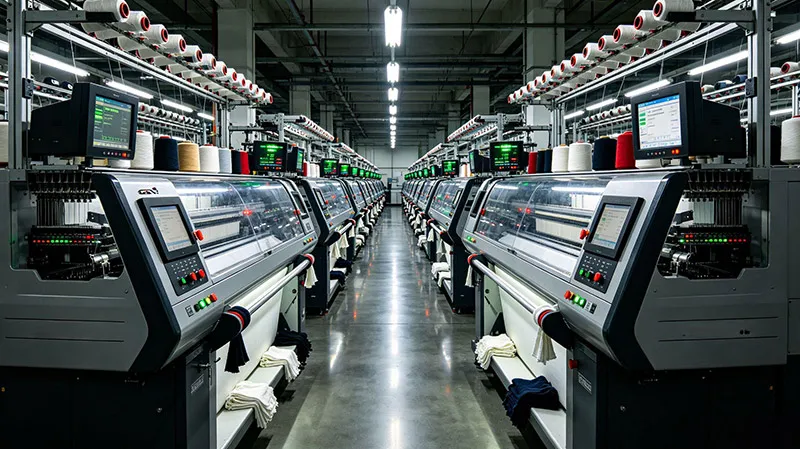
MOQ and development risk: To help brands cut inventory and trial risk, JM Sweater offers flexible low MOQ customization and rapid sampling across the full 3GG–18GG range. With a stock color yarn library and high-precision Stoll/Shima Seiki flat knitting machines, we can complete a first sample in 5–7 days. For knitwear factory low MOQ sampling, this helps sourcing teams dial in per-piece FOB cost before bulk.
Tech Pack Checklist: What to Specify for Your Factory
A tight Tech Pack cuts back-and-forth. When you send a development request to JM Sweater, include these five items:
- Target Gauge: Clearly state the required gauge (3GG, 7GG, 12GG, or 18GG). This is the physical basis for the factory to select the needle bed and set up the machine.
- Yarn Composition & Count: Write out fiber ratio, NM/Cotton Count, and ply count (for example: 100% Cashmere, 2/28NM, 2-ply). This prevents yarn thickness from mismatching the needle eye.
- Target Garment Weight & Tolerance: Set the standard garment weight and acceptable tolerance (for example, 260g ± 5%). This helps the factory control cost and thickness.
- Seaming Technique: State the linking/looping requirement. Specify whether the seams need clean, flat hand-linking, or standard machine stitching.
- Wash & Finishing Specs: Define hand feel requirements (softness, loft, nap length) and shrinkage standards. This is the key process that determines final garment texture and hand.
Conclusion — Ready to Develop Your Next Knitwear Collection?
From rugged, heavy 3GG vintage outerwear and the commercial 7GG gold standard, to four-season 12GG fine-gauge base layers and luxury 18GG ultra-thin worsted, choosing the right sweater gauge is a balance. Visual style. Garment weight. Yarn budget. Machine time. Trade offs are real. Pick the one that fits the product, not the mood board.
As a custom sweater OEM ODM manufacturer, JM Sweater runs Stoll and Shima Seiki high-precision flat knitting machines and a closed supply chain. We help sourcing and design teams connect yarn count calculation, Tech Pack review, and garment linking.