
I’ve been doing this sourcing thing for long enough to know that when most buyers hear “Dongguan sweater factory,” they picture one of two things: either a sprawling, high-tech operation that can turn a sketch into a shippable container in two weeks, or a chaotic workshop where quality is a coin toss. The reality, as usual, sits somewhere in the middle—but if you know where to look, Dalang is about as good as it gets.
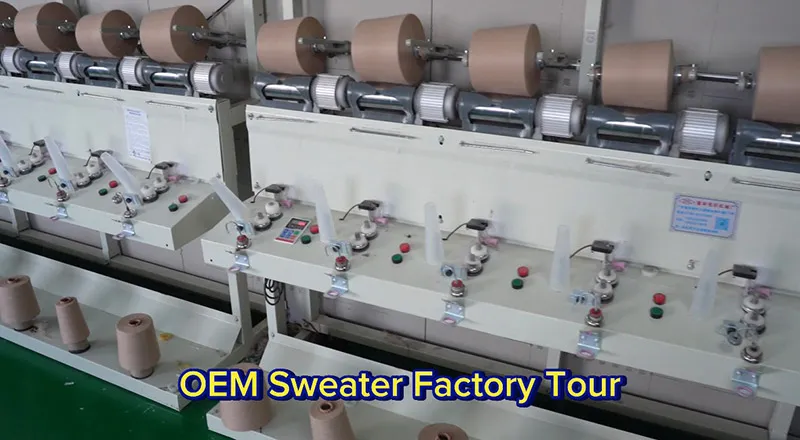
Let’s cut the fluff. If you’re sourcing knitwear at scale, you’ve heard of Dalang. It’s the town that produces roughly one out of every five sweaters sold globally. That’s not a marketing line—that’s just math. Around 28,000 active enterprises, 300,000 workers, and north of 900 million pieces a year. But the number that actually matters to you isn’t the output—it’s the supply chain density. Yarn traders, dye houses, machine manufacturers, sample rooms, finishing lines, and export logistics all sit within about a 20-kilometer radius. That means fewer truck delays, tighter quality control, and—if you pick the right partner—fewer headaches.
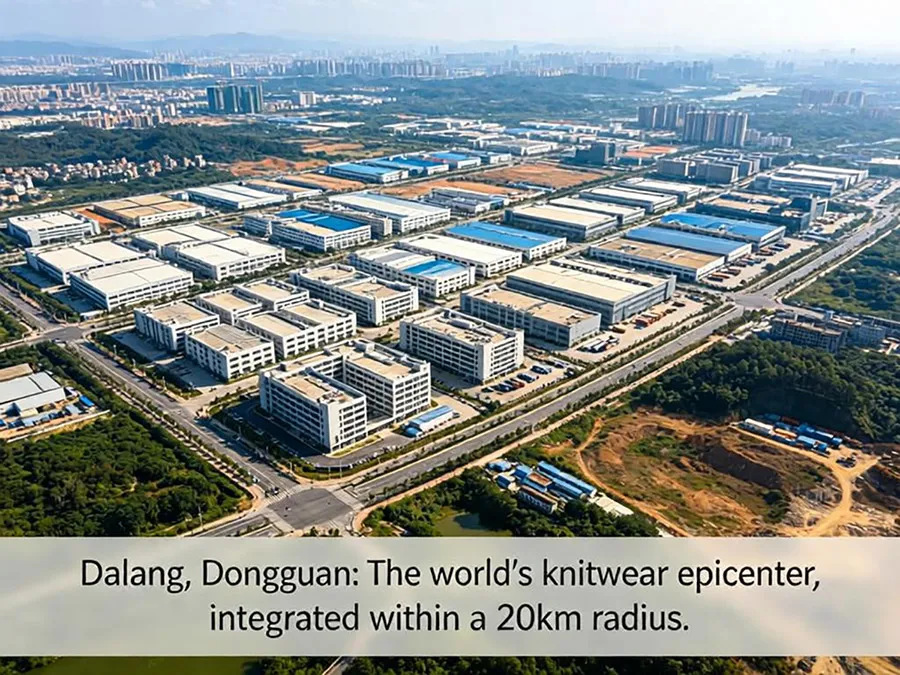
I’m going to walk you through how this place actually works, factory by factory, and more importantly, how to not mess up your supplier selection. Because I’ve seen that movie too many times.
A Quick History Lesson (That Actually Matters)
Dalang didn’t become a knitwear hub by accident. Back in 1979, the first wool factory opened here—and then a bunch of Hong Kong textile guys started moving their operations across the border. They brought cash, sure, but more importantly, they brought know-how and export connections. Over the next 40 years, that know-how turned into an ecosystem that now runs on computerized machines and data-driven production schedules. It’s not your grandfather’s garment district anymore.
So, what’s actually in it for you?
The short answer: speed and flexibility at a price that still makes sense.
Dalang’s yarn market alone moves over 35 billion yuan annually—that’s roughly $5 billion USD—and they introduce nearly 10,000 new yarn varieties every year. If you want something specific, chances are they’ve got it, or they can get it within a day.
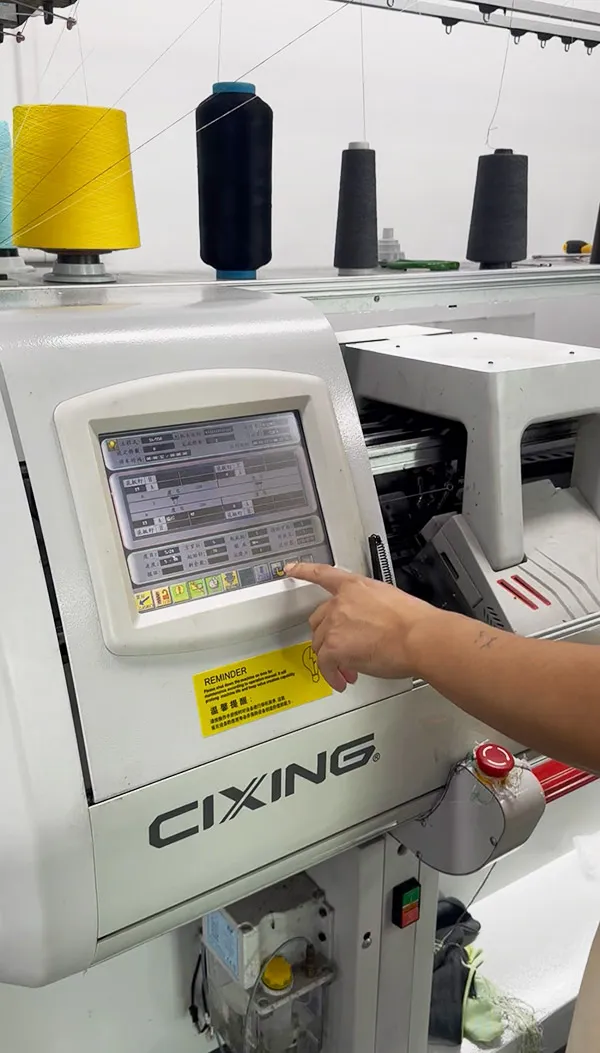
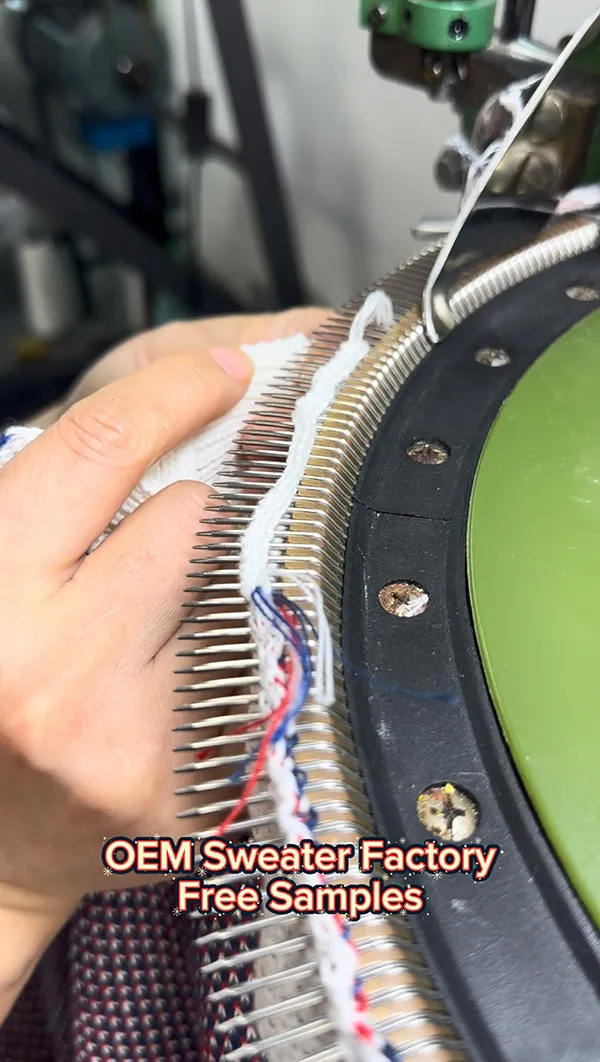
On the machinery side, they’ve got around 150,000 computerized knitting machines. A growing chunk of those are whole-garment (seamless) machines. And here’s where it gets interesting: domestic Chinese manufacturers are now building machines that run just as fast as the German and Japanese ones, but at a fraction of the cost. We're talking less than a tenth of the price. That’s not a typo. As a result, about 80% of the whole-garment machines in Dalang are now locally made. Some of them are even getting exported back to Southeast Asia. Go figure.
Dalang didn’t become a knitwear hub by accident. Back in 1979, the first wool factory opened here—and then a bunch of Hong Kong textile guys started moving their operations across the border. They brought cash, sure, but more importantly, they brought know-how and export connections. Over the next 40 years, that know-how turned into an ecosystem that now runs on computerized machines and data-driven production schedules. It’s not your grandfather’s garment district anymore.
So, what’s actually in it for you?
The short answer: speed and flexibility at a price that still makes sense.
Dalang’s yarn market alone moves over 35 billion yuan annually—that’s roughly $5 billion USD—and they introduce nearly 10,000 new yarn varieties every year. If you want something specific, chances are they’ve got it, or they can get it within a day.
On the machinery side, they’ve got around 150,000 computerized knitting machines. A growing chunk of those are whole-garment (seamless) machines. And here’s where it gets interesting: domestic Chinese manufacturers are now building machines that run just as fast as the German and Japanese ones, but at a fraction of the cost. We're talking less than a tenth of the price. That’s not a typo. As a result, about 80% of the whole-garment machines in Dalang are now locally made. Some of them are even getting exported back to Southeast Asia. Go figure.
The Factory Landscape: Who Does What
You’ve got three tiers here, and knowing which one fits your brand is half the battle.
Tier 1: The vertically integrated players. These are the big dogs. They do everything from yarn sourcing to design to sampling to bulk production to QC—all under one roof. If you’re a established brand with large volumes and complex styles, this is your lane. They’re not cheap, but they’re consistent, and they’ve got the certifications to back it up.
Tier 2: The mid-sized OEM/ODM shops. Typically running 50 to 200 machines and employing 80 to 300 people. These are your workhorses. They can handle medium-sized orders and they’re agile enough to do intricate stuff—jacquard, intarsia, cable knits. Good balance of capability and responsiveness.
Tier 3: The SMEs—over 7,000 of them. These are the little guys. Small workshops that excel at what we call "small-batch, quick-response." They’ll take orders as low as 30 to 100 pieces per style and turn them around in 7 to 12 days. That used to be a logistical nightmare for buyers. Now, thanks to Dalang’s integrated supply chain, it’s actually a competitive advantage. If you’re a DTC brand testing new styles, this is where you start.
You’ve got three tiers here, and knowing which one fits your brand is half the battle.
| Factory Tier | Core Strengths | MOQ (per color) | Lead Time | Best For |
|---|---|---|---|---|
| Tier 1 Fully Integrated Giants | ✅ Full vertical supply chain ✅ Rock-solid quality consistency ✅ Full compliance & certifications | 1,000+ units | 30–45 working days | Large international brands, high-spec mass production |
| Tier 2 Mid-Size OEM / ODM | ✅ Complex stitch expertise (jacquard, cable) ✅ High order flexibility ✅ Custom development support | 300–500 units | 20–30 working days | Mid-market brands, emerging designer labels |
| Tier 3 Small-Batch Workshops | ✅ Ultra-low minimums ✅ Lightning-fast turnaround ✅ Budget-friendly pricing | 30–100 units | 7–12 working days | DTC e-commerce brands, sample runs & style testing |
Tier 1: The vertically integrated players. These are the big dogs. They do everything from yarn sourcing to design to sampling to bulk production to QC—all under one roof. If you’re a established brand with large volumes and complex styles, this is your lane. They’re not cheap, but they’re consistent, and they’ve got the certifications to back it up.
Tier 2: The mid-sized OEM/ODM shops. Typically running 50 to 200 machines and employing 80 to 300 people. These are your workhorses. They can handle medium-sized orders and they’re agile enough to do intricate stuff—jacquard, intarsia, cable knits. Good balance of capability and responsiveness.
Tier 3: The SMEs—over 7,000 of them. These are the little guys. Small workshops that excel at what we call "small-batch, quick-response." They’ll take orders as low as 30 to 100 pieces per style and turn them around in 7 to 12 days. That used to be a logistical nightmare for buyers. Now, thanks to Dalang’s integrated supply chain, it’s actually a competitive advantage. If you’re a DTC brand testing new styles, this is where you start.
A Story from the Floor
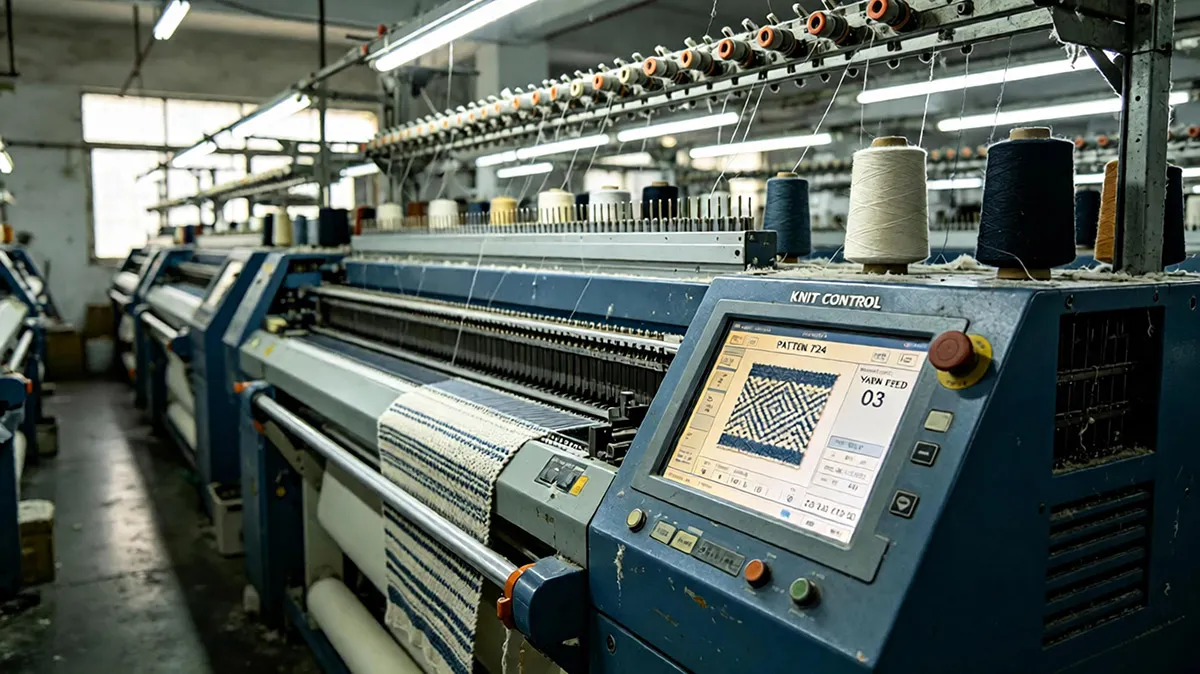
Last year, I was visiting a mid-sized factory in Dalang—about 120 machines, solid BSCI audit, good people. The owner, Mr. Chen, has been in the business for over 20 years. During the visit, he showed me a sweater they were producing for a Scandinavian brand. It was a fine-gauge merino with a pretty complex jacquard pattern. The sample was flawless. I asked him how long it took to develop. He said, "Three days from sketch to finished sample." And then he laughed and added, "But the first two samples? We threw them away. The tension wasn't right. The client wouldn't have noticed—but we did."
That’s the difference between a factory that just processes orders and one that actually cares about the product.
Last year, I was visiting a mid-sized factory in Dalang—about 120 machines, solid BSCI audit, good people. The owner, Mr. Chen, has been in the business for over 20 years. During the visit, he showed me a sweater they were producing for a Scandinavian brand. It was a fine-gauge merino with a pretty complex jacquard pattern. The sample was flawless. I asked him how long it took to develop. He said, "Three days from sketch to finished sample." And then he laughed and added, "But the first two samples? We threw them away. The tension wasn't right. The client wouldn't have noticed—but we did."
That’s the difference between a factory that just processes orders and one that actually cares about the product.
A Quick Note on the "Double Circulation" Shift
One thing you might not hear from other sourcing guides: a lot of these factories have been pivoting toward the domestic Chinese market in the last few years. The "dual circulation" policy isn't just government jargon—it's real. Many of them are now producing for Chinese brands that demand the same quality as European or American labels, but with shorter runs and faster turnaround times. What does that mean for you? It means they’ve gotten even better at small-batch production. And it means they understand that one-size-fits-all quality doesn't cut it anymore. Luxury, fast fashion, and everything in between—they’re all being made in the same factories, often on the same machines.
One thing you might not hear from other sourcing guides: a lot of these factories have been pivoting toward the domestic Chinese market in the last few years. The "dual circulation" policy isn't just government jargon—it's real. Many of them are now producing for Chinese brands that demand the same quality as European or American labels, but with shorter runs and faster turnaround times. What does that mean for you? It means they’ve gotten even better at small-batch production. And it means they understand that one-size-fits-all quality doesn't cut it anymore. Luxury, fast fashion, and everything in between—they’re all being made in the same factories, often on the same machines.
The Technical Side: What They Can Actually Do
Let’s get into the weeds for a second. Dalang factories routinely produce across a full gauge range—1.5 GG for chunky knits up to 16 GG for fine-gauge lightweight stuff. Whole-garment knitting is the big buzzword, and for good reason. These machines knit an entire sweater in one piece—no seams, better fit, and way more comfortable. Designers can work in 3D software, and within about two hours, a finished garment pops out of the machine.
But traditional techniques are still very much alive. Jacquard, intarsia, cable knitting, embroidery, printed knits—they’ve got deep expertise in all of it. Many factories employ in-house designers who crank out 300 to 500 new designs per season, pulling from runway shows and fast-fashion trends. If you’ve got a sketch, they can make it. If you don’t, they’ve got plenty of ideas.
| Gauge Category | Machine Range (GG) | Typical Styles & Applications | Key Construction Capabilities |
|---|---|---|---|
| Chunky Knits |
1.5 GG – 5 GG | Heavyweight sweaters, outerwear, thick vintage cardigans | ✅ Cable stitch ✅ Textured / raised jacquard |
| Mid Gauge |
7 GG – 10 GG | All-season sweaters, everyday basics, core apparel lines | ✅ Jacquard patterning ✅ Intarsia inlay |
| Fine Gauge |
12 GG – 16 GG | Base layers, premium cashmere knits, lightweight layering pieces | ✅ Seamless whole-garment knitting ✅ Ultra-fine stitch detail |
Let’s get into the weeds for a second. Dalang factories routinely produce across a full gauge range—1.5 GG for chunky knits up to 16 GG for fine-gauge lightweight stuff. Whole-garment knitting is the big buzzword, and for good reason. These machines knit an entire sweater in one piece—no seams, better fit, and way more comfortable. Designers can work in 3D software, and within about two hours, a finished garment pops out of the machine.
But traditional techniques are still very much alive. Jacquard, intarsia, cable knitting, embroidery, printed knits—they’ve got deep expertise in all of it. Many factories employ in-house designers who crank out 300 to 500 new designs per season, pulling from runway shows and fast-fashion trends. If you’ve got a sketch, they can make it. If you don’t, they’ve got plenty of ideas.
Quality Control: Where the Rubber Meets the Road
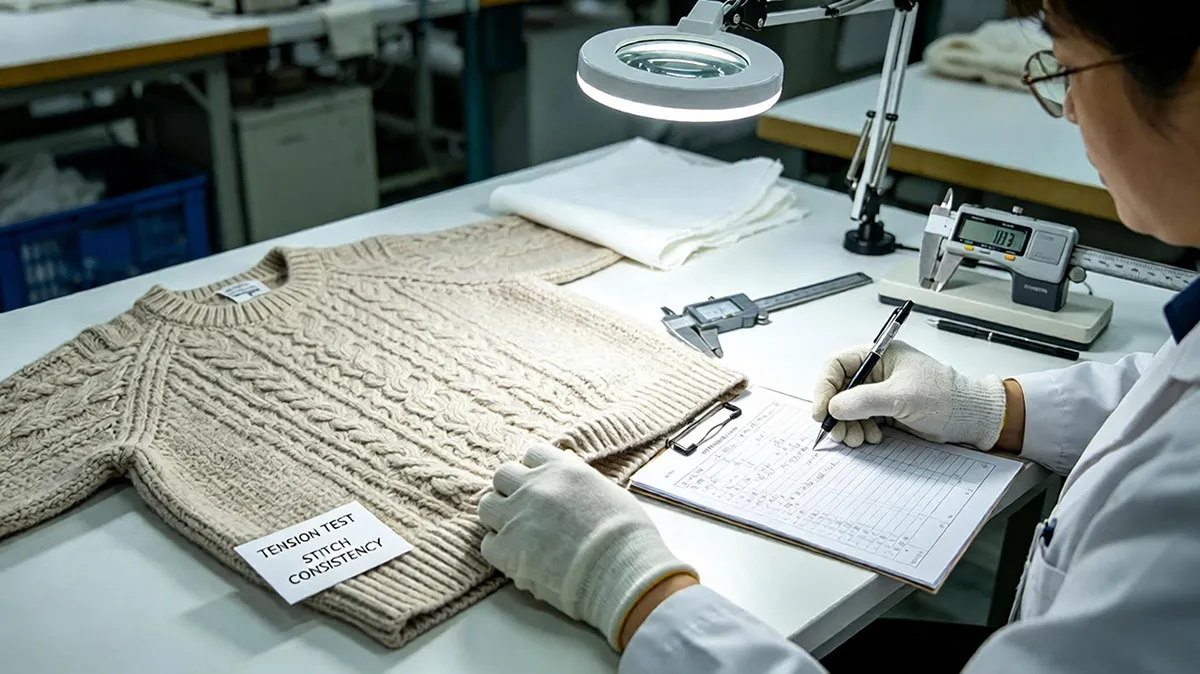
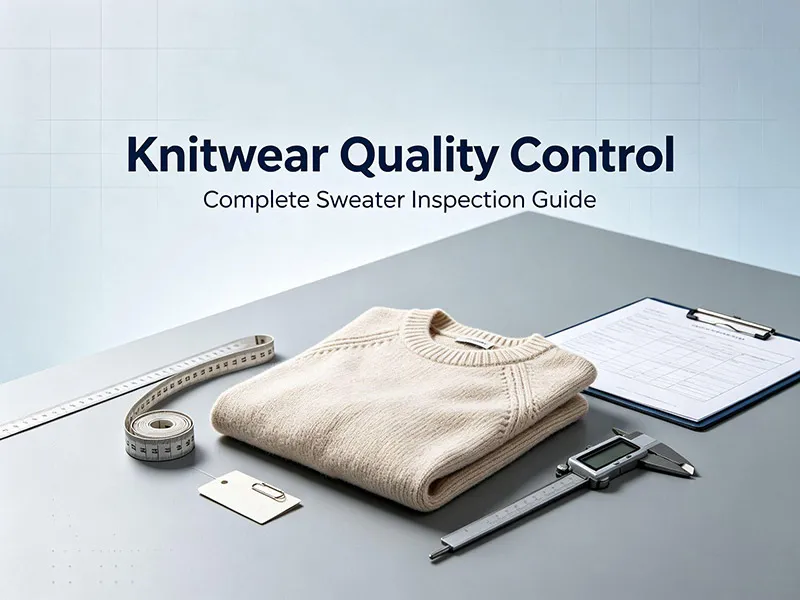
Reputable factories run multi-stage QC: raw material inspection on yarn arrival, in-line checks during production (that's your DUPRO inspection), and final random inspections before packaging. Most hold ISO 9001:2015, and an increasing number have passed BSCI audits.
A lot of them inspect to AQL 2.5 standards. They test GSM accuracy, tension consistency, shrinkage, and color stability. If you need third-party audits, there are inspection agencies on the ground that can do factory evaluations and product audits throughout the production cycle.
But here’s a piece of advice from someone who’s been burned before: don’t just look at the certs. Ask them what they test for that isn’t on the standard checklist. The good ones will have an answer. The mediocre ones will blink.
Reputable factories run multi-stage QC: raw material inspection on yarn arrival, in-line checks during production (that's your DUPRO inspection), and final random inspections before packaging. Most hold ISO 9001:2015, and an increasing number have passed BSCI audits.
A lot of them inspect to AQL 2.5 standards. They test GSM accuracy, tension consistency, shrinkage, and color stability. If you need third-party audits, there are inspection agencies on the ground that can do factory evaluations and product audits throughout the production cycle.
But here’s a piece of advice from someone who’s been burned before: don’t just look at the certs. Ask them what they test for that isn’t on the standard checklist. The good ones will have an answer. The mediocre ones will blink.
How to Pick the Right One (Without Losing Your Mind)
With thousands of suppliers, it’s easy to get overwhelmed. Here’s my shortcut:
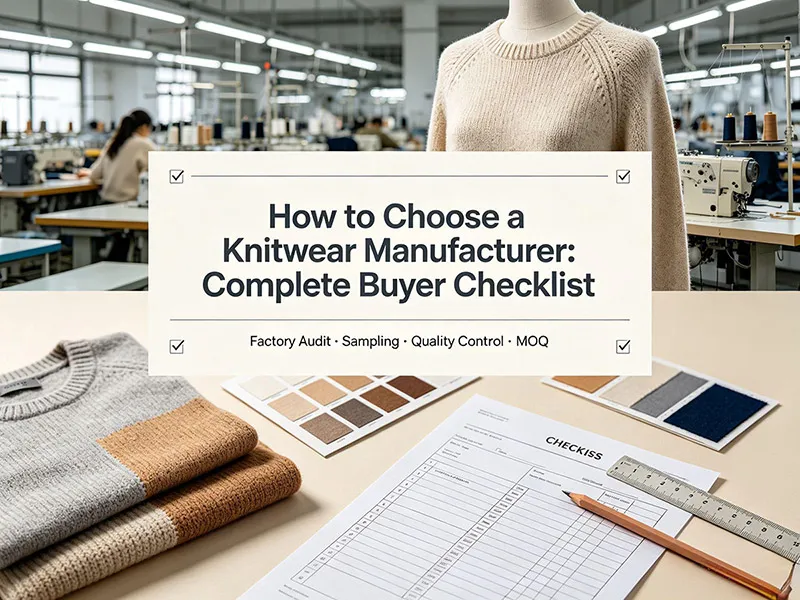
Start with capability. Ask for a detailed machine list—how many, what gauges, what brands. Then ask what’s in-house vs. outsourced. Vertical integration generally means better QC and more predictable lead times.
Test responsiveness. Send an inquiry. See how long it takes to get a reply. If they’re slow during the sampling phase, they’re not going to magically speed up when you’re in production.
Request samples and be picky. A sample tells you more than a price list ever will. Check stitch consistency, yarn quality, seam construction, and finishing. Ask for GSM and shrinkage test results. For high-end lines, pay attention to the hand-feel and small details—that’s where the top-tier factories separate themselves.
Verify compliance. ISO 9001 and BSCI are baseline. If you’re selling into Europe or North America, make sure they understand REACH and Oeko-Tex requirements. Most do, but it’s worth confirming.
Visit if you can. It’s about an hour from Shenzhen Airport and 90 minutes from Guangzhou. Walk the floor. Look at the QC checkpoints. Meet the people who will actually be making your sweaters. You’ll learn more in two hours than you will in two weeks of email chains.
With thousands of suppliers, it’s easy to get overwhelmed. Here’s my shortcut:
| Evaluation Dimension | What to Verify | Red Flags & Warning Signs |
|---|---|---|
| Production Equipment | Brand & quantity of computerized flat knitting machines; share of seamless whole-garment capacity | ❌ All core production processes fully outsourced — no in-house quality control |
| Sample Turnaround | 2–3 day prototyping capability; willingness and speed to revise sample iterations | ❌ Slow sample delivery; unresponsive communication (>24 hour reply time) |
| Quality & Compliance | Valid BSCI / ISO 9001 / OEKO-TEX certifications; on-site audit trail | ❌ Paper certificates only; no implemented DUPRO / AQL inspection standards on the floor |
Start with capability. Ask for a detailed machine list—how many, what gauges, what brands. Then ask what’s in-house vs. outsourced. Vertical integration generally means better QC and more predictable lead times.
Test responsiveness. Send an inquiry. See how long it takes to get a reply. If they’re slow during the sampling phase, they’re not going to magically speed up when you’re in production.
Request samples and be picky. A sample tells you more than a price list ever will. Check stitch consistency, yarn quality, seam construction, and finishing. Ask for GSM and shrinkage test results. For high-end lines, pay attention to the hand-feel and small details—that’s where the top-tier factories separate themselves.
Verify compliance. ISO 9001 and BSCI are baseline. If you’re selling into Europe or North America, make sure they understand REACH and Oeko-Tex requirements. Most do, but it’s worth confirming.
Visit if you can. It’s about an hour from Shenzhen Airport and 90 minutes from Guangzhou. Walk the floor. Look at the QC checkpoints. Meet the people who will actually be making your sweaters. You’ll learn more in two hours than you will in two weeks of email chains.
Final Take
Dalang isn’t just a place that makes sweaters. It’s a complete knitwear ecosystem that’s been refining itself for over four decades. 28,000 enterprises. 150,000 computerized machines. 900 million sweaters a year. Those numbers are impressive, but what actually matters is the density—the fact that every part of the supply chain is within arm’s reach.
If you take the time to understand how it works—who does what, who’s reliable, who’s just talking a good game—you’ll find not just a supplier, but a real manufacturing partner. The best factories here don't just follow orders. They solve problems. And in this business, that's worth more than a few cents off the unit price.
If you’re heading over and need a second pair of eyes, give me a shout. I know a few good factory owners who’d be happy to show you around—and maybe even buy you a decent cup of coffee while they’re at it.
Dalang isn’t just a place that makes sweaters. It’s a complete knitwear ecosystem that’s been refining itself for over four decades. 28,000 enterprises. 150,000 computerized machines. 900 million sweaters a year. Those numbers are impressive, but what actually matters is the density—the fact that every part of the supply chain is within arm’s reach.
If you take the time to understand how it works—who does what, who’s reliable, who’s just talking a good game—you’ll find not just a supplier, but a real manufacturing partner. The best factories here don't just follow orders. They solve problems. And in this business, that's worth more than a few cents off the unit price.
If you’re heading over and need a second pair of eyes, give me a shout. I know a few good factory owners who’d be happy to show you around—and maybe even buy you a decent cup of coffee while they’re at it.