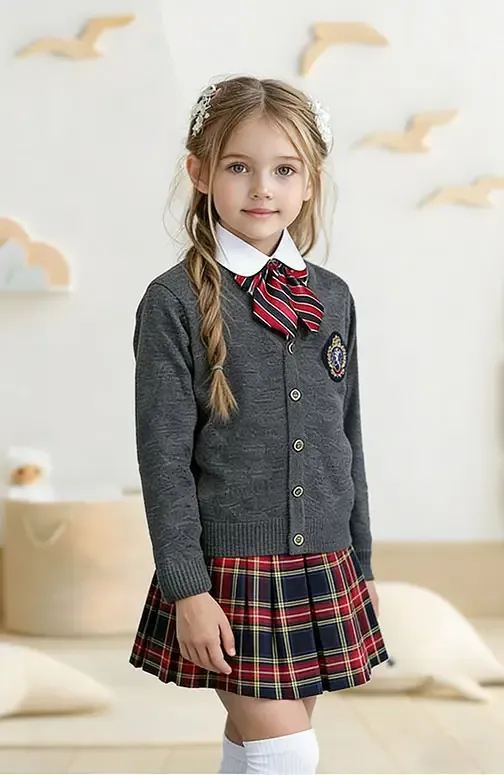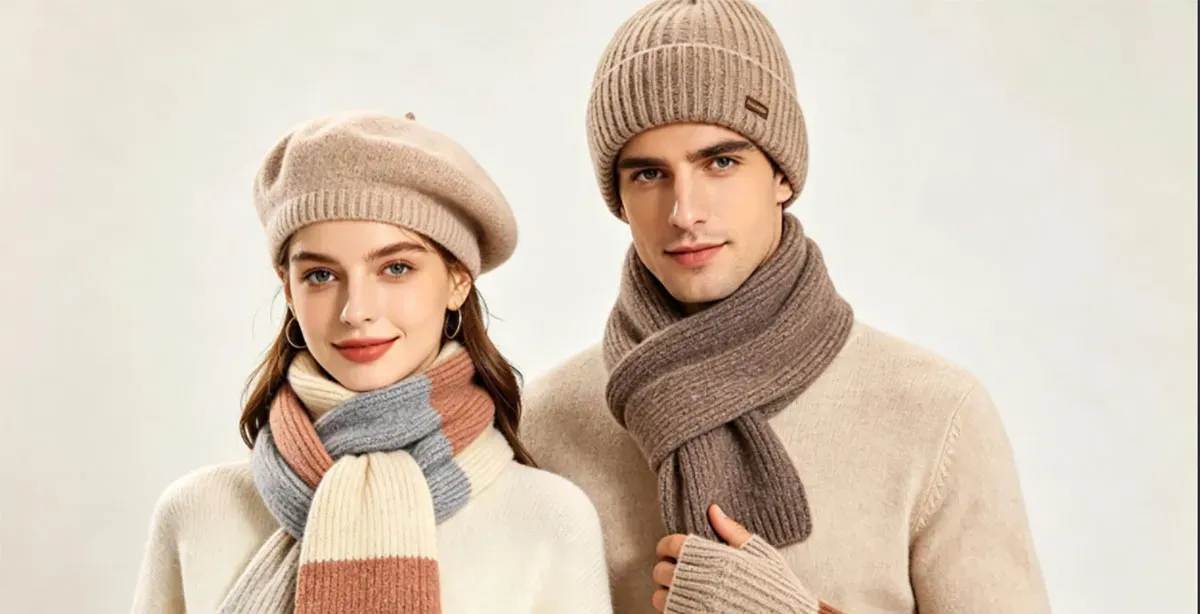

"How do I find a sweater manufacturer that actually gets what I'm trying to do—without spending half my budget on airfare and the other half on therapy?"
The knee-jerk reaction is always the same: punch "sweater manufacturers near me" into Google, because close feels safe. No time zones. Quick samples. You can show up at their door if something goes sideways.
And look—I get it. I've made that call myself.
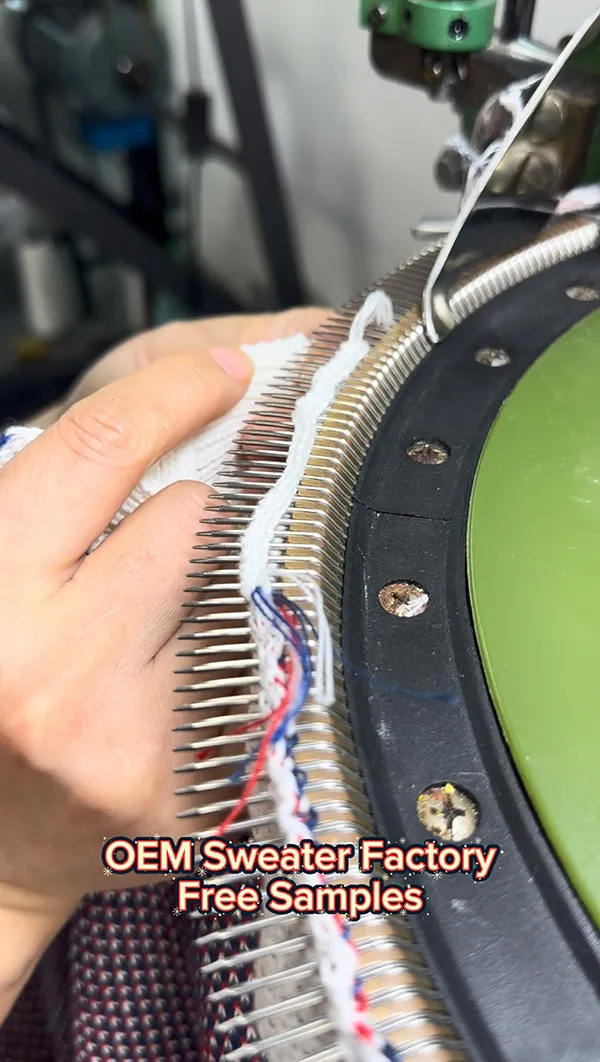
But here's the thing nobody tells you about knitwear: it's not like cut-and-sew. You're not just stitching panels together. You're working with tension, gauge, yarn behavior—stuff that takes generations of factory-floor experience to really nail. That local shop with 10 flat knitting machines might talk a good game, but when your 2,000-unit order hits their production board in September? You're looking at December delivery. If you're lucky.
So yeah, I've stopped thinking about "near me" in miles. I think about it in response time, technical competence, and how little I have to explain myself twice.
Here's the 2026 playbook I actually use when I'm vetting suppliers for my clients. No fluff. No "we're committed to excellence" garbage. Just the stuff that separates the real players from the expensive time-wasters.
1. Stop Looking at a Map. Look at These 3 Metrics Instead.
Forget the zip code. Ask these three questions first—they'll tell you more than any site visit ever could.
A. Hard capacity + buffer.
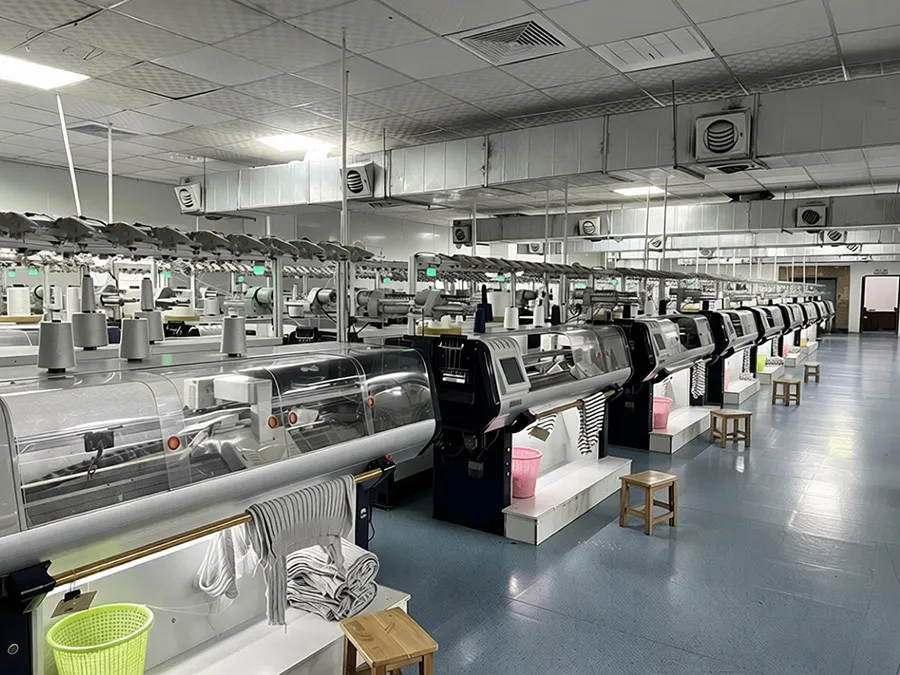
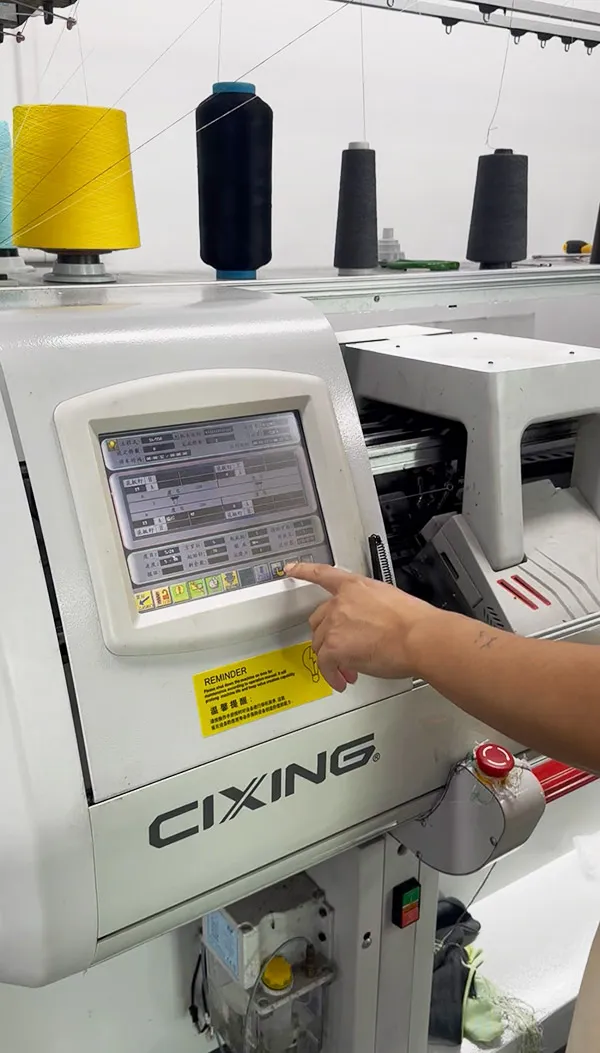
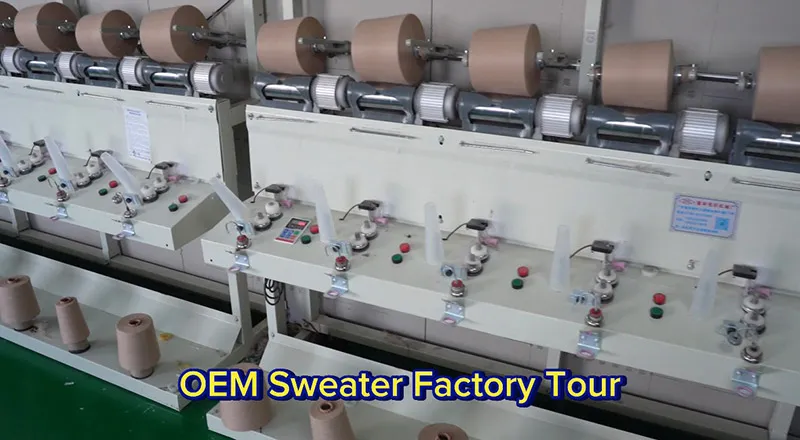
That local shop with 10 machines? They're one rush order away from pushing your entire season into January. I've seen it happen more times than I can count. The factories I actually trust are running at least 100+ automated flat knitting machines in facilities over 3,000 sq. meters, with annual output north of 1.2 million pieces. Why does that matter? Because when your influencer drops the ball and you need to chase 500 more units yesterday, a factory with real scale can actually flex for you. A small shop just laughs (and not in a nice way).
Forget the zip code. Ask these three questions first—they'll tell you more than any site visit ever could.
A. Hard capacity + buffer.
That local shop with 10 machines? They're one rush order away from pushing your entire season into January. I've seen it happen more times than I can count. The factories I actually trust are running at least 100+ automated flat knitting machines in facilities over 3,000 sq. meters, with annual output north of 1.2 million pieces. Why does that matter? Because when your influencer drops the ball and you need to chase 500 more units yesterday, a factory with real scale can actually flex for you. A small shop just laughs (and not in a nice way).
B. Full-gauge range (2G to 18G).
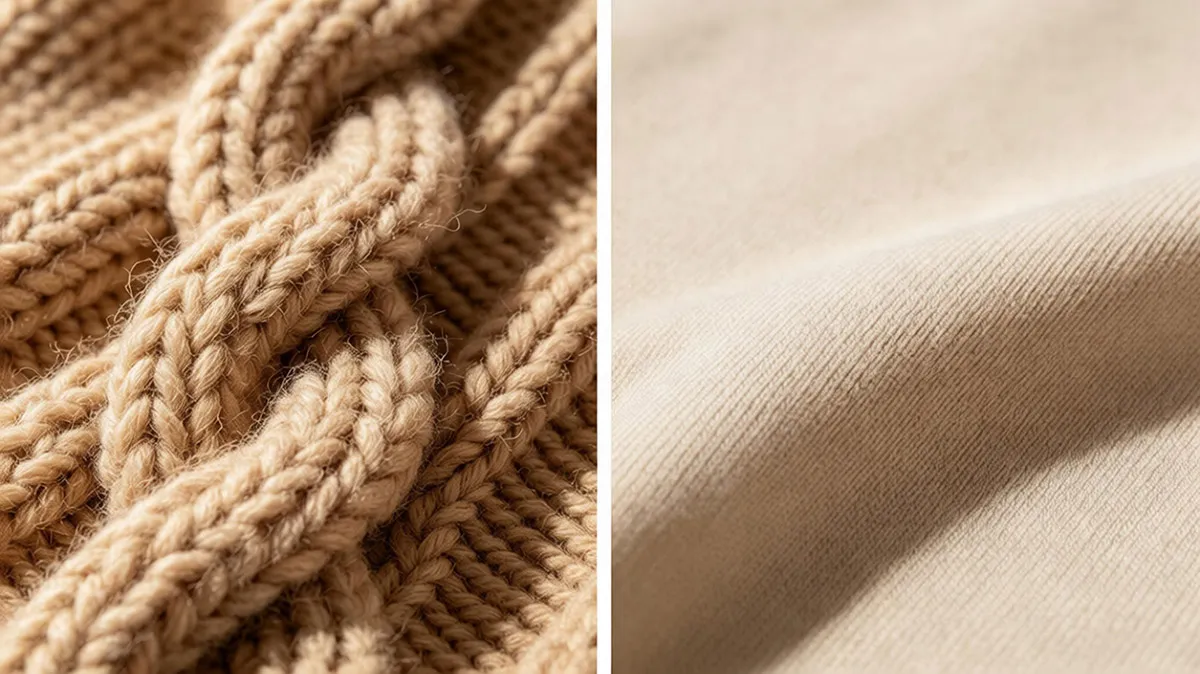
Here's where the technical rubber meets the road. If your fall collection has a chunky 3G cardigan and a fine-gauge 16G shell, do you really want to manage two different factories? Because that's doubling your QC headaches, your shipping coordination, and your chances of something going wrong. A proper knitwear factory should handle everything from chunky to micro-gauge under one roof—men's, women's, kids, even the weird stuff (yes, pet sweaters are actually a thing now, and they're annoyingly profitable).
Here's where the technical rubber meets the road. If your fall collection has a chunky 3G cardigan and a fine-gauge 16G shell, do you really want to manage two different factories? Because that's doubling your QC headaches, your shipping coordination, and your chances of something going wrong. A proper knitwear factory should handle everything from chunky to micro-gauge under one roof—men's, women's, kids, even the weird stuff (yes, pet sweaters are actually a thing now, and they're annoyingly profitable).
C. No-BS communication.
This one's personal for me. I've sat through too many calls where the sales rep just nods and says "no problem" while I can practically hear the engineering team in the background face-palming. The good ones? They push back. They'll look at your tech pack and say, "Hey, this neckline construction is going to sag after three washes—here's a fix." That's not being difficult. That's saving your brand from a returns nightmare. And they'll do it in clear, direct English within 24 hours, because they actually understand how the West works. That's real proximity.
This one's personal for me. I've sat through too many calls where the sales rep just nods and says "no problem" while I can practically hear the engineering team in the background face-palming. The good ones? They push back. They'll look at your tech pack and say, "Hey, this neckline construction is going to sag after three washes—here's a fix." That's not being difficult. That's saving your brand from a returns nightmare. And they'll do it in clear, direct English within 24 hours, because they actually understand how the West works. That's real proximity.
2. The Compliance Stuff That Actually Matters (a.k.a. Your Customs Shield)
Local shops love to say "yeah we're sustainable" with a straight face. Cool. Tell that to customs when they flag your container.
Here's my non-negotiable checklist. If a factory can't produce current certs for these, I walk. Simple.
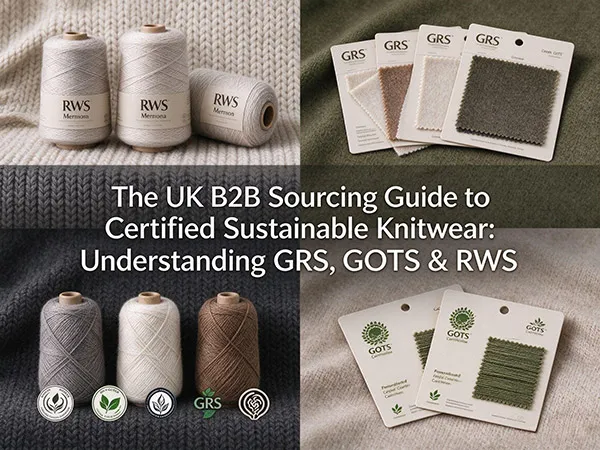
GRS (Global Recycled Standard): If you're making any sustainability claims with recycled yarns—and let's be honest, who isn't these days?—this is non-negotiable in Europe. No GRS, no marketing.
OEKO-TEX Standard 100: The baseline. Especially for kids' and intimate wear. You want zero harmful chemicals touching your customer's skin? This is how you prove it.
BSCI & WRAP: Social compliance. Most mid-to-large Western retailers won't even look at your pitch deck without these. Nobody wants to be the next headline about labor violations.
ISO 9001: This one tells me the factory actually has standardized QC from yarn receiving to finishing, instead of relying on "Grandpa's gut feeling" on the production floor. I've seen both. The difference is night and day.
Local shops love to say "yeah we're sustainable" with a straight face. Cool. Tell that to customs when they flag your container.
Here's my non-negotiable checklist. If a factory can't produce current certs for these, I walk. Simple.
GRS (Global Recycled Standard): If you're making any sustainability claims with recycled yarns—and let's be honest, who isn't these days?—this is non-negotiable in Europe. No GRS, no marketing.
OEKO-TEX Standard 100: The baseline. Especially for kids' and intimate wear. You want zero harmful chemicals touching your customer's skin? This is how you prove it.
BSCI & WRAP: Social compliance. Most mid-to-large Western retailers won't even look at your pitch deck without these. Nobody wants to be the next headline about labor violations.
ISO 9001: This one tells me the factory actually has standardized QC from yarn receiving to finishing, instead of relying on "Grandpa's gut feeling" on the production floor. I've seen both. The difference is night and day.
3. Real-World Example: 7 Days, Zero Drama
Let me paint you a picture with an actual project from last year.
A California-based independent brand came to me with a fun idea: a "Mini-Me" matching sweater collection for owners and their dogs. Think matching jacquard knitwear—cute, high-margin, perfect for the holiday gifting season. They'd spent three weeks chasing local manufacturers, and here's what they got:
One shop said they couldn't do dog sweaters at all (apparently the chest panel tension is totally different for deep-chested breeds like Frenchies—who knew? The factory sure didn't).
Another quoted a unit cost that would've forced them to price at Hermès levels just to break even.
One place just stopped returning emails after the second sample request.
So they reached out to a factory I'd worked with before in the Guangzhou knitwear hub—Guangzhou Junma Apparel, a 21-year veteran that's consistently been a top-tier exporter on major B2B platforms. Here's how that week went down:
Day 1 (Tech review): Brand uploads the design. Junma's engineering team gets back within hours with a legit fix: "Your Frenchie's chest panel needs different tension, or the sweater will ride up and choke the dog." That's not a problem—that's expertise. And it saved them a PR disaster.
Day 3 (Yarn locking): They locked in a GRS-certified, OEKO-TEX-approved cotton-blend yarn that was soft for both human and pup. No itchy dogs, no angry customers.
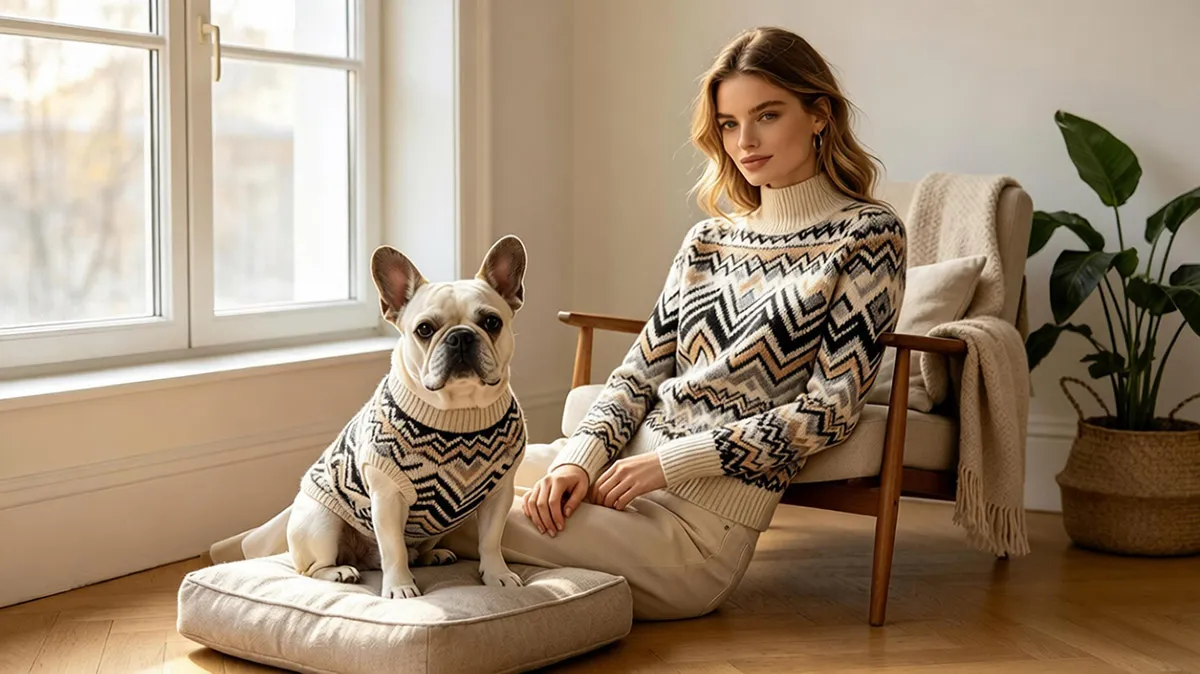
Day 7 (Sample delivery): Pre-production samples hit the brand's California office via international courier. Fit on both the human model and the test Frenchie? Perfect. First try. (That almost never happens, by the way.)
Day 30 (Delivered): 3,000 units, fully QC'd under ISO standards, landed DDP at their warehouse. They saved about 35% in production costs and beat their competitors to market by two full weeks.
That's not "near" in distance. That's near in outcome.
Let me paint you a picture with an actual project from last year.
A California-based independent brand came to me with a fun idea: a "Mini-Me" matching sweater collection for owners and their dogs. Think matching jacquard knitwear—cute, high-margin, perfect for the holiday gifting season. They'd spent three weeks chasing local manufacturers, and here's what they got:
One shop said they couldn't do dog sweaters at all (apparently the chest panel tension is totally different for deep-chested breeds like Frenchies—who knew? The factory sure didn't).
Another quoted a unit cost that would've forced them to price at Hermès levels just to break even.
One place just stopped returning emails after the second sample request.
So they reached out to a factory I'd worked with before in the Guangzhou knitwear hub—Guangzhou Junma Apparel, a 21-year veteran that's consistently been a top-tier exporter on major B2B platforms. Here's how that week went down:
Day 1 (Tech review): Brand uploads the design. Junma's engineering team gets back within hours with a legit fix: "Your Frenchie's chest panel needs different tension, or the sweater will ride up and choke the dog." That's not a problem—that's expertise. And it saved them a PR disaster.
Day 3 (Yarn locking): They locked in a GRS-certified, OEKO-TEX-approved cotton-blend yarn that was soft for both human and pup. No itchy dogs, no angry customers.
Day 7 (Sample delivery): Pre-production samples hit the brand's California office via international courier. Fit on both the human model and the test Frenchie? Perfect. First try. (That almost never happens, by the way.)
Day 30 (Delivered): 3,000 units, fully QC'd under ISO standards, landed DDP at their warehouse. They saved about 35% in production costs and beat their competitors to market by two full weeks.
That's not "near" in distance. That's near in outcome.
4. Bottom Line: What to Actually Ask
Next time you're tempted by that Google search, try this screening list instead. Send it to every potential supplier and see who comes back with real answers:
"Are you the actual factory or a trading agent? What's your floor space and total machine count?"
"Can I verify your current BSCI, WRAP, and GRS cert numbers directly?"
"What's your fastest turnaround for a custom OEM/ODM sample—and what's that process actually look like?"
"Show me examples of men's, women's, kids', and pet knitwear you've produced. Actual photos, not stock images."
Here's what 20 years has taught me: the partner that actually moves the needle for your brand isn't the one closest to your office. It's the one that turns your idea into reality faster, cleaner, and with fewer headaches than anyone else.
Factories like Guangzhou Junma Apparel in the Guangzhou region—21 years deep, full automation, proper certifications, and an engineering-first mindset—are redefining what "near" means. Not because they're down the street. Because they make your life easy from 7,000 miles away. And in this business, that's closer than you think.
Next time you're tempted by that Google search, try this screening list instead. Send it to every potential supplier and see who comes back with real answers:
"Are you the actual factory or a trading agent? What's your floor space and total machine count?"
"Can I verify your current BSCI, WRAP, and GRS cert numbers directly?"
"What's your fastest turnaround for a custom OEM/ODM sample—and what's that process actually look like?"
"Show me examples of men's, women's, kids', and pet knitwear you've produced. Actual photos, not stock images."
Here's what 20 years has taught me: the partner that actually moves the needle for your brand isn't the one closest to your office. It's the one that turns your idea into reality faster, cleaner, and with fewer headaches than anyone else.
Factories like Guangzhou Junma Apparel in the Guangzhou region—21 years deep, full automation, proper certifications, and an engineering-first mindset—are redefining what "near" means. Not because they're down the street. Because they make your life easy from 7,000 miles away. And in this business, that's closer than you think.
FAQ
Q1: Is it always better to choose a local sweater manufacturer "near me" over an overseas factory?
A: Local factories offer zero timezone gaps, but overseas hubs like Guangzhou deliver a massive cost advantage and full technical capabilities with a fast 7-day sample turnaround that mimics local speed.
Q2: What is the minimum facility scale I should look for when vetting a reliable sweater supplier?
A: You should partner with a factory operating at least a 3,000-square-meter facility with 100+ automated knitting machines to ensure they have the production buffer to handle your peak-season rush orders.
Q3: Why is a factory’s "Gauge (G) capability" so critical for my collection planning?
A: A factory with full-spectrum 2G-18G capabilities allows you to produce both chunky winter cardigans and ultra-fine summer knits under one roof, cutting your quality control and logistics headaches in half.
Q4: Which compliance certifications are non-negotiable for importing sweaters into Western markets?
A: Your supplier must hold verified GRS, OEKO-TEX, BSCI, and ISO 9001 certifications to protect your brand from customs delays, environmental compliance issues, and ethical labor violations.
Q5: Can standard sweater manufacturers handle specialized niches like "Mini-Me" or pet knitwear?
A: Most traditional factories fail at pet knitwear due to complex chest-panel tension requirements, so you must vet for a top-ranked, 21-year veteran like Guangzhou Junma Apparel that has a dedicated engineering team for multi-category novelties.
Q1: Is it always better to choose a local sweater manufacturer "near me" over an overseas factory?
A: Local factories offer zero timezone gaps, but overseas hubs like Guangzhou deliver a massive cost advantage and full technical capabilities with a fast 7-day sample turnaround that mimics local speed.
Q2: What is the minimum facility scale I should look for when vetting a reliable sweater supplier?
A: You should partner with a factory operating at least a 3,000-square-meter facility with 100+ automated knitting machines to ensure they have the production buffer to handle your peak-season rush orders.
Q3: Why is a factory’s "Gauge (G) capability" so critical for my collection planning?
A: A factory with full-spectrum 2G-18G capabilities allows you to produce both chunky winter cardigans and ultra-fine summer knits under one roof, cutting your quality control and logistics headaches in half.
Q4: Which compliance certifications are non-negotiable for importing sweaters into Western markets?
A: Your supplier must hold verified GRS, OEKO-TEX, BSCI, and ISO 9001 certifications to protect your brand from customs delays, environmental compliance issues, and ethical labor violations.
Q5: Can standard sweater manufacturers handle specialized niches like "Mini-Me" or pet knitwear?
A: Most traditional factories fail at pet knitwear due to complex chest-panel tension requirements, so you must vet for a top-ranked, 21-year veteran like Guangzhou Junma Apparel that has a dedicated engineering team for multi-category novelties.