
 From 50 to 50,000 pieces – a quality system built to survive the jump
In B2B apparel, moving from a few hundred units to tens of thousands often brings nasty surprises: uneven stitches, mismatched shades, skipped seams, and shrinkage after washing. The result? Whole batches rejected, rework nightmares, and missed deadlines.
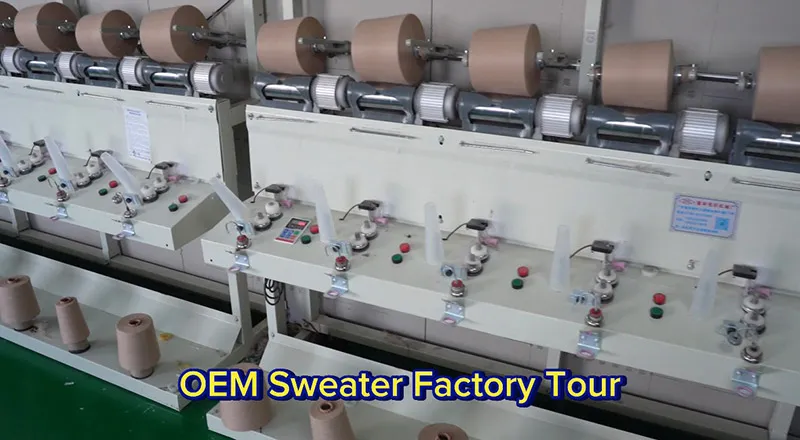
We run a knitwear OEM factory that’s been through this. Here’s what we’ve learned: scaling isn’t about knitting faster. It’s about building a repeatable, self-correcting quality system. Below are four technical angles that help us protect quality as volume explodes.
Keeping stitches consistent – when your machines go from one to one hundred
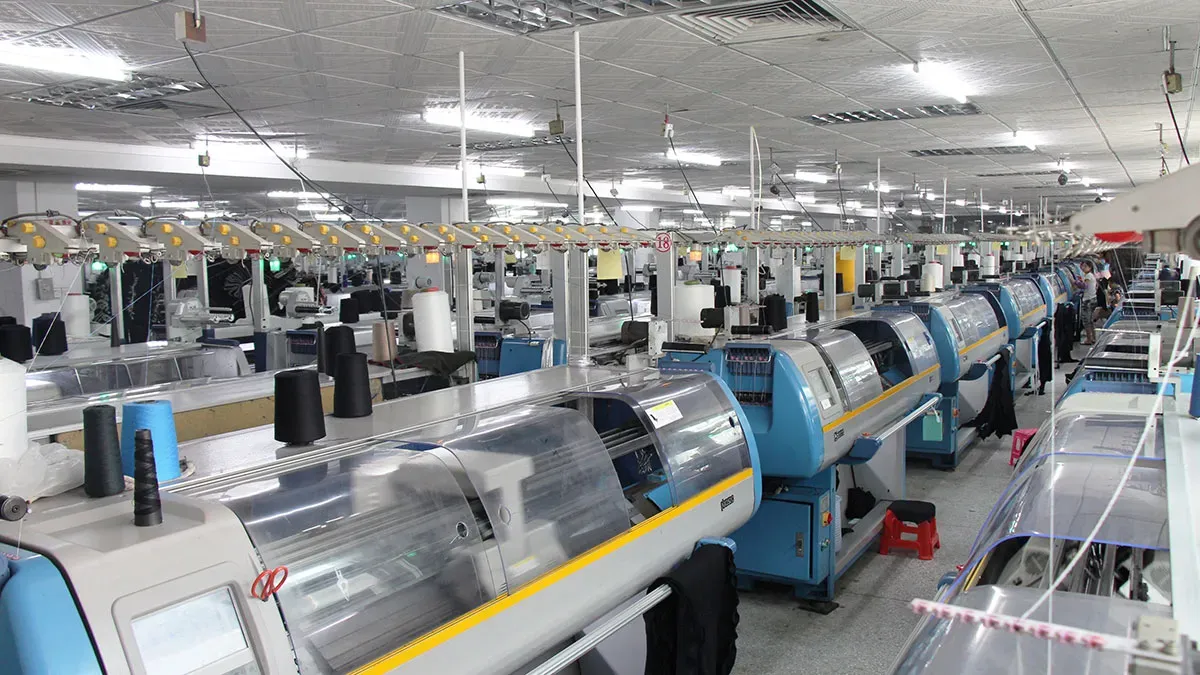
Once you ramp up from a few machines to a hundred, small differences start to show. Machine variations, yarn lots, even humidity changes – all can make stitch density drift visibly.
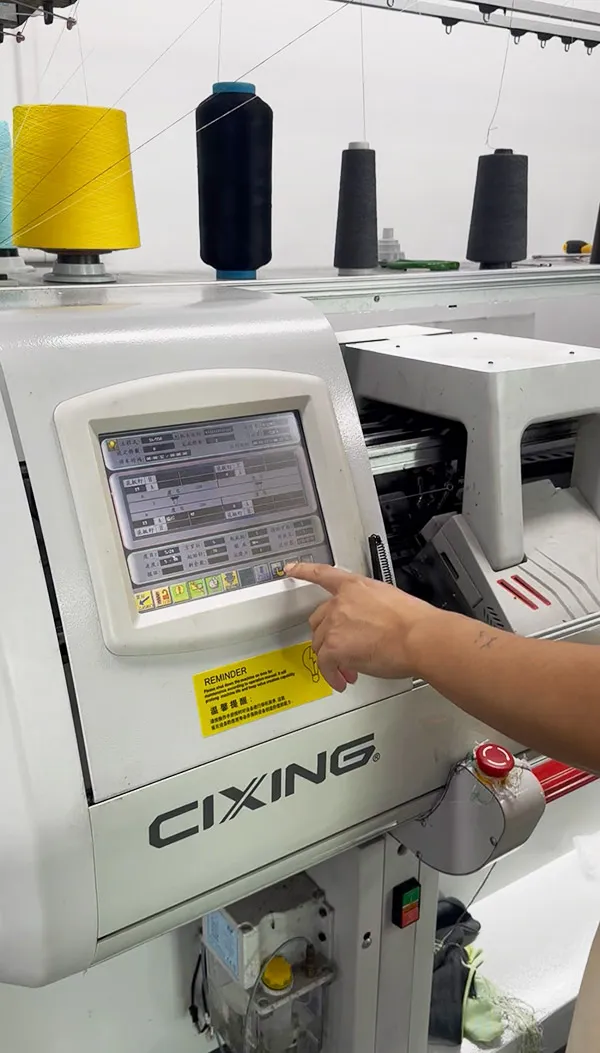
Lock down parameters on every computerised flat knitting machine.
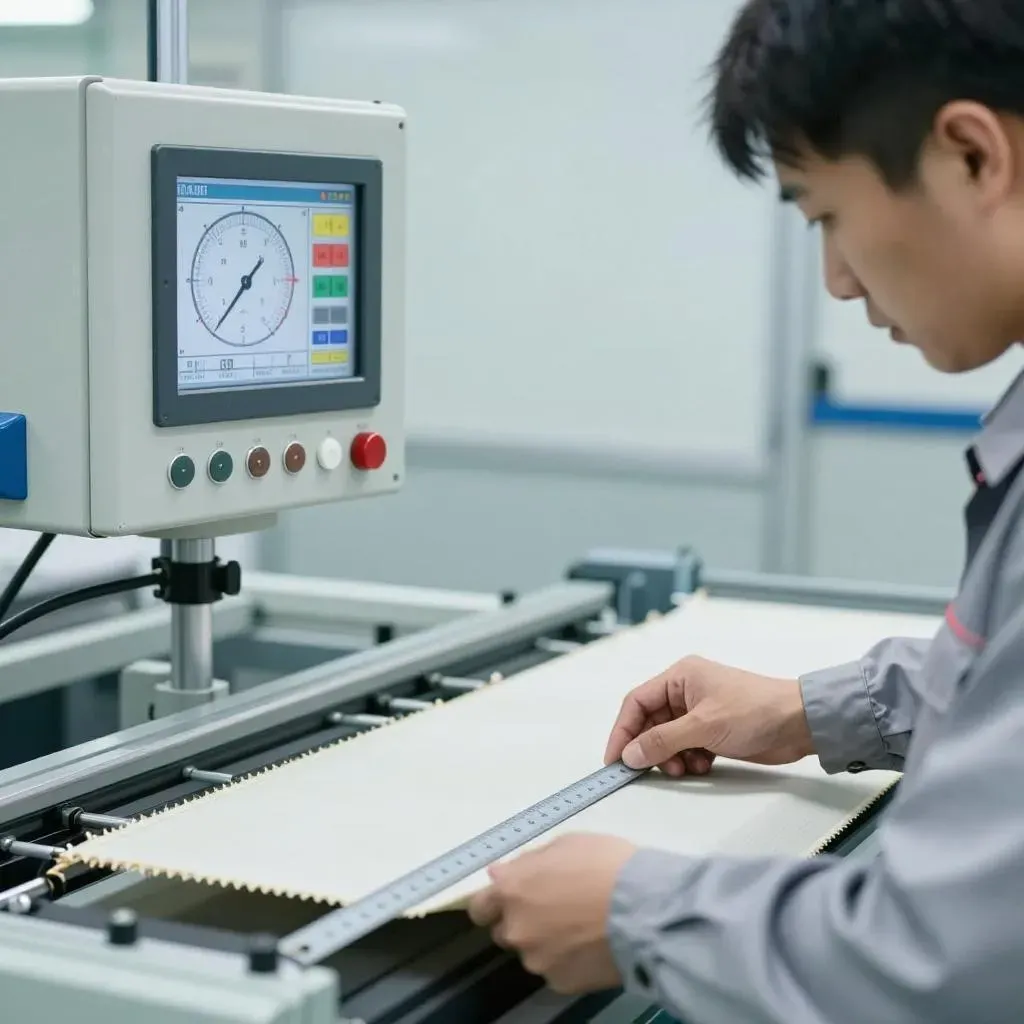 Before bulk production, we knit a master standard sample. Every setting – loop length, stitch cam depth, take-down tension – is digitised and locked into each machine’s control system. Operators can’t tweak anything without a supervisor’s password. That’s how we keep every machine on the same page.
Control the environment. Yarn is sensitive. Bump humidity by 5%, and your garment shrinkage rate shifts. We keep our workshop at 22°C ±2°C and 65% ±5% RH. That’s not a suggestion – it’s the foundation for making identical pieces at scale.
Test with physical stretch checks. Every two hours during production, we randomly pull a piece and measure its stretch under fixed tension. If it deviates more than 3% from the master sample, we stop and recalibrate. This catches stitch drift early – not after the whole garment is sewn.
Once you ramp up from a few machines to a hundred, small differences start to show. Machine variations, yarn lots, even humidity changes – all can make stitch density drift visibly.
Lock down parameters on every computerised flat knitting machine.
Before bulk production, we knit a master standard sample. Every setting – loop length, stitch cam depth, take-down tension – is digitised and locked into each machine’s control system. Operators can’t tweak anything without a supervisor’s password. That’s how we keep every machine on the same page.
Control the environment. Yarn is sensitive. Bump humidity by 5%, and your garment shrinkage rate shifts. We keep our workshop at 22°C ±2°C and 65% ±5% RH. That’s not a suggestion – it’s the foundation for making identical pieces at scale.
Test with physical stretch checks. Every two hours during production, we randomly pull a piece and measure its stretch under fixed tension. If it deviates more than 3% from the master sample, we stop and recalibrate. This catches stitch drift early – not after the whole garment is sewn.
SOP from sample to bulk – the “three‑check system” that prevents disasters
 Samples are made by master craftsmen. Bulk orders are run by production operators. Without a structured handover, you’re asking for trouble.
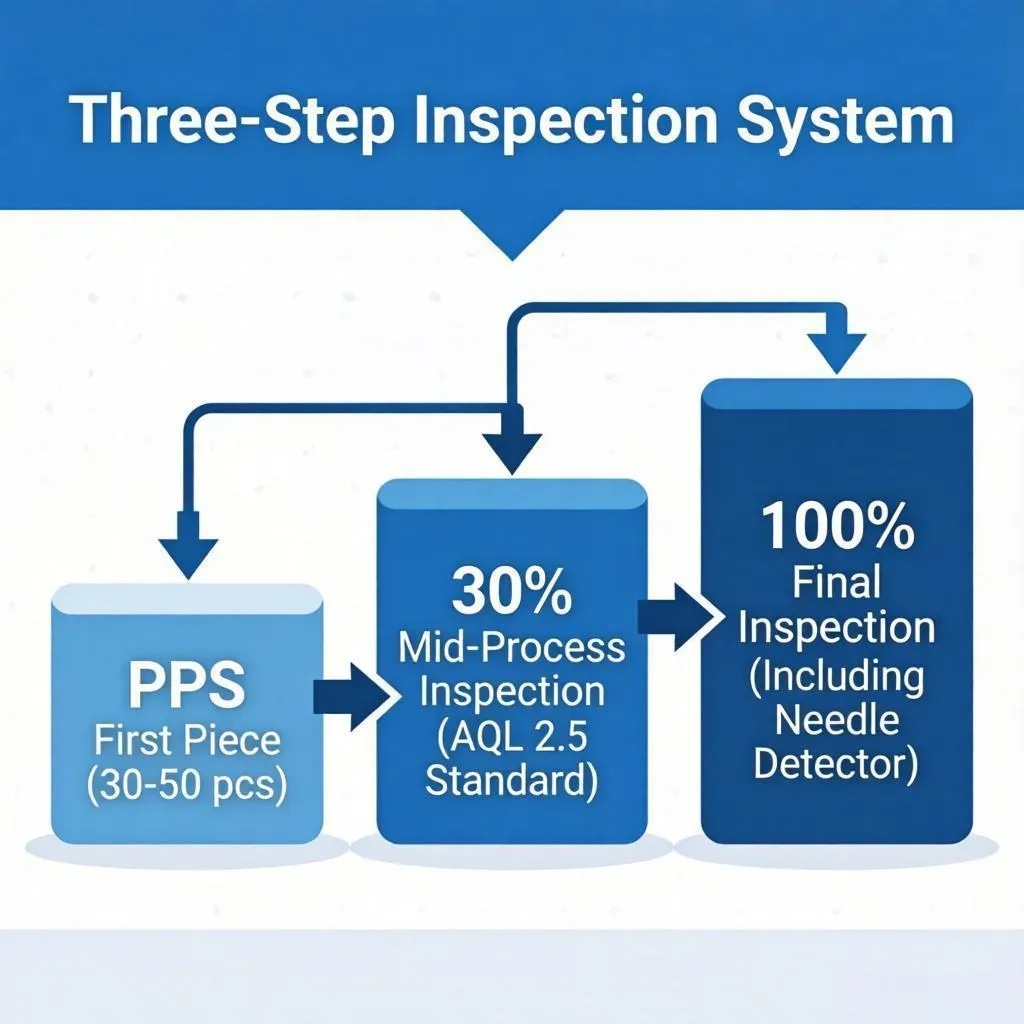
Pre‑production sample (PPS) first. Many clients assume the development sample is enough. We insist on a trial run with bulk yarn, bulk machines, and regular operators – usually 30 to 50 pieces. This reveals equipment mismatches and process problems before you’ve knit thousands. Best insurance you can buy.
Mid‑batch inspection. When the batch reaches 30% completion, we inspect against AQL 2.5. Focus on critical dimensions and appearance – especially uneven tension that could leave hidden “stretch marks”.
Final 100% check. Every single piece goes through a needle detector, visual inspection, and flat measurement. This catches what tired operators might miss at high volume: dropped stitches, press‑offs, and skipped loops.
Samples are made by master craftsmen. Bulk orders are run by production operators. Without a structured handover, you’re asking for trouble.
Pre‑production sample (PPS) first. Many clients assume the development sample is enough. We insist on a trial run with bulk yarn, bulk machines, and regular operators – usually 30 to 50 pieces. This reveals equipment mismatches and process problems before you’ve knit thousands. Best insurance you can buy.
Mid‑batch inspection. When the batch reaches 30% completion, we inspect against AQL 2.5. Focus on critical dimensions and appearance – especially uneven tension that could leave hidden “stretch marks”.
Final 100% check. Every single piece goes through a needle detector, visual inspection, and flat measurement. This catches what tired operators might miss at high volume: dropped stitches, press‑offs, and skipped loops.
Strength testing for sustainable yarns – going green without breaking quality
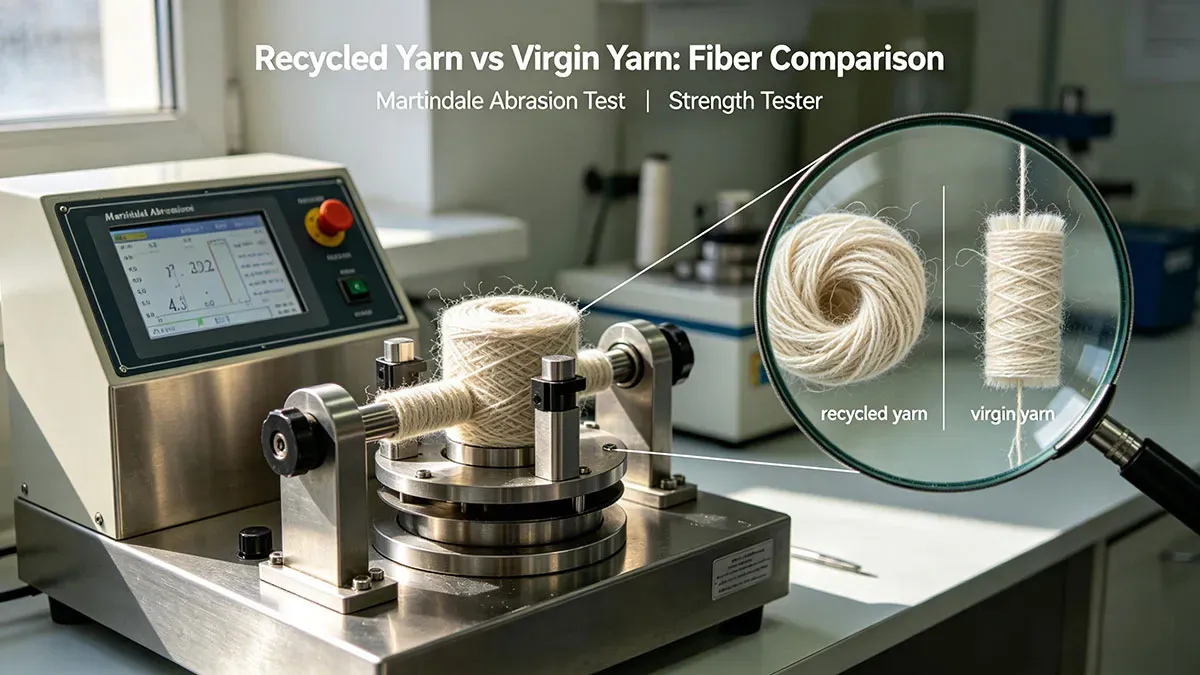 Recycled yarns (GRS‑certified etc.) are great. But multiple processing cycles shorten fibres and reduce strength. Run them at high speed on a large scale, and you risk frequent breaks or hidden cracks that only show after washing.
Pre‑production abrasion test. Recycled yarn never touches a machine until it passes the Martindale test. Our rule: after 30 washes, strength retention must stay above 70%. Fail that, and we reject the lot.
Dedicated speed card for fragile fibres. Weak yarns need slower knitting – typically 0.4–0.6 m/s instead of the usual 0.8–1.0 m/s. We build a “process speed card” for every yarn type and lock it into the network. Operators can’t override it. That stops batch breakouts before they start.
Be honest about trade‑offs. Sometimes 100% recycled fibre just won't hit the required pilling resistance. Then we’ll tell the client straight: here’s the risk, and here’s a solution – like a 30% recycled / 70% virgin blend that keeps the certification while surviving daily wear.
Recycled yarns (GRS‑certified etc.) are great. But multiple processing cycles shorten fibres and reduce strength. Run them at high speed on a large scale, and you risk frequent breaks or hidden cracks that only show after washing.
Pre‑production abrasion test. Recycled yarn never touches a machine until it passes the Martindale test. Our rule: after 30 washes, strength retention must stay above 70%. Fail that, and we reject the lot.
Dedicated speed card for fragile fibres. Weak yarns need slower knitting – typically 0.4–0.6 m/s instead of the usual 0.8–1.0 m/s. We build a “process speed card” for every yarn type and lock it into the network. Operators can’t override it. That stops batch breakouts before they start.
Be honest about trade‑offs. Sometimes 100% recycled fibre just won't hit the required pilling resistance. Then we’ll tell the client straight: here’s the risk, and here’s a solution – like a 30% recycled / 70% virgin blend that keeps the certification while surviving daily wear.
Flat knit vs. circular knit – choosing the right process for “affordable luxury” basics
Scaling up a basic knit? You’ll face the classic choice: flat knitting for precision and shape retention, or circular knitting for speed and lower cost. They perform very differently.
Our advice: stick with computerised flat knitting – even for 50,000 pieces.
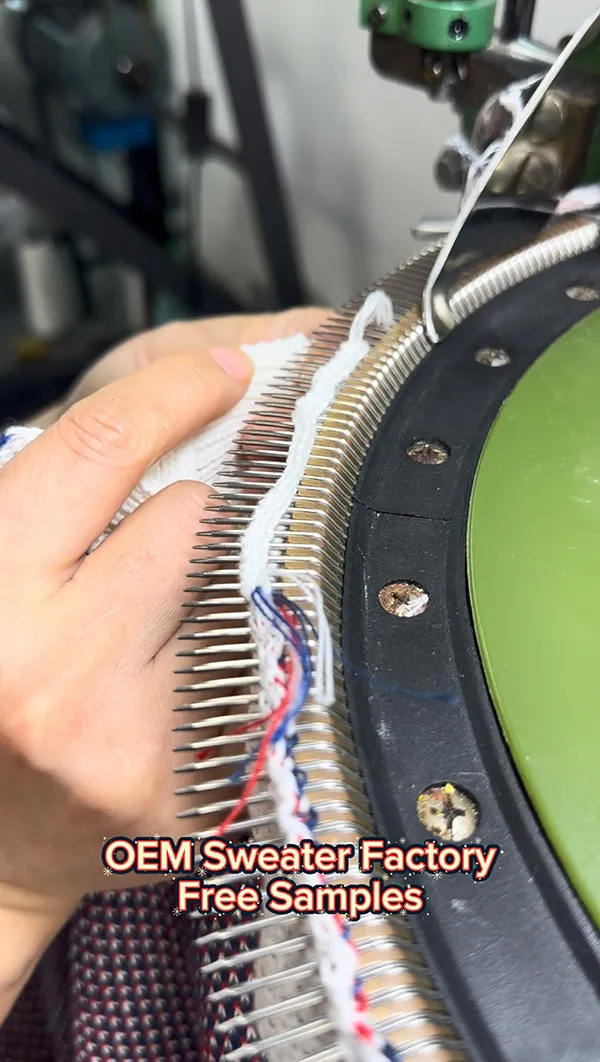
Flat knitting gives you exact control over loop length. That means “body” – a garment that keeps its shape after washing. You also get clean edges and fewer seams. For premium basics, that’s the difference between quality and compromise.
Look at long‑term cost, not just unit price. Sure, flat knitting might cost 30% more per piece. But in our experience, the return rate drops by 60% when you control every stitch. Over a full order, that works out cheaper – and your brand keeps its reputation.
Scaling up a basic knit? You’ll face the classic choice: flat knitting for precision and shape retention, or circular knitting for speed and lower cost. They perform very differently.
Our advice: stick with computerised flat knitting – even for 50,000 pieces.
Flat knitting gives you exact control over loop length. That means “body” – a garment that keeps its shape after washing. You also get clean edges and fewer seams. For premium basics, that’s the difference between quality and compromise.
Look at long‑term cost, not just unit price. Sure, flat knitting might cost 30% more per piece. But in our experience, the return rate drops by 60% when you control every stitch. Over a full order, that works out cheaper – and your brand keeps its reputation.
Scaling isn’t a finish line – it’s a system
Growing volume without losing quality comes down to four linked disciplines: lock your parameters and environment; enforce a three‑check system with real pre‑production samples; test every sustainable yarn and match it to the right speed; and don’t trade process integrity for speed.
We’ve built these systems into our daily workflow. And we’re happy to show any client around. Want the nitty‑gritty on scaling knitwear production? Drop us a line for a free “scale‑up feasibility assessment” – no fluff, just what works.
Growing volume without losing quality comes down to four linked disciplines: lock your parameters and environment; enforce a three‑check system with real pre‑production samples; test every sustainable yarn and match it to the right speed; and don’t trade process integrity for speed.
We’ve built these systems into our daily workflow. And we’re happy to show any client around. Want the nitty‑gritty on scaling knitwear production? Drop us a line for a free “scale‑up feasibility assessment” – no fluff, just what works.