

Excellent Quality.Company Updates: News from Our Knitwear Factory
Stay informed with our company updates. As a trusted Wholesale partner, we share the latest news for knitwear suppliers. Our Maker team delivers quality trusted by global Suppliers and streetwear brands.

Sweater Company Updates
Category
Hot News
- The most popular seven women sweater design
- Have these dress is quite have the entire spring
- If you have an electric clothes that can provide power for old people
- High quality army green military field sweater
- How can always wear the simple style sweater? pattern sweater is the most fashionable
- Men new style college sweater pullover
Latest News
- Decoding 2026 Knitwear Trends: What to Expect at the 139th Canton Fair Phase 3
- Craft Value and Pattern Selection of Embroidered Sweaters
- Version Classification of Sweaters and Body Shape Adaptation Guide
- Advantages and Material Ratio of Wool Blended Sweaters
- What kind of fabric is faux mink
- How many types of wool
Men’s Knitwear Buying Guide: Minimalist Knit Sweaters, Chunky Knits, Easily Create Casual Business Style
When men choose knitwear, the core is "scene adaptation + neatness". Minimalist knit sweaters and chunky knits are two essential styles—pick the right fit, material and color, and you can easily achieve a natural casual business look. For minimalist knit sweaters, prioritize slim - fitting and slightly stretchy styles (too loose looks slovenly). Choose cotton blends (breathable and easy to care for) or thin wool (warm and textured) for materials. Stick to basic colors like dark gray, navy and black—they match any outerwear. Layer with a shirt (expose 1 - 2cm of the collar for detail) and pair with a blazer or trench coat for commuting; wear it alone with khaki pants to switch to a casual style. It’s a "versatile item" in the wardrobe. For chunky knits, choose short and well - fitted styles (length just covering the waistline—too thick looks bulky). Opt for wool blends (anti - pilling) for materials, and simple cable or plain textures (avoid complicated patterns that look messy). Pick low - saturation colors like caramel brown and off - white. Match with casual trousers and Derby shoes for a perfect casual business combination; in cold weather, layer with a turtleneck base and a short jacket for warmth without losing neatness, balancing formality and casualness easily. JMSWEATER is a over 17 years professional sweater manufacturer that various sweaters are available to be customized as your requirements. Knitwear ranging from 1.5-18GG in jacquard, intarsia, flat bed knitting, circular knitting, hand knit and crochet. Various kinds of add-on process are available, thousands of material yarn offered with cashmere, merino wool, cotton, viscose, nylon, alpaca, linen, mohair etc. To know more of our procedures please feel free to send inquiry for us. WhatsApp:008618520111505 Vintage-Style Knitwear Recommendations: Cable-Knit Sweaters, Short Knit Cardigans, Recreate 90s Classics
To achieve the nostalgic 90s vibe, cable-knit sweaters and short knit cardigans are must-haves. They come with inherent vintage texture, allowing you to recreate classics while fitting modern outfits. For cable-knit sweaters, choose thick wool-blend materials—plump cable patterns are the soul of vintage style. Prioritize colors like camel, dark brown, or off-white, which carry a timeless feel. Pair with high-waisted straight-leg jeans and ankle boots to instantly look like a 90s street girl; layer over a floral dress and add a denim jacket for a sweet-yet-edgy look, blending vintage charm with vitality. Opt for a fitted style—too loose can look bulky, while a body-hugging fit better highlights retro appeal. Short knit cardigans feature classic designs like single-breasted buttons and small lapels. Pick soft cotton-wool blends in light gray, cream yellow, or wine red for a gentle vintage touch. Layer over a slip dress to show a slim waist, paired with Mary Janes—this is the standard vintage sweet look. Wear over a white shirt and high-waisted tailored pants, unbuttoning two buttons for a lazy work-ready style, easily recreating the elegance and casualness of the 90s. JMSWEATER is a over 17 years professional sweater manufacturer that various sweaters are available to be customized as your requirements. Knitwear ranging from 1.5-18GG in jacquard, intarsia, flat bed knitting, circular knitting, hand knit and crochet. Various kinds of add-on process are available, thousands of material yarn offered with cashmere, merino wool, cotton, viscose, nylon, alpaca, linen, mohair etc. To know more of our procedures please feel free to send inquiry for us. WhatsApp:008618520111505 Key Points for Choosing Kids’ Knitwear: Soft & Skin-Friendly, Moderate Elasticity, Balance Comfort and Safety
When choosing knitwear for kids, "comfort" and "safety" are the core. From material and elasticity to detailed design, every aspect should fit children’s activity needs and skin characteristics. Prioritize 100% pure cotton or cotton blends (cotton content ≥70%) for materials. Such fabrics are soft, skin-friendly, sweat-absorbent and breathable, which won’t irritate kids’ delicate skin. Avoid styles with high chemical fiber content to prevent sweating and allergies. For close-fitting knit underwear or base layers, pure cotton can reduce friction, making kids more comfortable during activities. Elasticity should be "moderate": too tight will strangle kids’ bodies, affecting movement and development; too loose is easy to deform and may get caught on items during play. Choose knitwear with spandex (content 5%-10%)—it can stretch with kids’ movements while maintaining shape. For example, knit jackets and onesies need moderate elasticity to balance fit and freedom of movement. Avoid hidden dangers in details: choose wide-rib collars for easy wearing and no neck strangulation; don’t pick too small or easy-to-fall buttons and decorations to prevent accidental swallowing; ensure the stitching is smooth and burr-free to avoid skin abrasion. In addition, prioritize light colors or styles without fluorescent agents to reduce the impact of chemicals on kids, truly making kids wear comfortably and parents feel at ease. JMSWEATER is a over 17 years professional sweater manufacturer that various sweaters are available to be customized as your requirements. Knitwear ranging from 1.5-18GG in jacquard, intarsia, flat bed knitting, circular knitting, hand knit and crochet. Various kinds of add-on process are available, thousands of material yarn offered with cashmere, merino wool, cotton, viscose, nylon, alpaca, linen, mohair etc. To know more of our procedures please feel free to send inquiry for us. WhatsApp:008618520111505 2025 Autumn & Winter Knitwear Trend Colors: Caramel Brown, Milk White, Dark Emerald, Embrace Elegance All Seasons
In 2025’s autumn and winter knitwear scene, caramel brown, milk white, and dark emerald stand out as "vibe creators". They not only fit the low temperatures of autumn and winter but also maintain a texture that spans all seasons, easily creating an elegant look. Caramel brown has a warm tone, as comforting as autumn sun. Woven into thick sweaters or scarves, it pairs with jeans for a casual feel and black coats for luxury. It keeps you warm in autumn and winter, and also works with light - colored outerwear in spring. Milk white is softer than pure white, less cold and more gentle. A thin knit cardigan looks neat for work, while a thick sweater with a midi skirt is sweet and elegant—both create clean, fresh outfits year - round. Dark emerald is low - key luxury: a knit dress in this color shines at parties, and as a scarf or inner wear, it enhances basic outfits. It’s elegant with camel coats in autumn and winter, and fresh with white bottoms in spring and summer. These three colors suit all skin tones, making knitwear more memorable with no effort. JMSWEATER is a over 17 years professional sweater manufacturer that various sweaters are available to be customized as your requirements. Knitwear ranging from 1.5-18GG in jacquard, intarsia, flat bed knitting, circular knitting, hand knit and crochet. Various kinds of add-on process are available, thousands of material yarn offered with cashmere, merino wool, cotton, viscose, nylon, alpaca, linen, mohair etc. To know more of our procedures please feel free to send inquiry for us. WhatsApp:008618520111505 Knitwear Cleaning & Maintenance Tips: Avoid Deformation, Pilling, and Extend Item Lifespan
Knitwear is soft and skin-friendly, but improper cleaning and maintenance can easily cause deformation and pilling. Follow these tips to keep your favorite knit items in good condition for longer. Sort before cleaning: For natural fiber knitwear like wool and cashmere, hand washing is recommended—use warm water (around 30℃), add neutral laundry detergent, and gently press the fabric (avoid rubbing or pulling). Blended knitwear (cotton-acrylic, etc.) can be machine washed, but place it in a laundry bag, select the "delicate cycle," and keep the water temperature below 40℃ to prevent fiber damage. Never use bleach, as it can ruin the fabric’s color and elasticity. Avoid twisting when dehydrating: For natural fiber knitwear, lay it flat on a towel, roll the towel into a cylinder, and squeeze to absorb water. For blended knitwear, use the washing machine’s "low-speed dehydration" (no more than 1 minute). Dry away from direct sunlight: Lay wool knitwear flat on a drying rack to prevent stretching; cotton knitwear can be hung, but use a wide-shoulder hanger to avoid stretching the neckline or shoulders. Prevent pilling in daily care: Before wearing, run a lint remover over the fabric to reduce friction-induced pilling. Fold knitwear separately when storing (avoid mixing with rough fabrics). For wool items, place mothballs (wrapped to prevent odor transfer) to repel moths. If small pills appear, do not pull them by hand—carefully cut them off with scissors to keep the fabric smooth. JMSWEATER is a over 17 years professional sweater manufacturer that various sweaters are available to be customized as your requirements. Knitwear ranging from 1.5-18GG in jacquard, intarsia, flat bed knitting, circular knitting, hand knit and crochet. Various kinds of add-on process are available, thousands of material yarn offered with cashmere, merino wool, cotton, viscose, nylon, alpaca, linen, mohair etc. To know more of our procedures please feel free to send inquiry for us. WhatsApp:008618520111505 Knitwear Fabric Encyclopedia: How to Choose Wool, Cotton, Acrylic? Understand Fabrics to Pick Good Items
When choosing knitwear, fabric is the key to determining wearing experience and practicality. Wool, cotton, and acrylic each have their advantages, corresponding to different needs and scenarios. Understanding their characteristics helps you pick items truly suitable for yourself. Wool knitwear focuses on warmth and texture. Made of natural fibers, it is soft and fluffy, locking in heat in cold winters and fitting the body better with wear. However, it requires gentle hand washing and should be kept away from direct sunlight to avoid shrinking. It is ideal for thick sweaters and scarves—prioritize wool if you pursue warmth and a premium feel. Cotton knitwear excels in breathability and skin-friendliness. It has strong sweat absorption, so it won’t make you feel stuffy in spring, and causes no irritation when worn next to the skin. It also resists deformation after washing. But its warmth is relatively weak, making it more suitable for thin T-shirts and cardigans. Choose cotton for daily commuting or home wear for comfort and easy care. Acrylic knitwear is a cost-effective option. It is wear-resistant, anti-pilling, has bright and fade-resistant colors, and can mimic the fluffiness of wool at a lower price. Its downside is slightly poor breathability, so it’s perfect for affordable outerwear and knit hats. Opt for acrylic if you have a limited budget or value durability. JMSWEATER is a over 17 years professional sweater manufacturer that various sweaters are available to be customized as your requirements. Knitwear ranging from 1.5-18GG in jacquard, intarsia, flat bed knitting, circular knitting, hand knit and crochet. Various kinds of add-on process are available, thousands of material yarn offered with cashmere, merino wool, cotton, viscose, nylon, alpaca, linen, mohair etc. To know more of our procedures please feel free to send inquiry for us. WhatsApp:008618520111505 Must-Have Knitwear List for Autumn & Winter: Thick Sweaters, Knit Scarves, Warm and Stylish
In autumn and winter, knitwear is a "must-have" for balancing warmth and fashion. Thick sweaters and knit scarves, in particular, not only fend off low temperatures but also easily enhance the completeness of your outfit—they are indispensable items in your wardrobe. For thick sweaters, wool blends are the top choice. They are fluffy, soft, and excellent at retaining heat. Crewneck styles pair well with turtleneck undershirts for a layered look; V-neck styles flatter the neckline and look more elegant with a necklace. In terms of colors, classic hues like caramel brown and dark gray are timeless and suit most people; dark tones such as wine red and emerald green exude an autumnal-winter vibe. Whether matched with jeans or midi skirts, they create a lazy yet warm style. Knit scarves should be thick with clear textures. Cable-knit or chunky-knit styles have a vintage charm—wrapping them twice ensures maximum warmth, while draping them casually over your shoulders adds a lazy touch to your outfit. Camel and off-white scarves are versatile and go with any coat; plaid or color-blocked scarves brighten up basic outfits. For example, pairing a black coat with a plaid knit scarf instantly breaks the dullness, making your autumn-winter look both warm and stylish. JMSWEATER is a over 17 years professional sweater manufacturer that various sweaters are available to be customized as your requirements. Knitwear ranging from 1.5-18GG in jacquard, intarsia, flat bed knitting, circular knitting, hand knit and crochet. Various kinds of add-on process are available, thousands of material yarn offered with cashmere, merino wool, cotton, viscose, nylon, alpaca, linen, mohair etc. To know more of our procedures please feel free to send inquiry for us. WhatsApp:008618520111505 Spring Knitwear Styling Guide: From Thin Cardigans to Knit Camisoles, Unlock a Gentle Vibe
As spring warms up with a slight chill, knitwear becomes the perfect choice for a gentle style—it’s light without being bulky, balancing warmth and breathability while easily elevating outfit texture. Thin knit cardigans are a spring must-have. Opt for cotton-blend ones (breathable and non-stuffy) in soft shades like ivory or light mint green for a fresh look. For daily wear, layer over a simple white tee and high-waisted jeans for a casual, energetic vibe; for dates, drape it over a floral dress to tone down the print’s busyness and add laziness. Remember to roll up the cuffs slightly to show your wrists—small details boost elegance. Knit camisoles are “multi-scene stars.” Choose styles with fine ribbing or subtle lace at the neckline—stylish but not over-the-top. Pair with a linen blazer and straight-leg pants for a neat work look; match with a long tulle skirt and canvas shoes to turn into a sweet, lively style. Finish with a thin silver necklace or light flat shoes, and your basic knit outfit will be full of spring gentleness. JMSWEATER is a over 17 years professional sweater manufacturer that various sweaters are available to be customized as your requirements. Knitwear ranging from 1.5-18GG in jacquard, intarsia, flat bed knitting, circular knitting, hand knit and crochet. Various kinds of add-on process are available, thousands of material yarn offered with cashmere, merino wool, cotton, viscose, nylon, alpaca, linen, mohair etc. To know more of our procedures please feel free to send inquiry for us. WhatsApp:008618520111505 Knit Necklines for Different Face Shapes: V-Necks Slim the Face, Round Necks Look More Youthful
Choosing the right knit neckline can highlight your facial advantages—different face shapes match different neckline designs. Only by finding the suitable style can knitwear be both comfortable and elegant. Round faces suit V-neck knitwear. The V-shaped line naturally elongates the proportion of the neck and face, weakens the roundness of the cheeks, and visually slims the face. It is recommended to choose a medium-depth V-neck to avoid being too deep and abrupt. Matching a thin necklace to extend along the V-neck line enhances the modification effect. Items like V-neck thin knit cardigans or slim-fit knit T-shirts are great choices for round faces. Square faces should avoid necklines with sharp edges and prioritize soft round necks or slightly flared round necks. The curve of the round neck can neutralize the jawline of square faces and add a gentle touch. For example, a thick round-neck sweater paired with a scarf of the same color is not only warm but also weakens the "square feel" of the face. Avoid square necks or high necks, as they may accentuate the sharpness of the face. Long faces are suitable for round necks or small square-neck knitwear. Round necks can visually broaden the face horizontally, preventing the face from looking too long; small square necks are soft yet neat, without leaving too much blank space on the neck. When choosing a round neck, you can pick styles with lace or embroidery to add layering around the face and balance the facial proportion. For instance, a round-neck knit camisole layered with a short cardigan is perfect for long faces. Heart-shaped faces (wide forehead, pointed chin) have a wide range of suitable necklines—both V-necks and round necks work. V-necks can balance the width of the forehead and guide the visual focus downward; round necks can soften the forehead line and make you look more youthful and cute. For example, a heart-shaped face with a round-neck knit sweatshirt and bangs maximizes the youthful effect; wearing a V-neck knit dress can highlight the delicate collarbone and show elegance. JMSWEATER is a over 17 years professional sweater manufacturer that various sweaters are available to be customized as your requirements. Knitwear ranging from 1.5-18GG in jacquard, intarsia, flat bed knitting, circular knitting, hand knit and crochet. Various kinds of add-on process are available, thousands of material yarn offered with cashmere, merino wool, cotton, viscose, nylon, alpaca, linen, mohair etc. To know more of our procedures please feel free to send inquiry for us. WhatsApp:008618520111505 Knit Skirts: From Casual to Formal
Knit skirts have emerged as a versatile wardrobe staple, effortlessly transitioning from casual daily looks to polished formal outfits—thanks to their soft texture and adaptable designs. Crafted from various yarns, including lightweight cotton blends for spring and thick woolen fabrics for winter, they balance comfort and structure, making them suitable for diverse occasions without compromising on style. For casual settings, midi-length knit skirts in relaxed fits are ideal. Pair them with tucked-in graphic tees and white sneakers for a laid-back weekend vibe, or layer with a cropped denim jacket and ankle boots on cooler days. Styles like ribbed textures or subtle patterns (such as small florals) add a cozy, approachable touch, perfect for coffee runs, park walks, or casual meetups with friends. When it comes to formal occasions, knit skirts elevate easily with the right 搭配 (matching). Opt for knee-length or midi knit skirts in solid neutral tones (black, navy, or camel) with a sleek, fitted silhouette. Pair them with a silk blouse and pointed-toe heels, then add a tailored blazer for office meetings or evening events. Some high-end knit skirts even feature delicate details like lace trim or metallic threads, adding a touch of elegance without looking over-the-top. Fashion enthusiasts love this versatility. “I have a black knit midi skirt that I wear to work with a blazer and on weekends with a sweater—It’s my most worn piece,” says Anna Liu, a marketing manager in Shanghai. Retailers note that knit skirts sell consistently year-round, with seasonal updates (like lighter fabrics for summer and thicker knits for winter) keeping them relevant. These skirts prove that one piece can bridge the gap between casual and formal, simplifying outfit choices while keeping style intact. JMSWEATER is a over 17 years professional sweater manufacturer that various sweaters are available to be customized as your requirements. Knitwear ranging from 1.5-18GG in jacquard, intarsia, flat bed knitting, circular knitting, hand knit and crochet. Various kinds of add-on process are available, thousands of material yarn offered with cashmere, merino wool, cotton, viscose, nylon, alpaca, linen, mohair etc. To know more of our procedures please feel free to send inquiry for us. WhatsApp:008618520111505
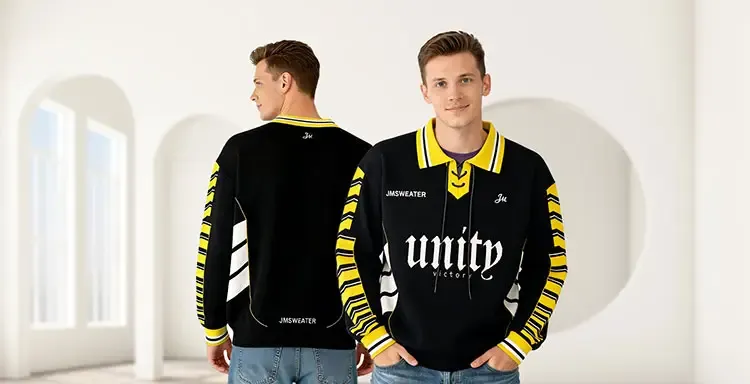
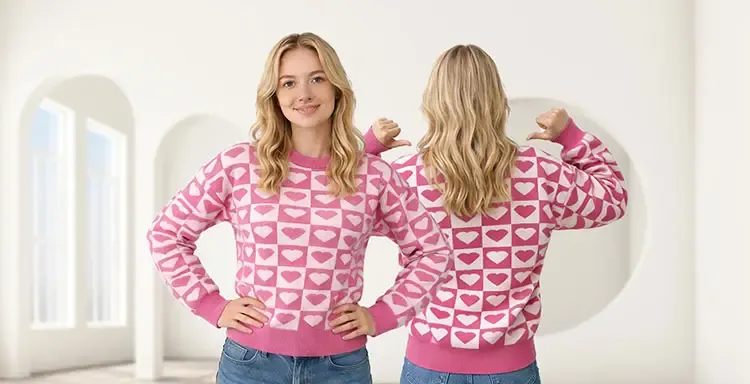
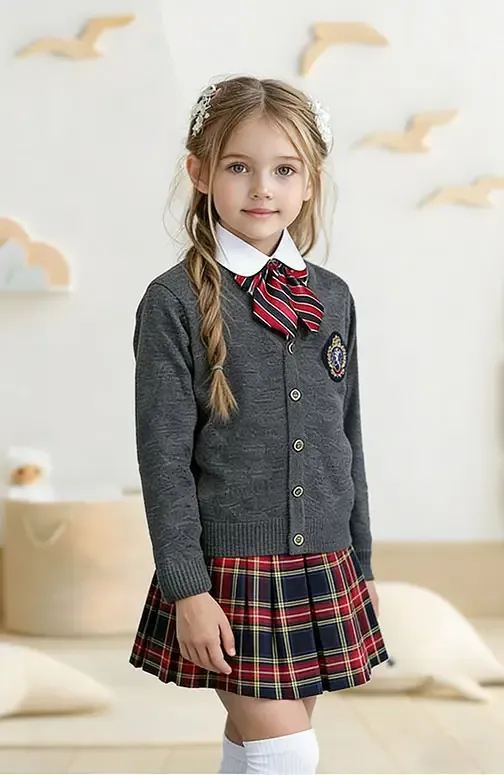
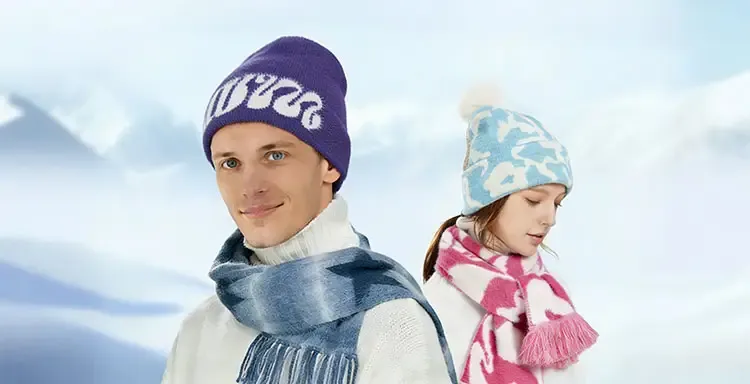
We can customize sweaters of various categories.


Sweater Manufacturer Blog
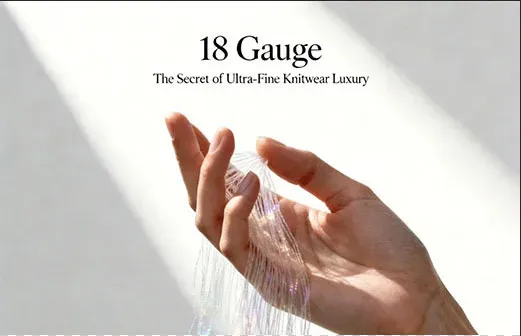
18 Gauge: The Secret of Ultra-Fine Knitwear Luxury
Here's what trips up most buyers—and plenty of sweater manufacturers, too—when they start looking at knitwear: gauge. Not price. Not lead time. Gauge. I’ve seen it happen over and over; people get obsessed with unit cost or factory deadlines, but the real make-or-break is always that tiny little number on the machine. So let me break down something that doesn’t get enough attention—18 gauge—and why it’s the real MVP when you’re chasing that ultra-fine, luxury handfeel. 18 Gauge: The Quiet Workhorse of Luxury Knitwear Here’s the thing. When you pick up a sweater that feels like a second skin—cool, smooth, almost liquid—you’re probably holding an 18-gauge piece. Not 12, not 7. 18. In plain English: gauge = number of needles per inch. 18 means dense. Like, really dense. It’s about as fine as you can get on commercial knitting machines today. Even the big luxury houses stick with 18 for their top-tier cashmere and silk blends. Why? Because it doesn’t just feel thin—it brings out the best in expensive fibers. That’s not marketing fluff. That’s physics. 12 vs 18: You Can See the Difference Let me give you a quick visual. A 12-gauge knit? You can clearly see the stitches. It has texture, sure. But 18-gauge? The stitches are so tiny, the fabric looks almost like woven cloth—smooth, clean, expensive. Yet you still get that beautiful knit stretch. There’s a catch, though. Running 18-gauge is a pain in the ass. You need super fine yarns that snap if the humidity is off by 2%. Your machines have to be dialed in perfectly. One tiny tension change and you’re looking at broken yarns, dropped stitches, and a whole lot of wasted time. That’s why 18-gauge pieces cost more—and why they should. Where 18 Gauge Really Shines: Silk-Cashmere If you haven’t tried a silk-cashmere blend in 18 gauge, you’re missing out. Seriously. The fine gauge lets the silk’s natural luster come through, while the cashmere stays soft and plush. Together? It feels like butter melting on your skin. And here’s a number that matters: weight. We’re talking finished garments as light as 150–180g/m². That’s about 20–30% lighter than a standard cotton tee. But it still breathes, still regulates temperature, still looks sharp. Perfect for summer collections—and yes, I’ve helped brands build entire summer lines around 18-gauge pieces. One client (a Scandinavian label, very picky) told me they’d never consider knitwear for July until I sent them a sample 18-gauge polo. Two weeks later, they placed a reorder. That’s how you break the “knits are only for winter” rule. The QC That Actually Matters Let’s be real. Anyone can claim “high quality.” But 18-gauge? It forces you to prove it. Because the yarn is so fine, even a tiny flaw—a pulled thread, a skipped stitch—ruins the whole garment. So the factory I work with does 100% manual inspection under magnifying lamps. Every. Single. Piece. They follow AQL 1.0, which is tighter than most brands require. I remember walking through their lighting room once, watching an inspector spend nearly two minutes on one sweater. She found a single irregular stitch near the hem. That sweater went to the reject pile. That’s the level of detail you need for 18-gauge. And Yes, Sustainable Options Exist You’ll also be glad to hear that we can run GRS-certified recycled fibers through 18-gauge. The trick is spinning them fine enough—and stable enough—to handle the high needle density. When it works, you get the same silky, draping feel, but with a much lower environmental footprint. To me, 18-gauge isn’t just a technical spec. It’s a commitment. It says you care about how the garment actually feels on skin, not just how it looks on a hanger. If you’re tired of competing on basic merino crewnecks, this is your way out. Higher price point. Real differentiation. And a story you can stand behind—because the product delivers. So next time you’re planning a luxury or summer knit line, don’t just ask for “fine gauge.” Ask for 18 gauge. That’s what it really looks like on a production table—when the machines are dialed in, the yarns are right, and someone’s actually checking every stitch.
view more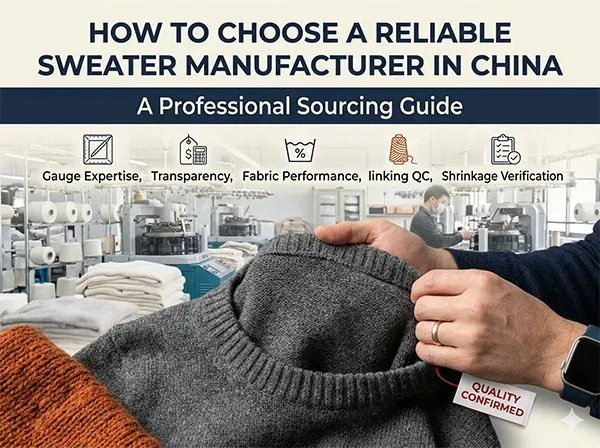
Beyond Sourcing: Finding the Right Sweater Factory in China to Fuel Your Brand’s Growth
Let me be blunt: finding a sweater factory in China is no problem. Finding one that actually respects your design, delivers consistent quality, and meets your ship date? That’s where most brands stumble. I can’t tell you how many brands I’ve seen fall into the “price-first” trap. They chase the lowest quote, and few months later they’re staring at a container full of wonky seams or shrinkage nightmares. So let me save you some pain. Below are five practical filters I use to separate the real players from the pretenders. Think of it as your pre-order factory audit — no fluff, just what works. Don’t just ask for samples. Ask about their “gauge comfort zone.” In knitting, gauge is everything. It tells you how many needles per inch — lower number = thicker stitch, higher number = finer stitch. A 7GG sweater has that chunky, cozy handfeel, perfect for fall/winter. A 18GG is sleek and smooth, ideal for lightweight spring layering. But here’s what most buyers miss: most good factories aren’t good at every gauge. They have a sweet spot. Why? Because different gauges require totally different machine tension, yarn feed, and even linking skills. A factory that kills it on 18GG might struggle with 7GG’s bulkier yarn. My rule: Find a factory whose core expertise matches your product. A “one-stop shop” often means they’re average at everything. A specialist? They’ll deliver consistency. Yes, sampling should cost more than bulk production. Here’s why. I still get pushback from new clients: “Why is this sample sweater $150 when the bulk unit price is only $25?” Let me explain the math — and the honesty check. A single sample ties up a senior pattern maker for hours of CAD programming. The machine has to stop production, run test swatches, adjust tension and shrinkage rates. That “downtime” cost gets spread over… one sweater. Not 1,000. Plus, you’re buying a single cone of yarn at retail or small-quantity markup, not bulk pricing. A transparent factory will walk you through these numbers. If a factory offers free or dirt-cheap samples? Red flag. It usually means they’re skipping the engineering step — and you’ll pay for it later with inconsistent sizing or failed shrinkage tests. Ask them: “Can you break down the sampling cost for me?” If they hesitate or get defensive, move on. Recycled vs. virgin cashmere? Know the trade-off. Sustainable materials are great — but only if you understand the performance gap. Virgin cashmere has long fibers. That means softer handfeel, better pilling resistance, and more dimensional stability after washing. Recycled cashmere is made from reclaimed fibers. It’s eco-friendly as hell, but those shorter fibers mean slightly less durability and a bit more pilling over time. A good factory won’t just push recycled because it’s trendy. They’ll ask: What’s your priority — sustainability score or garment lifespan? Then they’ll give you honest shrinkage data for both. What to look for: A partner who shows you wash tests and shrinkage rates for both options, then helps you decide based on your price point and brand promise. Turn the sweater inside out. That’s where quality lives. Anyone can make the front look good. The real craft is in the linking — the seam where two knitted panels are joined. Common defects I see:Skipped stitches (weak spots that will unravel).Dropped stitches (holes at the edge).Tension too tight (the seam puckers or feels stiff) When visiting a factory, skip the fancy showroom and go straight to the linking section. Watch how workers handle the edges. Do they check every few inches? Are the stitches uniform? Are loose threads trimmed? Factories with clean, consistent linking almost always have better overall quality control. It’s a dead giveaway. Pro tip: Ask to see their internal linking defect rate — not just the final pass rate. A number like <2% is excellent. Anything above 5% means trouble. Shrinkage testing: don’t trust, verify. Knitwear shrinks. That’s physics. But a professional factory knows how much to expect and how to compensate. The standard formula:(Pre-wash size – Post-wash size) / Pre-wash size × 100% For most wool and cashmere blends, acceptable shrinkage is ±3% to 5% — though this varies by fiber. Anything outside that range means the tension or wash process is flawed. Here’s what I ask every potential supplier: “How do you ensure bulk shrinkage matches your sample shrinkage?” A factory that can’t answer immediately — or doesn’t have a written wash-test protocol — is a risk. The good ones will show you a wash test report for each yarn lot, and they’ll tell you exactly how much shrinkage they pre-engineer into the pattern. So,sourcing from China isn’t about finding the cheapest factory. It’s about finding a partner who speaks your language of quality and transparency. Ask about gauge expertise. Push back on cheap sampling. Understand material trade-offs. Inspect the linking. And always, always verify shrinkage control.And you’ll avoid the kind of expensive lessons I learned the hard way — so you don’t have to.
view more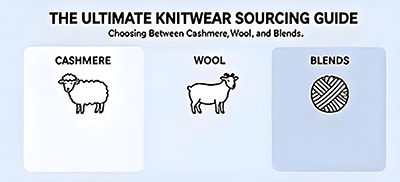
The Ultimate Knitwear Sourcing Guide: Choosing Between Cashmere, Wool, and Blends
To be honest,when you’re planning a Fall/Winter ‘26 knitwear collection, the real headache isn’t the silhouette—it’s that little composition label on the back. Get that wrong, and your beautiful design ends up either priced out of the market or coming back as a customer service nightmare. Here’s the thing: picking fibers isn’t just about how something feels in your hand at a trade show. It’s about retail math, how that sweater holds up after a season of wear. I’ve put together a no-nonsense breakdown on how to navigate the fiber landscape for ‘26. Think of it as your cheat sheet for balancing that luxury look with a P&L that actually works. The Real Cost of “Cloud-Soft” (100% Cashmere) Let’s get one thing straight. In the world of cashmere vs. wool vs. blends, 100% cashmere still sits at the top of the pyramid. And for good reason. The magic is in the math. We’re talking fiber diameters typically under 15.5 microns . To put that in perspective, high-quality merino wool lives in the 18-20 micron range. That tiny difference? That’s the difference between a fabric that feels like a cloud and one that feels… well, like a nice sweater. For brands playing in the “quiet luxury” or “timeless classic” space, pure cashmere is your ticket to that high-end price point. The key, from a technical standpoint, is pairing that super-fine fiber with good anti-pilling finishing. Yeah, it might pill a little initially—it’s a delicate fiber—but the right spinning technique, something an experienced sweater manufacturer knows how to execute, keeps it soft without it falling apart after three wears. The Pragmatist’s Choice: Wool & Strategic Blends Now, I love cashmere. But if you’re designing for commuters who wear their sweaters under a seatbelt five days a week, 100% cashmere might not be your best friend. This is where blends get interesting. They’re the workhorses of a collection. There’s a common fear in this industry: the dreaded pilling. I’ve seen buyers panic when their first sample arrives with fuzz. But here’s a pro tip from the supply chain: avoid the 30/70 blend zone. Instead, stick to strategic mixes like 90/10 (Wool/Cashmere) or 70/30 . A Wool + Nylon combo? That’s your durability play. It resists wrinkles and holds up to abrasion like a champ. A Cashmere + Silk blend? That’s for the designers who want that liquid drape and a subtle sheen. It’s about using science—specifically, fiber diameter and tensile strength—to solve real-world problems like shrinkage and wear-and-tear before they hit your customer service inbox. 2026 Reality Check: It’s Not “Nice to Have” Anymore If you’ve been in a European market recently, you know what I’m talking about. Sustainability isn’t a marketing angle anymore. It’s the entry fee. For 2026, if you don’t have RWS (Responsible Wool Standard) or GOTS in your supply chain, you’re going to have a hard time getting shelf space in the major retailers. It’s that simple. But here’s the silver lining. This isn’t just a cost burden. From a sourcing strategy perspective, these certifications give you pricing power. We’re seeing a 10% to 20% premium on retail items that carry the RWS label. There’s also a massive push toward Recycled Cashmere and bio-based blends. The Pricing Matrix: How to Structure Your Line Let’s talk money. This is where theory meets reality. Right now, the raw material cost for pure cashmere is roughly 7 to 8 times that of wool. You can’t ignore that math. If you try to sell a cashmere sweater at a wool price point, you’re going bankrupt. So, how do you build a collection that makes sense? I advise my clients to use a tiered matrix: High-End Line: Go 100% Cashmere. This is your halo product. It establishes the brand’s credibility and carries the highest margin. Contemporary Line: Use a High-ratio Wool/Cashmere blend (e.g., 90/10) . You keep the hand-feel premium, but you bring the retail price down to a point where your core customer doesn’t feel guilty buying it. Mass Market: Focus on high-quality Wool/Synthetic blends (e.g., Wool + Nylon) . This gives you durability and wrinkle resistance at a price that scales. By structuring your line this way, you’re not putting all your eggs in one basket. You’re covering the customer who wants the luxury experience and the one who just needs a reliable, great-looking sweater for the office. My Take There’s no “best” fiber. That’s a myth. There’s only the “best fit” for your brand and your customer. If there’s one piece of advice I hammer home to every sourcing team—and every sweater manufacturer we work with—it’s this: test everything before you cut.
view more