

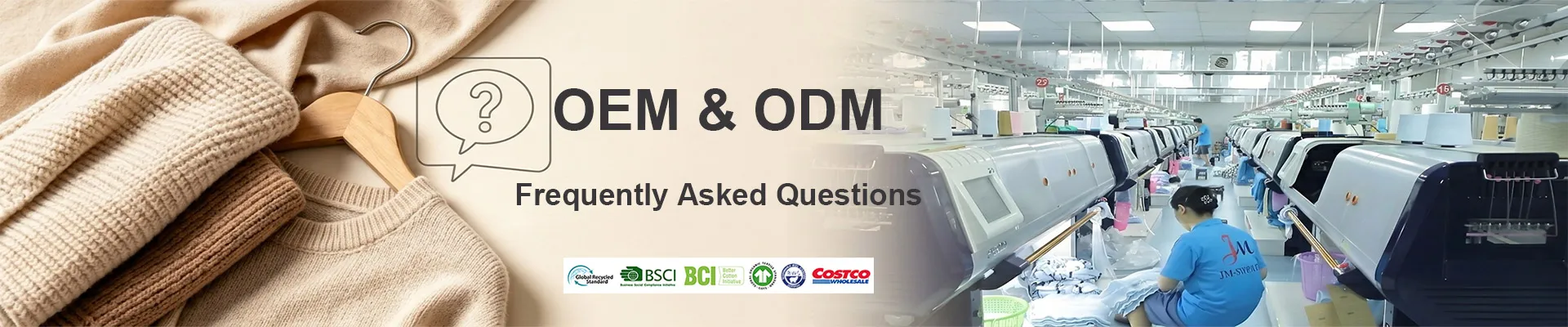
FAQ for Cotton Jumper & Golf Knitwear Manufacturing
This page answers the practical questions New Zealand and international buyers ask when sourcing from a direct knitwear factory in China. It covers MOQs, sampling, cotton jumpers, wool sweaters, cashmere-blend knitwear, golf knitwear, OEM/ODM services, logo application, quality control, pricing and shipping. Depending on your product brief, target price and preferred hand feel, we can also advise on yarn options including merino wool, wool, mohair, lambswool, alpaca, cotton and cashmere for custom knitwear programmes.
Cotton · Golf · Wool · Cashmere Blends Cotton jumpers, golf knitwear, fine gauge, jacquard, intarsia and premium knitwear
- Flexible MOQs for test runs and bulk production
- Tech pack, sample, sketch or reference image accepted
- Private label, labels, swing tags and export-ready packaging
Knitwear Manufacturing FAQ for Professional Buyers
For B2B buyers, unit price is only one part of the decision. A workable MOQ, clear sample approval, dependable yarn selection, accurate sizing, realistic lead times and repeatable bulk quality matter just as much. Our FAQ focuses on the points buyers need to assess before placing cotton jumper, golf knitwear or other private-label knitwear programmes.
For Brands & Private Label
Practical guidance on OEM, ODM, tech packs, logos, labels, packaging, collection development and reorders.
For Wholesalers & Importers
Clear information on MOQs, cost drivers, production lead times, quality control, shipping and export documentation.
For Golf & Cotton Knitwear
Yarn and construction guidance for cotton jumpers, golf knitwear, half-zips, 12GG/14GG/18GG and premium yarn qualities.
Frequently Asked Questions About Knitwear Manufacturing
These 50 questions cover the decisions sourcing teams typically need to make: factory capability, MOQ, sampling, yarns, knitting techniques, branding, quality, pricing, shipping and long-term supply.
Factory, MOQ & Getting Started
1. Are you a direct cotton jumper manufacturer or a trading company?
Yes. Guangzhou Junma Apparel Co., Ltd. is a direct knitwear factory in Guangzhou. We manufacture cotton jumpers, wool sweaters, golf knitwear and private-label garments for New Zealand and international brands, wholesalers and importers, with production handled directly by our factory team.
2. Can you develop complete OEM collections for golf knitwear?
Yes. We produce golf jumpers, knitted polos, half-zips and club knitwear from tech packs, reference samples or design sketches. Yarn, gauge, fit, branding and packaging are developed to suit your brand positioning and target price point.
3. What is the minimum order quantity for custom knitwear?
MOQ depends on the yarn, colour, knitting technique and branding. For many custom programmes we can assess quantities from around 100 pieces per style or colour. Stock yarns, simpler designs and repeat orders may allow more flexibility.
4. Can I mix sizes within the MOQ?
Usually, yes. The MOQ normally applies to the total quantity for a style or colour rather than to each individual size. Please provide your planned size breakdown so we can quote accurately.
5. Can I combine different knitwear styles in one order?
It may be possible when the yarn, colour and construction are compatible. If styles use substantially different knit structures, logos or yarns, we normally assess MOQ and pricing separately for each style to keep production reliable.
6. Do you work with start-ups and smaller brands?
Yes. We work with emerging labels, online brands and capsule collections, with a practical approach to sampling, MOQ and costing. The best results come when design direction, budget, quantity and quality expectations are aligned early.
7. What does OEM production mean at JM Sweater?
For OEM production, you provide the design, tech pack, sample or reference image and we manufacture to your specifications. This covers yarn selection, knit structure, measurements, branding, labels, packaging and bulk production.
8. What does ODM service mean for knitwear?
With ODM, we also support design development, yarn recommendations, colour direction, knit structure and sample refinement. It is useful when you have a concept or moodboard but do not yet have a complete tech pack.
9. Do I need a complete tech pack to request a quote?
A tech pack is helpful but not essential for an initial review. A product image or sketch, preferred material, target weight, size range, quantity and branding requirements are often enough to start. We can refine the technical details for sampling.
10. Can you develop production-ready knitwear from a simple sketch?
Yes. Our team can turn sketches, moodboards or reference images into a workable knitwear specification, including yarn suggestions, gauge, measurements, branding method and production notes.
Sampling, Production & Technical Development
11. How does the sampling process work?
We first review the design, yarn, colour, branding and measurements. We then confirm the sample cost and lead time. Once payment is arranged, we make the sample, carry out an internal measurement and workmanship check, and send it by express courier.
12. How long does a knitwear sample take?
Most custom knitwear samples take around 7–14 working days after yarn, colour, measurements and the sample charge are confirmed. Complex jacquard, intarsia or special-yarn developments may take longer.
13. Can sample charges be credited against a bulk order?
Depending on the programme and order quantity, part of the sample cost may be credited when bulk production proceeds. We confirm this before sampling so your development budget is clear.
14. Can I revise the sample after the first version?
Yes. Sample revisions are a normal part of knitwear development. We can adjust fit, length, sleeve shape, knit structure, colour, branding or hand feel based on your feedback before bulk approval.
15. How long does bulk production take after sample approval?
Bulk production commonly takes around 3–6 weeks after sample approval. The final lead time depends on yarn availability, order quantity, knitting technique, dyeing, finishing and packaging requirements.
16. What are the main stages of knitwear production?
The process typically includes design review, yarn sourcing or dyeing, knitting-machine programming, knitting, linking, washing, steaming and shaping, quality control, labelling, packing and shipment preparation.
17. Do you source the yarns?
Yes. We source and assess cotton, wool, cashmere blends, acrylic, nylon, polyester and recycled yarn options. Selection is based on target price, hand feel, pilling risk, colour requirements and lead time.
18. Which cotton yarns work well for cotton jumpers?
Depending on the style, we use combed cotton, cotton blends, mercerised cotton or cotton blended with nylon or polyester for improved shape retention. For lightweight seasonal knitwear, 12GG to 18GG can work particularly well.
19. Are 100% cotton jumpers suitable for every season?
Cotton is soft and comfortable, making it well suited to spring, summer and transitional ranges. For warmer winter knitwear, cotton-wool blends or other fibre combinations can provide a better balance of warmth, weight and shape retention.
20. Which yarns do you recommend for golf knitwear?
For golf knitwear, we often recommend lightweight cotton blends, merino-style yarns, viscose blends or yarn combinations with good stretch and recovery. Freedom of movement, shape retention, a clean surface and a stable hand feel after washing are key considerations.
Cotton Jumpers, Golf Knitwear & Materials
21. Can you manufacture half-zip golf jumpers?
Yes. We manufacture half-zip jumpers with stand collars, clean fine-gauge knitting, rib trims, branded zip options and custom logo placement. YKK, SBS or customer-specified zips can be used where required.
22. Can you make golf knitwear with a club or team logo?
Yes. Logos can be embroidered, knitted in jacquard, developed as intarsia or applied as patches. For premium golf and club ranges, we usually recommend a clean, understated finish that suits the garment and brand positioning.
23. Can you produce cashmere blends or premium knitwear?
Yes. We develop cashmere blends, merino-style qualities, cotton-cashmere blends and other soft premium yarn options. Before bulk production, we review hand feel, pilling, shrinkage, colour and stability through sampling.
24. How do you manage shrinkage in wool or cashmere knitwear?
We use controlled washing, steaming and shaping to stabilise measurements. For sensitive yarns, wash testing and dimensional checks are built into development so bulk production stays as close as possible to the approved sample.
25. Which knitting gauges can you produce?
Our production covers chunky through to fine-gauge knitwear, including 3GG, 5GG, 7GG, 12GG, 14GG and 18GG. For cotton jumpers and golf knitwear, 12GG, 14GG and 18GG are popular choices for cleaner, lighter constructions.
26. When is 18GG fine-gauge knitting a good choice?
18GG is suited to very fine, smooth and lightweight knitwear such as premium knitted polos, lightweight cotton jumpers and refined golf knitwear. It requires precise machinery and careful control of yarn tension.
27. When should a brand choose 12GG or 14GG?
12GG and 14GG are versatile choices for modern jumpers, cardigans, knitted polos and golf knitwear. They offer a clean surface, practical garment weight and a commercially workable balance between appearance and cost.
28. Can you produce jacquard and intarsia designs?
Yes. We produce jacquard, intarsia, varsity stripes, graphic motifs, logos, lettering and multi-colour knitted artwork. For accurate development, please provide high-resolution artwork, colour references and placement details.
29. Can you produce pointelle or mesh knit structures?
Yes. Pointelle, open-knit and lightweight mesh structures are possible. These techniques work well for women’s knitwear, summer jumpers, breathable cotton ranges and contemporary designs with decorative or functional effects.
30. Which logo techniques can be used on knitwear?
Options include embroidery, jacquard logos, intarsia logos, woven labels, patches, printing or combinations of these. The best method depends on the yarn, knit structure, logo size, target price and desired brand finish.
Branding, Colours, Sustainability & Quality
31. Do you provide private-label trims and packaging?
Yes. We can supply neck labels, care labels, size labels, swing tags, barcode stickers, polybags, carton markings and customised packaging so goods are prepared for wholesale, retail or e-commerce programmes.
32. Can you match our Pantone colours?
Yes. Yarn colours can be developed to Pantone references or approved lab dips. For consistent bulk production, we recommend approving lab dips in advance and checking yarn lots against the approved standard under controlled lighting.
33. How do you minimise shade variation between yarn lots?
We compare yarn lots, lab dips and bulk yarn against the approved standard using controlled light sources. For larger orders, we plan yarn requirements as consistently as possible to reduce visible shade variation across production.
34. Can you use recycled or certified yarns?
Yes. Depending on the programme, we can assess recycled yarns, GRS options, RWS wool, GOTS-oriented materials or OEKO-TEX-compliant qualities. Certification availability depends on the specific yarn supplier and fibre composition.
35. Which certifications are relevant to international buyers?
For many brands, BSCI, WRAP, ISO 9001, GRS and OEKO-TEX are useful supplier-assessment references. The documentation required depends on your market, product category and retailer or importer compliance programme.
36. How do you control quality during production?
We check measurements, colour, weight, knit appearance, seams, linking, branding, labels, packaging and overall workmanship. For export orders, AQL inspection, photos, videos or third-party inspection can also be arranged where required.
37. How do you reduce pilling in cotton or acrylic blends?
Pilling is influenced by yarn choice, knit structure, washing and finishing. We recommend suitable yarn blends, review friction-prone constructions and can use anti-pilling yarn options or specific finishing processes where appropriate.
38. Can you adapt size specifications for different markets?
Yes. We can develop fits for New Zealand, Australia, the UK, EU, US and Asian markets. Reference garments, target measurements or market examples are helpful for building a reliable size specification.
39. How is custom knitwear pricing calculated?
Pricing depends on yarn, garment weight, gauge, knit structure, branding, dyeing, packaging, order quantity and delivery terms. A simple 12GG cotton jumper, for example, has a very different cost structure from a multi-colour jacquard golf style.
40. What information do you need for an accurate quotation?
Please send your design image or tech pack, preferred material, gauge, sizes, quantity, number of colours, branding requirements, packaging, destination market and required delivery date. The clearer the brief, the more accurate the price and lead time can be.
Pricing, Shipping, Reorders & Long-Term Supply
41. What payment terms are commonly used?
For new orders, a deposit before production and the balance before shipment are commonly used. Payment terms for repeat customers or longer-term programmes can be discussed on a case-by-case basis.
42. Which Incoterms and delivery options can you support?
Depending on the programme, we can assess EXW, FOB, CIF and delivered or DDP-style options through freight partners where feasible. Larger B2B shipments are often handled on FOB terms, while samples are normally sent by express courier.
43. How long does international shipping take?
Samples are usually sent by express courier. For bulk orders, air freight is faster but more expensive, while sea freight is more economical for larger volumes. Transit time to New Zealand or other markets depends on the service, port, carrier and customs clearance.
44. Can you help with import and export documents?
Yes. We can provide commercial invoices, packing lists, certificates of origin and other standard export documents as required. Import duties, GST and local customs requirements should also be confirmed with your freight forwarder or customs broker.
45. Can the goods be inspected before shipment?
Yes. You can appoint your own inspector or arrange a third-party inspection. We can coordinate timing and provide samples, photos, videos and the production information needed for the inspection.
46. Can I visit your factory or sample showroom?
Yes. Buyers, brands and sourcing teams are welcome to visit our knitwear factory and sample showroom in Guangzhou by appointment. A visit allows you to review yarns, knit structures, sample quality and production processes first-hand.
47. Do you retain knitting programmes for reorders?
Yes. Digital knitting programmes, measurement data and sample information are retained for future reorders. This helps successful cotton jumper, golf knitwear and private-label styles be reproduced more efficiently and consistently.
48. Can you support Amazon FBA labelling or e-commerce preparation?
Yes. Where required, we can support SKU labels, barcode stickers, carton markings, polybag requirements and shipment preparation for e-commerce programmes. Final FBA or platform specifications should be supplied before packing begins.
49. Can you support confidentiality or exclusivity for designs?
For proprietary designs, special yarns or regional programmes, NDAs, confidential sample handling or project-specific exclusivity can be discussed. Any such arrangement should be agreed in writing before sampling starts.
50. How do I start an enquiry for cotton jumpers or golf knitwear?
Send us your design, reference image or tech pack together with the quantity, preferred yarn, target price, sizes and destination market. Our team will review feasibility, MOQ, sample lead time and factory pricing, then come back with a practical proposal.
Send an Enquiry for Cotton Jumpers or Golf Knitwear
Send us your design, reference image or tech pack together with the quantity, preferred yarn, target price, sizes and destination market. We will review feasibility, MOQ, sampling lead time and factory pricing.
Request a Quote for OEM & ODM Knitwear
Email: [email protected]
WhatsApp: +86 185 2011 1505
Phone: +86 185 2011 1505
Address: No. 25, Guangxing Street, Nansha District, Guangzhou, China
Buyer Summary
JM Sweater is a direct OEM/ODM knitwear factory in Guangzhou producing cotton jumpers, golf knitwear, wool sweaters, cashmere blends and private-label ranges. This FAQ brings together the key B2B questions around MOQ, sampling, yarns, gauge, branding, quality, pricing and shipping so New Zealand brands, importers and sourcing teams can evaluate a manufacturing programme more efficiently.