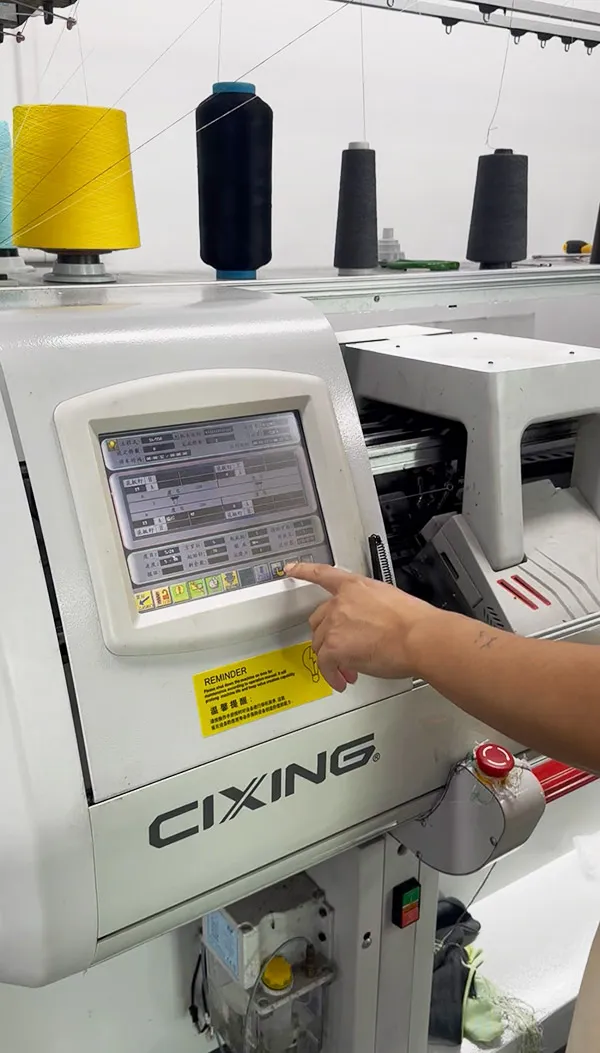
Premium Custom Knitwear Production & Linking Process by a Small Batch Sweater Manufacturer
Duration:20sUpdated:July 16th, 2026
More Sweater Manufacturer Videos

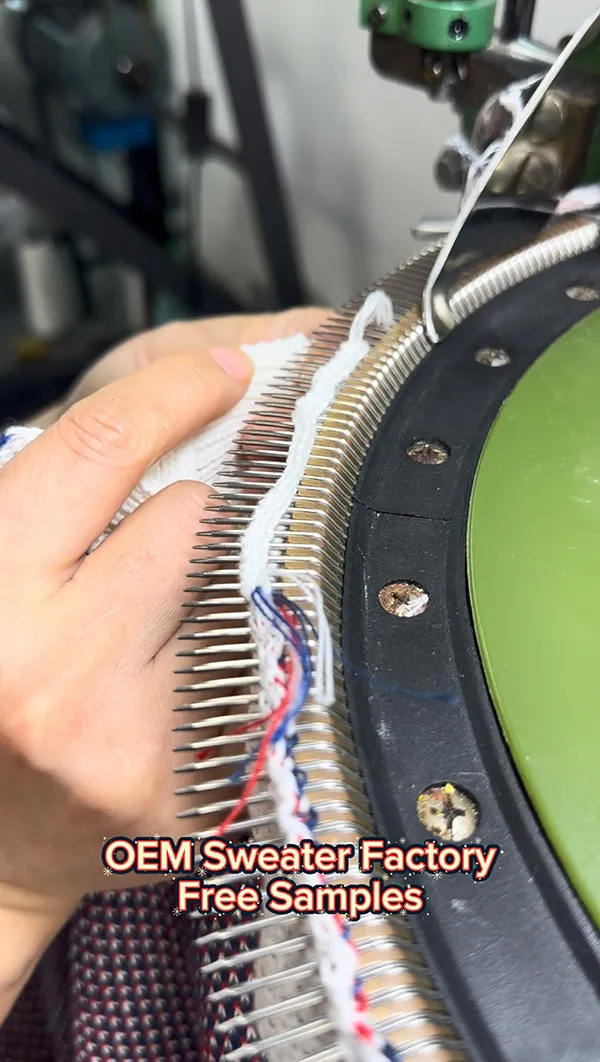
Retro Knitwear Manufacturer Circular Machine Operation and OEM Sweater Sample Making Process
Duration: 17sUpdated: August 19th, 2026As a vintage knitwear producer, Retro Knitwear Manufacturer employs circular knitting machines for early-stage sampling. Manual yarn guiding onto the needle bed creates ribbed structures and precise patterns. Control over tension and pin placement ensures consistent texture, demonstrating meticulous craftsmanship during OEM sample fabrication. For OEM orders, Retro Knitwear Manufacturer blends yarns like wool or cotton to match retro styles. The white and red thread combination shows multi-color weaving for surface depth. These knits fit autumn/winter casual wear, providing elasticity. With free samples and a full production chain, the factory aids buyers in material and fit evaluation.

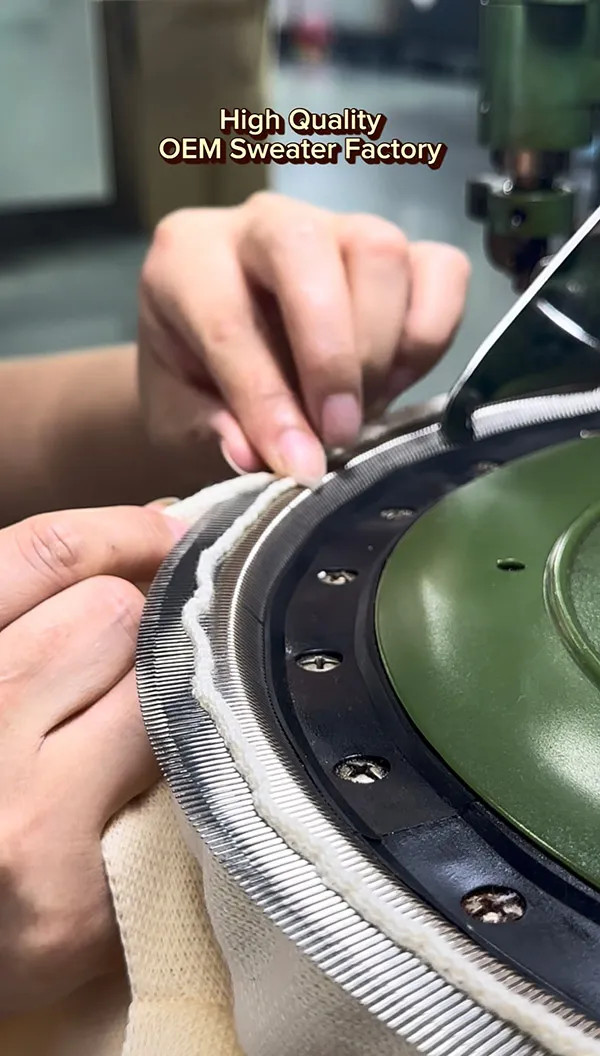
Showcase by an OEM Knitwear Manufacturer: Fine Stitch Panel Assembly for Off-White Pullovers
Duration: 31sUpdated: August 17th, 2026As an OEM Knitwear Manufacturer, our facility executes precise panel joining for refined knitwear apparel. Utilizing circular linking machinery, workers assemble off-white knit panels into classic crewneck pullovers, securing flat, durable seams along necklines, armholes, and ribbed borders. Knitted from soft combed cotton and organic wool blends, these versatile garments offer breathable warmth for minimalist casualwear, corporate uniforms, and autumn layering. We provide comprehensive OEM/ODM services, including tech pack prototyping, custom yarn dyeing, and flexible bulk production.

Unisex Sweater Manufacturer: Fine Stitch Alignment for Dark Oversized Crewneck Pullovers
Duration: 24sUpdated: August 13th, 2026As a Unisex Sweater Manufacturer, our facility executes detailed panel stitching for heavy-gauge streetwear tops. Utilizing circular seam machines, we join dark knit panels into relaxed-fit crewneck pullovers, ensuring reinforced shoulder seams and seamless ribbed collars. Spun from high-density wool and acrylic blends, these oversized garments provide durable warmth for urban streetwear, minimalist casualwear, and winter layering. We provide full OEM/ODM custom services, including tech pack prototyping, yarn sourcing, and flexible bulk manufacturing.
We can customize sweaters of various categories.
Sweater Manufacturer Blog

Low MOQ Knitwear Manufacturing: MOQ, Yarn, Gauge & Cost Guide
:root { --primary-color: #1a2b3c; --accent-color: #0056b3; --text-color: #333333; --bg-light: #f8f9fa; --border-color: #e2e8f0; --card-shadow: 0 4px 6px -1px rgba(0, 0, 0, 0.05), 0 2px 4px -1px rgba(0, 0, 0, 0.03); } body { font-family: -apple-system, BlinkMacSystemFont, "Segoe UI", Roboto, Helvetica, Arial, sans-serif; line-height: 1.65; color: var(--text-color); background-color: #ffffff; margin: 0; padding: 0; } .article-container { max-width: 880px; margin: 40px auto; padding: 0 24px; } h2 { font-size: 1.5rem; color: var(--primary-color); margin-top: 40px; margin-bottom: 16px; padding-bottom: 8px; border-bottom: 2px solid var(--border-color); } h3 { font-size: 1.2rem; color: var(--primary-color); margin-top: 24px; margin-bottom: 12px; } p { margin-bottom: 16px; font-size: 1rem; } .intro-lead { font-size: 1.1rem; background-color: var(--bg-light); padding: 16px 20px; border-left: 4px solid var(--accent-color); border-radius: 0 6px 6px 0; margin-bottom: 24px; } .key-takeaways { background: #ffffff; border: 1px solid var(--border-color); border-radius: 8px; padding: 24px; margin: 24px 0; box-shadow: var(--card-shadow); } .key-takeaways h3 { margin-top: 0; color: var(--accent-color); } ul, ol { padding-left: 20px; margin-bottom: 20px; } li { margin-bottom: 8px; } .table-responsive { overflow-x: auto; margin: 24px 0; border-radius: 8px; border: 1px solid var(--border-color); box-shadow: var(--card-shadow); } table { width: 100%; border-collapse: collapse; text-align: left; font-size: 0.95rem; } th { background-color: var(--primary-color); color: #ffffff; padding: 12px 16px; font-weight: 600; } td { padding: 12px 16px; border-bottom: 1px solid var(--border-color); } tr:nth-child(even) { background-color: var(--bg-light); } tr:last-child td { border-bottom: none; } .faq-section { margin-top: 40px; } .faq-item { background: var(--bg-light); border-radius: 6px; padding: 20px; margin-bottom: 16px; border: 1px solid var(--border-color); } .faq-item strong { color: var(--primary-color); font-size: 1.05rem; display: block; margin-bottom: 8px; } .cta-box { background: linear-gradient(135deg, var(--primary-color), var(--accent-color)); color: #ffffff; padding: 32px; border-radius: 8px; text-align: center; margin-top: 40px; } .cta-box h2 { color: #ffffff; border-bottom: none; margin-top: 0; padding-bottom: 0; } .cta-box p { margin-bottom: 0; font-size: 1.1rem; } .cta-box a { color: #ffffff; text-decoration: underline; font-weight: 600; } @media (max-width: 600px) { h1 { font-size: 1.75rem; } h2 { font-size: 1.3rem; } .article-container { padding: 0 16px; margin: 20px auto; } } Small-batch sweater production isn't arbitrary factory pricing. It's a direct function of dye lot minimums (MCQ), machine gauge utilization, and fixed-cost allocation across units. Understand these variables, and you control your landed cost. Key Takeaways Yarn selection drives MOQ: Mill stock-supported yarns unlock 50–100 pieces per style. Custom-dyed lots are constrained by vat capacity (MCQ). Gauge dictates labor cost: 14GG–18GG fine-gauge machines run slower, demand more linking hours, and consume significantly more machine time than coarse gauges. The sweet spot: 300 pieces per style delivers optimal fixed-cost absorption (CAD, setup, calibration) — the smart entry point for market testing. How Much Does Low MOQ Knitwear Cost? Knitted garment FOB pricing follows a layered cost pyramid governed by batch size and operational throughput. Cost Pyramid (Standard Breakdown) Raw Materials & Wastage: 40%–50% Knitting Hours: 20%–25% Linking & Assembly: 15%–20% Milling & Washing Finish: 8%–12% Trims & Packaging: 5%–8% Batch Scaling Model: FOB Comparison (100% Merino Wool, 350g, 12GG) Cost Component 50 Pcs (Micro Run) 100 Pcs (Low MOQ) 300 Pcs (Mid Run) 1,000 Pcs (Bulk Run) Yarn (incl. 10% wastage) $13.50 $13.50 $13.00 $12.50 CAD Pattern & Machine Setup $3.00 (absorbing $150) $1.50 (absorbing $150) $0.50 (absorbing $150) $0.15 (absorbing $150) Knitting & Linking Labor $8.00 $8.00 $7.20 $6.30 Finishing / Trims / Margin $11.50 $9.00 $7.30 $5.80 Estimated FOB per Piece $36.00 $32.00 $28.00 $24.75 Stock Yarn vs. Custom Yarn: Which One Fits Your Order? The dyeing minimum imposed by upstream mills is the primary MOQ bottleneck. Here's how to navigate it. Mill Stock-Supported Yarn: Sold by the kilogram. Zero minimum color quantity (MCQ). Lead time: 1–3 days. Minimizes inventory risk — ideal for quick-turn programs. Custom-Dyed Yarn: Constrained by industrial vat capacity. Minimum dye lot typically runs 50kg–100kg per color. Rule of thumb: 100kg yarn (less 10% waste) ÷ 0.4kg per sweater = 225-piece minimum per color. Stock vs. Custom: Decision Matrix Evaluation Factor Mill Stock-Supported Pantone Custom-Dyed Min. Color Quantity (MCQ) None (by kg/cone) 50kg – 200kg per shade Garment MOQ Threshold 50 – 100 pieces / style 250 – 500+ pieces / style Yarn Lead Time 1 – 3 days 20 – 30 days Best For Sampling, capsule collections, replenishment Core basics, exclusive brand colors, bulk production How Sweater Gauge (3GG–18GG) Affects Your Price & MOQ Machine gauge determines knitting speed, yarn consumption, and labor intensity — each carrying distinct MOQ implications. Coarse Gauge (3GG–5GG) Heavy yarn weight: 450g–900g per piece Fast knitting: 15–25 minutes per unit Flexible scheduling; high MOQ tolerance Mid Gauge (7GG–12GG) Most widely available equipment Balanced labor-to-material ratio Recommended sweet spot for low MOQ production Fine Gauge (14GG–18GG) Low yarn weight: 120g–250g per piece Slow production: 45–75 minutes per piece Demands skilled linking operators — small runs become expensive 3 Design Hacks to Lower MOQ & Reduce Cost Optimize your tech pack for manufacturing (DFM) without compromising quality. These structural adjustments deliver measurable savings. 1. Switch Set-in Sleeves to Drop Shoulders Simplifies cutting and knitting sequences. Reduces linking labor and reject rates by 15%–20%. Higher size tolerance means fewer graded sizes in your range. 2. Replace All-Over Jacquard with Localized Embroidery or Patches Run the main body in a single stock-service yarn. Move complex patterns to post-knitting finishing. This sidesteps multi-color custom-dye MCQ constraints entirely. 3. Base Jersey/Rib with Elevated Trims Keep the body in high-speed jersey or rib for consistent throughput and waste control. Differentiate through applied details: custom metal zippers, shell buttons, or debossed leather patches. How We Keep Quality High on Small-Batch Orders Our three standard operating procedures guarantee bulk consistency, even on micro-runs. AQL 2.5 / 4.0 Rigorous Inspection: Level II sampling standards. Orders under 100 pieces undergo 100% individual inspection. Shrinkage Control: Pre-production yarn samples undergo a 30cm x 30cm wash test. Results feed back into CAD grading with 3%–8% shrinkage allowance built in. Color Consistency: Standardized lightbox inspection (D65/TL84). Colorfastness rating of 4.0 or higher. Strict bundle-tint lot tracking ensures front/back and sleeve matching — no shading issues on your final garment. Partnering with JMSweater for Low MOQ Success Navigating minimum order quantities doesn't mean sacrificing quality or overextending your cash flow. As a specialized knitwear manufacturer, JMSweater (Guangzhou Junma Apparel Co., Ltd.) bridges the gap between boutique design vision and scalable industrial production. Operating 3,000 square meters of modern manufacturing facilities with 21 years of technical expertise, we help emerging labels and established B2B buyers bring low-MOQ capsule collections to market with total cost transparency. Whether you need agile development using stock-supported yarns or custom-engineered gauge solutions, our team works directly with your tech packs to optimize unit economics from day one. Frequently Asked Questions (FAQ) Q1: Can I mix different sizes or colorways to meet a 100-piece MOQ? Yes. While yarn colorways are constrained by dye lot minimums (MCQ), total garment MOQs can usually be split across standard sizing (e.g., S through XL) within the same colorway. If you choose mill stock-supported yarns with zero MCQ, you can comfortably run multiple colorways in smaller batch sizes per style. Q2: What is the typical lead time for small-batch knitwear production? For orders using stock-supported yarn, production typically takes 15 to 25 days after sample approval. If your design requires custom-dyed yarn, add an extra 20 to 30 days for lab dip matching and yarn spinning before flat-bed knitting begins. Q3: Why are fine-gauge sweaters (14GG–18GG) more expensive for small orders? Fine-gauge machinery runs at significantly slower speeds, requiring upwards of 45 to 75 minutes per panel. Additionally, joining lightweight 18GG panels demands highly experienced linking operators to prevent dropped stitches, driving up labor hours per unit on low-volume runs. Q4: How do I request an exact FOB quote for my tech pack? To get an accurate cost breakdown, provide your factory with four key metrics: target gauge, estimated garment weight (in grams), yarn composition preference (stock service vs. custom-dyed), and your target order volume per style. Ready to Scale Your Next Collection? Got a tech pack or design sketch ready? [Reach out to the JMSweater engineering team today] to review your spec sheet, discuss yarn availability, and calculate a custom cost model for your upcoming line.
view more
How to Choose a Knitwear Manufacturer: Complete Buyer Checklist
How to Choose a Knitwear Manufacturer: Complete Buyer Checklist @page { size: A4; margin: 18mm 15mm 18mm 15mm; background-color: #fcfbf9; } *, *::before, *::after { box-sizing: border-box; } body { font-family: -apple-system, BlinkMacSystemFont, "Segoe UI", Roboto, Helvetica, Arial, sans-serif; font-size: 12pt; line-height: 1.6; color: #2d3748; margin: 0; padding: 0; background-color: #fcfbf9; } /* Header Banner */ .header-card { background-color: #1a202c; color: #ffffff; padding: 24px 28px; border-radius: 8px; margin-bottom: 24px; } .subtitle { font-size: 14pt; color: #cbd5e0; margin: 0; font-style: italic; } /* Typography & Hierarchy */ h2 { font-size: 13pt; font-weight: 700; color: #1a202c; margin: 22px 0 12px 0; padding-bottom: 6px; border-bottom: 2px solid #e2e8f0; page-break-after: avoid; } h3 { font-size: 12pt; font-weight: 600; color: #2b6cb0; margin: 16px 0 8px 0; page-break-after: avoid; } p { margin: 0 0 10px 0; text-align: justify; } ul, ol { margin: 0 0 12px 0; padding-left: 20px; } li { margin-bottom: 6px; } strong { color: #1a202c; } /* Callout & Highlight Boxes */ .red-flag { background-color: #fff5f5; border-left: 4px solid #e53e3e; padding: 10px 14px; margin: 12px 0; border-radius: 0 6px 6px 0; font-size: 9.5pt; color: #9b2c2c; } .pro-tip { background-color: #ebf8ff; border-left: 4px solid #3182ce; padding: 10px 14px; margin: 12px 0; border-radius: 0 6px 6px 0; font-size: 9.5pt; color: #2c5282; } /* Tables */ table { width: 100%; border-collapse: collapse; margin: 14px 0; font-size: 9.5pt; background-color: #ffffff; border-radius: 6px; overflow: hidden; border: 1px solid #e2e8f0; } th { background-color: #2d3748; color: #ffffff; font-weight: 600; text-align: left; padding: 10px 12px; } td { padding: 9px 12px; border-bottom: 1px solid #edf2f7; } tr:nth-child(even) { background-color: #f7fafc; } /* Math Symbols */ .math { font-family: 'Times New Roman', serif; font-style: italic; font-weight: bold; color: #2c5282; } /* CTA Section */ .cta-box { background-color: #edf2f7; border: 1px solid #cbd5e0; border-radius: 8px; padding: 18px 22px; margin-top: 24px; page-break-inside: avoid; } .cta-box h2 { margin-top: 0; border-bottom: none; padding-bottom: 0; color: #2b6cb0; } A Step-by-Step Sourcing Guide for Brands — Even Without a Tech Pack With the global knitwear market projected to surpass $1 Trillion by 2035, the demand for high-quality sweaters is exploding. But for brand founders, capturing this growth isn't easy. Let’s cut the flattery. Finding a sweater factory isn’t about winning a lowball bidding war. In my experience, the cheapest quote usually comes with hidden costs: missed ship dates, inconsistent sizing, pilling after two washes, and a communication blackhole that makes you want to pull your own hair out. Smart sourcing isn’t about price. It’s about finding a manufacturing partner that’s responsive, transparent, and technically competent. Even if you don’t have a technical designer on staff or a fully built-out tech pack, you can screen factories quickly using these four core criteria. Here’s exactly how. 1. Hardware & Process: What’s Actually on the Floor Forget the glossy sales pitch. A factory’s real capability comes down to two things: the knitting machines they run and how they stitch the pieces together. Gauge (GG) Selection & Machine Capability Gauge refers to the number of needles per inch on the knitting bed. Higher GG = finer, lighter fabric. But here’s the catch: a factory needs the native machine for each gauge. You’re looking for STOLL (Germany) or SHIMA SEIKI (Japan) equipment, not knockoffs. Here’s how the gauges break down: Coarse Knit (3GG – 5GG): Heavyweight fall/winter sweaters, cable knits, cardigans. This gauge tests a factory’s tension control on wide-gauge beds. Mid-Gauge (7GG – 9GG): Your bread-and-butter spring/fall styles. This is the volume sweet spot. The key metric here is stitch uniformity across bulk production. Fine & Superfine (12GG – 18GG): Base layers, fine merino, and cashmere blends. This is where the factory’s climate control and finishing processes get scrutinized. Temperature and humidity swings wreck fine-gauge production. Red flag: A factory that claims they can run 7GG on a 12GG machine by "modifying" the settings. That’s a fancy way of saying your sweater will stretch out and lose its shape after one wear. Walk away. The Joining Process: What Determines Garment Durability This is the single biggest differentiator between a premium sweater and fast-fashion garbage. Hand-Linking (Looping): Each stitch from the knitted panels is looped onto a linking machine, one by one. The result? Seams that are flat, elastic, and almost invisible against the skin. This is how you build garments that last. Cut-and-Sew (Overlock): The cheaper, faster route. Panels get cut with scissors and stitched together with an overlock machine. The seams are bulky, have zero give, and will start fraying at the edges after a few wash cycles. Bottom line: if you’re selling a premium product, hand-linking is non-negotiable. If you’re chasing ultra-low cost, just know the trade-offs. 2. Decoding MOQ: How to Test the Waters Without Breaking the Bank Here’s a truth most brand founders learn the hard way: the MOQ bottleneck usually isn’t the factory’s knitting machines. It’s the dye house. Most mills set dye-lot minimums at 100–300 kg per color. That translates to roughly 300–1,000 finished garments, depending on weight. So how do you get started with 100–200 pieces? Stock service yarns. Stock Service vs. Custom Dyeing If you insist on a specific Pantone match, be prepared to pay for custom dyeing—and wait an extra 2–3 weeks for lab dips and strike-offs. But if you’re willing to work from the factory’s stock yarn color cards, everything changes. CriteriaStock Service YarnsCustom DyeingMOQLow (100–200 pcs/design)High (300–1,000+ pcs/design)Lead TimeFast (3–7 days for strike-offs)Slow (adds 2–3 weeks for color development)RiskLow—test multiple colors easilyHigh—you’re sitting on leftover yarn Pro tip: When you send your RFQ, ask this exact question: “What’s your MOQ if we use your stock service yarns?” The answer will tell you immediately if they’re set up for agile, small-batch production or if they’re still operating in the old-school volume model. 3. Sampling Without a Tech Pack & Rigorous Quality Control A good OEM/ODM factory is essentially a development partner. They don’t need a perfect tech pack to start working with you. How to Kick Off Sampling Send them any one of these: High-res reference images or sketches—clearly mark the silhouette and pattern details you want. A physical sample garment—this is the gold standard. Even if it’s the wrong fabric or a different brand, they can reverse-engineer the measurements and build a new pattern from it. The Three Critical Samples Before Production Don’t skip these. Each one protects you from expensive mistakes. Knit-down (Yarn Swatch): This is your first sanity check. It confirms the actual yarn hand-feel, the true color, and how the stitch pattern renders. Approve this before the factory cuts a single panel. Proto Sample (First Fit Sample): This is your first look at actual garment silhouette and construction. Check the fit, the drop, the armhole depth. This is where you catch pattern issues. PPS (Pre-Production Sample): This is the non-negotiable gatekeeper. The PPS must be made with 100% production yarn, trims, and finishing processes. That means the same dye lot, the same wash, the same steam-setting. Do not—under any circumstances—authorize bulk production without a signed-off PPS in hand. The Quality Benchmarks That Matter (AQL 2.5) Hold your factory to these three metrics during the final inspection: Size tolerance: Within ±1.5 cm of the spec sheet. Pilling resistance: ISO/AATCC rating of 3–4 or higher. Anything below that and your customers will complain within weeks. Washing shrinkage: Must fall within ±3% to ±5% after the standard wash-and-set finishing process. 4. Sending a Smart RFQ & Spotting Supplier Red Flags You don’t need a novel. You need a concise, information-rich inquiry that gets you a real quote on the first pass. The Four Components of a High-Conversion RFQ Include these four elements, and you’ll get a useful response—not a generic brochure. Estimated quantity: Total pieces AND breakdown per color. (Example: 200 total, 100 pcs in Navy, 100 pcs in Charcoal) Visual reference: Either a high-quality photo or simply state: “Sample garment available for shipping.” Yarn & gauge preferences: Be specific. (Example: “7GG mid-gauge, cotton-blend, using your stock service yarns.”) Target market & delivery deadline: (Example: “US market—must hit warehouse by October 15th.”) Factory Red Flags: Three to Walk Away From I’ve seen these patterns repeat across dozens of factory audits. If you hit any of these, keep looking. Slow sampling response: If they can’t turn a proto sample around on time, they’re telling you—loudly—that they can’t manage production schedules. Bulk will be worse. Pushing custom dyeing exclusively: If they refuse to show you a stock yarn color card and insist on high-MOQ custom dyeing, they don’t have a service model for emerging brands. They’re still hunting whales. No industrial steam-setting equipment: If they’re finishing sweaters with a hand iron instead of a proper steam tunnel or press, your garments will shrink and deform after the customer’s first wash. That’s a chargeback waiting to happen. Final Take: Build a Supply Chain, Not a One-Off Deal Choosing a knitwear factory isn't a transaction. It’s the foundation of your brand’s supply chain. The playbook is simple: Use stock service yarns to de-risk your initial order. Lock down your PPS before bulk production starts. Send a tight, data-driven RFQ to filter out time-wasters. Do that, and you’ll operate like a seasoned sourcing pro—regardless of your team’s size. Ready to Skip the Sourcing Headaches? Finding a knitwear partner who balances flexible MOQs, rigid quality control, and transparent communication shouldn’t feel like a gamble. At JM Sweater (Guangzhou Junma Apparel Co., Ltd.), we’ve spent 21 years perfecting custom knitwear manufacturing for growing global brands. With a 3,000 m² facility and annual capacity of 1.2M garments, we bridge the gap between high-end craftsmanship and flexible production—whether you need low-MOQ stock yarn development or full-scale OEM/ODM runs. Need help reviewing a Tech Pack or calculating yarn yield? [Get a Free Production Assessment & Quote within 24 Hours]
view more
Top 4 Sweater Manufacturers in the UK & Sourcing Guide
Sourcing luxury knitwear from the UK requires navigating two very different worlds: heritage mills rooted in traditional craftsmanship, and modern factories optimized for private-label production. From ultra-fine 30G merino to heavy-gauge Scottish cashmere, partnering with the right UK manufacturer depends on matching your brand’s technical specs—specifically machine capabilities, MOQ flexibilities, and yarn traceability. Here is an analytical breakdown of the top 4 UK sweater manufacturers, alongside a practical sourcing checklist covering machine gauges, yarn origin, and finishing techniques for your next OEM run. UK Top Sweater Manufacturers Comparison Manufacturer Base Location Knitting Gauge Range Core Special Yarns Key Construction Techniques Best For Main Certifications John Smedley Derbyshire, England 12GG – 30GG (Ultra-fine) Extra-Fine Merino, Sea Island Cotton Fully fashioned, hand-linked seams Ultra-luxury brands, high-end tailoring Royal Warrant, Made in England Johnstons of Elgin Hawick & Elgin, Scotland 3GG – 12GG Scottish Cashmere, Lambswool, Camel Hair, Escorial Wool Fully vertical production, teasel finishing, cable & jacquard Heritage luxury knitwear collections Royal Warrant, RWS, SFA Harley of Scotland Peterhead, Scotland 3GG – 12GG Shetland Wool, Supersoft Lambswool Whole-Garment seamless 3D knit, Fair Isle jacquard, zero-waste build Outdoor heritage & sustainable fashion labels British Wool Certified Paul James Knitwear Leicestershire, England 3GG – 18GG Extra-Fine Merino, Alpaca, Organic Cotton, British Wool Agile OEM/ODM, small-batch sampling, hand-finishing Emerging designers, mid-to-high-end private labels Ethical Trading Certified, 100% natural fibre guarantee Top 4 UK Sweater Manufacturers 1. John Smedley – Ultra-Fine Gauge Knitwear Specialist Overview: John Smedley started up in 1784 over in Derbyshire, and they're officially the oldest textile factory still running anywhere in the world. They've got a Royal Warrant to their name, and their whole reputation sits on ultra‑fine gauge work—think 24GG and even 30GG, using fully‑fashioned methods and hand‑linked seams throughout. If you're a luxury brand that really cares about fabric definition and wants that “Made in England” stamp, this is still the mill everyone measures themselves against. Key Manufacturer Specifications: Headquarters/Mill Location: Lea Mills, Derbyshire, England Gauge Capabilities:12GG, 24GG, up to 30GG (Ultra‑Fine Knit) Specialized Materials: Extra‑Fine Merino Wool, Sea Island Cotton Manufacturing Specialty: Fully Fashioned, Hand‑Linked Seams, Fine‑Gauge Polo & Crew Necks Best Suited For: Ultra‑Luxury Brands, High‑End Tailoring Houses, Bespoke Private Labels Certifications & Heritage: Royal Warrant Holder, Made in England 2. Johnstons of Elgin – Vertical Luxury Cashmere & Wool Production Overview: Johnstons of Elgin has been around since 1797 – one of Scotland's real textile stalwarts, and a serious player in luxury cashmere and fine woollens. What sets them apart is the vertical setup: they bring in raw fibre, dye it, spin it, weave and knit it, all under one roof. That kind of control is rare nowadays. They've also got a Royal Warrant, and they regularly produce for big international fashion houses that demand heritage skills and full traceability right back to the goat. If you're obsessive about fibre provenance, this is the kind of mill you'd trust without a second thought. Key Manufacturer Specifications: Headquarters/Mill Location: Hawick & Elgin, Scotland (Knitting Hub based in Hawick) Gauge Capabilities:3GG to 12GG (Specializing in Heavy Chunky to Classic Medium Knits) Specialized Materials: 100% Scottish‑Dyed Cashmere, Fine Lambswool, Camel Hair, Escorial Wool Manufacturing Specialty: Fully Vertical Processing, Traditional Teasel Finishing, Cable & Jacquard Knits Best Suited For: Heritage Apparel Brands, High‑End Knitwear Collections, Luxury Private Labels Certifications & Sustainability: Royal Warrant Holder, Sustainable Fibre Sourcing Standards 3. Harley of Scotland – Seamless Whole‑Garment and Shetland Knitwear Overview: Harley of Scotland was founded in 1929, based up in Peterhead. They were pretty early to jump on Whole‑Garment (seamless) knitting, and they've been refining it for decades. You'll see them mixing classic Fair Isle patterns with 3D knitting that cuts down waste noticeably. For outdoor heritage brands and labels that care about sustainability, the seamless construction gives you better comfort and durability, and on top of that you're saving roughly 10‑20% of yarn—so it's not just a green story, it actually makes commercial sense. Key Manufacturer Specifications: Headquarters/Mill Location: Peterhead, Aberdeenshire, Scotland Gauge Capabilities:3GG to 12GG (Specializing in Chunky to Medium Gauge Seamless Knits) Specialized Materials: Pure Real Shetland Wool, Supersoft Lambswool, Fair Isle Specialty Yarns Manufacturing Specialty: Whole‑Garment Seamless Knitting (3D Knit), Zero‑Waste Production, Fair Isle Jacquards Best Suited For: Outdoor Heritage Brands, Sustainable Fashion Labels, Contemporary Nordic/British‑Style Collections Certifications & Sustainability: Zero‑Waste Manufacturing Focus, Certified British Wool Partners 4. Paul James Knitwear – Private Label and Full Natural Fibre Range Overview: Paul James Knitwear set up in 1976 in Leicestershire – that's old textile country in England. They've carved out a niche as a flexible partner, and they're strict about using only 100% natural fibres—no synthetics, no blends, no shortcuts. Their gauge range covers a full spectrum, and they offer a quick sampling service alongside traditional hand‑finishing. That combination works well for emerging designers and established indie brands that need smaller runs and hands‑on technical support during development, not just a factory slot. Key Manufacturer Specifications: Headquarters/Mill Location: Leicestershire, England Gauge Capabilities:3GG to 18GG (Full Spectrum: Heavy Chunky to Fine Gauge) Specialized Materials: 100% Extra‑Fine Merino Wool, Chunky Peruvian Alpaca, Organic Cotton, British Wool Manufacturing Specialty: Agile Private Label Services, Tech Pack Development, Small‑Batch Sampling, Hand‑Finishing Best Suited For: Emerging Designer Brands, Mid‑to‑High‑End Private Labels, Boutique Apparel Chains Certifications & Sustainability: 100% Pure Natural Fiber Guarantee, Ethical Trading Certified UK Sweater Sourcing & Manufacturing Guide Right, so you're looking at UK‑based sweater factories, or maybe you're developing a premium knitwear line. Don't just glance at the machine list and call it a day – that's a rookie move. You really need to get your head around the production details that affect bulk quality, final cost, and delivery timelines. Over the years we've seen good programmes fall apart because someone ignored these nuances, and we've also seen average designs turn into great product because the sourcing team knew what to ask for. Here's the stuff that actually matters – from someone who's been on both the factory floor and the buying desk. Matching Gauge to Your Design and Styling The gauge number tells you fabric density, weight per piece, and how the sweater feels in hand. But here's the catch – the factory's machine park is what it is. You can't ask for fine gauge(24GG)if they only run heavy gauge(12GG), so match your design to their capability, not the other way round. Coarse Gauges(3GG – 5GG): Heavier garments, good for chunky cardigans, cable knits, and that traditional Shetland look. These need tighter tension and generally go with coarse‑loop linking heads – if your factory doesn't have those heads, you're stuck. Medium Gauges(7GG – 12GG): This is the bread‑and‑butter range, covering most knitwear programmes globally. Works for all‑season basics, jacquards, and everyday crew necks – decent warmth without being too bulky. Most mills are comfortable here, so it's a safe bet. Fine and Ultra‑Fine Gauges(14GG – 30GG): These are for premium base layers, polos, and lightweight cashmere pieces. But as you go finer, things get tricky – yarn tensile strength becomes a headache, you need tight humidity control in the mill, and linking accuracy has to be spot‑on. John Smedley specializes in ultra-fine gauge, but that's a very specialized lane – not every factory can follow you there, so don't assume. Fibre and Yarn Sourcing – Traceability Is Essential Here's a reality check: raw materials usually eat up 50‑70% of your total manufacturing cost on better‑end sweaters. So before you even think about issuing a purchase order, get your yarn specs and sustainability paperwork in order. A delay at this stage will cascade right through your whole timeline. Scottish Cashmere: Takes dye beautifully, and after traditional teasel finishing you get that super soft, lofty hand. Pricey, but for the right brand story it's unbeatable. Extra‑Fine Merino: Aim for 19.5 micron or finer if you want next‑to‑skin comfort without itching. Anything coarser, and you'll get complaints – trust me. British Wool: Coarser and tougher – good body, great for outdoor heavy‑gauge knits. Not luxury, but honest and durable. Certifications: the US and EU markets are getting stricter by the year. In your contracts, push for suppliers that can show RWS, GOTS, and OEKO‑TEX Standard 100 – either from the mill or from the spinner. If they can't produce the certificates at the quoting stage, assume they don't have them. Key Production Processes – Linking and Finishing Honestly? The big quality difference rarely comes from the knitting machines themselves – it's in the back‑end finishing. We've seen gorgeous panels ruined by sloppy linking, and we've seen average knits turned into premium product just by careful finishing. Pay attention here. Hand‑Linking vs. Cut & Sew Hand‑Linking: Each loop from the knitted panels is matched precisely onto the linking machine's dial – you get a flat, almost invisible seam that doesn't rub or irritate. That's the standard for premium goods, especially around collars and shoulders. Labour‑intensive, yes, but that's where the value is. Cut & Sew: They cut the knitted fabric and overlock it. Cheaper, but the seam is bulkier and can ruin the feel of a luxury garment. Fine for mass‑market stuff, but not for heritage pieces. Whole‑Garment (Seamless) The flat‑knit machine produces a 3D‑shaped sweater with no seams at all. Besides comfort, it cuts yarn waste by about 10‑20% – that's a real sustainability win. Harley of Scotland specialises in this, so if you're going that route, they're a natural fit. Washing and Milling After knitting, sweaters go through a controlled wash and mill to develop the final handle and loft. You always hear about Scottish soft water being ideal for cashmere finishing – and there's some truth to that – but with the right process settings you can get similar results elsewhere. Consistency across batches is what really matters, not just the first sample. Pre‑Order Checklist for Production To keep your RFQ process smooth and avoid endless email chains, make sure your tech pack includes everything below. We've lost count of how many programmes got held up because a buyer forgot to specify sleeve drop tolerance or assumed the factory would "just know" the finish level. Grading Spec Table: Chest, body length, sleeve length, neck drop per size, with clear tolerances (usually ±1.5cm). Don't leave any room for interpretation. Yarn Composition and Count: E.g., 2/28Nm 100% Cashmere or 2/48Nm 100% Merino – be exact. "Fine wool" doesn't cut it. Colour References: Standard international color references, and state clearly whether you're using stock‑service yarns or need custom lab dips. Custom dyeing adds time and cost – factor that in from the start. Labelling and Packaging: Main label, wash care (compliant with destination market regulations), hang tags, dust bag specs. These seem minor, but they can hold up your shipment if they're not nailed down early. Sampling and Lead Times: Typically 2‑3 weeks for a prototype sample; bulk production 8‑12 weeks after sample sign‑off. Also watch out for local summer holidays and the pre‑Christmas rush – capacity gets tight, so book your slot well ahead. Knitwear Sourcing FAQ Q1: What's the cost and brand‑positioning gap between UK‑made sweaters and overseas sourcing? UK mills trade heavily on heritage, Royal Warrants, and that premium British‑made narrative – that pushes unit cost up, making them best suited for luxury capsules. Overseas operations run fully vertical supply chains from yarn to finished goods, offering solid technical expertise in heavyweight styles, complex intarsia/jacquard, flexible MOQs, and cost‑efficient bulk production. For growing commercial brands, this option provides high craft standards without paying for the heritage label. Q2: What core technical documents should a buyer provide when requesting a sweater quote (RFQ)? To get accurate pricing and shorten the sampling cycle, send a complete tech pack – graded spec sheet with tolerances, exact yarn composition and count, target gauge, construction details (fully fashioned, hand‑linking, etc.), and vector artwork or color references for patterns. These parameters directly drive both garment structure and manufacturing cost. Q3: What are the typical lead times for sampling and bulk production on custom sweaters? The timeline splits into two stages. After design and yarn specs are finalised, a proto sample usually takes 10–15 days. Once the pre-production sample is approved and bulk yarn arrives, production runs about 30–45 days. Actual lead times vary with order volume and complexity – we recommend securing capacity 2–3 months ahead of peak retail seasons. UK Domestic vs. Overseas Production: Which is Right for You? While UK mills offer unmatched heritage and prestige for luxury capsules, high MOQs and premium unit costs can be challenging for scaling brands. If your focus is high-volume lines, complex jacquards, or flexible MOQs with competitive cost structures, working with a fully vertical global partner is often the more scalable solution. Looking for a Reliable Supply Chain Partner? If you are developing a premium line but require a cost-effective, flexible-MOQ, and fast-turnaround bulk production partner, JM Sweater (Guangzhou Junma Apparel Co., Ltd.) is a solid strategic fit. With over 20 years of hands-on technical expertise, we operate as a top-tier knitwear manufacturer. Our 3,000 m² facility houses 110 modern knitting machines, achieving an annual capacity of 1.2 million garments. From raw yarn procurement and precision prototyping to zero-defect quality control, we provide full-spectrum services for global brands. Whether you need heavyweight streetwear, intricate intarsia and jacquard, or zero-waste whole-garment knitting, we help you scale without compromising on craft.
view more