
Must-Have Knitwear List for Autumn & Winter: Thick Sweaters, Knit Scarves, Warm and Stylish

October 30th, 2025

In autumn and winter, knitwear is a "must-have" for balancing warmth and fashion. Thick sweaters and knit scarves, in particular, not only fend off low temperatures but also easily enhance the completeness of your outfitthey are indispensable items in your wardrobe.


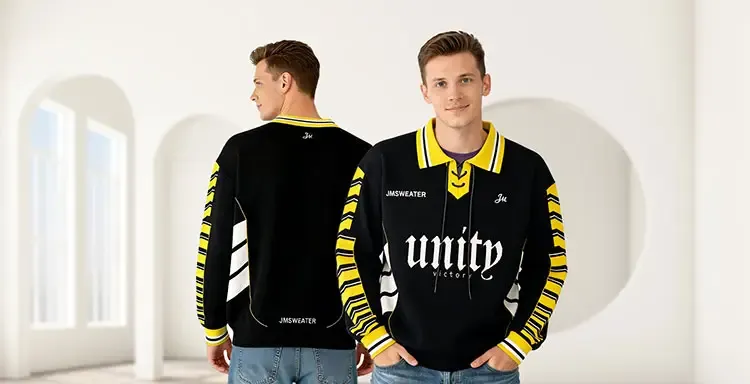
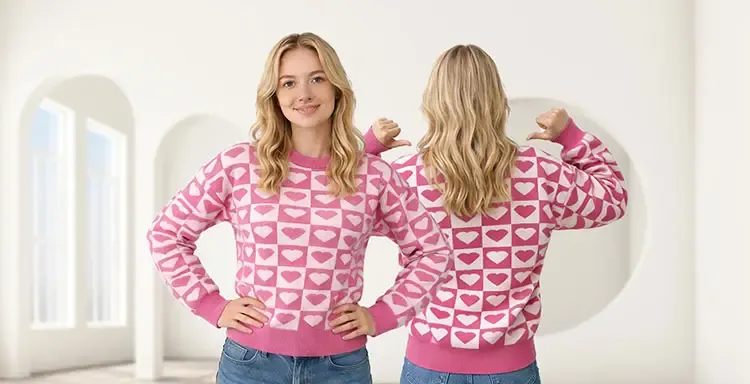
For thick sweaters, wool blends are the top choice. They are fluffy, soft, and excellent at retaining heat. Crewneck styles pair well with turtleneck undershirts for a layered look; V-neck styles flatter the neckline and look more elegant with a necklace. In terms of colors, classic hues like caramel brown and dark gray are timeless and suit most people; dark tones such as wine red and emerald green exude an autumnal-winter vibe. Whether matched with jeans or midi skirts, they create a lazy yet warm style.


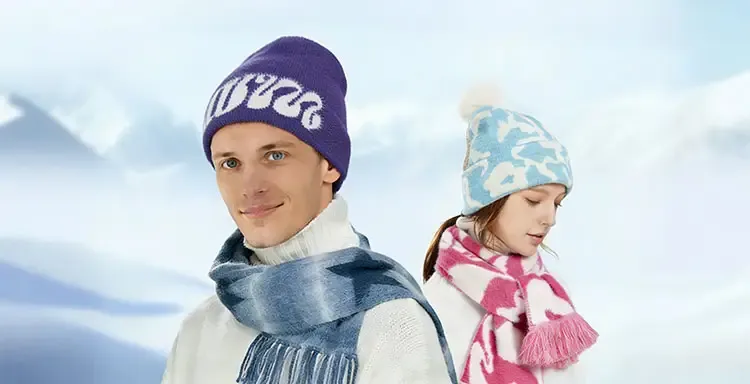
Knit scarves should be thick with clear textures. Cable-knit or chunky-knit styles have a vintage charmwrapping them twice ensures maximum warmth, while draping them casually over your shoulders adds a lazy touch to your outfit. Camel and off-white scarves are versatile and go with any coat; plaid or color-blocked scarves brighten up basic outfits. For example, pairing a black coat with a plaid knit scarf instantly breaks the dullness, making your autumn-winter look both warm and stylish.


JMSWEATER is a over 17 years professional sweater manufacturer that various sweaters are available to be customized as your requirements. 

Knitwear ranging from 1.5-18GG in jacquard, intarsia, flat bed knitting, circular knitting, hand knit and crochet. 


Various kinds of add-on process are available, thousands of material yarn offered with cashmere, merino wool, cotton, viscose, nylon, alpaca, linen, mohair etc. 

To know more of our procedures please feel free to send inquiry for us. 

Web: https://jmsweater.en.alibaba.com 

WhatsApp:008618520111505

More Articles

Craft Value and Pattern Selection of Embroidered Sweaters
Embroidered sweaters are a combination of knitting and embroidery technology, with both practical and decorative values. Their processes are divided into three-dimensional embroidery and flat embroidery. Three-dimensional embroidery such as towel embroidery has obvious raised patterns and full texture, suitable for creating a personalized street style; flat embroidery has delicate lines and exquisite patterns, suitable for commuting and light luxury scenarios. Pattern selection should be combined with dressing style. Simple small patterns such as letters and small flowers are versatile and suitable for any scene; large-area complex patterns such as retro patterns and cartoon images are suitable as outerwear items to improve eye-catching degree. In addition, embroidered sweaters can support personalized customization, and exclusive logos or patterns can be embroidered on the garment to meet the customization needs of brands or individuals. JMSWEATER is a over 17 years professional sweater manufacturer that various sweaters are available to be customized as your requirements. Knitwear ranging from 1.5-18GG in jacquard, intarsia, flat bed knitting, circular knitting, hand knit and crochet. Various kinds of add-on process are available, thousands of material yarn offered with cashmere, merino wool, cotton, viscose, nylon, alpaca, linen, mohair etc. To know more of our procedures please feel free to send inquiry for us. Web: https://jmsweater.en.alibaba.com WhatsApp:008618520111505
Version Classification of Sweaters and Body Shape Adaptation Guide
The version of a sweater directly affects the dressing effect, which is mainly divided into five categories: slim fit, loose fit, oversize, short style and long style. The slim fit is close to the body, suitable for people with a well-proportioned or thin figure, can highlight the sense of lines, and is suitable for workplace commuting; the loose fit is slightly wider than the body, friendly to people who are slightly fat, and can cover abdominal fat; the oversize version is wide, creating a lazy and casual style, suitable for matching with tight lower garments to balance the proportion; the short sweater is above the waist line, which can lengthen the leg line and is suitable for small people; the long sweater is over the buttocks, which has both warmth and fat-covering effects, suitable for outer wear in autumn and winter. JMSWEATER is a over 17 years professional sweater manufacturer that various sweaters are available to be customized as your requirements. Knitwear ranging from 1.5-18GG in jacquard, intarsia, flat bed knitting, circular knitting, hand knit and crochet. Various kinds of add-on process are available, thousands of material yarn offered with cashmere, merino wool, cotton, viscose, nylon, alpaca, linen, mohair etc. To know more of our procedures please feel free to send inquiry for us. Web: https://jmsweater.en.alibaba.com WhatsApp:008618520111505
Advantages and Material Ratio of Wool Blended Sweaters
Wool blended sweaters combine the warmth of pure wool with the practicality of other fibers, and are cost-effective autumn and winter items. There are three common material ratios: wool + acrylic (mostly 7:3 ratio), which not only retains the softness and warmth of wool, but also improves anti-pilling and easy-care properties with acrylic; wool + cotton (mostly 6:4 ratio), which enhances air permeability and skin-friendliness, suitable for close-fitting wear; wool + nylon (mostly 8:2 ratio), which improves fabric toughness and extends service life. Different ratios are suitable for different scenarios. The 7:3 wool-acrylic blend is suitable for daily commuting, and the 6:4 wool-cotton blend is more suitable for people with sensitive skin, which can be selected according to needs when purchasing. JMSWEATER is a over 17 years professional sweater manufacturer that various sweaters are available to be customized as your requirements. Knitwear ranging from 1.5-18GG in jacquard, intarsia, flat bed knitting, circular knitting, hand knit and crochet. Various kinds of add-on process are available, thousands of material yarn offered with cashmere, merino wool, cotton, viscose, nylon, alpaca, linen, mohair etc. To know more of our procedures please feel free to send inquiry for us. Web: https://jmsweater.en.alibaba.com WhatsApp:008618520111505
What kind of fabric is faux mink
Faux mink is a type of fur material that imitates the appearance and feel of mink fur. It is primarily composed of chemical fibers, although some may also contain natural animal fibers. Here are the specifics: Chemical fiber blends: Most faux mink fur is made from a blend of chemical fibers such as polyester, nylon, and polyester fibers. These fibers are treated with special processes to mimic the luster, softness, and downy texture of mink fur. For example, polyester fibers can enhance the fabric's crispness and durability, while nylon adds elasticity and flexibility. Combination of natural fibers and chemical fibers: Some faux mink fur is created by mixing natural animal fibers such as raccoon fur and rabbit fur with chemical fiber raw materials. The inclusion of natural animal fibers can further enhance the warmth and texture of the fabric, bringing it closer to the performance of genuine mink fur. JMSWEATER is a over 17 years professional sweater manufacturer that various sweaters are available to be customized as your requirements. Knitwear ranging from 1.5-18GG in jacquard, intarsia, flat bed knitting, circular knitting, hand knit and crochet. Various kinds of add-on process are available, thousands of material yarn offered with cashmere, merino wool, cotton, viscose, nylon, alpaca, linen, mohair etc. To know more of our procedures please feel free to send inquiry for us. Web: https://jmsweater.en.alibaba.com WhatsApp:008618520111505
How many types of wool
The classification dimensions of wool are diverse, and can be divided according to different criteria such as variety, fineness, use, and origin, and different categories differ significantly in quality, characteristics and application scenarios. The following are common classification methods and specific categories: I. Classification of sheep by breed (core classification method) This is the most basic classification, and the wool produced by different breeds of sheep differs greatly in terms of fiber structure, fineness, and gloss, and there are also obvious levels of quality. (1) Fine-haired sheep breeds The fine fiber, high uniformity and soft handfeel of wool is the main source of high-quality wool, suitable for the production of high-end wool products. Buy Merino Wool The best known fine wool variety in the world is native to Spain, and has been introduced to Australia, New Zealand and other countries to cultivate, among which Australian Merino wool has the best quality. Features: The fiber is extremely fine (usually less than 17.5 microns, the top varieties can reach 11-13 microns), highly curly, good elasticity, strong warmth and breathability, and the hand feel is fine and smooth, and it is not easy to pick up balls. Uses: high-end cashmere shirts, fine wool fabrics, suitable clothing, etc. Chinese Merino Wool The fine-haired sheep variety cultivated in China combines the excellent characteristics of foreign merino sheep and adapts to the domestic climate environment. The fiber thickness is about 18-20 microns, and the quality is close to that of imported merino wool. Use: Mid-to-high-end fabrics, knitted clothing, etc. (2) Semi-fine-haired sheep breeds The fineness of wool is between fine and rough wool, and the fiber length is long, suitable for making medium-thick wool fabrics, blankets, etc. Suffolk Wool Native to the United Kingdom, the wool has a fineness of about 25-30 microns, a medium length, a good gloss and a high strength. Uses: tweed fabrics, knit coats, carpets, etc. Cowley replaces wool Originally from New Zealand, the fiber has a fineness of 22-28 microns, is flexible and resistant to wear, and is suitable for mixed textile production of various types of fabrics. (3) Crude sheep breeds Wool is coarse in fiber and has a large difference in diameter, contains flannel and coarse wool, is good for warmth but has a rough hand feel, and is mainly used in making carpets, blankets, tweed coats, etc. Mongolian wool The wool produced by Mongolian sheep in China is coarse (30 microns or more), uneven in length, high in fat content, and strong in warmth. Uses: Carpets, blankets, coated fabrics, and can also be used to make wool felt. Xizang wool Made from Xizang sheep in China, the fiber is coarse and hard, the length is long, and the toughness is good, suitable for making durable products such as carpets and tents. (4) Specialized varieties of wool Cashmere (often referred to as "soft gold") Note: Strictly speaking, goat cashmere does not belong to wool (wool specifically refers to sheep hair), but it is often classified as a high-end wool material, supplemented here. It is a fine fur of the inner layer of a goat, with a fineness of 14-16 microns, which is extremely soft and warm. Use: Top cashmere shirts, scarves, high-end clothing. Alpaca Wool (Alpaca Wool) Made from alpaca, it is divided into Suli alpaca wool (long fiber and shiny) and Huacao alpaca (soft and delicate to the hand), with a fineness of 18-22 microns, which is better for warmth than wool, and does not easily flap. Use: High-end knitwear, wool fabrics. II. Classification by wool thickness Fineness is a key indicator of wool quality, which directly affects the feel and use of wool, usually expressed in "micron (μm)." Ultrafine wool: fineness ≤ 18 microns, mainly Merino fine wool, used in high-end sportswear and fine fabrics. Fine wool: 18-22 microns, suitable for the production of medium to high-end knitwear and tweed fabrics. Semi-fine wool: 22-30 microns for medium-thick wool fabrics and mixed fabrics. Coarse wool: > 30 microns, mainly used in carpets and rough textile products. III. Classification by wool use Wool for textiles: The fiber is of good quality (fine grain, moderate length) and strong textile ability. It is used to make clothing, scarves, blankets and other textiles. It covers fine and partly semi-fine hair. Industrial wool: Crude wool or short fibre of poor quality, used in the manufacture of wool felts, filter materials, industrial seals, etc. IV. Classification by place of origin of wool The quality of wool from different places of production has unique characteristics due to differences in climate and breeding environment: Australian wool: With Merino wool as the core, it is the core supply source for the global wool market, and is known as the "wool kingdom." New Zealand wool: mainly semi-fine wool, suitable for making blankets and coated fabrics, and has high value for money. China's wool: The output is among the highest in the world, covering fine, semi-fine and coarse wool, and the main production areas are Inner Mongolia, Xinjiang and Qinghai. South African wool: mainly fine and semi-fine wool, with stable quality, is often used in mixed fabrics. V. Other special categories Raw Wool: Wool that has not been cleaned, combed and processed, containing impurities (dust, grease, sheep sweat, etc.), which needs to be processed before it can be used. Scoured Wool: Wool that has been cleaned and degreased has removed most of the impurities and is the basic raw material for textile processing. Carbonized Wool: Removing plant impurities (such as grass clippings) from wool through the carbonization process, suitable for making high-end fine woven fabrics. JMSWEATER is a over 17 years professional sweater manufacturer that various sweaters are available to be customized as your requirements. Knitwear ranging from 1.5-18GG in jacquard, intarsia, flat bed knitting, circular knitting, hand knit and crochet. Various kinds of add-on process are available, thousands of material yarn offered with cashmere, merino wool, cotton, viscose, nylon, alpaca, linen, mohair etc. To know more of our procedures please feel free to send inquiry for us. Web: https://jmsweater.en.alibaba.com WhatsApp:008618520111505

Get in Touch

  • Name *
  • Email *
  • Facebook/WatsApp *
  • Country/Region
  • More details (Within 200 words) *
    0/200
  • Captcha *