

Excellent Quality.Custom School Uniform Knit Sweater Manufacture
As a dedicated Factory for Academic Subculture styles, we redefine the School Uniform aesthetic for modern street labels. We specialize in oversized mohair school-relic knitwear maker production to deliver an authentic texture. Our team bridges classic ivy silhouettes and raw rebellion, helping you launch provocative collections that resonate deeply with today's alternative youth fashion movement.
- Home
- Custom Uniform Sweater
- School Uniform
Custom Uniform Sweater

High quality sky blue customize cardigan beautiful school uniform

High quality OEM uniform cable knitting fashion british style junior school uniform

Flatting knitting custom school uniform pure cutton sweater vest senior school uniform

Cheap price pure color knitted school uniform manufacturers

Latest red custom unisex cardigan sweater school uniform design

Normal design high quality sleeveless vest bulk school uniforms

Noble temperament latest design school uniform sweater design

High quality OEM uniform cable knitting fashion british style junior school uniform

Fashionable V-neck sleeveless vest sweater design for boys school uniform

Customized varsity sweater cardigan 100% cotton striped school uniform cardigan design for high school and senior school students

Blue cotton Polo shirt kindergarten primary school uniform
Manufacturing Process
-
Project Consultation
Tell us what you’re building. We’ll review your tech pack or ideas, clarify specs, and advise on fabrics, fit, minimums, and estimated costs—everything you need to get started with confidence. -
Sourcing Materials
Reliable sourcing tailored to your needs. We work with trusted fabric suppliers to source the best quality materials within your budget. Choosing in-stock fabrics can help reduce lead time significantly. -
Sample Making
Your first product, handcrafted. Our skilled sampling team will cut and sew your sample for fit testing, design verification, and internal evaluation before send to you for review. -
Proto Revisions
We fine-tune, you approve. Need changes? We’ll revise based on your feedback quickly—most projects only take 1–2 rounds thanks to our experience and attention to detail. -
Bulk Production & QC
Mass production with full quality control. Once approved, your design goes into production. Our QC team monitors each stage to ensure consistency, durability, and compliance with your standards. -
On-time Delivery
Reliable shipping, wherever you are. We coordinate the packaging, documentation, and logistics to ensure your order is shipped on time, whether by sea, air, or express courier.
Trending Knits
-
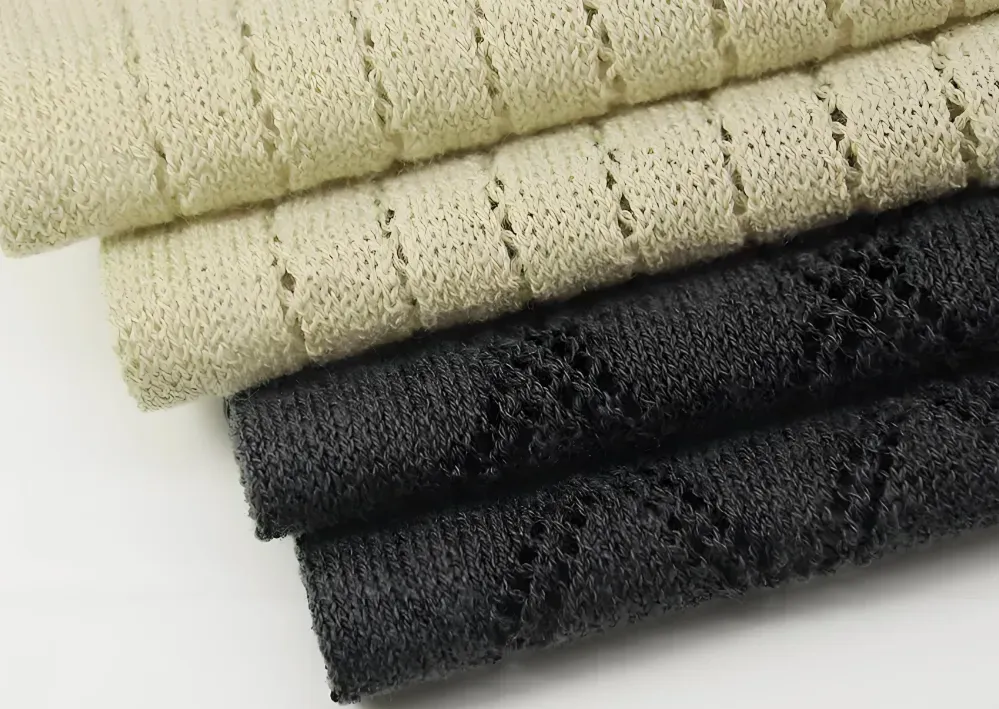
Washi Blended Knit
As a trusted uniform sweater supplier, we provide soft, durable, breathable Washi blended knitwear with great shape retention, all-day comfort and excellent wrinkle resistance. Boasting a refined texture, it is ideal for professional uniforms requiring long-lasting performance.
-
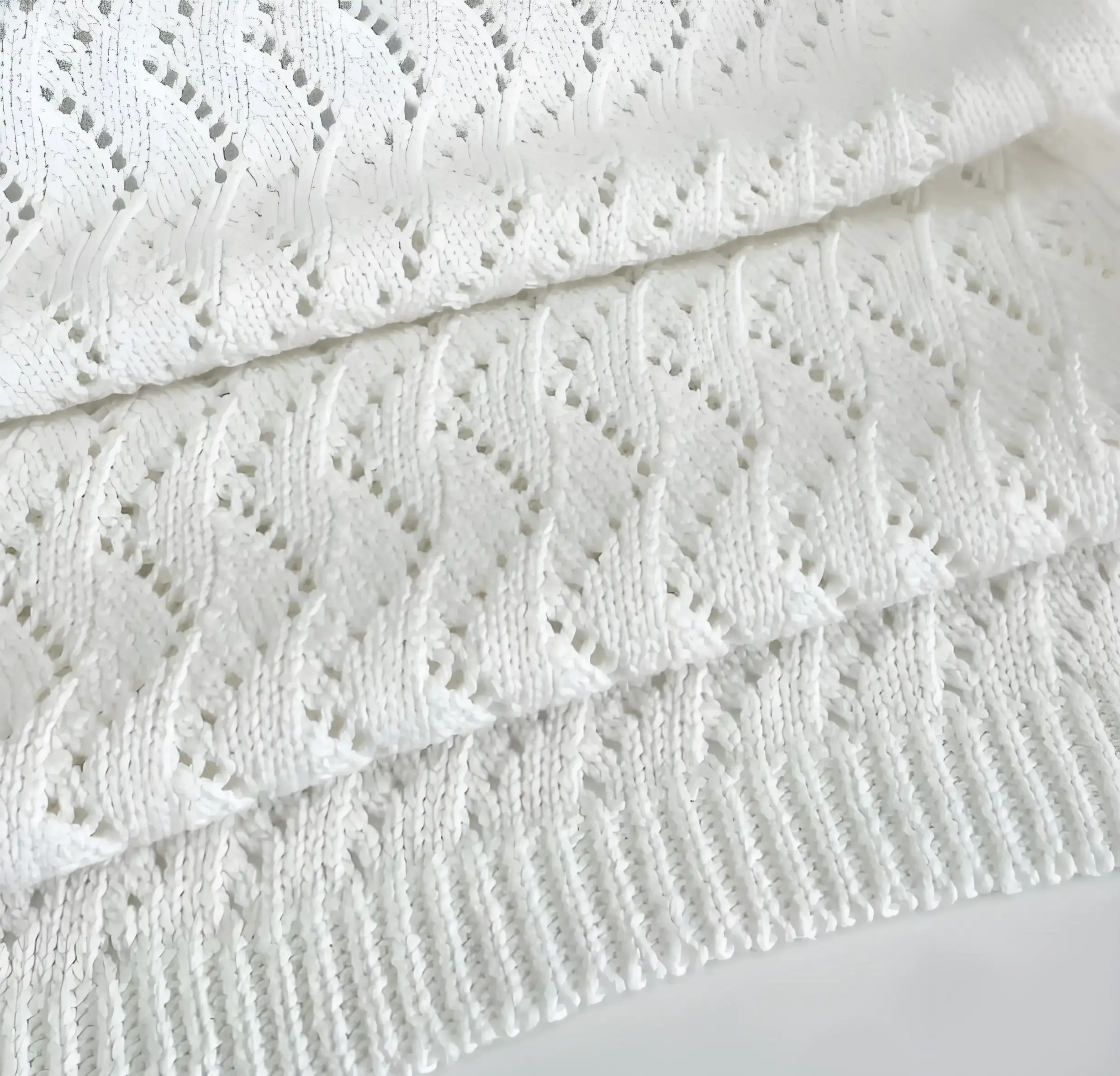
Structured Acetate Cotton
Structured Acetate Cotton boasts a crisp structure, excellent drape and outstanding wrinkle resistance. Breathable, smooth and colorfast, it is durable and easy-care—quality from an experienced uniform sweater manufacturer, perfectly designed for high‑grade uniforms.
-
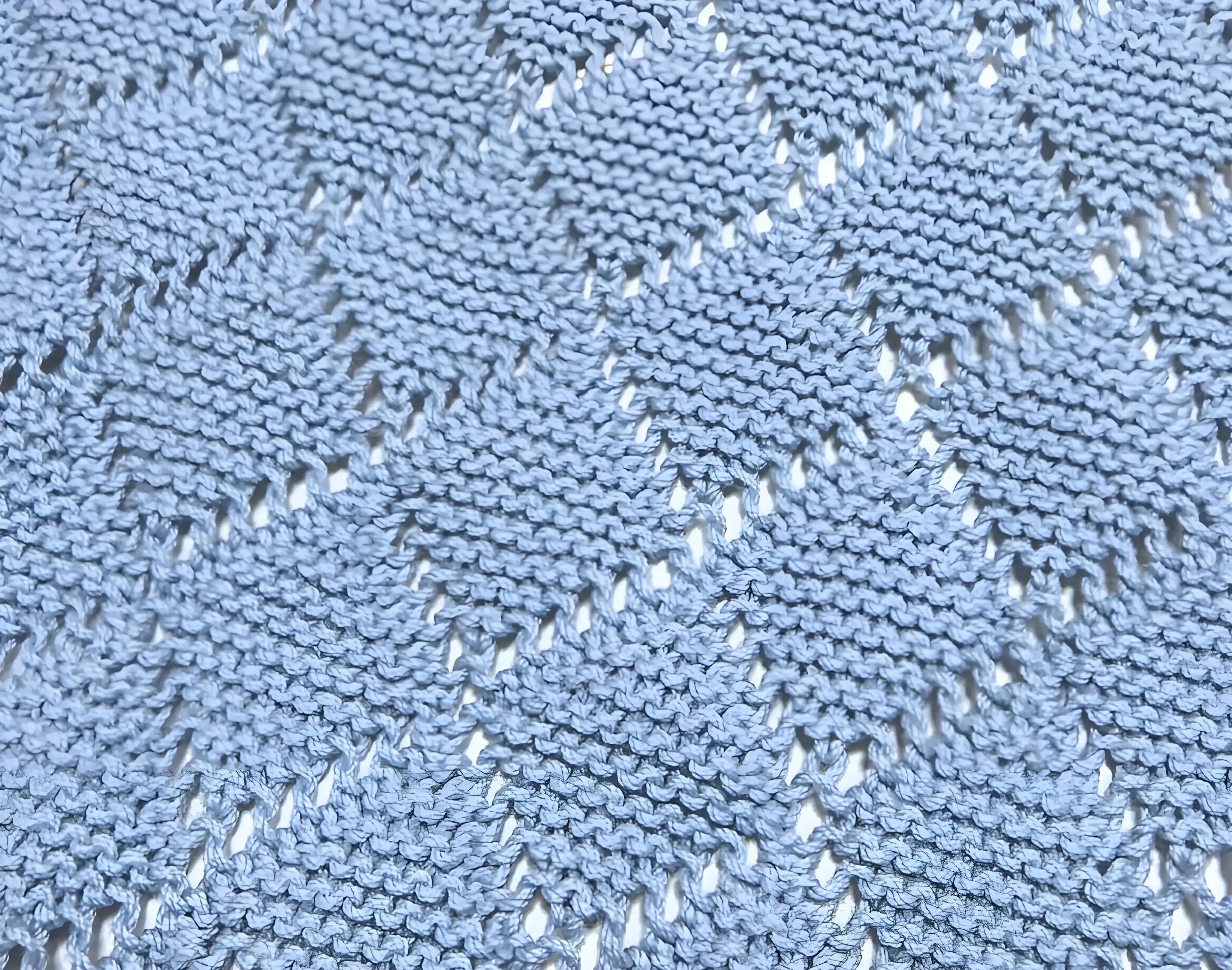
Cool Stereo Cotton
Ideal for uniform sweater wholesale buyers: Cool Structured Cotton with gentle rich firm 3D texture, excellent breathability and ultra soft handfeel. Wrinkle-resistant, durable and shape-retaining — delivering all-day comfort especially for stable, long-time daily wear.
Varsity Revival: The New Standard for Uniform Sweater
A couple years ago, “archival aesthetics” was a niche thing. Now it’s everywhere. That vintage prep-school sweater look? It’s not actually about prep school anymore. It’s about storytelling. And the brands that get it aren’t chasing fast-fashion knockoffs—they’re putting money into pieces that carry real weight, literally and visually.
As a uniform sweater manufacturer,I’ve watched this play out from the production side. The ones winning? They don’t settle for “good enough.” They want sweaters that hold structure, take a logo without screaming, and layer without bunching up. No flimsy fabric that dies after three washes.
So here’s what’s actually separating brand-level makers from the rest right now—no fluff, just what I’m seeing cross my desk.
If you’re building a uniform sweater for 2026, this is where most people mess up.
12GG is your standard school sweater. Thin, lightweight, fine for layering but zero structure. One wash and it starts losing its shape.
5GG is a different conversation.
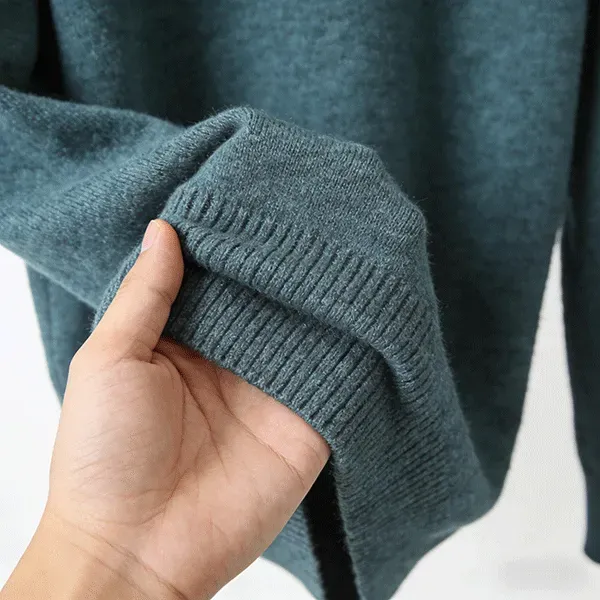
We’re talking 500g to over a kilo per piece. That kind of density turns a sweater into something that holds its shape like outerwear. The boxy fit stays boxy even after half a dozen washes. Ribbing stays tight, pilling resistance hits level 3 or higher. If you’re going for workwear-grade streetwear, this isn’t optional—it’s the foundation.
A tiny silhouette tweak can make a cardigan go from “meh” to sold out.
Right now the combo that’s working: boxy fit + drop shoulder. Wider chest, slightly cropped length. Short, roomy, leaves space for a hoodie or thick tee underneath. It takes the uniform cardigan out of the campus or office context and drops it straight into modern streetwear.
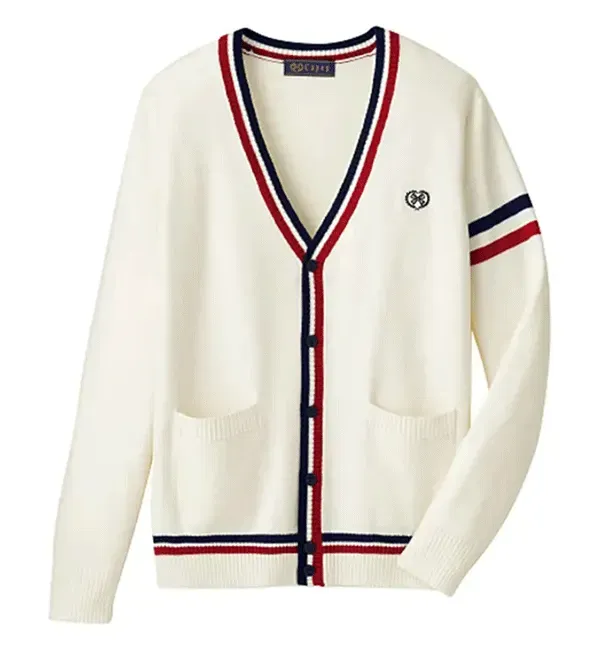
For smaller brands, the real win is MOQ flexibility. 100–300 units. Enough to test the fit, tweak a detail, and launch without sitting on a mountain of inventory. That’s how independent brands keep their design integrity without betting the whole budget on one fit.
Logos sell—no surprise there. But how you put the logo on matters way more than people think.
Intarsia is still my go-to. No thick patches that peel off, no screen prints that crack after a few washes. Intarsia knits the logo right into the fabric. Yarns interlock, the back stays clean, and it looks sharper.
The trade-off is time. Intarsia takes longer—how much longer depends on the factory, but it’s always a slower run. Worth it though. Buyers notice when they flip a garment inside out. Clean craftsmanship speaks for itself.
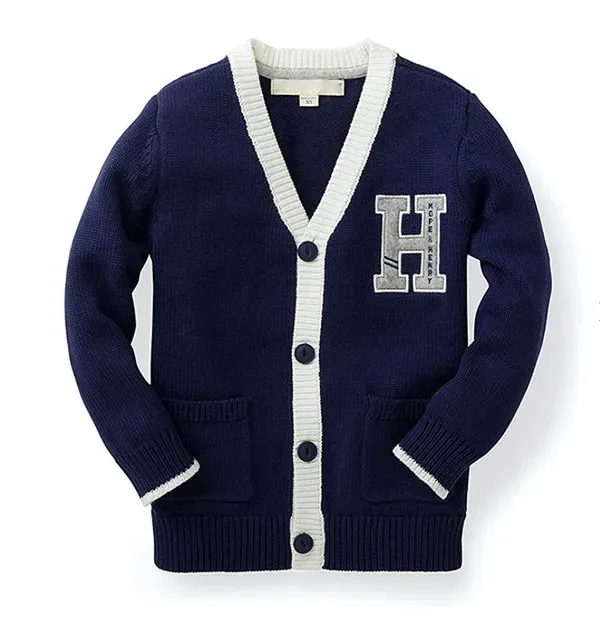
For spring/summer or anyone who hates wool, 100% combed cotton works best. Fiber length 32mm or longer keeps the logo crisp and the fabric breathable. No weird shrinkage around the logo, no scratchy texture.
Here’s something that sounds counterintuitive: for archival-inspired pieces, “perfect” isn’t always better.
Sometimes you want controlled imperfection.
A vintage wash plus enzyme treatment gives you that faded, worn-in look without tearing the fabric apart. The enzyme softens the handfeel and fades the color naturally.
Add a little strategic hand-pulling at the collar or cuffs, and you’ve got a piece that feels like it’s been in someone’s closet for twenty years, but still holds up to daily wear. That’s the sweet spot: collector’s item vibe, not commodity.
Sustainability isn’t a bonus anymore—it’s a requirement, especially if you’re selling into the EU or US.
For knitwear, GRS certification is the cleanest way to prove you’re not just greenwashing.
Recycled wool blends are where we’ve been putting most of our focus. Compared to virgin wool, recycled wool can cut CO₂ emissions by 65–94% and water use by over 80%, depending on the fiber source. We aim for 50%+ recycled fiber to meet GRS labeling rules, and we make sure to have full TC traceability on hand. Europe’s anti-greenwashing laws are tightening fast—having that paperwork ready upfront saves a lot of scrambling later.
After twenty years in this industry, the one thing I’ve learned is that the brands who sweat the small stuff are the ones whose pieces end up in archives, not discount bins.
We can customize sweaters of various categories.
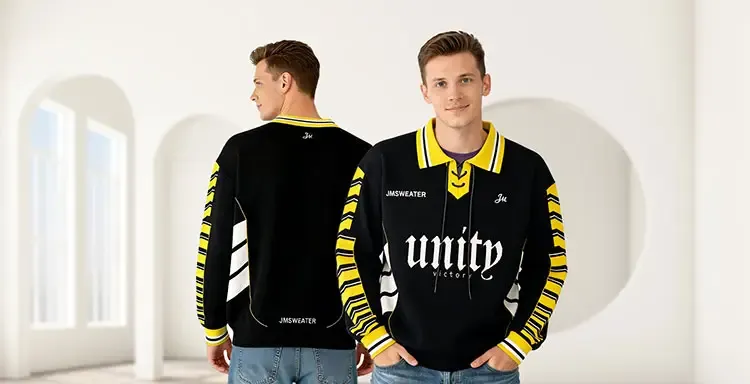
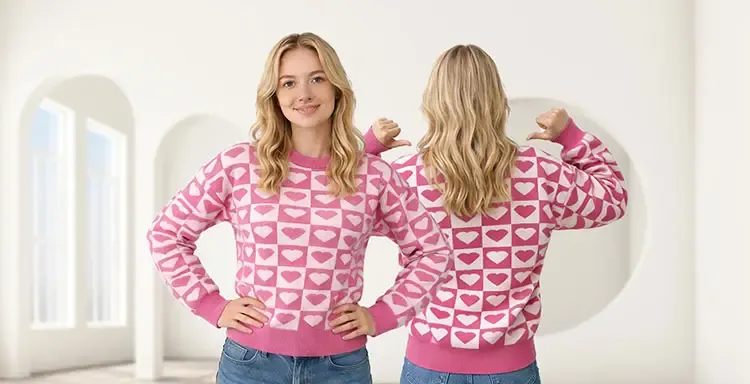

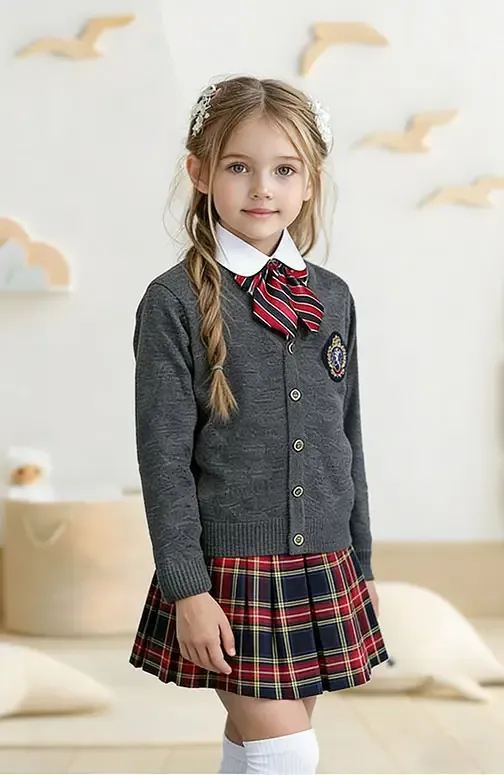

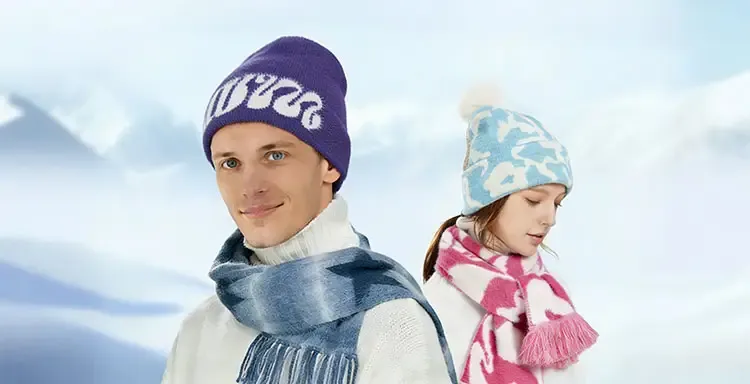
Sweater Factory Video
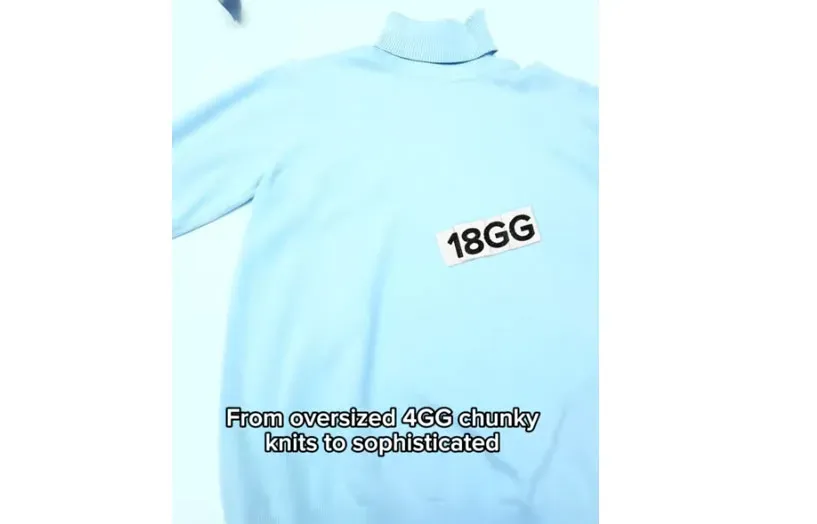
The Art of Gauge: From Architectural 4GG to Ethereal 18GG
Duration: 27sUpdated: April 8th, 2026Knitting is more than just interlinking yarns; it’s the precise engineering of aesthetics. As a specialized sweater manufacturer, we bring your design logic to life—whether through the heavy-duty, sculptural texture of a 4-gauge chunky knit or the liquid-smooth, sophisticated finish of an 18-gauge fine knit.
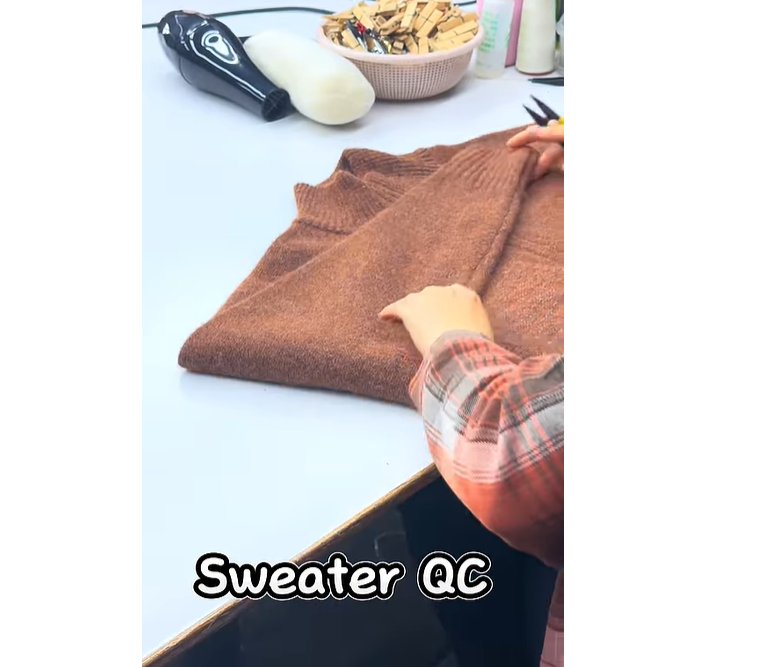
Sweater Factory On-Site Quality Control in China
Duration: 27sUpdated: March 11th, 2026Our Sweater Factory On-Site Quality Control in China sets the standard for excellence. We implement AQL 1.0 Inspection for High-End Heavyweight Sweaters, ensuring every custom garment meets the rigorous quality demands of premium global brands.
Knitwear Manufacturer and Sweater Factory: Providing full OEM/ODM services for global brands.
Duration: 58sUpdated: March 23rd, 2026Welcome to our factory. We are a professional knitwear manufacturer specializing in comprehensive OEM and ODM services for global brands, with expertise in advanced techniques like embroidery, printing, and fabric combining. We produce a wide range of sweaters, including: Men's Sweaters Women's Sweaters Children's Sweaters Uniform & Corporate Knitwear Pet Sweaters Christmas & Novelty Sweaters Our expertise lies in sophisticated craftsmanship. We master various techniques such as embroidery, printing, beading, stone washing, spray coloring, and combining knit with woven fabrics. We transform your concepts from yarn into premium finished garments with consistent quality. From initial sampling to bulk production, we ensure efficient and reliable execution for every order. Let's discuss how we can bring your next sweater collection to life.
Sweater Manufacturer Blog
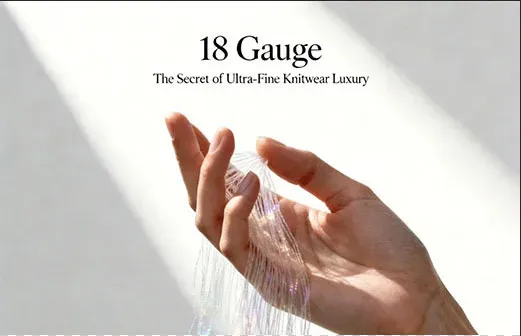
18 Gauge: The Secret of Ultra-Fine Knitwear Luxury
Here's what trips up most buyers—and plenty of sweater manufacturers, too—when they start looking at knitwear: gauge. Not price. Not lead time. Gauge. I’ve seen it happen over and over; people get obsessed with unit cost or factory deadlines, but the real make-or-break is always that tiny little number on the machine. So let me break down something that doesn’t get enough attention—18 gauge—and why it’s the real MVP when you’re chasing that ultra-fine, luxury handfeel. 18 Gauge: The Quiet Workhorse of Luxury Knitwear Here’s the thing. When you pick up a sweater that feels like a second skin—cool, smooth, almost liquid—you’re probably holding an 18-gauge piece. Not 12, not 7. 18. In plain English: gauge = number of needles per inch. 18 means dense. Like, really dense. It’s about as fine as you can get on commercial knitting machines today. Even the big luxury houses stick with 18 for their top-tier cashmere and silk blends. Why? Because it doesn’t just feel thin—it brings out the best in expensive fibers. That’s not marketing fluff. That’s physics. 12 vs 18: You Can See the Difference Let me give you a quick visual. A 12-gauge knit? You can clearly see the stitches. It has texture, sure. But 18-gauge? The stitches are so tiny, the fabric looks almost like woven cloth—smooth, clean, expensive. Yet you still get that beautiful knit stretch. There’s a catch, though. Running 18-gauge is a pain in the ass. You need super fine yarns that snap if the humidity is off by 2%. Your machines have to be dialed in perfectly. One tiny tension change and you’re looking at broken yarns, dropped stitches, and a whole lot of wasted time. That’s why 18-gauge pieces cost more—and why they should. Where 18 Gauge Really Shines: Silk-Cashmere If you haven’t tried a silk-cashmere blend in 18 gauge, you’re missing out. Seriously. The fine gauge lets the silk’s natural luster come through, while the cashmere stays soft and plush. Together? It feels like butter melting on your skin. And here’s a number that matters: weight. We’re talking finished garments as light as 150–180g/m². That’s about 20–30% lighter than a standard cotton tee. But it still breathes, still regulates temperature, still looks sharp. Perfect for summer collections—and yes, I’ve helped brands build entire summer lines around 18-gauge pieces. One client (a Scandinavian label, very picky) told me they’d never consider knitwear for July until I sent them a sample 18-gauge polo. Two weeks later, they placed a reorder. That’s how you break the “knits are only for winter” rule. The QC That Actually Matters Let’s be real. Anyone can claim “high quality.” But 18-gauge? It forces you to prove it. Because the yarn is so fine, even a tiny flaw—a pulled thread, a skipped stitch—ruins the whole garment. So the factory I work with does 100% manual inspection under magnifying lamps. Every. Single. Piece. They follow AQL 1.0, which is tighter than most brands require. I remember walking through their lighting room once, watching an inspector spend nearly two minutes on one sweater. She found a single irregular stitch near the hem. That sweater went to the reject pile. That’s the level of detail you need for 18-gauge. And Yes, Sustainable Options Exist You’ll also be glad to hear that we can run GRS-certified recycled fibers through 18-gauge. The trick is spinning them fine enough—and stable enough—to handle the high needle density. When it works, you get the same silky, draping feel, but with a much lower environmental footprint. To me, 18-gauge isn’t just a technical spec. It’s a commitment. It says you care about how the garment actually feels on skin, not just how it looks on a hanger. If you’re tired of competing on basic merino crewnecks, this is your way out. Higher price point. Real differentiation. And a story you can stand behind—because the product delivers. So next time you’re planning a luxury or summer knit line, don’t just ask for “fine gauge.” Ask for 18 gauge. That’s what it really looks like on a production table—when the machines are dialed in, the yarns are right, and someone’s actually checking every stitch.
view more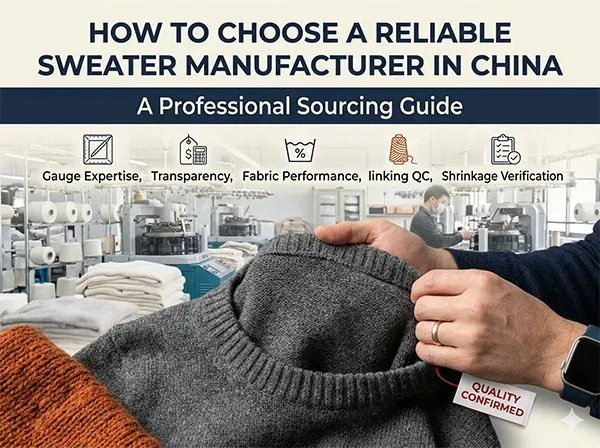
Beyond Sourcing: Finding the Right Sweater Factory in China to Fuel Your Brand’s Growth
Let me be blunt: finding a sweater factory in China is no problem. Finding one that actually respects your design, delivers consistent quality, and meets your ship date? That’s where most brands stumble. I can’t tell you how many brands I’ve seen fall into the “price-first” trap. They chase the lowest quote, and few months later they’re staring at a container full of wonky seams or shrinkage nightmares. So let me save you some pain. Below are five practical filters I use to separate the real players from the pretenders. Think of it as your pre-order factory audit — no fluff, just what works. Don’t just ask for samples. Ask about their “gauge comfort zone.” In knitting, gauge is everything. It tells you how many needles per inch — lower number = thicker stitch, higher number = finer stitch. A 7GG sweater has that chunky, cozy handfeel, perfect for fall/winter. A 18GG is sleek and smooth, ideal for lightweight spring layering. But here’s what most buyers miss: most good factories aren’t good at every gauge. They have a sweet spot. Why? Because different gauges require totally different machine tension, yarn feed, and even linking skills. A factory that kills it on 18GG might struggle with 7GG’s bulkier yarn. My rule: Find a factory whose core expertise matches your product. A “one-stop shop” often means they’re average at everything. A specialist? They’ll deliver consistency. Yes, sampling should cost more than bulk production. Here’s why. I still get pushback from new clients: “Why is this sample sweater $150 when the bulk unit price is only $25?” Let me explain the math — and the honesty check. A single sample ties up a senior pattern maker for hours of CAD programming. The machine has to stop production, run test swatches, adjust tension and shrinkage rates. That “downtime” cost gets spread over… one sweater. Not 1,000. Plus, you’re buying a single cone of yarn at retail or small-quantity markup, not bulk pricing. A transparent factory will walk you through these numbers. If a factory offers free or dirt-cheap samples? Red flag. It usually means they’re skipping the engineering step — and you’ll pay for it later with inconsistent sizing or failed shrinkage tests. Ask them: “Can you break down the sampling cost for me?” If they hesitate or get defensive, move on. Recycled vs. virgin cashmere? Know the trade-off. Sustainable materials are great — but only if you understand the performance gap. Virgin cashmere has long fibers. That means softer handfeel, better pilling resistance, and more dimensional stability after washing. Recycled cashmere is made from reclaimed fibers. It’s eco-friendly as hell, but those shorter fibers mean slightly less durability and a bit more pilling over time. A good factory won’t just push recycled because it’s trendy. They’ll ask: What’s your priority — sustainability score or garment lifespan? Then they’ll give you honest shrinkage data for both. What to look for: A partner who shows you wash tests and shrinkage rates for both options, then helps you decide based on your price point and brand promise. Turn the sweater inside out. That’s where quality lives. Anyone can make the front look good. The real craft is in the linking — the seam where two knitted panels are joined. Common defects I see:Skipped stitches (weak spots that will unravel).Dropped stitches (holes at the edge).Tension too tight (the seam puckers or feels stiff) When visiting a factory, skip the fancy showroom and go straight to the linking section. Watch how workers handle the edges. Do they check every few inches? Are the stitches uniform? Are loose threads trimmed? Factories with clean, consistent linking almost always have better overall quality control. It’s a dead giveaway. Pro tip: Ask to see their internal linking defect rate — not just the final pass rate. A number like <2% is excellent. Anything above 5% means trouble. Shrinkage testing: don’t trust, verify. Knitwear shrinks. That’s physics. But a professional factory knows how much to expect and how to compensate. The standard formula:(Pre-wash size – Post-wash size) / Pre-wash size × 100% For most wool and cashmere blends, acceptable shrinkage is ±3% to 5% — though this varies by fiber. Anything outside that range means the tension or wash process is flawed. Here’s what I ask every potential supplier: “How do you ensure bulk shrinkage matches your sample shrinkage?” A factory that can’t answer immediately — or doesn’t have a written wash-test protocol — is a risk. The good ones will show you a wash test report for each yarn lot, and they’ll tell you exactly how much shrinkage they pre-engineer into the pattern. So,sourcing from China isn’t about finding the cheapest factory. It’s about finding a partner who speaks your language of quality and transparency. Ask about gauge expertise. Push back on cheap sampling. Understand material trade-offs. Inspect the linking. And always, always verify shrinkage control.And you’ll avoid the kind of expensive lessons I learned the hard way — so you don’t have to.
view more
The Ultimate Knitwear Sourcing Guide: Choosing Between Cashmere, Wool, and Blends
To be honest,when you’re planning a Fall/Winter ‘26 knitwear collection, the real headache isn’t the silhouette—it’s that little composition label on the back. Get that wrong, and your beautiful design ends up either priced out of the market or coming back as a customer service nightmare. Here’s the thing: picking fibers isn’t just about how something feels in your hand at a trade show. It’s about retail math, how that sweater holds up after a season of wear. I’ve put together a no-nonsense breakdown on how to navigate the fiber landscape for ‘26. Think of it as your cheat sheet for balancing that luxury look with a P&L that actually works. The Real Cost of “Cloud-Soft” (100% Cashmere) Let’s get one thing straight. In the world of cashmere vs. wool vs. blends, 100% cashmere still sits at the top of the pyramid. And for good reason. The magic is in the math. We’re talking fiber diameters typically under 15.5 microns . To put that in perspective, high-quality merino wool lives in the 18-20 micron range. That tiny difference? That’s the difference between a fabric that feels like a cloud and one that feels… well, like a nice sweater. For brands playing in the “quiet luxury” or “timeless classic” space, pure cashmere is your ticket to that high-end price point. The key, from a technical standpoint, is pairing that super-fine fiber with good anti-pilling finishing. Yeah, it might pill a little initially—it’s a delicate fiber—but the right spinning technique, something an experienced sweater manufacturer knows how to execute, keeps it soft without it falling apart after three wears. The Pragmatist’s Choice: Wool & Strategic Blends Now, I love cashmere. But if you’re designing for commuters who wear their sweaters under a seatbelt five days a week, 100% cashmere might not be your best friend. This is where blends get interesting. They’re the workhorses of a collection. There’s a common fear in this industry: the dreaded pilling. I’ve seen buyers panic when their first sample arrives with fuzz. But here’s a pro tip from the supply chain: avoid the 30/70 blend zone. Instead, stick to strategic mixes like 90/10 (Wool/Cashmere) or 70/30 . A Wool + Nylon combo? That’s your durability play. It resists wrinkles and holds up to abrasion like a champ. A Cashmere + Silk blend? That’s for the designers who want that liquid drape and a subtle sheen. It’s about using science—specifically, fiber diameter and tensile strength—to solve real-world problems like shrinkage and wear-and-tear before they hit your customer service inbox. 2026 Reality Check: It’s Not “Nice to Have” Anymore If you’ve been in a European market recently, you know what I’m talking about. Sustainability isn’t a marketing angle anymore. It’s the entry fee. For 2026, if you don’t have RWS (Responsible Wool Standard) or GOTS in your supply chain, you’re going to have a hard time getting shelf space in the major retailers. It’s that simple. But here’s the silver lining. This isn’t just a cost burden. From a sourcing strategy perspective, these certifications give you pricing power. We’re seeing a 10% to 20% premium on retail items that carry the RWS label. There’s also a massive push toward Recycled Cashmere and bio-based blends. The Pricing Matrix: How to Structure Your Line Let’s talk money. This is where theory meets reality. Right now, the raw material cost for pure cashmere is roughly 7 to 8 times that of wool. You can’t ignore that math. If you try to sell a cashmere sweater at a wool price point, you’re going bankrupt. So, how do you build a collection that makes sense? I advise my clients to use a tiered matrix: High-End Line: Go 100% Cashmere. This is your halo product. It establishes the brand’s credibility and carries the highest margin. Contemporary Line: Use a High-ratio Wool/Cashmere blend (e.g., 90/10) . You keep the hand-feel premium, but you bring the retail price down to a point where your core customer doesn’t feel guilty buying it. Mass Market: Focus on high-quality Wool/Synthetic blends (e.g., Wool + Nylon) . This gives you durability and wrinkle resistance at a price that scales. By structuring your line this way, you’re not putting all your eggs in one basket. You’re covering the customer who wants the luxury experience and the one who just needs a reliable, great-looking sweater for the office. My Take There’s no “best” fiber. That’s a myth. There’s only the “best fit” for your brand and your customer. If there’s one piece of advice I hammer home to every sourcing team—and every sweater manufacturer we work with—it’s this: test everything before you cut.
view more