




18 Gauge: The Secret of Ultra-Fine Knitwear Luxury
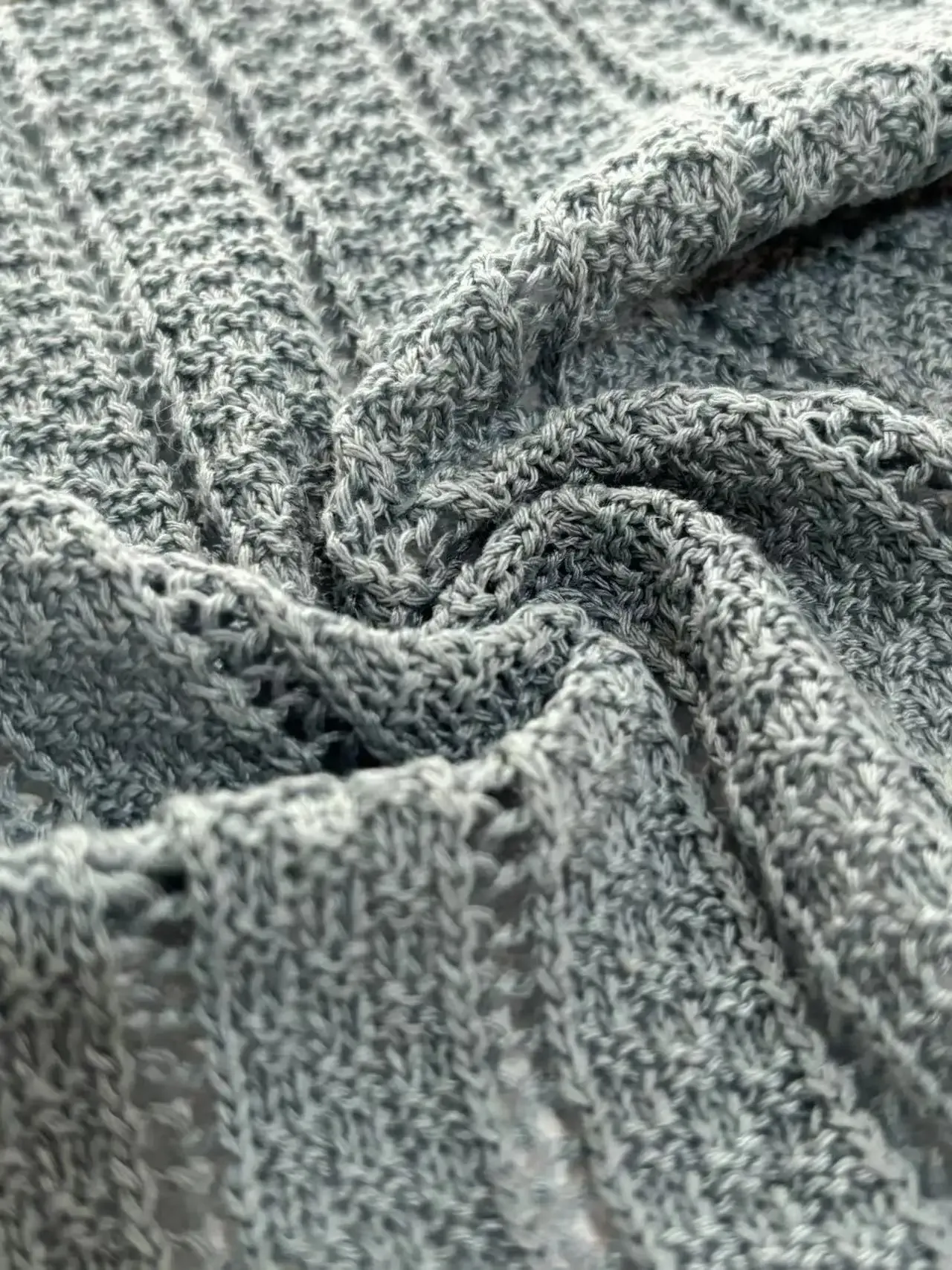
Here's what trips up most buyers—and plenty of sweater manufacturers, too—when they start looking at knitwear: gauge. Not price. Not lead time. Gauge. I’ve seen it happen over and over; people get obsessed with unit cost or factory deadlines, but the real make-or-break is always that tiny little number on the machine. So let me break down something that doesn’t get enough attention—18 gauge—and why it’s the real MVP when you’re chasing that ultra-fine, luxury handfeel. 18 Gauge: The Quiet Workhorse of Luxury Knitwear Here’s the thing. When you pick up a sweater that feels like a second skin—cool, smooth, almost liquid—you’re probably holding an 18-gauge piece. Not 12, not 7. 18. In plain English: gauge = number of needles per inch. 18 means dense. Like, really dense. It’s about as fine as you can get on commercial knitting machines today. Even the big luxury houses stick with 18 for their top-tier cashmere and silk blends. Why? Because it doesn’t just feel thin—it brings out the best in expensive fibers. That’s not marketing fluff. That’s physics. 12 vs 18: You Can See the Difference Let me give you a quick visual. A 12-gauge knit? You can clearly see the stitches. It has texture, sure. But 18-gauge? The stitches are so tiny, the fabric looks almost like woven cloth—smooth, clean, expensive. Yet you still get that beautiful knit stretch. There’s a catch, though. Running 18-gauge is a pain in the ass. You need super fine yarns that snap if the humidity is off by 2%. Your machines have to be dialed in perfectly. One tiny tension change and you’re looking at broken yarns, dropped stitches, and a whole lot of wasted time. That’s why 18-gauge pieces cost more—and why they should. Where 18 Gauge Really Shines: Silk-Cashmere If you haven’t tried a silk-cashmere blend in 18 gauge, you’re missing out. Seriously. The fine gauge lets the silk’s natural luster come through, while the cashmere stays soft and plush. Together? It feels like butter melting on your skin. And here’s a number that matters: weight. We’re talking finished garments as light as 150–180g/m². That’s about 20–30% lighter than a standard cotton tee. But it still breathes, still regulates temperature, still looks sharp. Perfect for summer collections—and yes, I’ve helped brands build entire summer lines around 18-gauge pieces. One client (a Scandinavian label, very picky) told me they’d never consider knitwear for July until I sent them a sample 18-gauge polo. Two weeks later, they placed a reorder. That’s how you break the “knits are only for winter” rule. The QC That Actually Matters Let’s be real. Anyone can claim “high quality.” But 18-gauge? It forces you to prove it. Because the yarn is so fine, even a tiny flaw—a pulled thread, a skipped stitch—ruins the whole garment. So the factory I work with does 100% manual inspection under magnifying lamps. Every. Single. Piece. They follow AQL 1.0, which is tighter than most brands require. I remember walking through their lighting room once, watching an inspector spend nearly two minutes on one sweater. She found a single irregular stitch near the hem. That sweater went to the reject pile. That’s the level of detail you need for 18-gauge. And Yes, Sustainable Options Exist You’ll also be glad to hear that we can run GRS-certified recycled fibers through 18-gauge. The trick is spinning them fine enough—and stable enough—to handle the high needle density. When it works, you get the same silky, draping feel, but with a much lower environmental footprint. To me, 18-gauge isn’t just a technical spec. It’s a commitment. It says you care about how the garment actually feels on skin, not just how it looks on a hanger. If you’re tired of competing on basic merino crewnecks, this is your way out. Higher price point. Real differentiation. And a story you can stand behind—because the product delivers. So next time you’re planning a luxury or summer knit line, don’t just ask for “fine gauge.” Ask for 18 gauge. That’s what it really looks like on a production table—when the machines are dialed in, the yarns are right, and someone’s actually checking every stitch.