
I can’t tell you how many brands I’ve seen fall into the “price-first” trap. They chase the lowest quote, and few months later they’re staring at a container full of wonky seams or shrinkage nightmares. So let me save you some pain.
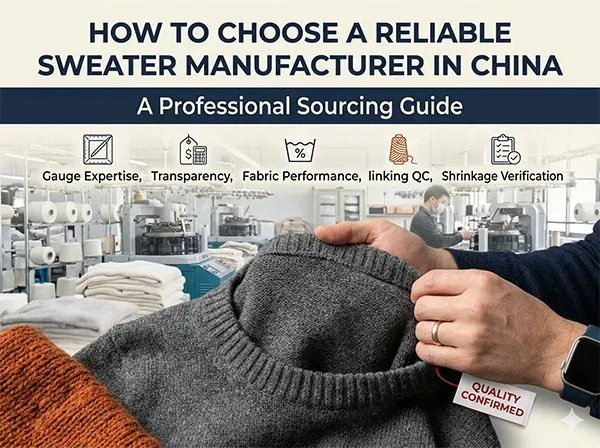
Below are five practical filters I use to separate the real players from the pretenders. Think of it as your pre-order factory audit — no fluff, just what works.
Don’t just ask for samples. Ask about their “gauge comfort zone.”
In knitting, gauge is everything. It tells you how many needles per inch — lower number = thicker stitch, higher number = finer stitch. A 7GG sweater has that chunky, cozy handfeel, perfect for fall/winter. A 18GG is sleek and smooth, ideal for lightweight spring layering.
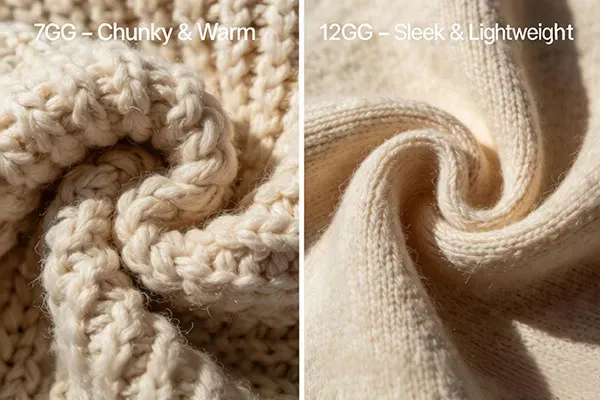
But here’s what most buyers miss: most good factories aren’t good at every gauge. They have a sweet spot. Why? Because different gauges require totally different machine tension, yarn feed, and even linking skills. A factory that kills it on 18GG might struggle with 7GG’s bulkier yarn.
My rule: Find a factory whose core expertise matches your product. A “one-stop shop” often means they’re average at everything. A specialist? They’ll deliver consistency.
In knitting, gauge is everything. It tells you how many needles per inch — lower number = thicker stitch, higher number = finer stitch. A 7GG sweater has that chunky, cozy handfeel, perfect for fall/winter. A 18GG is sleek and smooth, ideal for lightweight spring layering.
But here’s what most buyers miss: most good factories aren’t good at every gauge. They have a sweet spot. Why? Because different gauges require totally different machine tension, yarn feed, and even linking skills. A factory that kills it on 18GG might struggle with 7GG’s bulkier yarn.
My rule: Find a factory whose core expertise matches your product. A “one-stop shop” often means they’re average at everything. A specialist? They’ll deliver consistency.
Yes, sampling should cost more than bulk production. Here’s why.
I still get pushback from new clients: “Why is this sample sweater $150 when the bulk unit price is only $25?”
Let me explain the math — and the honesty check.
A single sample ties up a senior pattern maker for hours of CAD programming. The machine has to stop production, run test swatches, adjust tension and shrinkage rates. That “downtime” cost gets spread over… one sweater. Not 1,000. Plus, you’re buying a single cone of yarn at retail or small-quantity markup, not bulk pricing.
A transparent factory will walk you through these numbers. If a factory offers free or dirt-cheap samples? Red flag. It usually means they’re skipping the engineering step — and you’ll pay for it later with inconsistent sizing or failed shrinkage tests.
Ask them: “Can you break down the sampling cost for me?” If they hesitate or get defensive, move on.
I still get pushback from new clients: “Why is this sample sweater $150 when the bulk unit price is only $25?”
Let me explain the math — and the honesty check.
A single sample ties up a senior pattern maker for hours of CAD programming. The machine has to stop production, run test swatches, adjust tension and shrinkage rates. That “downtime” cost gets spread over… one sweater. Not 1,000. Plus, you’re buying a single cone of yarn at retail or small-quantity markup, not bulk pricing.
A transparent factory will walk you through these numbers. If a factory offers free or dirt-cheap samples? Red flag. It usually means they’re skipping the engineering step — and you’ll pay for it later with inconsistent sizing or failed shrinkage tests.
Ask them: “Can you break down the sampling cost for me?” If they hesitate or get defensive, move on.
Recycled vs. virgin cashmere? Know the trade-off.
Sustainable materials are great — but only if you understand the performance gap.
Virgin cashmere has long fibers. That means softer handfeel, better pilling resistance, and more dimensional stability after washing.
Recycled cashmere is made from reclaimed fibers. It’s eco-friendly as hell, but those shorter fibers mean slightly less durability and a bit more pilling over time.
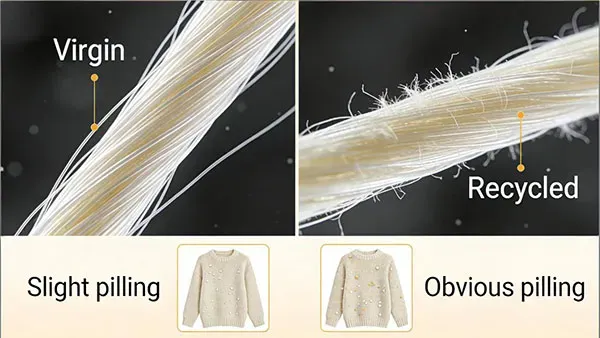
A good factory won’t just push recycled because it’s trendy. They’ll ask: What’s your priority — sustainability score or garment lifespan? Then they’ll give you honest shrinkage data for both.
What to look for: A partner who shows you wash tests and shrinkage rates for both options, then helps you decide based on your price point and brand promise.
Sustainable materials are great — but only if you understand the performance gap.
Virgin cashmere has long fibers. That means softer handfeel, better pilling resistance, and more dimensional stability after washing.
Recycled cashmere is made from reclaimed fibers. It’s eco-friendly as hell, but those shorter fibers mean slightly less durability and a bit more pilling over time.
A good factory won’t just push recycled because it’s trendy. They’ll ask: What’s your priority — sustainability score or garment lifespan? Then they’ll give you honest shrinkage data for both.
What to look for: A partner who shows you wash tests and shrinkage rates for both options, then helps you decide based on your price point and brand promise.
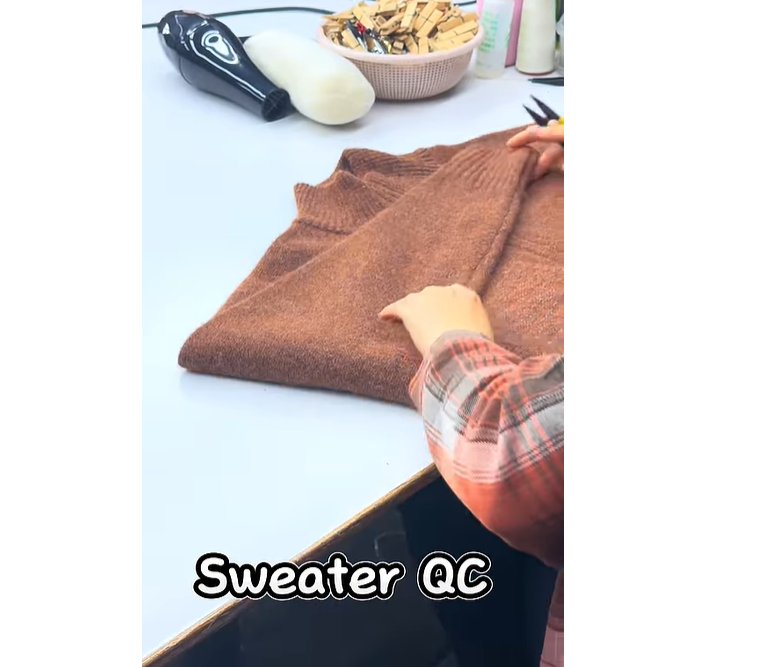
Turn the sweater inside out. That’s where quality lives.
Anyone can make the front look good. The real craft is in the linking — the seam where two knitted panels are joined.
Common defects I see:Skipped stitches (weak spots that will unravel).Dropped stitches (holes at the edge).Tension too tight (the seam puckers or feels stiff)
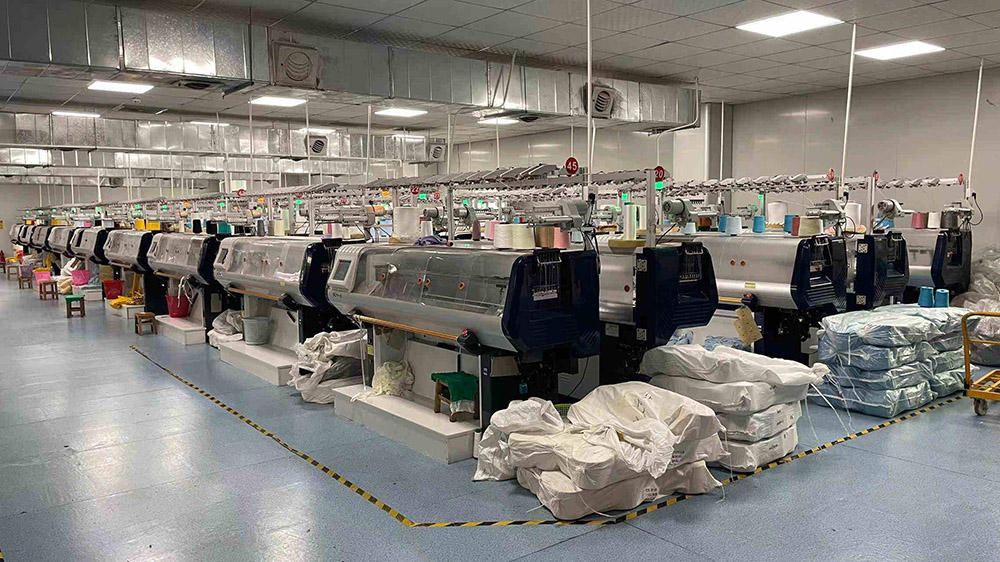
When visiting a factory, skip the fancy showroom and go straight to the linking section. Watch how workers handle the edges. Do they check every few inches? Are the stitches uniform? Are loose threads trimmed?
Factories with clean, consistent linking almost always have better overall quality control. It’s a dead giveaway.
Pro tip: Ask to see their internal linking defect rate — not just the final pass rate. A number like <2% is excellent. Anything above 5% means trouble.
Anyone can make the front look good. The real craft is in the linking — the seam where two knitted panels are joined.
Common defects I see:Skipped stitches (weak spots that will unravel).Dropped stitches (holes at the edge).Tension too tight (the seam puckers or feels stiff)
When visiting a factory, skip the fancy showroom and go straight to the linking section. Watch how workers handle the edges. Do they check every few inches? Are the stitches uniform? Are loose threads trimmed?
Factories with clean, consistent linking almost always have better overall quality control. It’s a dead giveaway.
Pro tip: Ask to see their internal linking defect rate — not just the final pass rate. A number like <2% is excellent. Anything above 5% means trouble.
Shrinkage testing: don’t trust, verify.
Knitwear shrinks. That’s physics. But a professional factory knows how much to expect and how to compensate.
The standard formula:(Pre-wash size – Post-wash size) / Pre-wash size × 100%
For most wool and cashmere blends, acceptable shrinkage is ±3% to 5% — though this varies by fiber. Anything outside that range means the tension or wash process is flawed.
Knitwear shrinks. That’s physics. But a professional factory knows how much to expect and how to compensate.
The standard formula:(Pre-wash size – Post-wash size) / Pre-wash size × 100%
For most wool and cashmere blends, acceptable shrinkage is ±3% to 5% — though this varies by fiber. Anything outside that range means the tension or wash process is flawed.
Here’s what I ask every potential supplier: “How do you ensure bulk shrinkage matches your sample shrinkage?”
A factory that can’t answer immediately — or doesn’t have a written wash-test protocol — is a risk. The good ones will show you a wash test report for each yarn lot, and they’ll tell you exactly how much shrinkage they pre-engineer into the pattern.
So,sourcing from China isn’t about finding the cheapest factory. It’s about finding a partner who speaks your language of quality and transparency. Ask about gauge expertise. Push back on cheap sampling. Understand material trade-offs. Inspect the linking. And always, always verify shrinkage control.And you’ll avoid the kind of expensive lessons I learned the hard way — so you don’t have to.
A factory that can’t answer immediately — or doesn’t have a written wash-test protocol — is a risk. The good ones will show you a wash test report for each yarn lot, and they’ll tell you exactly how much shrinkage they pre-engineer into the pattern.
So,sourcing from China isn’t about finding the cheapest factory. It’s about finding a partner who speaks your language of quality and transparency. Ask about gauge expertise. Push back on cheap sampling. Understand material trade-offs. Inspect the linking. And always, always verify shrinkage control.And you’ll avoid the kind of expensive lessons I learned the hard way — so you don’t have to.